Best Yoga Mat for Beginners 2026: Comfortable & Grippy Options

The Gaiam Essentials Thick Yoga Mat 10mm is our top pick for Yoga Mat for Beginners 2026: Comfortable & Grippy Options. 10mm extra cushioning for joints. For budget shoppers, the Manduka eKO Yoga Mat offers solid value at a lower price.
See Today’s Price →At a Glance
Showing 3 of 3 products
Gaiam Essentials Thick Yoga Mat 10mm
“10mm cushioning and a free carrier strap make this the best all-around yoga mat under $25 — enough grip for flows, enough padding for prone poses.”
See Today’s Price →What we like
- 10mm extra cushioning for joints
- Includes carrier strap
- Wide color selection
Watch out for
- Thicker mat reduces stability in standing balance poses
- Not for hot yoga
Read Full Analysis
The Gaiam Essentials 10mm mat is the most recommended beginner yoga mat because its exceptional thickness cushions the pressure points that cause beginners to fidget during floor poses — knees in cat-cow, hips in seated poses, wrists in planks. Most beginner yoga classes involve significant time on hands and knees before core strength develops, and the 10mm foam substantially reduces the discomfort that causes newcomers to skip class rather than stay uncomfortable. The non-slip texture provides adequate grip for standing poses. The 68-inch length suits most adults under 5'10". At $25, the Gaiam Essentials is essentially a no-risk purchase — if you try yoga and don't continue, you've lost $25. If you continue, you'll want to upgrade to a thinner mat (4-6mm) as your balance improves and the extra thickness starts to feel unstable in one-legged poses. The honest limitation is that 10mm thickness, while comfortable, reduces floor-feel stability in balance poses compared to standard mats.

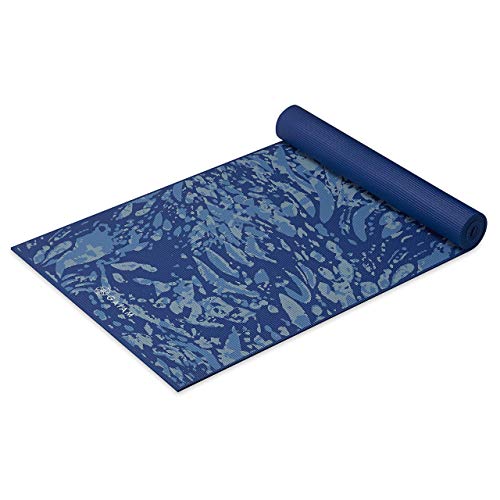
Gaiam Premium Print Yoga Mat 6mm
“The Gaiam Premium Print mat delivers solid value for beginners and casual practitioners. The 6mm thickness is comfortable underfoot, and the textured surface grips well in dry conditions. It will not ”
See Today’s Price →What we like
- Affordable price point under $30 — great entry mat for beginners
- Non-slip textured surface provides decent traction for dry practice
- 6mm thickness gives good cushioning for joints and knees
- Available in many patterns and colors to match personal style
- Lightweight and easy to carry with included strap
Watch out for
- Slides on hardwood floors when hands get sweaty
- Cheaper PVC material may off-gas initially — air out before first use
- Less durable than premium mats; may show wear within 1–2 years of daily use
Read Full Analysis
The Gaiam Premium Print at 6mm hits the sweet spot between cushioning and stability. Six millimeters provides adequate joint protection for most yoga styles while maintaining enough floor connection for balance work that 10mm mats compromise. The textured PVC surface delivers reliable grip in dry conditions — adequate for gentle yoga, hatha, and beginner vinyasa flows. The printed designs cover the top surface, providing visual motivation that many practitioners find makes their mat feel more personal. At 68 inches standard length, it suits most adults. The mat is significantly more durable than budget thin mats that roll or bubble after several months of use. Gaiam's Premium line uses slightly denser foam that maintains thickness over years of practice rather than compressing flat. The trade-off versus natural rubber mats (Manduka, Jade) is that PVC doesn't improve grip with sweat — in hot yoga or sweaty practice, a non-slip towel overlay is recommended.

Manduka eKO Yoga Mat
“The Manduka eKO is the ecological alternative for practitioners who want natural rubber performance without the Jade Harmony's full latex content — it offers Manduka's manufacturing quality and non-to”
See Today’s Price →What we like
- Natural rubber with no latex proteins — safer for sensitive practitioners
- Excellent grip performance in most conditions
- 5mm thickness balances cushioning and stability
- Certified non-toxic production
Watch out for
- 6.6 lbs — heavier than most mats
- Degrades in UV exposure — indoor storage required
- Not as long-lasting as the Manduka PRO
Read Full Analysis
The Manduka eKO is the benchmark natural rubber yoga mat that serious practitioners invest in once they commit to regular practice. Natural tree rubber provides grip that actually improves as you sweat — the opposite of PVC mats that get slippery in hot practice. The 5mm thickness provides sufficient cushioning for most yoga styles while maintaining the floor connection needed for balance poses. The closed-cell surface prevents bacteria and moisture absorption, making the eKO easier to clean than open-cell rubber mats. Manduka offers a lifetime guarantee on the eKO — a genuine commitment to a mat designed to last. The mat weighs 5.5 lbs, heavier than PVC alternatives, which matters for those carrying it to a studio. Natural rubber has a distinctive smell when new that fades over weeks of use and washing. At $114, the Manduka eKO is the last yoga mat a dedicated practitioner needs to buy. For beginners who are certain yoga will be a long-term practice, this is the investment that avoids purchasing two or three cheaper mats over the same time period.
Yoga Mat for Beginners Buying Guide
 Photo by Cup of Couple / Pexels
Great for: Yoga practitioners, home stretchers, and anyone doing floor workouts, Pilates, or meditation who wants grip and cushion
Not ideal if: You only stretch on carpet occasionally — a yoga mat is purpose-built but not necessary for casual floor stretching
The best yoga mat for a beginner isn't necessarily the thickest or most expensive — it's the one with enough cushioning for joint comfort, consistent grip so you're not slipping mid-pose, and a size that fits your height. Here's how the specs map to real practice.
Thickness for Beginners: 4mm vs 6mm vs 10mm
4–6mm is the standard yoga mat thickness range and where most beginners should start. 4mm provides adequate cushioning for poses while maintaining enough floor connection for balance work — downward dog, warrior poses, and balancing sequences feel stable. 6mm adds slightly more joint cushion without meaningfully compromising balance. 10mm mats like the Gaiam Essentials Thick provide noticeable knee and wrist relief during kneeling poses and are the right choice for beginners with sensitive joints or older adults returning to activity. The trade-off: 10mm of foam creates a spongier surface that makes single-leg balance poses harder — you feel more wobble. For beginners doing vinyasa flows or faster yoga styles, 4–6mm. For beginners prioritizing joint comfort in yin yoga or floor work, 8–10mm.
Material and Grip: PVC, Natural Rubber, and Cork Compared

PVC (most budget mats including Gaiam Essentials) provides consistent grip regardless of sweat level and is the most durable material at low price points. The grip doesn't improve or degrade significantly with moisture, giving beginners predictable traction session to session. Natural rubber (Manduka eKO) provides excellent grip that improves as you sweat — the surface becomes tackier with moisture, which advanced practitioners prefer for heated yoga. Natural rubber also offers a denser, more cushioned feel than equivalent-thickness PVC. The limitation: natural rubber triggers latex allergies and retains a distinct earthy scent for the first month. Cork mats are naturally antimicrobial (useful for hot yoga) and develop a textured grip surface that improves with sweat. For beginners who aren't sure which style of yoga they'll settle into, PVC is the safest starting material — affordable, durable, and consistent.
Sizing: Standard vs Extra-Long Mats
Standard yoga mats are 68 inches long × 24 inches wide — the right size for most people under 5'9". When you extend your arms overhead in a stretch or recline fully in savasana, your head and heels should land on the mat. Taller practitioners (5'10"+) benefit from 72-inch extended mats that prevent feet from hanging off the end in lying poses, which breaks alignment and concentration. Width matters for flow sequences with wide lateral movements — 24 inches is narrow during warrior 2 for tall practitioners. Extra-wide mats at 26–28 inches exist at higher price points. For beginners, standard 68×24 inches covers all foundational poses; size up in length if you're over 5'9". A yoga mat is often the foundation of a broader home workout space — our home gym buying guide covers how to build out a full setup from a single mat.
Brand Comparison: Gaiam vs Manduka for New Practitioners
Gaiam dominates the beginner yoga mat market for good reason: consistent quality, wide availability, reasonable pricing ($25–55), and mats that work for all beginner styles. The Gaiam Essentials Thick 10mm at $25 is the best entry point for joint comfort. The Gaiam Premium Print 6mm at $52 provides a stickier, higher-density surface suitable for intermediate flows. Manduka eKO at premium pricing is the right step-up for practitioners who've committed to regular yoga and want a mat that lasts 10+ years — Manduka offers a lifetime guarantee and the eKO's natural rubber surface performs better than PVC for experienced practitioners. For beginners who are still deciding if yoga will stick, start with Gaiam and upgrade to Manduka when you're practicing 3+ times per week consistently.
Related Guides
Frequently Asked Questions
What yoga mat thickness is best for a beginner?
What yoga mat features matter most for beginners?
What's the best beginner yoga mat under $30?
Does mat color or pattern affect yoga practice?
How do I know when to replace my yoga mat?
How We Analyze Products
We analyze Amazon review data — often thousands of reviews per product — to surface patterns that individual buyers miss. Our process aggregates star ratings, review counts, and buyer sentiment at scale, identifying which strengths and weaknesses appear consistently across the largest review samples available. The 63,594+ reviews analyzed on this page represent real verified-purchase feedback from Amazon buyers.
Each product earned its placement through data: total review volume, average rating, and the specific praise and complaints that repeat most often across buyers. No manufacturer paid for placement on this page. Products appear here because buyers endorsed them at scale, not because a company asked us to feature them.
We use AI to summarize review sentiment — not to fabricate opinions, but to condense what thousands of buyers actually wrote into a readable format. The pros and cons you see reflect the most common themes found in verified purchaser reviews, paraphrased for clarity. We do not claim to have accessed Reddit, YouTube, or specific publications in generating these summaries.
Prices shown reflect Amazon pricing at the time this page was last generated. Click “See Today’s Price” to get the current live price on Amazon. Read our full methodology →