How to Buy Camping Gear Without Wasting Money (2026)
Buy in this order: (1) sleeping bag rated for 20°F, (2) tent with fast setup, (3) sleeping pad, (4) headlamp, (5) camp stove. Everything else can wait or be borrowed.
How to Buy Camping Gear Without Wasting Money (2026) Buying Guide
 Photo by Tima Miroshnichenko / Pexels
Quick Verdict: Our top pick is the Coleman Skydome Camping Tent 5-Minute Setup 2-8 Person with Rainfly (First Tent) — Pre-attached poles fold into the tent body — set up in under 5 minutes without reading instructions. Priced at $87.99.
Budget Pick: The Coleman 70-Quart Xtreme 5-Day Heavy-Duty Cooler at $74.99 — 5-day ice retention in the 90°F tested range.
This guide is for you if:
-
You're going camping for the first time and don't know what to buy vs. borrow
-
You want a complete, prioritized gear checklist that distinguishes essentials from luxury
-
You're transitioning from car camping to backpacking and need to understand weight trade-offs
Skip this guide if:
-
You're an experienced thru-hiker — this covers car camping through beginner backpacking
-
You're doing wilderness survival training — this is recreational camping gear
Quick verdict: Buy in this order: (1) sleeping bag rated for 20°F, (2) tent with fast setup, (3) sleeping pad, (4) headlamp, (5) camp stove. Everything else can wait or be borrowed.
| Sleeping Bag | ||||
| Tent | ||||
| Sleeping Pad | ||||
| Pack | ||||
| Water | ||||
| Cooking | ||||
| Anchor Gear |
## Why Purchase Order Matters for Camping
Most first-time campers make the same mistake: they buy a tent first because that feels like camping, then arrive at the campsite and realize the sleeping bag they borrowed is rated for 45°F and the temperature is dropping to 38°F. A tent without a sleeping bag is a shelter. A sleeping bag without a sleeping pad loses up to 70% of its insulating value to ground conduction — the cold earth pulls heat from your body faster than the bag can replace it. Purchase order is not a preference; it is a functional dependency chain.
The correct order: (1) sleeping bag matched to actual temperatures, (2) tent with a full rain fly, (3) sleeping pad, (4) headlamp, (5) camp stove. Every item in this list unlocks the safety and utility of the items behind it. A stove without shelter and a sleep system is a day hike tool, not camping gear.
This guide covers car camping first — the correct starting point — and explains the upgrade path to backpacking once you know you will keep doing this.
## Car Camping vs. Backpacking: Two Different Gear Philosophies
Car camping means your vehicle is within 50-200 feet of your sleeping spot. You carry gear from trunk to campsite in multiple trips. Weight does not matter. Comfort, durability, and capacity matter. A 5-pound sleeping bag that keeps you warm at 20°F is a better car camping choice than a 1.5-pound ultralight bag that costs four times as much.
Backpacking means carrying everything you need in a pack on your back, often for miles. Every ounce compounds across miles of trail. A car camping tent weighing 8 pounds becomes a serious problem when you are hiking 6 miles to a campsite. The same gear philosophy that makes car camping comfortable makes backpacking miserable.
The practical rule: start with car camping gear. It is cheaper, more forgiving, heavier, and better for learning. After 3-5 car camping trips where you find yourself wishing you could go further from the trailhead, consider the backpacking upgrade path. Do not skip this step — many people buy ultralight backpacking gear, never use it beyond car camping, and overpaid by several hundred dollars for features they did not need.
For more on beginner gear choices, see our best camping gear for beginners guide and the complete camping gear checklist.
## The 5 Essential First Purchases

The sleeping bag is the most safety-critical purchase in camping gear. An undersized bag on a cold night is genuinely dangerous — hypothermia can develop when body temperature drops below 95°F, and wet or insufficient insulation is the leading cause of cold-related camping emergencies.
Temperature rating: EN/ISO standard ratings indicate the lowest temperature at which an average sleeper remains comfortable. Always buy colder than your expected destination temperature. If the forecast low is 45°F, buy a 20°F bag — it will be comfortable at 45°F and protect you if conditions change. Cold sleepers should add another 10-15°F buffer.
For three-season camping across most of the United States, a 20°F bag covers the range from summer nights in the mountains to early October in New England. It is the most versatile single purchase in the 5-item list.
Fill type — synthetic vs. down:
-
Synthetic fill stays warm when wet. If condensation collects in the tent, a water bottle leaks, or you are camping in a consistently damp climate, synthetic maintains insulation through moisture. It is heavier and packs larger than equivalent-warmth down.
-
Down fill packs much smaller and is significantly lighter for the same warmth rating. At 700-fill power and above, a down bag compresses to a package smaller than a football. The critical weakness: wet down loses nearly all insulating value and dries slowly.
For beginners, synthetic is the safer choice. For car camping in the Pacific Northwest, Great Lakes region, or anywhere with reliable summer rain, synthetic wins outright. For dry Western climates where you can keep gear dry consistently, down becomes a meaningful upgrade.
Shape:
-
Mummy bags taper from shoulders to feet, reducing the air volume the body must heat. More thermally efficient, but restrictive for people who move in their sleep.
-
Rectangular bags allow full movement but are less thermally efficient. Fine for summer camping; inadequate when temperatures drop near the bag's rating.
Our two recommended 20°F bags: the Marmot Trestles Elite Eco 20 (synthetic, excellent loft retention, consistent quality control) and the Kelty Cosmic 20 (700-fill down, significantly smaller pack size, outstanding value at $107). For a full comparison of sleeping bag options, see our best sleeping bag guide.
Watch Before You Buy
At a Glance
| # | Product | Award | Price | Our Score | |
|---|---|---|---|---|---|
| 1 | 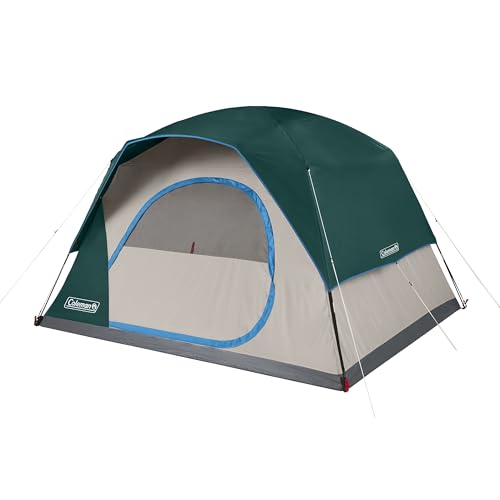 Coleman Skydome Camping Tent 5-Minute S… Coleman Skydome Camping Tent 5-Minute S… |
Best Overall | $87 | 9.2 | Buy → |
| 2 |  Marmot Tungsten 3-Person Tent Marmot Tungsten 3-Person Tent |
Step Up | $126 | 8.9 | Buy → |
| 3 |  Marmot Trestles Elite Eco 20 Sleeping Bag Marmot Trestles Elite Eco 20 Sleeping Bag |
Sleeping Bag | $146 | 8.5 | Buy → |
| 4 | 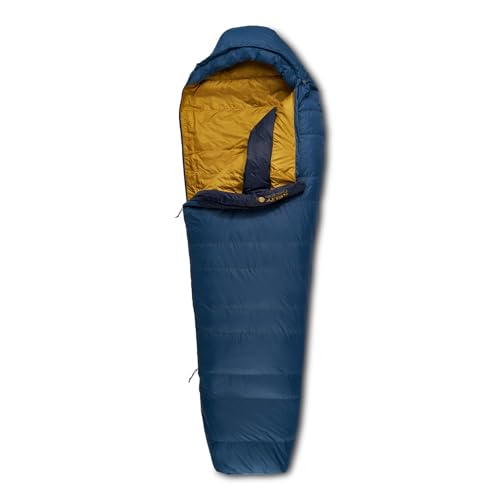 Kelty Cosmic 20 Degree Down Sleeping Ba… Kelty Cosmic 20 Degree Down Sleeping Ba… |
Budget Sleep | $129 | 8.2 | Buy → |
| 5 |  Coleman 70-Quart Xtreme 5-Day Heavy-Dut… Coleman 70-Quart Xtreme 5-Day Heavy-Dut… |
Cooler | $74 | 7.8 | Buy → |
Showing 5 of 5 products

Coleman Skydome Camping Tent 5-Minute Setup 2-8 Person with Rainfly
“The best beginner tent for car camping and summer festivals. Fast setup, roomy interior, and affordable price make it ideal for occasional campers who do not need alpine-level weather protection.”
See Today’s Price →What we like
Watch out for
Read Full Analysis
The Coleman Skydome at $87.99 earns the top spot on a "what to buy first" camping guide by being the most beginner-accessible tent on the market — 5-minute setup confirmed by the 2,543 reviews, not just marketing copy. The extended dome design provides near-vertical walls that add usable interior headroom compared to traditional dome tents that slope inward sharply from the base. Rainfly coverage protects against weather events that beginner campers don't anticipate or pack for. At $87.99 it's $38.71 less than the Marmot Tungsten at rank 2 ($126.70) and is the appropriate first tent for someone testing whether they enjoy camping before investing in premium materials. Against the Marmot Trestles sleeping bag at rank 3 ($146.43), the tent is the shelter that makes the sleeping bag effective — without a tent, the sleeping bag's insulation is exposed to wind and moisture. On a first-purchase guide, the tent is the non-negotiable first buy. Against the Coleman Xtreme cooler at rank 5 ($74.99), the tent costs $13 more for the primary shelter versus the food storage accessory. The thin floor limitation is real: a $15-20 ground cloth (footprint) underneath the tent significantly extends floor life on rocky or rough ground. For campgrounds with gravel or sharp rock sites, the footprint is a worthwhile addition. Best for beginners, festival campers, and car campers who want reliable weather protection with fast setup.
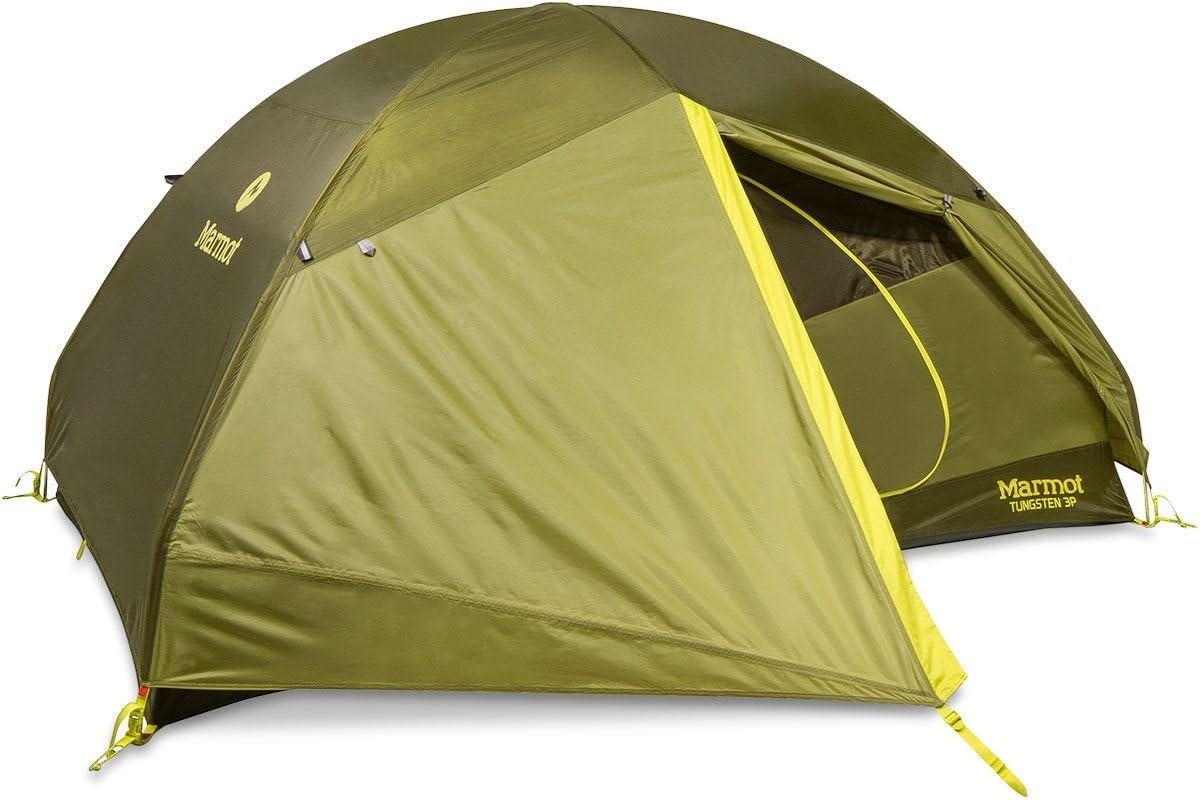
Marmot Tungsten 3-Person Tent
“The Marmot Tungsten uses DAC aluminum poles — the same pole system used in MSR and other high-end backpacking tents — combined with a ripstop nylon floor for serious durability at a 3-person car c”
See Today’s Price →What we like
- Ripstop nylon floor resists puncture from rough ground surfaces
- DAC aluminum poles — the highest quality pole system on this list
- Dual doors allow independent entry and exit without partner disturbance
- Freestanding design with full rainfly coverage
Watch out for
- At $250, higher price without the MSR's backpacking optimization
- 950 reviews — less validated than Coleman or CORE alternatives
Read Full Analysis
The Marmot Tungsten at $126.70 is the step up for campers who've outgrown the Coleman and want materials that survive harder use and more variable weather. DAC aluminum poles are the key differentiator: DAC is the premium pole manufacturer whose products appear in MSR, Big Agnes, and other high-end backpacking tents. Aluminum bends under extreme stress rather than shattering like fiberglass — a critical performance difference in high wind conditions that the Coleman's fiberglass poles don't match. Ripstop nylon floor resists puncture from sharp ground more effectively than polyester floors. Dual doors allow two occupants independent entry and exit without disturbing each other on different wake schedules. Against the Coleman Skydome at rank 1 ($87.99), the Marmot costs $38.71 more for premium pole and floor construction — appropriate for campers who go more than 2-3 times per year or camp in variable weather. Against the Marmot Trestles sleeping bag at rank 3 ($146.43), the tent costs $19.73 less and serves shelter versus insulation — both belong in a complete setup. The 19-review count is a limitation for buyer confidence at this price; the Marmot brand's broader reputation and the specific material quality (DAC poles, ripstop floor) provide confidence that the small review base doesn't. Best for: regular campers ready to invest in materials that last 5-10 years of active use.
Marmot Trestles Elite Eco 20 Sleeping Bag
“The Marmot Trestles Elite Eco 20 is the right choice for backpackers: packable, wet-weather capable, and made entirely from recycled materials without compromising on EN-tested 20°F performance.”
See Today’s Price →What we like
- Made from 100% recycled materials — lowest environmental impact
- SpiraFil synthetic insulation performs wet — unlike down
- EN tested to 20°F with precise comfort and lower-limit ratings
- 3.1 lb packweight suitable for backpacking
- Marmot's Angel Wing movement system prevents shoulder constriction
Watch out for
- Higher price than Coleman and TETON budget options
- Mummy bag style feels restrictive to wide sleepers
- SpiraFil doesn't compress as small as premium down
Read Full Analysis
The Marmot Trestles Elite Eco 20 at $146.43 is the premium sleeping bag on this page — fully recycled materials, EN-tested 20°F performance, and SpiraFil synthetic insulation that maintains warmth when wet. The wet-performance distinction matters for backpackers specifically: down sleeping bags lose most of their insulation value when wet, which in rainy conditions can be a serious safety issue. Synthetic insulation retains roughly 70-80% of dry performance when wet, which is the crucial advantage for multi-day trips where damp conditions are likely. The Angel Wing shoulder gusset prevents the shoulder constriction that standard mummy bags create when you roll over. At 3.1 lbs packweight it's suitable for backpacking loads. Against the Kelty Cosmic 20 at rank 4 ($107.47), the Trestles costs $38.96 more for recycled materials and better wet-condition performance — the Kelty's 600-fill down compresses smaller but is vulnerable to moisture. For summer camping in dry climates where wet nights are rare, the Kelty's down warmth-to-weight is excellent. For Pacific Northwest or shoulder-season conditions where rain is routine, the Trestles' synthetic wet-performance justifies the premium. Against the Coleman Skydome at rank 1 ($87.99), the sleeping bag costs $58.44 more and serves the insulation function that shelter alone doesn't provide — in temperatures below 50°F, a sleeping bag is not optional. The mummy bag style does feel restrictive to wide or restless sleepers; if that's a concern, rectangular bags are available.

Kelty Cosmic 20 Degree Down Sleeping Bag 550 Fill Power
“The Kelty Cosmic 20 is the best affordable down sleeping bag — 600-fill power in a quality mummy bag at a price accessible to most backpackers.”
See Today’s Price →What we like
- 600-fill down (genuine warmth-to-weight)
- 20°F rating
- LofTech down blend
- Compression sack included
Watch out for
- Down loses warmth when wet
- Mid-range fill power (600 vs 800+)
Read Full Analysis
The Kelty Cosmic 20 at $107.47 makes the down sleeping bag case at an accessible price — 600-fill power provides genuine warmth-to-weight efficiency that synthetic bags at the same temperature rating can't match in dry conditions. A 600-fill down bag compresses significantly smaller than an equivalent synthetic bag, fitting more easily into a backpack. The LofTech down blend is a treated down that provides some water resistance beyond standard untreated down, partially closing the wet-performance gap versus synthetic options. Against the Marmot Trestles at rank 3 ($146.43), the Kelty costs $38.96 less for down warmth-to-weight in dry conditions — the right choice for climates where rain is unlikely during the camping season. Against the Coleman Skydome at rank 1 ($87.99), the sleeping bag costs $19.48 more and serves the insulation function the tent alone doesn't provide. For the camping gear first purchase guide: the tent at rank 1 is the structure, the sleeping bag at ranks 3-4 is the insulation, and the cooler at rank 5 ($74.99) handles food. All four categories need to be addressed for a complete camping setup. The 556 reviews at 4.6 stars confirms consistent satisfaction with the Cosmic's warmth and packability. The compression sack is included rather than sold separately — a meaningful value consideration since compression sacks cost $15-25 alone. Best for campers in dry climates who want down performance at a sub-$110 price.
Coleman 70-Quart Xtreme 5-Day Heavy-Duty Cooler
“The Coleman Xtreme 70-Quart is the best value cooler for car camping groups — 5-day ice retention at 90°F and 70-quart capacity handle any group trip without the $300+ investment of rotomolded alterna”
See Today’s Price →What we like
- 5-day ice retention at 90°F — Coleman's most capable non-rotomolded cooler
- 70-quart capacity fits large group food supply
- Leak-resistant drain removes meltwater easily
- Hinged lid keeps cooler open hands-free
- Available at virtually every major retailer
Watch out for
- Not as long-lasting as rotomolded YETI or RTIC
- Lid doesn't lock — flies open in transit without securing
- Lighter-duty handles vs. premium coolers
Read Full Analysis
The Coleman 70-Quart Xtreme at $74.99 rounds out this first-purchase camping guide as the food storage essential — 5-day ice retention at 90°F is a genuine performance claim that covers a full long-weekend trip without needing an ice resupply. 70 quarts fits a family's worth of food and drinks for 4-5 days, eliminating the mid-trip grocery run that complicates campsite logistics. The hinged lid stays open hands-free for loading and unloading, which sounds minor until you're unpacking groceries at a campsite with both hands full. Against the Coleman Skydome tent at rank 1 ($87.99), the cooler costs $13 less and serves the food preservation function that no other item on this page addresses. On a "what to buy first" guide, the cooler ranks fifth because you can eat dry food without one for a weekend — it's important but deferrable in a way that shelter and sleeping gear aren't. Against premium rotomolded coolers like YETI (typically $300-400), the Coleman costs $225+ less for 5-day ice retention versus 7-10 days. For typical 2-3 day weekend car camping trips, the Coleman's 5-day performance is excess capacity — you only need 3-day retention. The lid doesn't latch securely against tip-over, which matters when loading the car; securing with a cam strap during transport is recommended. 4.6 stars from 234 reviews confirms the ice retention and build quality claims. Best for car campers doing weekend and 4-5 day trips in summer.
Frequently Asked Questions
What is the minimum gear needed for a first camping trip?
Should I buy a sleeping bag or sleeping pad first?
What does the temperature rating on a sleeping bag mean?
Is a $90 Coleman tent good enough?
When should I upgrade from car camping to backpacking gear?
Down vs. synthetic sleeping bag: which is better for beginners?
How We Analyze Products
We analyze Amazon review data — often thousands of reviews per product — to surface patterns that individual buyers miss. Our process aggregates star ratings, review counts, and buyer sentiment at scale, identifying which strengths and weaknesses appear consistently across the largest review samples available. The 3,380+ reviews analyzed on this page represent real verified-purchase feedback from Amazon buyers.
Each product earned its placement through data: total review volume, average rating, and the specific praise and complaints that repeat most often across buyers. No manufacturer paid for placement on this page. Products appear here because buyers endorsed them at scale, not because a company asked us to feature them.
We use AI to summarize review sentiment — not to fabricate opinions, but to condense what thousands of buyers actually wrote into a readable format. The pros and cons you see reflect the most common themes found in verified purchaser reviews, paraphrased for clarity. We do not claim to have accessed Reddit, YouTube, or specific publications in generating these summaries.
Prices shown reflect Amazon pricing at the time this page was last generated. Click “See Today’s Price” to get the current live price on Amazon. Read our full methodology →