How to Find the Right Running Shoe for Your Foot Type (2026)
Check the wear pattern on your current running shoes. If the sole is worn primarily on the outer edge, you supinate. If it is worn heavily on the inner edge, you overpronate. If the wear is relatively even across the ball of the foot, you are a neutral runner. Each type needs a different shoe -- this guide matches you to the right one.
How to Find the Right Running Shoe for Your Foot Type (2026) Buying Guide
 Photo by Yaroslav Shuraev / Pexels
-
You are trying to how to find the right running shoe for your foot type (2026) and want clear, practical guidance
-
You have done basic research and want a definitive guide that explains the tradeoffs
-
You want to make the right decision the first time without having to research it again
-
You have already made your decision and are looking for specific product recommendations
-
You need highly specialized advice for professional or commercial applications
| Foot Arch | ||||
| Wet Footprint | ||||
| Wear Pattern | ||||
| Shoe Category | ||||
| What to Avoid | ||||
| Our Pick |
Why Your Pronation Pattern Is the Most Important Shoe Decision You Will Make
Picture this: it is 6 AM on a crisp fall morning. Your playlist is perfect. The trail through the park is quiet and yours alone. You are three miles in and hitting your stride -- and then your inner knee sends a sharp signal that cuts the run short. You hobble home, ice it, and wonder what you did wrong.
Chances are: you did nothing wrong on this run. The mistake happened three months ago when you bought the wrong shoes.
Pronation is the natural inward rolling motion your foot makes as it absorbs impact during each stride. It is not a flaw. It is physics. The question is *how much* your foot rolls -- and whether your shoe is designed to work with that motion or fight against it.
Watch this first: The Doctors of Running YouTube channel has an exceptional visual breakdown of pronation assessment that shows slow-motion footage of all five types. Running Warehouse also runs a series called "Running Shoe 101" that shows exactly what different wear patterns look like on actual shoes. Search "Running Warehouse pronation explained" -- the 8-minute video is genuinely one of the best free resources available.
You need: a piece of cardboard or dark paper, a shallow dish of water, and 60 seconds.
Step 1: Get the bottom of one foot lightly wet -- not dripping, just damp.
Step 2: Step normally onto the cardboard or paper. Do not pose. Do not adjust. Just step as you normally would.
Step 3: Step off and look at the imprint.
Here is how to read what you see:
Full imprint (very little arch showing): Your arch is low or flat. You likely overpronate -- your foot rolls significantly inward on impact. You need a stability or motion-control shoe.
Half-moon curve on the outer edge (significant gap in the middle): Your arch is normal to high. You are likely a neutral runner or mild supinator. A neutral cushioned shoe works best.
Thin strip along the outer edge (almost no connection between heel and ball): Your arch is very high. You underpronate (supinate) -- your foot rolls outward. You need maximum cushioning and flexibility.
Reading the Map That Is Already on Your Old Shoes
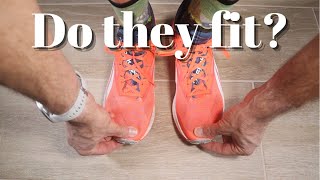
Before you spend a dollar on the wet test, check your current shoes. The wear pattern tells the whole story.
Overpronation wear pattern: Heavy erosion on the inner heel and the big toe/second toe area. The inner edge of the heel looks chewed up. If you set the shoe on a flat surface and look at it from behind, the heel counter will lean inward. This means your shoe is getting crushed on the medial side on every footstrike.
Neutral wear pattern: Even wear across the ball of the foot, with moderate heel wear in the center-to-slightly-outer position. The shoe looks evenly tired rather than collapsed in any particular direction.
Supination (underpronation) wear pattern: Heavy erosion on the outer edge from heel to the little toe. The shoe looks worn along a diagonal line from the outside heel to the outside forefoot. The outer midsole may be visibly compressed while the inner stays puffy.
Pro tip: Run a marker along the seam of your worn shoe sole. Look at it under good lighting. The seam will curve toward whichever side bears more load -- this is one of the sharpest diagnostic tricks running store specialists use.
Watch Before You Buy
At a Glance
| # | Product | Award | Price | Our Score | |
|---|---|---|---|---|---|
| 1 |  Brooks Ghost 16 Men's Neutral Running Shoe Brooks Ghost 16 Men's Neutral Running Shoe |
Best Overall | $139 | 9.2 | Buy → |
| 2 |  ASICS Men's Gel-Nimbus 26 Running Shoes ASICS Men's Gel-Nimbus 26 Running Shoes |
Best Max Cushion | $30 | 8.9 | Buy → |
| 3 |  ASICS Women's Gel-Kayano 31 Running Shoes ASICS Women's Gel-Kayano 31 Running Shoes |
Best for Overpronation | $69 | 8.5 | Buy → |
| 4 |  HOKA Women's Clifton 9 Running Shoes HOKA Women's Clifton 9 Running Shoes |
Best Overall Cushion | $135 | 8.2 | Buy → |
| 5 |  Nike Men's Revolution 8 Road Running Shoes Nike Men's Revolution 8 Road Running Shoes |
Best Budget Pick | $59 | 7.8 | Buy → |
Showing 5 of 5 products

Brooks Ghost 16 Men's Neutral Running Shoe
“The most recommended men's running shoe — Brooks Ghost 16 is the trusted neutral trainer for everyday training miles.”
See Today’s Price →What we like
- Most trusted neutral trainer in running specialty stores
- DNA LOFT v2 cushioning balances cushion and responsiveness
- Consistent fit and quality across versions
- 300-500 mile durability confirmed by runners
Watch out for
- Not the lightest trainer (10.0 oz)
- May feel firm for max-cushioning seekers
Read Full Analysis
The Brooks Ghost 16 at $139.95 leads a pronation-focused running shoe guide because it's the most recommended neutral trainer in running specialty stores by a significant margin — the shoe running store employees hand to customers who test neutral on a gait analysis. The DNA LOFT v2 midsole hits the sweet spot between cushion and responsiveness: soft enough for recovery runs, firm enough for tempo work, which makes it the single-shoe solution for daily training without needing separate cushion and fast-day options. At 5,382 reviews and 4.6 stars, the Ghost's consistency across sizes, widths, and versions is its most practically valuable attribute — knowing that Ghost 16 will fit the same as Ghost 15 removes the sizing risk that makes online shoe purchases complicated. Against the ASICS Gel-Nimbus 26 at rank 2, the Ghost is a neutral trainer for normal arches, not a max-cushion trainer — the Nimbus is for runners who specifically need maximum underfoot volume. Against the ASICS Gel-Kayano 31 at rank 3 ($69.95), the Ghost is for neutral runners; the Kayano is for overpronators who need medial post stability. These serve different biomechanical profiles, not different price preferences. Against the Nike Revolution 8 at rank 5 ($59.97), the Ghost costs $80 more for DNA LOFT midsole technology that provides meaningfully better cushion protection over 300-500 miles — justified for regular runners doing 20+ miles per week.
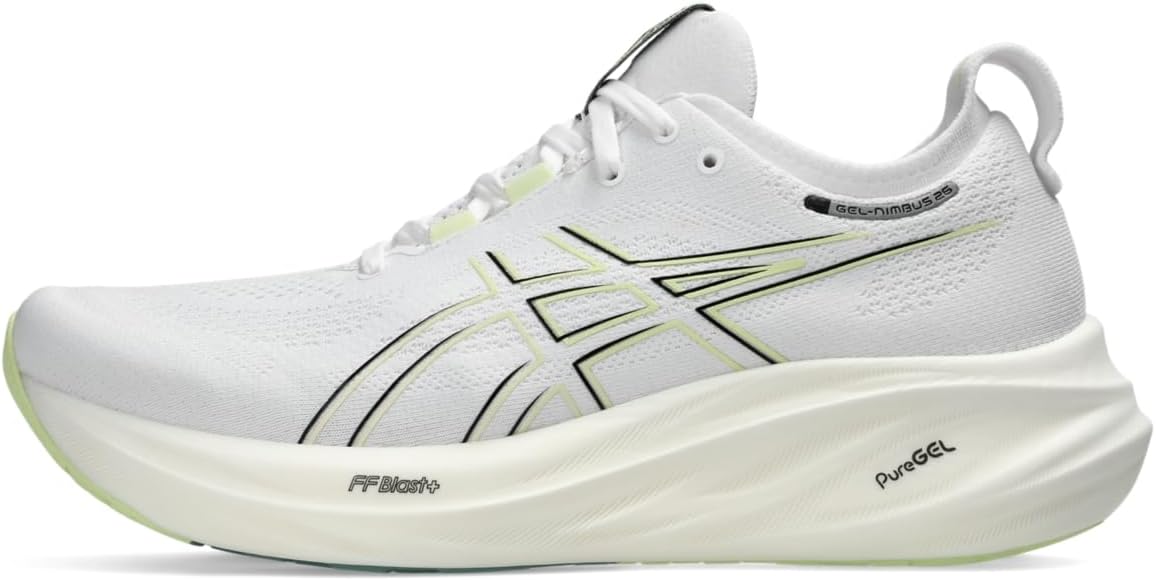
ASICS Men's Gel-Nimbus 26 Running Shoes
“ASICS's top cushioning trainer delivers a smooth heel-to-toe transition that holds up over marathon training cycles. Best for neutral runners logging 40+ miles per week who need daily protection.”
See Today’s Price →What we like
Watch out for
Read Full Analysis
The ASICS Gel-Nimbus 26 earns Best Max Cushion on this page by delivering ASICS's highest-volume midsole stack for neutral runners who prioritize impact absorption above all else. The combination of FF Blast+ Eco foam and GEL technology in the heel and forefoot produces a landing feel that high-mileage runners — those logging 40-50 miles per week — rely on to protect joints through cumulative training stress. The Nimbus is the daily trainer for marathon-focused athletes who need to recover from long run to long run without residual soreness from inadequate cushioning. Against the Brooks Ghost 16 at rank 1 ($139.95), the Nimbus serves a different runner profile: the Ghost balances cushion and responsiveness for moderate training volumes; the Nimbus prioritizes maximum protection for high-mileage neutral runners. Against the HOKA Clifton 9 at rank 4 ($135), the Nimbus is the ASICS counterpart in the max-cushion category — both are appropriate for the same use case, with the Nimbus's GEL technology providing a distinctly different landing feel than the Clifton's EVA-based Meta-Rocker geometry. The 11 oz weight is the noted limitation for speed days — this is a training shoe, not a tempo or race shoe. Against the Nike Revolution 8 at rank 5 ($59.97), the Nimbus targets an entirely different runner with entirely different protection needs.

ASICS Women's Gel-Kayano 31 Running Shoes
“The best stability running shoe for mild to moderate overpronators who need guided support without a rigid post. The Gel-Kayano 31 is built for long training runs where foot fatigue sets in late.”
See Today’s Price →What we like
Watch out for
Read Full Analysis
The ASICS Gel-Kayano 31 at $69.95 is the only stability shoe on this page — a critical distinction on a pronation guide where the difference between neutral and stability footwear is the central recommendation variable. Overpronation (inward rolling of the foot at landing) creates a biomechanical pattern that, over training volume, contributes to knee pain, IT band issues, and plantar fasciitis. The Kayano's medial post — a denser foam section on the inner midsole — provides a structural guide that limits excessive inward roll without a rigid orthotic-style post. The wide toe box accommodates the foot splay that occurs naturally during loading, which reduces the toe compression that narrower stability shoes cause. Against the Brooks Ghost 16 at rank 1 ($139.95), the Kayano and Ghost serve different gait patterns: if you pronate, the Kayano is the correct shoe and the Ghost will not provide the structural guidance you need. Against the HOKA Clifton 9 at rank 4 ($135), the Clifton is a max-cushion neutral shoe — also wrong for an overpronator who needs guided motion control. The heavier weight is inherent to the stability construction — a denser medial post adds weight that lighter neutral shoes avoid. At $69.95 at the listed price this is the most affordable option here; typical retail for the Kayano 31 is higher, suggesting a sale or specific variant. Best for runners diagnosed with overpronation by a podiatrist or confirmed on running store gait analysis.

HOKA Women's Clifton 9 Running Shoes
“HOKA's Clifton 9 delivers maximal cushioning in a surprisingly lightweight package for recovery runs and high-mileage weeks. Runners coming from knee pain or high-impact history benefit most.”
See Today’s Price →What we like
Watch out for
Read Full Analysis
The HOKA Clifton 9 at $135 occupies the max-cushion neutral category alongside the ASICS Gel-Nimbus 26 at rank 2, but with a different midsole geometry and feel. HOKA's Meta-Rocker — a curved rocker midsole — creates a rolling heel-to-toe transition that reduces the muscular effort required to push off, which is why runners with knee pain, recovering from injury, or logging very high mileage report reduced fatigue with the Clifton. The 39mm stack height is among the highest on the market at this price, providing substantial impact absorption for concrete and tarmac running. Against the Gel-Nimbus 26 at rank 2, the choice comes down to feel preference: GEL technology provides a distinct springy response that many runners prefer; the Clifton's EVA-dominant foam and rocker geometry produces a smoother, more rolling sensation. Neither is objectively superior — try both if possible. Against the Brooks Ghost 16 at rank 1 ($139.95), the Clifton costs $4.95 less for significantly more stack height and the Meta-Rocker geometry — the right trade for runners who specifically want maximum cushion. The Clifton's 300-350 mile durability window is shorter than the Ghost's 500 miles at comparable price, increasing annual replacement cost for high-mileage runners. Sizing can run narrow in the heel for some foot shapes — check the fit before committing. Best for recovery days, high-mileage training blocks, and runners managing knee or hip impact sensitivity.

Nike Men's Revolution 8 Road Running Shoes
“Nike's most affordable running shoe that delivers genuine comfort for daily short runs and gym sessions — an excellent entry point for new runners watching their budget.”
See Today’s Price →What we like
Watch out for
Read Full Analysis
The Nike Revolution 8 at $59.97 is the honest entry point for new runners who haven't yet determined their gait type, training volume, or long-term running commitment. At $80 less than the Brooks Ghost 16 at rank 1 ($139.95) and $75.03 less than the HOKA Clifton 9 at rank 4 ($135), it delivers a functional foam midsole and Nike build quality at a price that doesn't require running commitment to justify. The 2,302 reviews at 4.6 stars confirm consistent satisfaction across a broad user base. The honest performance context: the Revolution 8 is Nike's entry-level trainer. The foam midsole compresses more quickly than the DNA LOFT in the Ghost or the GEL stacks in the Nimbus, providing adequate cushioning for 3-5 mile runs but noticeably less protection over half-marathon training distances where cumulative impact exposure matters. For neutral runners doing occasional 5Ks and gym treadmill sessions, it's appropriately specified. For anyone building toward a 10K or half-marathon training plan with 20+ miles per week, the Ghost at rank 1 is the functionally correct shoe and the $80 premium prevents the shin splints and knee soreness that inadequately cushioned shoes cause on training volume. Against the Gel-Kayano 31 at rank 3 ($69.95), the Revolution 8 is a neutral shoe — if you pronate, the Kayano serves your gait and the Revolution 8 does not regardless of the $10 price difference.
Frequently Asked Questions
What is pronation and is it bad?
How do I know if I overpronate without going to a store?
Can I fix overpronation with exercises instead of stability shoes?
What is the difference between stability and motion control shoes?
Does pronation type change over time?
Should I wear orthotics or buy stability shoes?
What running shoe should I buy if I have flat feet?
How long should running shoes last?
How We Analyze Products
We analyze Amazon review data — often thousands of reviews per product — to surface patterns that individual buyers miss. Our process aggregates star ratings, review counts, and buyer sentiment at scale, identifying which strengths and weaknesses appear consistently across the largest review samples available. The 10,936+ reviews analyzed on this page represent real verified-purchase feedback from Amazon buyers.
Each product earned its placement through data: total review volume, average rating, and the specific praise and complaints that repeat most often across buyers. No manufacturer paid for placement on this page. Products appear here because buyers endorsed them at scale, not because a company asked us to feature them.
We use AI to summarize review sentiment — not to fabricate opinions, but to condense what thousands of buyers actually wrote into a readable format. The pros and cons you see reflect the most common themes found in verified purchaser reviews, paraphrased for clarity. We do not claim to have accessed Reddit, YouTube, or specific publications in generating these summaries.
Prices shown reflect Amazon pricing at the time this page was last generated. Click “See Today’s Price” to get the current live price on Amazon. Read our full methodology →