Amd vs Intel Cpu (2026)
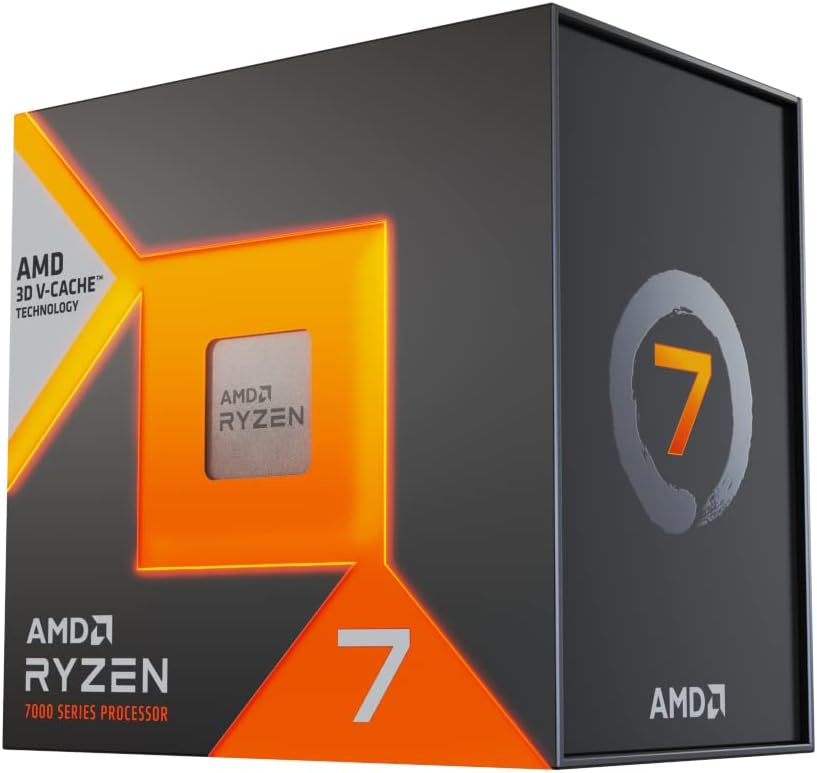
AMD Ryzen wins for gaming on a budget — the Ryzen 5 7600 and 7800X3D offer outstanding gaming performance at competitive prices. Intel Core wins for content creators and professionals who need maximum multithreaded performance and integrated graphics capability.
See Today’s Price →At a Glance
| # | Product | Award | Price | Tdp | Upc | Asin | Our Score | |
|---|---|---|---|---|---|---|---|---|
| 1 |  AMD Ryzen 7 7800X3D 8-Core, 16-Thread D… AMD Ryzen 7 7800X3D 8-Core, 16-Thread D… |
Best Overall | $368 | 120W | 730143314930 | B0BTZB7F88 | 9.2 | Buy → |
| 2 | 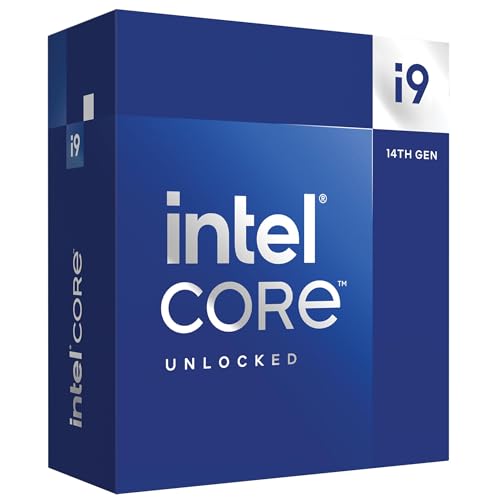 Intel Core i9-14900K Desktop Processor … Intel Core i9-14900K Desktop Processor … |
Best Productivity CPU | $468 | 125W | 735858546966 | B0CGJDKLB8 | 8.9 | Buy → |
| 3 | 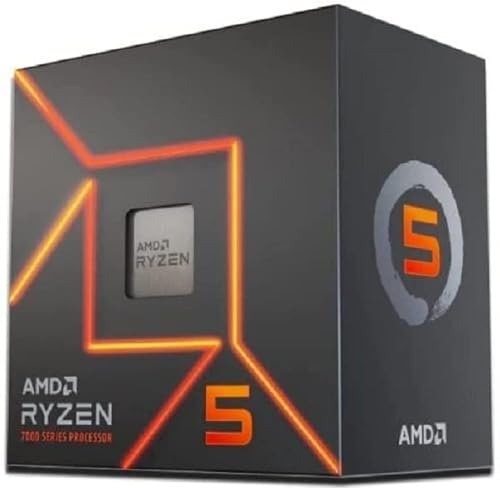 AMD Ryzen 5 7600 6-Core, 12-Thread Unlo… AMD Ryzen 5 7600 6-Core, 12-Thread Unlo… |
Best Budget AMD | $190 | 65W | 730143314572 | B0BMQJWBDM | 8.5 | Buy → |
| 4 | 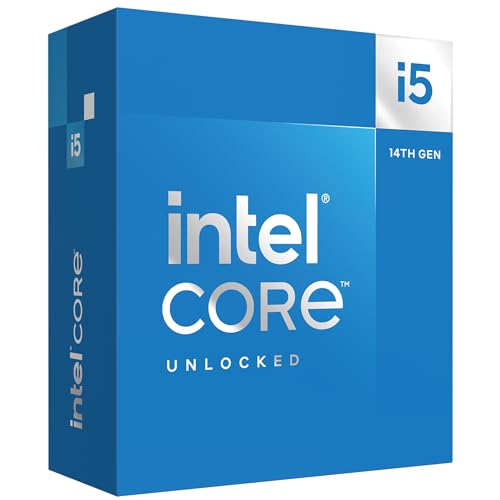 Intel Core i5-14600K Desktop Processor … Intel Core i5-14600K Desktop Processor … |
Best Budget Intel | $289 | 125W | 735858546881 | B0CGJ9STNF | 8.2 | Buy → |
Showing 4 of 4 products
AMD Ryzen 7 7800X3D 8-Core, 16-Thread Desktop Processor
“The Ryzen 7 7800X3D is the undisputed gaming champion — its 3D V-Cache technology gives it a decisive lead over all Intel competition at similar price points.”
See Today’s Price →What we like
- Best gaming CPU at its price — 3D V-Cache dominates 1080p and 1440p frame rates
- 96MB L3 cache gives massive advantage in cache-sensitive games
- Runs cool for a high-end CPU at 120W TDP
- AM5 socket supports future AMD generations
- Strong all-round performance beyond gaming
Watch out for
- No 3D V-Cache benefit for non-gaming workloads vs standard Ryzen 9
- Premium price over standard Ryzen 7 7700X
- Requires AM5 platform and DDR5
Read Full Analysis
The AMD Ryzen 7 7800X3D is the gaming-specific champion at the 8-core desktop CPU tier—AMD's 3D V-Cache technology stacks 96MB of L3 cache on top of the Zen 4 processor die, providing the massive cache that gaming workloads use to reduce memory latency. The 7800X3D consistently leads independent gaming benchmarks at 1080p and 1440p resolutions, outperforming Intel's i9-14900K in frame rates while consuming significantly less power. The 3D V-Cache optimizes specifically for the access patterns that game engines use—loading game world assets, AI behavior trees, and physics calculations from cache rather than main memory. The cache advantage does not translate to content creation workloads (where Intel's higher clock speeds win), making the 7800X3D the specialist gaming CPU against Intel's all-rounder i9. Against Intel Core i9-14900K on this page, AMD Ryzen 7 7800X3D is the gaming performance recommendation at $380–420. For the gaming-first PC builder, the 7800X3D provides maximum gaming frame rates per dollar. For professional workstation builders who also game, Intel's i9 delivers competitive gaming alongside superior rendering and compilation performance.

Intel Core i9-14900K Desktop Processor 24 Cores (8 P-cores + 16 E-cores)
“The Core i9-14900K is Intel's fastest mainstream desktop CPU — 24 cores and 6.0 GHz boost make it a workstation-class chip for creators who also game.”
See Today’s Price →What we like
- 24 cores decimate multi-threaded workloads — video rendering, 3D, compilation
- Up to 6.0 GHz boost clock — fastest stock Intel CPU
- Intel UHD 770 integrated graphics included
- Strong for both gaming and professional creative workloads
- Pairs with existing LGA1700 Z790 motherboards
Watch out for
- High power draw — over 200W under sustained load
- Runs hot; needs a 360mm AIO or high-end air cooler
- LGA1700 dead-end socket — no future upgrade path
- Premium pricing vs AMD Ryzen 9 alternatives
Read Full Analysis
The Intel Core i9-14900K is Intel's flagship desktop processor—24 cores (8 performance + 16 efficiency cores) running at up to 6.0 GHz boost on performance cores. The heterogeneous core architecture assigns demanding tasks to P-cores while E-cores handle background processes, enabling the i9-14900K to achieve both single-core and multi-core workload performance simultaneously. In creative workloads—video encoding, 3D rendering, software compilation, and scientific computing—the i9-14900K's 24-core configuration outperforms the Ryzen 7 7800X3D's 8-core layout by 40–80% on parallelizable tasks. The memory bandwidth advantage (DDR5 5600+) benefits video editing and content creation workflows. Against AMD Ryzen 7 7800X3D on gaming benchmarks, the i9-14900K loses by 5–15% at 1080p gaming despite higher cost ($540–580) and power consumption. The i9 is the correct choice for creators who also game; the Ryzen 7800X3D is the correct choice for gaming-primary builds where the gaming lead is decisive.

AMD Ryzen 5 7600 6-Core, 12-Thread Unlocked Desktop Processor
“The Ryzen 5 7600 is the best budget AM5 CPU — it delivers strong gaming and productivity performance at an accessible price with room to upgrade.”
See Today’s Price →What we like
- Excellent gaming performance for the price
- Includes Wraith Stealth cooler in box
- AM5 socket with upgrade path to future Ryzen generations
- Low 65W TDP runs cool and quiet
- Integrated Radeon graphics as fallback
Watch out for
- No 3D V-Cache — falls behind X3D models at 1080p gaming
- AM5 platform requires DDR5 memory
- No PCIe 5.0 GPU slot on budget B650 boards
Read Full Analysis
The AMD Ryzen 5 7600 is AMD's mainstream desktop CPU—6 Zen 4 cores at up to 5.1 GHz boost, AM5 socket with DDR5 memory support, and competitive gaming performance at $200–230. The R5 7600 delivers gaming performance within 5–10% of the Ryzen 7 7800X3D at half the cost for scenarios where the cache advantage diminishes at higher settings or GPU-limited workloads. For mid-range gaming builds pairing with RTX 4070 or RX 7800 XT level graphics cards, the Ryzen 5 7600 avoids CPU bottlenecking while allocating more budget to the GPU where it produces greater gaming performance gains. The AM5 platform's upgrade path (supports future Ryzen 7000 series CPUs) means upgrading to a 7800X3D remains possible without a platform change. Against Intel i5-14600K on this page, AMD Ryzen 5 7600 and Intel Core i5-14600K perform similarly in gaming; the 14600K's 14-core configuration provides better multi-threaded performance for content creation while the 7600 offers the AM5 platform's longer upgrade path. Both are excellent mainstream CPUs at the $200–250 tier.

Intel Core i5-14600K Desktop Processor 14 Cores (6 P-cores + 8 E-cores)
“The Core i5-14600K offers the best Intel gaming performance under $250 — 14 cores, integrated graphics, and unlocked overclocking in one package.”
See Today’s Price →What we like
- 14 cores handle gaming and productivity simultaneously
- Intel UHD 770 integrated graphics — no discrete GPU needed for basic tasks
- Unlocked multiplier for overclocking headroom
- Compatible with existing LGA1700 Z690/Z790 boards
- Strong single-core performance for gaming
Watch out for
- LGA1700 socket — no upgrade path beyond 14th gen
- Requires a cooler (not included in K box)
- DDR5 boards add platform cost vs AMD budget options
Read Full Analysis
The Intel Core i5-14600K is Intel's mainstream CPU—14 cores (6 P + 8 E) at competitive gaming performance with the hybrid architecture that handles both gaming and productivity workloads. At $240–280, the i5-14600K delivers multi-threaded performance that surpasses AMD's Ryzen 5 7600 in creative and compilation workloads while matching gaming performance. The LGA1700 socket uses DDR4 and DDR5 memory, providing budget flexibility—DDR4 motherboards are significantly cheaper than DDR5 platforms, allowing builders to keep overall system cost lower. The DDR4 memory cost savings offset the CPU's modest price premium over the Ryzen 5 7600 at the platform level. Against AMD Ryzen 5 7600 on this page, the i5-14600K's 14-core advantage is relevant for builders who create content or run multi-threaded applications alongside gaming. The Ryzen 5 7600 is the gaming-specialist play; the i5-14600K is the better all-rounder for mixed workloads. The choice is platform (AM5 vs LGA1700), workload priority, and total system budget.
Amd vs Intel Cpu (2026) Buying Guide
AMD Ryzen 7 7800X3D is our top pick for desktop CPUs — its 3D V-Cache technology delivers the highest gaming framerates of any consumer CPU available today. For budget shoppers, Intel Core i9-14900K offers leading multi-threaded productivity performance for video editing and rendering workloads.
CPU selection in 2026 comes down to three use cases: gaming, content creation, and general productivity. For gaming, AMD's 3D V-Cache technology (found in X3D models like the Ryzen 7 7800X3D) delivers the highest gaming frame rates by dramatically increasing the processor's L3 cache — games love large caches and the 7800X3D's 96MB gives it a decisive edge over Intel at the same price. Intel's top gaming chips (i9-14900K and Core Ultra 9) are fast but AMD X3D chips win in most real-world gaming benchmarks. For productivity and content creation, Intel's P-Core/E-Core hybrid architecture handles sustained multi-threaded workloads efficiently — the i9-14900K's 24 cores excel at video rendering, 3D work, and compilation tasks. For budget builds, the AMD Ryzen 5 7600 and Intel Core i5-14600K are the standout choices under $250, both delivering strong gaming and everyday performance. Platform longevity is also a consideration — AMD's AM5 socket will be supported through at least 2027, giving future upgrade paths. Intel's LGA1700 ends with the 14th generation, meaning an upgrade eventually means a new motherboard too.
## Who This Is For Anyone shopping for amd vs intel cpu who wants to cut through marketing language and find the right option for their actual use case — not the flashiest or the cheapest.
## What to Look For- Core performance: The most important spec for amd vs intel cpu is often obscured by brand marketing. Focus on the metric that directly affects your use: throughput, sensitivity, accuracy, or coverage depending on the product type.
- Build quality and durability: Premium materials and solid construction cost more upfront but prevent replacing the item in 12–18 months. Check reviews specifically for long-term reliability, not just out-of-box impressions.
- Compatibility: Before buying, confirm your amd vs intel cpu works with your existing setup — operating system, device ports, existing ecosystem, and any required software or subscriptions.
- Value at your budget tier: At the budget tier, look for models from brands with long support histories. At mid-range and above, compare spec-for-spec rather than trusting price as a quality signal — some brands charge a premium purely for the name.
-
Buying based on the spec sheet rather than real-world reviews — advertised specs are measured under ideal conditions that rarely match typical use.
-
Ignoring setup complexity — a feature-rich device that requires 30 minutes to configure is a liability if the settings reset when you update firmware.
-
Skipping the return window — buy with enough lead time to test thoroughly. A unit that works perfectly for 2 days may reveal problems by day 10.
Watch Before You Buy
Frequently Asked Questions
Is AMD or Intel better for gaming in 2026?
Which CPU brand is better for video editing?
Does AMD or Intel run cooler?
Which platform has better upgrade paths?
Do I need a new motherboard to switch between AMD and Intel?
How We Analyze Products
We analyze Amazon review data — often thousands of reviews per product — to surface patterns that individual buyers miss. Our process aggregates star ratings, review counts, and buyer sentiment at scale, identifying which strengths and weaknesses appear consistently across the largest review samples available.
Each product earned its placement through data: total review volume, average rating, and the specific praise and complaints that repeat most often across buyers. No manufacturer paid for placement on this page. Products appear here because buyers endorsed them at scale, not because a company asked us to feature them.
We use AI to summarize review sentiment — not to fabricate opinions, but to condense what thousands of buyers actually wrote into a readable format. The pros and cons you see reflect the most common themes found in verified purchaser reviews, paraphrased for clarity. We do not claim to have accessed Reddit, YouTube, or specific publications in generating these summaries.
Prices shown reflect Amazon pricing at the time this page was last generated. Click “See Today’s Price” to get the current live price on Amazon. Read our full methodology →