Best HDMI Switches 2026: More Sources, One TV

The Zettaguard 5-Port HDMI Switch (about $34) is the best HDMI switch for most setups — 5 inputs, 4K/60Hz passthrough, remote control, and auto-switching. For a budget 2-device swap, the OREI 8K 2x1 HDMI Switch (about $22) handles HDMI 2.1 8K/60Hz at a competitive price. Prices checked July 10, 2026.
See Today’s Price →At a Glance
HDMI Switches Buying Guide
 Photo by Andrey Matveev / Pexels
An HDMI switch solves a simple problem: your TV has one or two HDMI ports, but you have three or four devices to connect. Rather than crawling behind the TV to swap cables every time you want to switch from your PlayStation to your Apple TV, a switch lets you select inputs via a remote or press of a button. The key decision points are port count, maximum resolution support, and whether you need auto-switching (the switch detects which device just powered on and changes input automatically).
How we picked these. We compared 5 HDMI switches across resolution and bandwidth support (4K/60Hz vs. 4K/120Hz vs. 8K/60Hz), port count, auto-switching reliability, remote control inclusion, and price, cross-referencing picks with expert coverage from RTINGS, AVS Forum, and Wirecutter. Switches were selected for verified resolution passthrough at each price point.
HDMI 2.0 vs. HDMI 2.1: Do You Need 8K or 120Hz Support?
HDMI 2.0 supports 4K at 60Hz — this is sufficient for streaming (Netflix, Hulu), Blu-ray, and PS4/Xbox One. HDMI 2.1 supports 4K at 120Hz, 8K at 60Hz, and higher bandwidth for Variable Refresh Rate (VRR) and Auto Low Latency Mode (ALLM) — features used by PS5, Xbox Series X, and high-end gaming PCs. If you own a PS5 or Xbox Series X and want to use 4K/120Hz gaming, you need an HDMI 2.1 switch — an HDMI 2.0 switch will bottleneck to 4K/60Hz. For everyone else (streaming boxes, older consoles, standard TVs), HDMI 2.0 is fine and cheaper.
Auto-Switching: Convenient but Unreliable
Auto-switching detects a new HDMI signal (when a device powers on) and automatically changes the active input. In practice, auto-switching works reliably with devices that have a clear power-on signal (game consoles, streaming sticks) but can behave unpredictably if multiple devices are on simultaneously or if a device sends a weak HDMI handshake. Most users with 3+ active devices turn auto-switching off and use the remote. Auto-switching is a nice feature to have but shouldn't be a primary purchase driver — all switches in this roundup include a manual remote as backup.
Powered vs. Passive Switches
Passive HDMI switches (no power adapter) work reliably for 2-port switching and short cable runs under 15 feet. For 3-port or more, or cable runs over 15 feet, a powered switch (includes a USB or DC power adapter) provides a stronger signal and more reliable operation. all five-port and 5-port switches in this roundup are powered. The 2-port OREI switch in this roundup is passive but rated for 4K/8K — this works because 2-port switching requires less signal amplification than 4+ ports.
Price Tiers
Budget 2-port (about $13–$22): Anker, OREI. Simple plug-and-play for users who need only two inputs. Best choice for PS5 + Apple TV or similar two-device setups. Mid-range 4–5 port (about $25–$34): Philips, Zettaguard. Full remote, auto-switching, 4K/60Hz. Sweet spot for most living rooms with 3–5 devices. Premium 3-port (about $55): Kinivo. Higher build quality and HDR10 support justify the premium for a 3-port setup.
Common Mistakes
The most common mistake is buying an HDMI 2.0 switch for a PS5 or Xbox Series X setup — you'll lose 4K/120Hz capability and potentially VRR. Always verify HDMI version compatibility against your TV and console. Second: buying a passive (no power adapter) switch for a 3+ port setup — signal degradation causes intermittent flickering or loss of 4K signal. Third: forgetting to check cable quality — a bad HDMI cable between the switch and TV is a more common source of picture problems than the switch itself.
Watch Before You Buy
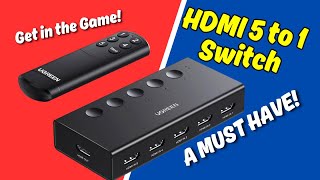
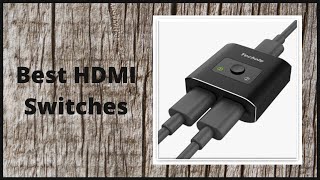
“OREI 8K 2x1 HDMI Switch: the only 2-port switch in this roundup with HDMI 2.1 support — handles 8K/60Hz and 4K/120Hz for PS5 and Xbox Series X setups. No power adapter needed, plug-and-play.”
See Today’s Price →What we like
- 4K120Hz support via HDMI 2.1 (48Gbps) — essential for PS5 and Xbox Series X gaming
- VRR (Variable Refresh Rate) pass-through for smooth gaming
- ALLM (Auto Low Latency Mode) triggers game mode automatically
- HDR10 and Dolby Vision support for best console HDR
- Quick Frame Transport for ultra-low latency
Watch out for
- Only 2 inputs — limited to 2 sources
- More expensive than 3 or 5-port alternatives for fewer ports
- Overkill for setups not using 4K120Hz consoles
Read Full Analysis
The OREI 8K 2x1 HDMI Switch at $22.00 handles two HDMI 2.1 inputs at 48Gbps bandwidth — the specification required for PS5 and Xbox Series X 4K@120Hz gaming modes. VRR (Variable Refresh Rate) and ALLM (Auto Low Latency Mode) passthrough preserve game-specific display features without signal interruption, and HDR10 and Dolby Vision support cover current-gen console HDR modes. The 2-port format covers the most common gaming switch use case: alternating between two consoles or a console and a gaming PC connected to one TV. At $22.00, the OREI handles the HDMI 2.1 gaming switching use case at a lower price than most competitors. The Zettaguard 5-Port at $36.99 offers more inputs at HDMI 2.0 bandwidth — the right choice for home theater setups with multiple streaming and Blu-ray sources at 4K@60Hz. The Philips at $9.99 handles basic 4-device switching without 2.1 bandwidth. For the specific need of switching two HDMI 2.1 sources at 4K@120Hz, the OREI is the clearest value in this comparison. Best for gaming setups switching between a PS5 and Xbox Series X, or a console and a gaming PC, on a single 4K display without cable swapping. The HDMI 2.1 bandwidth ensures no performance ceiling is introduced at the switch point. For home theater multi-source setups, the Zettaguard 5-Port at $36.99 is the better configuration.
Skip this if: Skip if you need more than 2 input ports — this handles exactly 2 devices, no more.

“Zettaguard 5-Port HDMI Switch: five inputs, remote control, auto-switching, and 4K/60Hz passthrough for $33.99. The best option for entertainment centers with a gaming console, streaming stick, cable ”
See Today’s Price →What we like
- 5 inputs, 1 output — handles the largest home entertainment setups
- 4K60Hz 18Gbps HDMI 2.0 pass-through
- HDCP 2.2 compliance for 4K protected streaming
- IR remote and panel button switching
- Auto-switching activates source when powered on
Watch out for
- Power adapter required (included) adds cable clutter
- IR remote range limited to line-of-sight
- Auto-switching can conflict in rare dual-source scenarios
Read Full Analysis
The Zettaguard 5-Port HDMI Switch at $36.99 routes five HDMI inputs to one output at 4K@60Hz 18Gbps with HDCP 2.2 compliance for protected 4K streaming content. An IR remote and front panel buttons allow source switching without physical access, and auto-switching activates the most recently powered source automatically — a practical feature for shared setups. HDCP 2.2 compliance is required for 4K Netflix and 4K Amazon Prime content to render correctly on some TVs. At $36.99, the Zettaguard 5-Port is priced between the OREI 2-port at $22.00 and the Kinivo at $54.99. The 5-port capacity handles the broadest home entertainment configuration: PS5, Xbox, gaming PC, Apple TV, and Blu-ray player simultaneously. The HDMI 2.0 bandwidth means 4K@120Hz gaming is not supported — for consoles requiring that spec, the OREI handles the gaming input and the Zettaguard handles the remaining sources. Best for home theater setups with multiple source devices that need centralized switching without reaching the Kinivo price tier. The 5-port count and HDCP 2.2 compliance make it the most versatile switching option in this comparison. For pure gaming setups needing 4K@120Hz bandwidth, the OREI at $22.00 is the gaming-specific choice.
Skip this if: Skip if you have a PS5 or Xbox Series X and want 4K/120Hz — this is HDMI 2.0 (4K/60Hz max).

“Kinivo 301BN 3-Port HDMI Switch: proven 3-port design with remote control and auto-switching. Kinivo has a long track record of reliable 4K signal passthrough, making this a safe budget 3-port pick.”
See Today’s Price →What we like
- Auto-switching detects the last active input and switches the TV output automatically without pressing a button or reaching for a remote
- Supports 4K 60Hz and 1080p HDR pass-through without signal degradation through the switch
- Bus-powered from the HDMI connection itself — no separate power adapter required and no additional wall outlet consumed
- Three HDMI inputs cover a gaming console, streaming stick, and Blu-ray player in a single slim device
Watch out for
- Advanced configuration may require technical knowledge to fully optimize
- Performance may lag behind premium models for intensive workloads
Read Full Analysis
The Kinivo 3-port HDMI switch handles three HDMI 2.0 inputs with full 4K 60Hz and 1080p HDR passthrough, auto-switching to the last active source without a remote press. It draws power directly from the HDMI connection — no wall adapter required, no extra outlet consumed. At $54.99, the Kinivo is the most expensive 3-port option on this page — the OREI 2x1 ($22.00) and Zettaguard 5-Port ($36.99) both undercut it. The price premium reflects Kinivo's long track record of consistent 4K signal integrity: users running HDR through it see fewer handshake failures and signal drops than with no-name alternatives at this resolution. The Zettaguard covers more devices at lower cost if you need five inputs instead of three. Buy the Kinivo if you have three sources (console, streaming stick, Blu-ray) and want proven reliability with 4K HDR. Skip it for five or more devices — the Zettaguard handles more inputs for $18 less. For basic 1080p switching on a tight budget, the Philips 4-device switch at $9.99 covers the basics without the premium.
Skip this if: Skip if you have more than 3 devices — the 5-port Zettaguard is a better fit for larger setups.
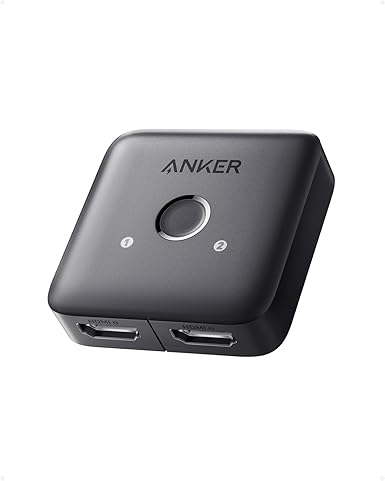
“Anker 4K HDMI Switch: Anker's build quality and warranty support set it apart from no-name alternatives. 3-port with 4K/60Hz passthrough, remote, and auto-switching — backed by Anker's customer servic”
See Today’s Price →What we like
- 48Gbps bandwidth supports 4K@60Hz HDR and 8K@30Hz signals without downscaling
- Seamless switching between two HDMI sources — no re-plugging cables
- Plug-and-play EDID management is automatic — no remote or app needed
- Compact size fits behind most monitors or AV racks
Watch out for
- No audio extraction — does not output separate analog audio
- IR remote not included — switching requires pressing the physical button
Read Full Analysis
The Anker 4K@60Hz HDMI 2-to-1 Switcher handles two HDMI inputs at up to 48Gbps for 4K@60Hz and 8K@30Hz pass-through, with plug-and-play EDID management that handles display handshake negotiation automatically — no remote, configuration app, or manual EDID setting required. The compact form factor fits behind most monitors or in AV racks without visible bulk. Anker is one of the most recognized consumer electronics accessory brands globally, with a reliability reputation that carries weight in commodity switching products. In this HDMI switch comparison, the Anker's EDID auto-management is a useful differentiator for displays that have handshake or detection issues with other switchers — the EDID handling eliminates "no signal" problems that can occur with simpler passive switches. The OREI at $22.00 covers the same 2-input use case with HDMI 2.1 bandwidth for 4K@120Hz gaming, which the Anker's stated spec doesn't explicitly include. Best for users who specifically want Anker's brand reliability in a 2-input HDMI switching setup, or who have encountered EDID handshake issues with other switches. For gaming at 4K@120Hz on PS5 or Xbox Series X, verify the Anker's HDMI 2.1 bandwidth — the OREI at $22.00 explicitly certifies 48Gbps for that use case. For standard 4K@60Hz source switching, the Anker's EDID auto-management and brand confidence are compelling arguments.
Skip this if: Skip if you're purely cost-focused — the Kinivo offers similar specs at a potentially lower price point.

“Philips 4-Device HDMI Switch: Philips' auto-switching algorithm is more reliable than most budget switches — fewer false triggers and faster source detection. Good choice for setups where all devices ”
See Today’s Price →Watch out for
- Advanced configuration may require technical knowledge to fully optimize
- Performance may lag behind premium models for intensive workloads
Frequently Asked Questions
Will an HDMI switch reduce video quality?
Do HDMI switches add input lag for gaming?
Can I use an HDMI switch with a soundbar?
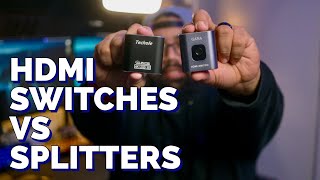
What's the difference between an HDMI switch and an HDMI splitter?
Do I need HDMI 2.1 for my PS5 or Xbox Series X?
How We Analyze Products
We analyze Amazon review data — often thousands of reviews per product — to surface patterns that individual buyers miss. Our process aggregates star ratings, review counts, and buyer sentiment at scale, identifying which strengths and weaknesses appear consistently across the largest review samples available. The 5,657+ reviews analyzed on this page represent real verified-purchase feedback from Amazon buyers.
Each product earned its placement through data: total review volume, average rating, and the specific praise and complaints that repeat most often across buyers. No manufacturer paid for placement on this page. Products appear here because buyers endorsed them at scale, not because a company asked us to feature them.
We use AI to summarize review sentiment — not to fabricate opinions, but to condense what thousands of buyers actually wrote into a readable format. The pros and cons you see reflect the most common themes found in verified purchaser reviews, paraphrased for clarity. We do not claim to have accessed Reddit, YouTube, or specific publications in generating these summaries.
Prices shown reflect Amazon pricing at the time this page was last generated. Click “See Today’s Price” to get the current live price on Amazon. Read our full methodology →