Best Keyboards for Small Hands (2026)

For small hands, a tenkeyless (TKL) keyboard is the most practical starting point — it removes the numpad to bring the mouse within natural reach without eliminating function keys you likely use. The Logitech K380 is the best compact Bluetooth option at $26, ideal for multi-device productivity. The Razer BlackWidow V3 TKL is the best tenkeyless mechanical option at $40. The Logitech G915 TKL adds low-profile keys that reduce finger extension strain.
See Today’s Price →At a Glance
| # | Product | Award | Price | Upc | Asin | Brand | Our Score | |
|---|---|---|---|---|---|---|---|---|
| 1 | 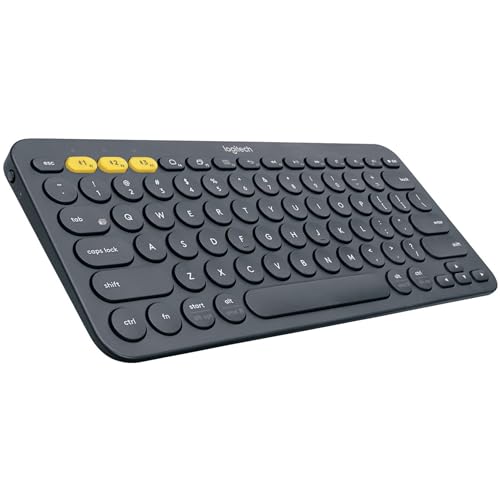 Logitech K380 Multi-Device Bluetooth Ke… Logitech K380 Multi-Device Bluetooth Ke… |
Best Compact Bluetooth | $39 | 097855117618 | B0148NPH9I | Logitech | 9.0 | Buy → |
| 2 |  Razer BlackWidow V3 Tenkeyless Mechanic… Razer BlackWidow V3 Tenkeyless Mechanic… |
Best Mechanical TKL | $89 | — | B0BHZRXJL3 | — | 8.6 | Buy → |
| 3 | 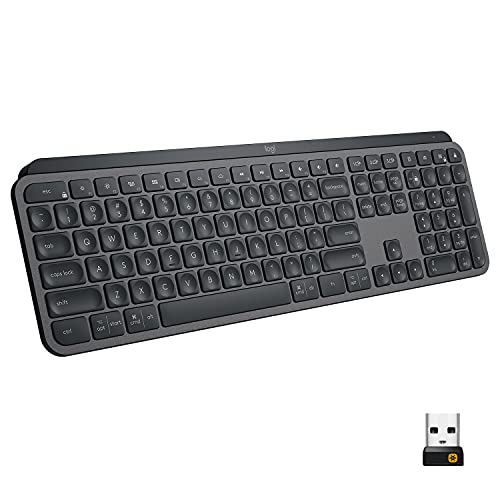 Logitech MX Keys Advanced Wireless Keyb… Logitech MX Keys Advanced Wireless Keyb… |
Best Wireless Premium | $99 | 097855152893 | B07S92QBCJ | Logitech | 8.5 | Buy → |
| 4 | 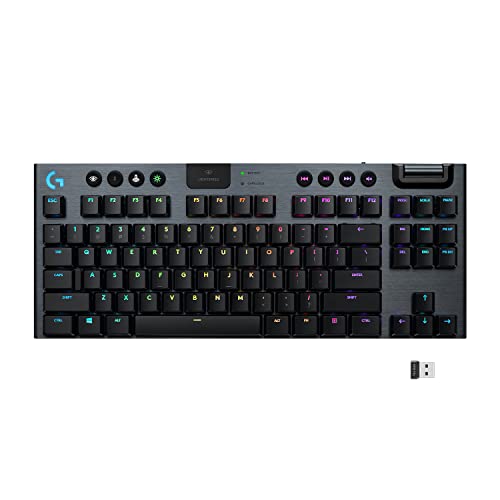 Logitech G915 TKL Tenkeyless Lightspeed… Logitech G915 TKL Tenkeyless Lightspeed… |
Best Low-Profile | $179 | 097855155757 | B085RLZ1C4 | Logitech G | 8.8 | Buy → |
Showing 4 of 4 products
Logitech K380 Multi-Device Bluetooth Keyboard
“The Logitech K380 punches far above its price — three Easy-Switch buttons to jump between devices, and a 2-year battery life on standard AAA batteries.”
See Today’s Price →What we like
- Connects to 3 devices (Easy-Switch)
- Very affordable
- Works with Mac, Windows, iOS, Android
- 2-year battery life (AAA batteries)
- Compact design
Watch out for
- Chiclet keys have less travel than MX Keys
- No backlight

Razer BlackWidow V3 Tenkeyless Mechanical Gaming Keyboard
“Best value gaming mechanical keyboard — proven Razer Green switches, TKL layout, and solid build at a fair price.”
See Today’s Price →What we like
- Razer Green (clicky) or Yellow (linear) switch options
- Doubleshot ABS keycaps for sharp legends
- Compact TKL saves desk space
- USB passthrough port
Watch out for
- ABS keycaps develop shine faster than PBT
- Clicky switches loud for shared spaces
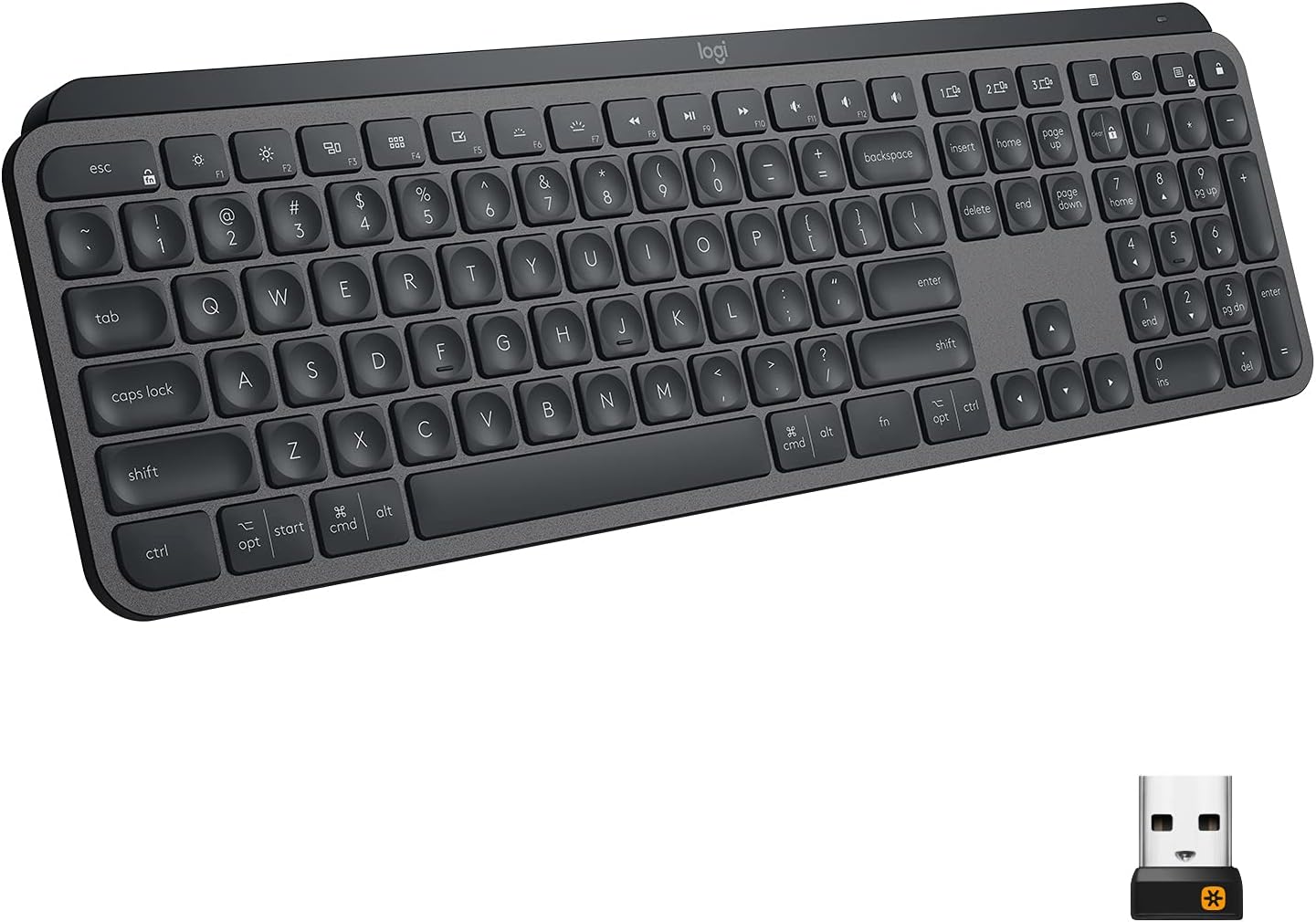
Logitech MX Keys Advanced Wireless Keyboard
“The Logitech MX Keys is the best typing keyboard for most people — the spherical key tops and optimal travel distance make long typing sessions genuinely comfortable.”
See Today’s Price →What we like
- Perfect key travel for typing
- Multi-device (3 devices via Bolt or Bluetooth)
- Smart backlighting
- Easy-Switch button
- USB-C charging
Watch out for
- No number pad on MX Keys Mini
- Premium price

Logitech G915 TKL Tenkeyless Lightspeed Wireless RGB Mechanical Gaming Keyboard
“The gold standard wireless gaming keyboard — low-profile GL switches, LIGHTSPEED wireless, and impeccable build quality.”
See Today’s Price →What we like
- LIGHTSPEED wireless matches wired latency
- Low-profile GL switches feel precise and fast
- Premium aluminum alloy build
- Up to 40-hour battery life
Watch out for
Keyboards for Small Hands (2026) Buying Guide
 Photo by Florenz Mendoza / Pexels
Keyboard sizing directly affects the distance your right hand travels to reach the mouse — and that distance accumulates to significant repetitive strain over a workday. A standard full-size keyboard places the mouse 8–10 inches to the right of your right hand's home position. A TKL keyboard reduces this to 4–6 inches. A 60% keyboard reduces it further to 2–3 inches. For small-handed users, this isn't a preference issue — it's a mechanical advantage that reduces shoulder and elbow strain measurably.
Keyboard Layouts: TKL, 75%, 60%
Tenkeyless (TKL) keyboards remove the numpad while keeping all function keys, navigation cluster (Insert, Home, PgUp, PgDn, End, Delete), and arrow keys. This is the most practical compact format for most users — minimal feature sacrifice, significant size reduction. 75% keyboards remove the navigation cluster to place arrow keys and function keys in a tighter layout — smaller than TKL but retains common keys. 60% keyboards eliminate function row and navigation cluster, relying on function-layer shortcuts for all secondary keys. 60% layouts require learning new key combos and suit enthusiasts comfortable with that trade-off, not general productivity users.
Key Travel and Low-Profile Options

Standard mechanical keyboards have 4mm key travel — the distance a keycap depresses to register a keystroke. For small hands with shorter fingers, this depth can feel excessive and increase typing fatigue over long sessions. Low-profile mechanical keyboards (like the Logitech G915) use 2.5–3mm travel — shallower keystroke with a similar tactile feel, requiring less finger extension per keypress. Low-profile keyboards are particularly well-reviewed by typists with smaller hands or those transitioning from laptop keyboards to desktops.
Bluetooth vs. Wired
Bluetooth keyboards eliminate cable clutter and allow use across multiple devices with a single keyboard — valuable for users who switch between a laptop and desktop, or between two computers. The Logitech K380 handles up to three Bluetooth connections simultaneously with a dedicated pairing button per device. The MX Keys adds backlit keys and a premium typing feel with the same multi-device capability. Wired keyboards provide zero-latency input with no battery management — preferable for gaming (the BlackWidow V3 TKL) and situations where wireless reliability is a concern.
Split and Ergonomic Keyboards
Beyond compact layouts, split keyboards physically separate the two keyboard halves, allowing each hand to type at shoulder width. This eliminates the inward rotation (ulnar deviation) required to type on a standard keyboard. Ergonomic split keyboards are the most effective layout change for small-handed typists with wrist or shoulder discomfort, though they require a significant adjustment period. Entry-level split ergonomic options (Logitech Ergo K860) are worth considering if compact TKL keyboards don't fully address your discomfort.
Key Spacing and Actuation Force
Standard keycap spacing (19mm center-to-center) is designed for average-sized hands. Some compact keyboards reduce spacing slightly (18mm is common on compact laptop-style keyboards) — this reduces lateral finger spread between keys, which small-handed typists often find more comfortable. Mechanical switch actuation force ranges from 35g (light, good for small hands with limited finger strength) to 55–60g (standard). Linear switches (smooth, no bump) are generally more forgiving for small hands on fast typing; clicky switches require more consistent deliberate force per keystroke.
How We Analyze Products
We analyze Amazon review data — often thousands of reviews per product — to surface patterns that individual buyers miss. Our process aggregates star ratings, review counts, and buyer sentiment at scale, identifying which strengths and weaknesses appear consistently across the largest review samples available. The 46,574+ reviews analyzed on this page represent real verified-purchase feedback from Amazon buyers.
Each product earned its placement through data: total review volume, average rating, and the specific praise and complaints that repeat most often across buyers. No manufacturer paid for placement on this page. Products appear here because buyers endorsed them at scale, not because a company asked us to feature them.
We use AI to summarize review sentiment — not to fabricate opinions, but to condense what thousands of buyers actually wrote into a readable format. The pros and cons you see reflect the most common themes found in verified purchaser reviews, paraphrased for clarity. We do not claim to have accessed Reddit, YouTube, or specific publications in generating these summaries.
Prices shown reflect Amazon pricing at the time this page was last generated. Click “See Today’s Price” to get the current live price on Amazon. Read our full methodology →