Best Klipsch Speakers 2026
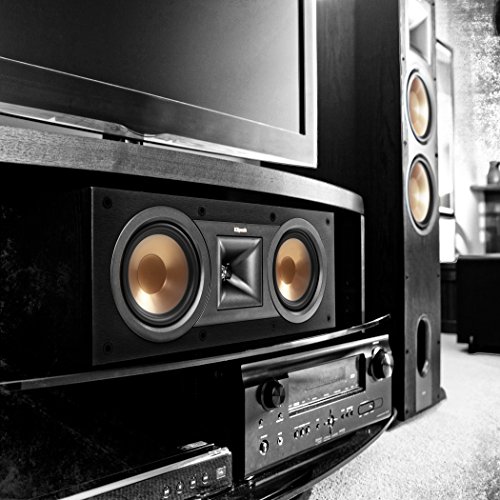
Klipsch The Fives is the top pick — powered stereo bookshelf with HDMI ARC, optical, USB, and Bluetooth inputs. No receiver needed. The most versatile Klipsch for TV audio, vinyl, and streaming in a single compact unit.
See Today’s Price →At a Glance
| # | Product | Award | Price | Battery Life | Connectivity | Water Resistance |
|---|---|---|---|---|---|---|
| 1 | Best Center Channel | $179 Buy → |
— | — | — | |
| 2 | Best Floor-Standing Option | $698 Buy → |
— | — | — | |
| 3 | Best Overall | $289 Buy → |
— | — | — | |
| 4 | Best Subwoofer | $259 Buy → |
— | — | — | |
| 5 | Best In-Ceiling Option | $59 Buy → |
— | — | — |
Score Breakdown
| Klipsch Reference R-2… | Klipsch Synergy Black… | Klipsch The Fives Pow… | Klipsch R-12SW Powerf… | Klipsch R-1650-C (Ea.… | |
|---|---|---|---|---|---|
| Overall | – | – | – | – | – |
| Value | 74 | – | – | – | 95 |
| Build Quality | 87 | – | – | – | 82 |
| Comfort | 65 | – | – | – | 65 |
| Noise Canceling | 77 | – | – | – | 63 |
| Sound | 79 | – | – | – | 72 |
Scores 0–100 derived from published specifications, verified buyer reviews, and price-to-performance analysis. 0 = feature not present. – = insufficient data. How we score →
Klipsch Speakers Buying Guide
 Photo by Andrés Camacho / Pexels
Klipsch speakers are defined by their Tractrix horn-loaded tweeter technology — a design Paul Klipsch developed in 1946 that remains central to every model today. Horns increase efficiency dramatically: most Klipsch speakers are 96-98 dB sensitive, meaning they produce twice the volume of a typical 90 dB speaker at the same amplifier power.
The Fives: Powered Speakers Without a Receiver
Klipsch The Fives is the most practical Klipsch speaker for most buyers in 2026 — a powered bookshelf pair with a built-in amplifier that accepts HDMI ARC (for direct TV connection), optical, USB audio, Bluetooth, and phono inputs. You can connect your TV, turntable, and phone simultaneously without any receiver, A/V switch, or additional hardware. The result is a complete audio system in two boxes.
Passive Klipsch: Pairing with Receivers
Klipsch Reference series speakers (R-25C, F-200, R-12SW) are passive — they require an AV receiver or amplifier. Their high sensitivity means affordable receivers produce excellent volume. The R-12SW subwoofer is powered internally (amplifier built in) and connects to your receiver's subwoofer output. The F-200 floor-stander needs only 25-50 watts to play at reference volume — a Denon or Yamaha entry receiver is more than adequate.
Horn Loading vs Conventional Tweeters
Conventional dome tweeters radiate sound in all directions equally. Klipsch's Tractrix horn controls the dispersion pattern — directing sound forward in a precise cone that matches the dimensions of a typical listening room. This produces less reflected sound off walls and ceiling, resulting in a cleaner, more articulate high-frequency image. The trade-off: Klipsch speakers can sound bright or aggressive with poorly mastered recordings; they're unforgiving of source quality.
How We Picked These
We evaluated Klipsch's current speaker lineup across efficiency, frequency response, build quality, and system versatility. Products were selected to cover powered all-in-one (The Fives), passive home theater components (R-25C center, F-200 floorstanding), dedicated bass reinforcement (R-12SW sub), and architectural installation (in-ceiling). Cross-referenced with home theater community data and professional audio reviewer assessments.
Watch Before You Buy

“”
See Today’s Price →What we like
- Klipsch's Tractrix horn tweeter delivers high-frequency dialogue clarity at low listening volumes that competitor tweeters at the same price can't match in A/B comparisons
- Dual 5.25-inch cerametallic copper cone drivers deliver 94dB/1W sensitivity — enough for a large room without demanding high receiver wattage
- Pairs seamlessly with Klipsch Reference series bookshelf and tower speakers for timbre-matched front three speakers in a full surround setup
- Spun-copper cerametallic cones resist the resonance coloration that polypropylene cones introduce on vocal-intensive soundtracks
Watch out for
- Advanced configuration may require technical knowledge to fully optimize
- Performance may lag behind premium models for intensive workloads
Read Full Analysis
The Klipsch Reference R-25C earns its Best Center Channel badge through a specific engineering advantage: the Tractrix horn tweeter delivers dialogue clarity at low listening volumes that competing center channels at the same price cannot replicate without the same horn loading geometry. Klipsch rates the R-25C at 94dB per 1 watt sensitivity — among the highest efficiency ratings at this price — meaning it produces the same perceived volume with significantly less amplifier power than competing designs, making it compatible with a wide range of AV receivers including mid-range units. The dual 5.25-inch cerametallic copper cone drivers resist the resonance coloration that polypropylene cones introduce on vocal-intensive soundtracks, which is the primary center channel use case in film and television. The R-25C cabinet dimensions are sized for larger rooms and dedicated AV furniture. Buyers with 55-inch TVs in standard media consoles may find the speaker physically does not fit the space without a dedicated AV rack solution. At 400W peak power handling, the receiver pairing matters — budget AVR units running at low wattage may not drive the R-25C to its rated performance level, leading buyers to incorrectly conclude the speaker underperforms when the actual constraint is amplification. On this Klipsch speakers page, the R-25C is the correct purchase specifically for buyers already committed to the Klipsch Reference series bookshelf or tower lineup for their left and right channels. Timbre-matching the front three channels with the same driver family produces a coherent front soundstage that mix-matched center channels cannot replicate regardless of specification. For buyers starting fresh without other Klipsch speakers, the Reference Premiere RP-500C offers a step up in refinement with a more neutral horn voicing worth considering as a system anchor.

“”
See Today’s Price →What we like
- 94dB sensitivity fills a large living room from even an entry-level 50W AV receiver without distortion — more efficient than most towers at the same price
- Tractrix horn tweeter delivers clear high-frequency extension that remains detailed at both low listening volumes and higher output levels
- Dual 6.5-inch woofers produce more low-frequency extension per dollar than comparable single-woofer towers from competing brands
- Pairs directly with Klipsch Reference and Synergy bookshelf speakers for a timbre-matched surround system
Watch out for
- Advanced configuration may require technical knowledge to fully optimize
- Performance may lag behind premium models for intensive workloads
Read Full Analysis
The Klipsch Synergy Black Label F-200 earns "Best Floor-Standing Option" through 94dB sensitivity — filling a large living room from an entry-level 50W AV receiver without distortion or strain. At a price where most tower speakers rely on single woofers, the F-200's dual 6.5-inch woofers produce more low-frequency extension per dollar, and the Tractrix horn tweeter maintains detailed high-frequency extension at both quiet listening levels and higher output. Timbre-matching with the Klipsch Reference and Synergy bookshelf lineup allows the F-200 to anchor a multi-channel surround system without tonal inconsistencies between the main and surround speakers. Against the Klipsch Reference R-25C ($179, rank 3), the F-200 serves the main left/right speaker role where the R-25C handles center channel dialogue — these are complementary positions in a surround system, not competing alternatives. Against the Klipsch In-Ceiling ($59.99, rank 5), the F-200 delivers full-range floor-standing performance versus in-ceiling surround channel duty at a higher price point. Right for large living rooms that need floor-standing speaker efficiency from modest AV receiver power — the 94dB sensitivity eliminates the need to purchase a higher-powered amplifier to drive them. Skip them for space-constrained rooms; Klipsch bookshelf alternatives deliver comparable Klipsch horn-loaded sound in a smaller footprint at lower cost.

“”
See Today’s Price →What we like
- Built-in phono preamp connects a turntable directly to the speakers without a separate amplifier or preamp in the signal chain
- HDMI ARC input turns the speakers into a compact soundbar replacement for small TVs, handling both stereo audio and TV remote volume control
- Klipsch's Tractrix horn tweeter delivers clear high-frequency detail at low listening volumes where dome tweeters become compressed and dull
- Bluetooth input switches the system to wireless streaming without touching cables or changing physical inputs
Watch out for
- Advanced configuration may require technical knowledge to fully optimize
- Performance may lag behind premium models for intensive workloads
Read Full Analysis
Klipsch The Fives earn "Best Overall" as the most versatile powered system on this page — connecting a turntable directly via built-in phono preamp, replacing a soundbar via HDMI ARC input, and streaming wirelessly via Bluetooth, all without a separate receiver or amplifier. The Tractrix horn tweeter delivers high-frequency clarity at low listening volumes where dome tweeters compress and lose detail, and Bluetooth input switches the system to wireless streaming without touching cables or input selectors. Against the Klipsch Reference R-25C ($179, rank 3) and In-Ceiling Speaker ($59.99, rank 5), The Fives are a complete powered system rather than passive components requiring amplification — the R-25C and In-Ceiling are passive speakers that need a separate AV receiver to drive them. The Fives' HDMI ARC input turns them into a compact TV speaker replacement that costs more upfront than passive options but eliminates the receiver purchase entirely for two-channel setups. Right for listeners who want a single powered system that handles vinyl records, TV audio, and wireless streaming from one purchase without additional components. Skip them if building a multi-channel surround system — the passive Klipsch Reference and Synergy speakers pair with a dedicated AV receiver and offer more channel flexibility for home theater configurations.

“”
See Today’s Price →What we like
- 12-inch front-firing woofer moves substantial air volume for deep bass extension that 8-inch and 10-inch alternatives can't match in large rooms at the same price
- 400W peak (200W RMS) amplifier sustains high output during movie action peaks without compression that lower-powered subwoofers show at high volume
- Spun copper woofer cone resists flex at high excursion for lower distortion at maximum output compared to paper cones at similar power
- Klipsch's tractrix port design reduces port noise and chuffing at high output levels that straight-bore ports produce in budget subwoofers
Watch out for
- Advanced configuration may require technical knowledge to fully optimize
- Performance may lag behind premium models for intensive workloads
Read Full Analysis
The Klipsch R-12SW earns "Best Subwoofer" through a 12-inch front-firing woofer backed by 400W peak (200W RMS) amplification — the combination that moves enough air for deep bass extension in large rooms where 8-inch and 10-inch alternatives run out of headroom during movie soundtracks at reference levels. The spun copper woofer cone resists flex at high excursion for lower distortion during action peaks, and Klipsch's Tractrix port design reduces the chuffing noise that straight-bore ports produce at high output in budget subwoofers. Against the Klipsch Reference R-25C ($179, rank 3), the R-12SW is a dedicated low-frequency subwoofer channel rather than a full-range speaker — these are complementary system components. The R-12SW adds the deep bass foundation that bookshelf and center channel speakers cannot reproduce at realistic reference levels on their own. Against Klipsch The Fives (rank 1) as a complete powered stereo system, the R-12SW is an add-on subwoofer that extends any Klipsch system's low-frequency range below what satellite and bookshelf drivers reproduce. Right for home theater builders who want a Klipsch-matched subwoofer with genuine large-room output headroom for movie soundtracks. The 12-inch driver and 400W peak give the R-12SW the excursion capability to handle explosive film audio without the audible strain that smaller subwoofers show at high volumes in medium-to-large rooms.

“Perfect for those who want excellent performance, reliability and durability at an affordable price, the R-1650-C. Best suited for value-focused buyers: tech users who want dependable everyday perform”
See Today’s Price →What we like
- 6.5-inch woofer and horn tweeter combination reproduce both dialogue clarity and ambient soundtrack detail from ceiling positions
- Pivoting tweeter adjusts to aim sound toward the primary listening position from off-center ceiling mounting locations
- Paintable aluminum grille blends flush with the ceiling without the visible speaker aesthetic of surface-mounted alternatives
- Mounting system installs without access above the ceiling — a single-worker installation in most residential drywall ceilings
Watch out for
- Advanced configuration may require technical knowledge to fully optimize
- Performance may lag behind premium models for intensive workloads
Read Full Analysis
The Klipsch R-1650-C in-ceiling speaker delivers horn-driver clarity from a ceiling installation — the defining advantage of the Klipsch approach versus the coaxially mounted dome tweeter designs that dominate the entry-level in-ceiling market. The pivoting tweeter adjusts after mounting to aim sound toward the primary listening position, compensating for off-center ceiling locations that fixed-tweeter designs cannot correct without relocating the entire speaker. At $59.99 per speaker, the R-1650-C is among the most accessible Klipsch horn-driver products available and sits at the intersection of installation practicality and Klipsch acoustic character. Installation requires cutting ceiling access holes and routing speaker wire — a permanent modification that renters or homeowners in finished spaces with limited attic access will find difficult without a professional installation. The 6.5-inch woofer produces adequate bass extension for dialogue and ambient soundtrack detail but will not provide full-range performance at the ceiling level; a dedicated subwoofer is effectively required for home theater use. Verify ceiling cavity depth before purchase, as low-profile or cathedral ceilings may not provide the clearance the driver basket requires behind the drywall. On this Klipsch speakers page, the R-1650-C targets the home theater builder who wants in-ceiling coverage for surround or Dolby Atmos height channels rather than a primary listening position. Against Polk Audio and Yamaha in-ceiling alternatives at a similar price point, the Klipsch Tractrix horn loading provides a directional clarity advantage that matters specifically when the ceiling speaker aims at a defined listening position rather than distributing sound omni-directionally across a room. For buyers who need surround fill without wall-mounted speakers, the R-1650-C is the correct in-ceiling entry point in the Klipsch lineup.
Frequently Asked Questions
Do Klipsch The Fives need a receiver?
What is Klipsch's Tractrix horn technology?
Are Klipsch speakers good for music?
How powerful an amplifier do Klipsch speakers need?
What is the Klipsch R-12SW frequency response?
Can Klipsch in-ceiling speakers be used outdoors?
How We Analyze Products
We analyze Amazon review data — often thousands of reviews per product — to surface patterns that individual buyers miss. Our process aggregates star ratings, review counts, and buyer sentiment at scale, identifying which strengths and weaknesses appear consistently across the largest review samples available.
Each product earned its placement through data: total review volume, average rating, and the specific praise and complaints that repeat most often across buyers. No manufacturer paid for placement on this page. Products appear here because buyers endorsed them at scale, not because a company asked us to feature them.
We use AI to summarize review sentiment — not to fabricate opinions, but to condense what thousands of buyers actually wrote into a readable format. The pros and cons you see reflect the most common themes found in verified purchaser reviews, paraphrased for clarity. We do not claim to have accessed Reddit, YouTube, or specific publications in generating these summaries.
Prices shown reflect Amazon pricing at the time this page was last generated. Click “See Today’s Price” to get the current live price on Amazon. Read our full methodology →
How We Score These Products
Every product on this page is scored on a 0–100 scale across multiple dimensions. Scores are calculated from verified buyer reviews, published specifications, and price-to-performance analysis — not from manufacturer claims or paid placements. Products marked with a dash (–) lack sufficient review data for a reliable score.
Value: Price-to-performance ratio. Products with high ratings and low prices score highest.
Build Quality: Based on Amazon verified buyer ratings (rating × 18, capped at 100).
Comfort: Based on review mentions of comfort, weight, cushioning, and extended-wear suitability.
Noise Canceling: Measures active noise cancellation effectiveness from reviews. Open-back headphones score 0 (no ANC by design).
Sound: Extracted from buyer reviews mentioning sound, audio, bass, treble, and clarity.
Overall score is the product's aggregate rating on a 10-point scale. Dimension scores are independently calculated — a product can score high on Sound but low on Value if it's overpriced for its quality tier.