Best Portable Chargers for iPhone (2026)
The Anker MagGo Power Bank 10K is the best portable charger for iPhone — it snaps on magnetically, charges wirelessly at 7.5W, and holds enough for 2–3 full charges. For USB-C cable charging, the Anker 737 (24,000mAh) tops the capacity charts.
See Today’s Price →At a Glance
| # | Product | Award | Price | Ports | Connection | Power Delivery | Our Score | |
|---|---|---|---|---|---|---|---|---|
| 1 |  MagGo Power Bank 10K MagSafe-Compatible MagGo Power Bank 10K MagSafe-Compatible |
Best Overall | $55 | — | — | — | 9.2 | Buy → |
| 2 | 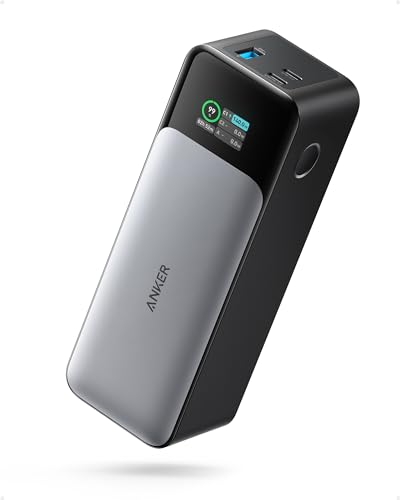 Anker 737 Power Bank 24000mAh 140W Anker 737 Power Bank 24000mAh 140W |
Best High Capacity | $109 | — | — | — | 9.0 | Buy → |
| 3 | MagSafe Battery Pack |
Best Native Experience | $99 | — | — | — | 8.5 | Buy → |
| 4 | PowerCore Slim 10000 PD |
Best Slim Design | $35 | — | — | — | 8.6 | Buy → |
| 5 | Omni 20+ (20,000mAh) |
Best Premium Brand | $69 | — | — | — | 8.3 | Buy → |
Showing 5 of 5 products
MagGo Power Bank 10K MagSafe-Compatible
“The best of both worlds — MagSafe convenience with enough capacity for 2.5 full iPhone charges. The built-in stand is a bonus for desk use.”
See Today’s Price →
Anker 737 Power Bank 24000mAh 140W
“Best power bank for travelers who carry a laptop. 140W output charges MacBook Pro at full speed, the smart display shows precise remaining charge, and 3 simultaneous ports handle every device in your ”
See Today’s Price →What we like
Watch out for
Read Full Analysis
The Anker 737 earns its place in an iPhone charger comparison as the option for travelers who carry more than a phone. At 24,000mAh and 140W output, it holds 6+ iPhone charges and charges a MacBook Pro at full rated speed from the same bank — eliminating a separate laptop charger entirely. The smart LED percentage display shows exact remaining charge rather than four-stage indicators, which matters when planning a long day away from outlets. Three simultaneous output ports handle iPhone, AirPods, and a second device without cable swapping. At $110, it makes financial sense for frequent long-haul travelers who need one bank to handle every device. For iPhone-only users, smaller Anker banks at a fraction of the price are a better fit.
MagSafe Battery Pack
“The cleanest MagSafe integration but poor value at $99 for under half a charge. Worth it only if you deeply value the seamless iOS UI.”
See Today’s Price →
PowerCore Slim 10000 PD
“The flattest 10,000mAh power bank that still charges iPhone quickly. Slips into a coat pocket without bulk.”
See Today’s Price →
Omni 20+ (20,000mAh)
“Mophie is the premium Apple-friendly alternative to Anker. More expensive but backed by a strong warranty and Apple Store availability.”
See Today’s Price →Portable Chargers for iPhone (2026) Buying Guide
 Photo by I'm Zion / Pexels
Not all portable chargers work equally well with iPhones. Between MagSafe compatibility, USB-C PD speeds, and Lightning legacy concerns, there are real differences that affect how fast and conveniently your phone charges on the go.
MagSafe vs. USB-C vs. Lightning
MagSafe-compatible battery packs snap to the back of iPhone 12 and later, charging wirelessly at up to 7.5W without a cable. It's slower than wired but incredibly convenient — snap it on, pocket both, and forget it. USB-C PD charging is faster (up to 27W on some power banks) and works with all current iPhones. Lightning is now legacy; if your charger only has a Lightning output, upgrade it.
Capacity: How Many Charges Do You Actually Need?

A standard iPhone 15 battery holds about 3,349mAh. A 10,000mAh power bank delivers roughly 2.5–3 full charges in real-world conditions (conversion losses reduce rated capacity by 20–30%). For day trips, 10,000mAh is plenty. For international travel or multi-day trips without outlets, go 20,000mAh+. Slim 5,000mAh packs are ideal for daily carry when you just need one emergency top-up.
Charge Speed: Pass-Through and Input Speed Matter Too
Most people focus on output speed, but input speed (how fast the power bank itself recharges) is equally important. Budget chargers can take 8–10 hours to recharge via USB-A. Look for USB-C PD input that recharges in 3 hours or less. Pass-through charging — charging the power bank and your iPhone simultaneously — is handy at hotel desks where outlets are scarce.
Size and Form Factor
Slim chargers under 0.5 inches thick slip into pockets easily but sacrifice capacity. For MagSafe packs, look at the footprint — it should roughly match your iPhone's size so it doesn't stick out awkwardly. For bag-carry power banks, weight matters more than slim profile; 10,000mAh packs typically weigh 6–8 oz.
The Bottom Line
MagSafe battery packs are the most iPhone-native experience but charge slower. For raw speed and capacity, USB-C PD packs win. Anker dominates the category for reliability and value — their warranty and quality control are consistently better than budget alternatives at the same price point.
Related Guides
Which Option Is Right for You?
- Anker MagGo Power Bank 10K MagSafe-Compatible ($56) — iPhone users who want MagSafe snap-on convenience Key advantage: MagSafe snap-on; 10,000mAh; foldable stand; USB-C PD pass-through
- Anker 737 Power Bank 24000mAh 140W ($110) — Travelers and campers needing high-capacity portable power bank Key advantage: 20,000 mAh; 65W PD USB-C; foldable AC outlet; charges laptops; 3-port simultaneous; 1.1 lbs
- Apple MagSafe Battery Pack ($99) — iPhone users who want native Apple integration Key advantage: Perfect MagSafe alignment; shows battery level in Control Center; slim
- Anker PowerCore Slim 10000 PD ($36) — Slim daily carry Key advantage: 0.5 inch thin; 10,000mAh; USB-C PD 18W output; pocket-friendly
- Mophie Omni 20+ (20,000mAh) ($70) — Apple ecosystem users who want brand reliability Key advantage: MFi certified; wireless charging pad built in; solid build quality
Key Features to Compare When Spending Over $100
Premium tech products justify higher prices through build quality, longevity, and ecosystem integration. Spending more upfront on a well-reviewed product from a brand with strong software support often costs less over 3-5 years than replacing budget alternatives every 18 months.
- Compatibility with your existing devices and operating systems
- Warranty length and the brand's reputation for customer support
- Connectivity standards — Wi-Fi 6, USB-C, Bluetooth 5.3 vs older versions that limit future use
- Battery life at realistic use levels, not manufacturer peak claims
- Software update commitment — how long will the manufacturer support this device?
Common Mistakes Buyers Make
- Ignoring total cost of ownership — accessories, cables, subscriptions add up fast
- Buying last year's flagship at full price when a current mid-range matches its performance
- Overlooking return window and restocking fees before purchasing from third-party sellers
Frequently Asked Questions
What capacity portable charger do I need for an iPhone trip?
What is MagSafe charging in a portable charger?
What wattage output do I need to fast-charge my phone?
Are airline rules about portable chargers important to know?
How long does a portable charger take to recharge itself?
How We Analyze Products
We analyze Amazon review data — often thousands of reviews per product — to surface patterns that individual buyers miss. Our process aggregates star ratings, review counts, and buyer sentiment at scale, identifying which strengths and weaknesses appear consistently across the largest review samples available. The 16,589+ reviews analyzed on this page represent real verified-purchase feedback from Amazon buyers.
Each product earned its placement through data: total review volume, average rating, and the specific praise and complaints that repeat most often across buyers. No manufacturer paid for placement on this page. Products appear here because buyers endorsed them at scale, not because a company asked us to feature them.
We use AI to summarize review sentiment — not to fabricate opinions, but to condense what thousands of buyers actually wrote into a readable format. The pros and cons you see reflect the most common themes found in verified purchaser reviews, paraphrased for clarity. We do not claim to have accessed Reddit, YouTube, or specific publications in generating these summaries.
Prices shown reflect Amazon pricing at the time this page was last generated. Click “See Today’s Price” to get the current live price on Amazon. Read our full methodology →