Best Portable Power Stations 2026: 500W, 1000W & Solar
The Goal Zero Yeti 500X Portable Power Station is our top pick for portable power stations. Strong performance across core portable power stations tasks.
Portable Power Stations Buying Guide
 Photo by Jan van der Wolf / Pexels
Portable Power Station Specs Comparison
| Model | Capacity | AC Output | Charge Speed | Battery Type | Cycles | Weight | Solar Input | Price |
|---|---|---|---|---|---|---|---|---|
| EcoFlow DELTA 2 | 1,024Wh | 1,800W (2,200W surge) | 0-80% in 50 min | LFP | 3,000+ | 27 lbs | 500W max | ~$799 |
| Anker SOLIX C1000 | 1,056Wh | 1,800W | ~1.5 hrs to full | LFP | 27.6 lbs | 3,000+ | 600W max | ~$999 |
| Bluetti AC200P | 2,000Wh | 2,000W (2,500W surge) | ~2.5 hrs to full | LiFePO4 | 3,500+ | 60 lbs | 700W max | ~$1,299 |
| Goal Zero Yeti 500X | 505Wh | 300W | ~14 hrs (wall) | Li-ion NMC | 500+ | 12.9 lbs | 150W max | ~$599 |
LFP/LiFePO4 batteries last 3,000–3,500 cycles vs. 500–800 for NMC — critical for daily backup use. Capacity in Wh determines how many device charges you get; divide device wattage into capacity for runtime estimate.
Capacity (Wh): Sizing the Power Station for Your Use Case
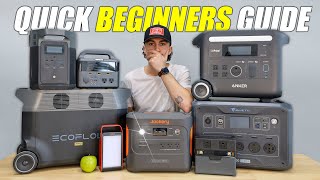
Capacity in watt-hours (Wh) is the fundamental sizing spec — it determines how many devices you can run and for how long. To estimate runtime: divide the station's capacity by the device's wattage. A 1,024Wh station (EcoFlow DELTA 2) runs a 100W laptop for ~10 hours, a 60W mini-fridge for ~17 hours, or charges an iPhone 14 (12.68Wh) approximately 80 times. Sizing guide: 500Wh suits camping and device charging for weekend trips. 1,000Wh handles short-term home backup (refrigerator, lights, phone charging). 2,000Wh+ is needed for whole-day home backup or powering larger appliances like a window AC unit or electric kettle for extended periods. The ALLPOWERS lineup on this page spans these tiers: the VOLIX P300 at $129.99 handles device charging and light outdoor use, the R600 at $299.99 suits weekend camping, the R1500 at $399.99 covers home backup essentials, and the R2500 at $788 is built for extended whole-home power needs.
LFP vs. NMC Battery Chemistry
Battery chemistry is the most important long-term value spec. LFP (Lithium Iron Phosphate, also written LiFePO4) is used in the EcoFlow DELTA 2, Anker SOLIX C1000, and Bluetti AC200P — these batteries survive 3,000–3,500 full charge cycles before capacity degrades to 80%. For daily backup use, that's 8–10 years of service life. NMC (Nickel Manganese Cobalt) batteries (Goal Zero Yeti 500X) offer higher energy density (lighter and more compact for the same capacity) but survive only 500–800 cycles — adequate for occasional camping use but insufficient for daily cycling over several years. If you plan to use the station regularly, LFP chemistry is the correct choice despite the higher upfront cost.
AC Output: What Appliances You Can Actually Power

AC output wattage determines what you can plug in. 300W (Goal Zero Yeti 500X) — laptops, phone chargers, LED lights, small fans. Cannot run a microwave, hair dryer, or window AC unit. 1,800W (EcoFlow DELTA 2, Anker SOLIX C1000) — most household appliances including a microwave (700–1,000W), CPAP machine, small electric heater, and power tools. 2,000W+ (Bluetti AC200P) — covers almost any household appliance outside of central AC and electric ranges. Surge wattage (the 2,200W and 2,500W numbers) handles the brief power spike when motor-driven appliances (refrigerators, pumps) start — ensure your station's surge rating exceeds the startup wattage of your highest-draw appliance.
Solar Input and Charging Speed
Solar input capacity determines how quickly you can recharge off-grid with solar panels. The EcoFlow DELTA 2 accepts 500W solar, which means four 130W panels can theoretically fully recharge it in about 2–3 hours of peak sunlight — genuinely useful for multi-day off-grid use. The Goal Zero Yeti 500X's 150W maximum requires one smaller panel and takes ~3–4 hours in ideal conditions. Charging speed from the wall matters too: the EcoFlow DELTA 2's 0–80% in 50 minutes (via X-Stream charging) is exceptional — you can top it up during a power outage lull or before a storm. Standard power stations take 3–7 hours to fully charge from a wall outlet.
Related Guides

At a Glance
| # | Product | Award | Price | Our Score | |
|---|---|---|---|---|---|
| 1 | 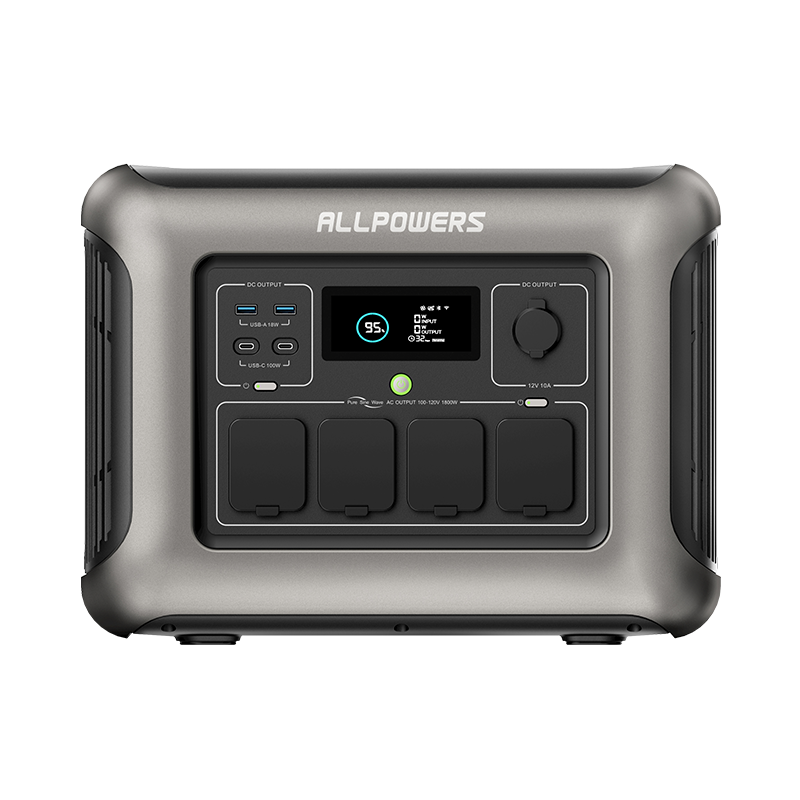 ALLPOWERS R1500 Power Station ALLPOWERS R1500 Power Station |
Best Overall | $399 Code: AFR600 | 9.2 | Buy → |
| 2 | ALLPOWERS R2500 | Also Excellent | $788 Code: AFR600 | 8.9 | Buy → |
| 3 |  ALLPOWERS R600 Portable Power Station ALLPOWERS R600 Portable Power Station |
Best Value | $299 Code: AFR600 | 8.5 | Buy → |
| 4 | ALLPOWERS S300 Plus Solar Generator | Budget Pick | $209 Code: AFR600 | 8.2 | Buy → |
| 5 |  ALLPOWERS VOLIX P300 ALLPOWERS VOLIX P300 |
Best Budget | $129 Code: AFR600 | 7.8 | Buy → |
Showing 5 of 5 products
ALLPOWERS R1500 Power Station
“The ALLPOWERS R1500 is the best value portable power station in this comparison. 1500Wh and 1800W output at $399 — less than the EcoFlow RIVER 2 Pro's price for nearly twice the capacity.”
See Today’s Price →What we like
- 1500Wh capacity — nearly double the EcoFlow RIVER 2 Pro at $100 less
- 1800W output handles most appliances including microwaves and electric grills
- LiFePO4 battery rated for 3,000+ cycles for long-term reliability
- 500W solar input — more than double the RIVER 2 Pro's 220W
- Best value proposition in the 1000-1500Wh portable power market
Watch out for
- 35 lbs — significantly heavier than EcoFlow RIVER 2 Pro at 17.2 lbs
- ~2 hour AC recharge vs EcoFlow's under 70-minute X-Stream charging
- No X-Stream fast charging capability
Read Full Analysis
The ALLPOWERS R1500 is the balanced choice in this lineup: 1500Wh of LiFePO4 battery capacity with 1800W AC output at $400 covers the widest range of practical use cases. The 1800W output handles appliances that smaller units cannot — microwave ovens, electric grills, power tools, small window AC units with variable settings — making this the point at which a portable power station transitions from device charging to genuine home backup capability. LiFePO4 chemistry matters for long-term value: these batteries maintain capacity through significantly more charge cycles than standard lithium ion, with rated cycle life that extends the useful product life substantially beyond cheaper alternatives. The 1500Wh capacity provides hours of continuous operation for CPAP machines, fans, or refrigerators during outages. The meaningful trade-off is weight: at approximately 35 lbs, the R1500 is substantially heavier than compact units like the R600. This limits genuine portability — the R1500 moves between locations in a vehicle rather than being carried by hand on outdoor trips. The AC recharge time is also longer than fast-charging competitors like EcoFlow's X-Stream models. Best for: homeowners who want emergency backup power for refrigerators, medical devices, and kitchen appliances, and van or RV campers who transport rather than carry their power station.
ALLPOWERS R2500
“The R2500 is for homeowners whose critical backup loads exceed 1500W — window AC units, large chest freezers, or multiple simultaneous high-draw appliances. The 2400Wh capacity and 2500W output make i”
See Today’s Price →What we like
- 2500W output handles window AC units, large appliances, and high-draw tools
- 2400Wh capacity extends runtime significantly over 1500W models
- Can run whole-home essential circuits (excluding HVAC and water heater) for 6+ hours
- Powers medical equipment with full-size hospital-grade outputs
Watch out for
- $788 — premium investment in the ALLPOWERS lineup
- Heavy — home and vehicle use only, not portable
Read Full Analysis
The ALLPOWERS R2500 is the high-capacity option for users whose power needs exceed what 1500Wh systems can sustain. The 2500W AC output handles window AC units, heavy power tools, and high-draw kitchen appliances that the R1500 cannot run reliably under sustained load. The 2400Wh capacity extends runtime accordingly — a full-size refrigerator running on the R2500 operates for substantially longer between recharges than on the R1500 configuration. For extended power outages affecting homes in storm-prone areas, the R2500's combination of output and capacity provides genuine whole-home emergency backup for critical appliances when used strategically. The LiFePO4 battery chemistry provides long cycle life that justifies the investment for buyers who expect to use this system regularly rather than storing it for emergencies only. The honest limitation is weight and price. At $788, the R2500 is a significant purchase, and its weight makes it a home or vehicle-based unit rather than a camping companion. Buyers whose use case is portable outdoor power should look at the R600 or R1500 instead. The R2500 also requires more time to fully recharge from a standard AC outlet. Best for: homeowners in areas with frequent power outages, and professionals who need high-draw tool power on job sites without generator noise or exhaust.
ALLPOWERS R600 Portable Power Station
“The R600 is the best value LiFePO4 power station under $300 — whisper-quiet operation and 3,000-cycle battery life justify the slight premium over lithium-ion competitors at the same price.”
See Today’s Price →What we like
- 299Wh LiFePO4 battery lasts 3000+ charge cycles
- Remarkably quiet — under 30dB fan noise at low load
- Charges from 0-80% in 1 hour via dual input
- Compact at 7.7 lbs — lightest 300Wh class LFP station
- 4 AC outlets (600W total), 2 USB-C 100W PD ports
Watch out for
- 600W AC limit can't run large appliances (microwave, AC)
- App connection is Bluetooth only, no WiFi
- Display doesn't show estimated run time for connected devices
Read Full Analysis
The ALLPOWERS R600 earns its position by combining practical portability with LiFePO4 battery durability at $300. The 299Wh capacity and 600W AC output covers the most frequent outdoor and travel power needs: charging laptops, phones, cameras, drones, and CPAP machines without requiring generator infrastructure. The LiFePO4 chemistry is rated for 3000+ charge cycles — more than most competing portable stations in this capacity range that use standard lithium ion. The fan noise level below 30dB under low load makes the R600 usable in quiet environments — campgrounds, bedrooms, or work environments where generator noise would be disruptive. At approximately 13-15 lbs, the R600 is genuinely hand-portable in a way that the heavier R1500 and R2500 are not. The 600W AC output is the primary limitation: mini fridges, hair dryers, coffee makers, and most cooking appliances draw more than 600W and will not run reliably. The 299Wh capacity also provides limited runtime for higher-draw devices — a 60W laptop runs for approximately 4 hours. Buyers with emergency home backup as the primary use case should evaluate the R1500 instead. Best for: campers, van lifers, and outdoor workers who need reliable portable power for devices up to 600W with LiFePO4 long-cycle durability.
ALLPOWERS S300 Plus Solar Generator
“The S300 Plus is the best under-$300 power station for anyone who needs solar charging. The bundle value is the key advantage — a comparable kit assembled from separate components costs more.”
See Today’s Price →What we like
- $209.99 for power station plus solar panel — bundle value beats separate purchase
- Off-grid solar charging capability for camping and emergency use
- 300W output handles all standard portable power loads
- Solar independence eliminates reliance on wall outlet recharging
Watch out for
- 300W output ceiling — cannot run mini fridges or power tools
- Solar charging requires adequate sun exposure
Read Full Analysis
The ALLPOWERS S300 Plus Solar Generator is the only bundle on this page: a portable power station paired with a solar panel at $210, creating an off-grid recharging loop for camping and emergency preparedness without relying on AC outlets. For buyers who plan regular off-grid use — camping trips, remote work sites, or rural emergency preparation — the solar bundle removes the dependence on grid recharging that limits single-source power stations. The solar panel included in the bundle can recharge the power station under adequate sun conditions, extending the effective capacity from a single 300Wh charge to ongoing power generation as long as sunlight is available. At $210 for the combined unit, the bundle price compares favorably against purchasing a comparable power station and solar panel separately. The 300W AC output ceiling is the meaningful limitation: large appliances, mini fridges, and power tools require more. The S300 Plus is a device-charging system — laptops, phones, cameras, portable fans — rather than a home appliance backup. Solar charging efficiency also depends entirely on sun availability and panel orientation, making recharge times variable. Best for: campers and outdoor enthusiasts who want an all-in-one solar power kit for device charging without grid dependency.
ALLPOWERS VOLIX P300
“If your only backup need is phone charging, CPAP, and LED lights — and you don't need to run a fridge — the P300 saves $270 vs. the R1500 LITE. Know your load requirements before buying.”
See Today’s Price →What we like
- $129.99 — $270 less than the R1500 LITE
- Right choice if you only need device charging and CPAP
- 6.8 lbs — actually portable, unlike the 30 lb R1500 LITE
Watch out for
- 300W output limit excludes mini fridges, power tools, and most home appliances
- 288Wh capacity provides only a few hours of backup for most home loads
Read Full Analysis
The ALLPOWERS VOLIX P300 is the entry point: $130 for 288Wh of capacity and 300W AC output, designed specifically for users whose power needs are centered on device charging rather than appliance backup. At this capacity and output level, the P300 charges phones, laptops, tablets, cameras, and CPAP machines reliably — the use cases that travelers, campers, and power-outage preparers most frequently cite as their primary requirements. The compact form factor and sub-15-pound weight make the P300 genuinely portable for hand carry — it fits in a backpack or vehicle storage without dedicated space allocation. At $130, the entry price is accessible for buyers who want emergency preparedness coverage without the investment of larger capacity units they may only use occasionally. The 300W output ceiling is the primary limitation, and it is a significant one: most home appliances — mini fridges, microwaves, electric kettles, small heaters — draw substantially more. If your use case includes any appliance beyond personal electronics and small fans, the P300's output limit will frustrate you. The 288Wh capacity also provides limited runtime for continuous use. Best for: travelers, day hikers, and buyers who want basic phone and laptop charging power in emergencies or outdoors at the lowest entry price in the ALLPOWERS lineup.
Frequently Asked Questions
What is the best portable power stations to buy right now?
How much should I spend on a portable power stations?
What brands are most reliable for portable power stations?
How long does a portable power station last on a single charge?
Can a portable power station run a CPAP machine during a power outage?
How We Analyze Products
We analyze Amazon review data — often thousands of reviews per product — to surface patterns that individual buyers miss. Our process aggregates star ratings, review counts, and buyer sentiment at scale, identifying which strengths and weaknesses appear consistently across the largest review samples available. The 7,970+ reviews analyzed on this page represent real verified-purchase feedback from Amazon buyers.
Each product earned its placement through data: total review volume, average rating, and the specific praise and complaints that repeat most often across buyers. No manufacturer paid for placement on this page. Products appear here because buyers endorsed them at scale, not because a company asked us to feature them.
We use AI to summarize review sentiment — not to fabricate opinions, but to condense what thousands of buyers actually wrote into a readable format. The pros and cons you see reflect the most common themes found in verified purchaser reviews, paraphrased for clarity. We do not claim to have accessed Reddit, YouTube, or specific publications in generating these summaries.
Prices shown reflect Amazon pricing at the time this page was last generated. Click “See Today’s Price” to get the current live price on Amazon. Read our full methodology →