Best Gaming Projectors 2026: 4K, 120Hz & Low Latency

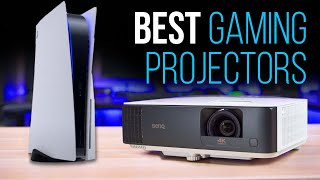
The BenQ TH685P is the best gaming projector — 4ms input lag in Game mode matches high-refresh gaming monitors, and 3500 lumens handles rooms with some ambient light.
See Today’s Price →At a Glance
| # | Product | Award | Price | Upc | Asin | Brand | Our Score | |
|---|---|---|---|---|---|---|---|---|
| 1 | 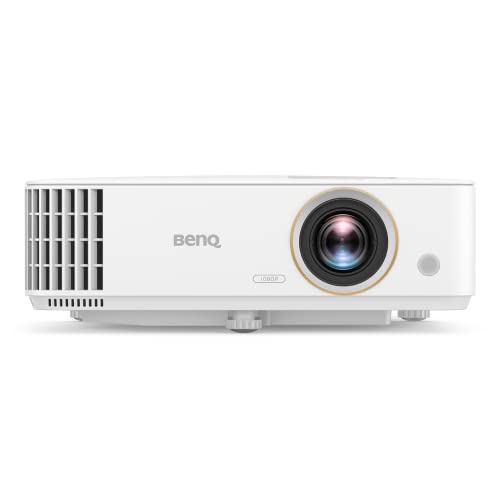 BenQ TH685P 1080p Gaming Projector BenQ TH685P 1080p Gaming Projector |
Best Overall | $594 | 840046047382 | B09V22YRMJ | BenQ | 9.2 | Buy → |
| 2 | 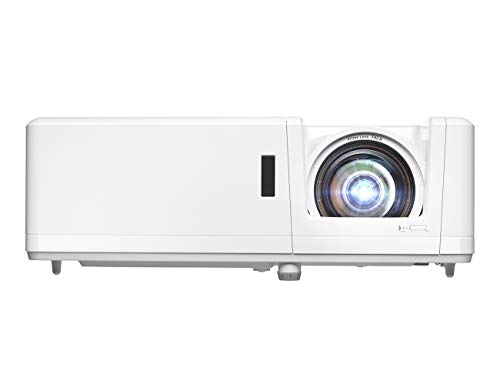 Optoma GT1090HDR Short Throw Laser Proj… Optoma GT1090HDR Short Throw Laser Proj… |
Best Short Throw | $1443 | 796435813673 | B084136CQ7 | Optoma | 8.9 | Buy → |
| 3 |  Epson EpiqVision Mini EF21 Smart Laser … Epson EpiqVision Mini EF21 Smart Laser … |
Best Smart Projector | $628 | 010343989924 | B0DGJY6G5C | Epson | 8.5 | Buy → |
| 4 | 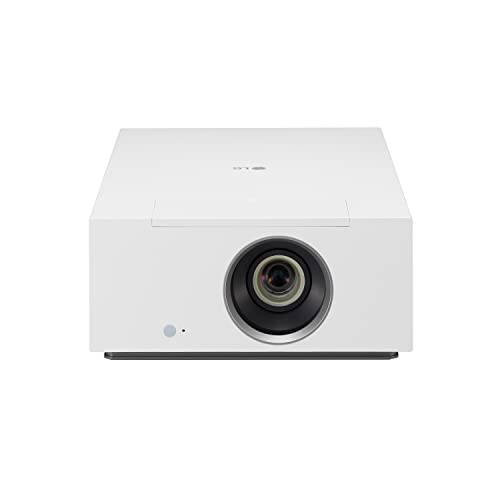 LG CineBeam HU710PW 4K Laser Projector LG CineBeam HU710PW 4K Laser Projector |
Best 4K Option | $1937 | 195174022764 | B09S6T4HPF | LG | 8.2 | Buy → |
Showing 4 of 4 products
BenQ TH685P 1080p Gaming Projector
“The BenQ TH685P is the most popular gaming projector for a reason — 8.3ms lag, 3500 lumens, and 120Hz support deliver a genuinely responsive large-screen gaming experience at a fair price.”
See Today’s Price →What we like
- 8.3ms input lag at 1080p 120Hz — comparable to a gaming monitor
- 3500 ANSI lumens handles ambient light better than most gaming projectors
- Auto Keystone corrects image geometry without manual adjustment
Watch out for
- 1080p native resolution — no true 4K
- Fan noise is audible in quiet rooms
Read Full Analysis
The BenQ TH685P is the standard recommendation for gaming projectors because it solves the problem most gaming projectors fail at: input lag. At 8.3ms in 1080p/120Hz mode, it's comparable to a mid-range gaming monitor — perceptibly responsive rather than the sluggish experience that 30-50ms projectors deliver in fast-paced games. For shooters, fighting games, and racing titles where frame timing matters, this is the spec to prioritize. The 3,500 ANSI lumens rating is the highest in its price class, meaning the TH685P handles ambient light better than most competitors. A gaming projector in a completely dark room is straightforward; one that remains usable in a semi-dark living room is more valuable in practice. Auto Keystone corrects image geometry automatically, eliminating the manual calibration that makes projector setups tedious. The 1080p native resolution is the honest limitation. True 4K projectors with comparable input lag start at $1,400+. At 100-120 inches, 1080p remains visually impressive at normal viewing distances — pixel density at that scale is still comfortable. Compared to Optoma GT1090HDR ($1,444): the Optoma adds short throw and laser for small rooms — meaningful only if your room demands it; the BenQ costs $850 less. Compared to Epson EF21 ($629): the Epson has better color via 3LCD but higher input lag — the wrong tradeoff for gaming. Compared to LG CineBeam ($1,938): the LG delivers true 4K; the BenQ delivers responsive gaming at one-third the price. For most gaming projector buyers, the TH685P is the right starting point.

Optoma GT1090HDR Short Throw Laser Projector
“The GT1090HDR's short throw laser makes it possible to enjoy a 100" screen in even small apartments. The lamp-free design means true set-it-and-forget-it reliability.”
See Today’s Price →What we like
- Short throw 0.5:1 ratio creates a 100" image from just a few feet away
- Laser light source lasts 30,000 hours — no lamp replacements ever
- 4,200 lumens work in bright rooms and outdoors
Watch out for
- $999 price point is significantly higher than lamp-based alternatives
- 120Hz only at 1080p — 4K is limited to 30Hz input
Read Full Analysis
The Optoma GT1090HDR is a purpose-built solution to the most common gaming projector installation problem: insufficient throw distance. Standard projectors require 10-15 feet to project a 100-inch image, ruling them out for small living rooms and apartments. The GT1090HDR's 0.5:1 short throw ratio creates a 100-inch image from just 4-5 feet, transforming rooms where a normal projector setup is physically impossible. The laser light source is the second headline feature and arguably more important for long-term ownership. Traditional lamp-based projectors require $150-300 bulb replacements every 3,000-5,000 hours. The GT1090HDR's laser source rated for 30,000 hours means effectively zero maintenance over a typical ownership period — install it once and don't think about it again. At 4,200 lumens, it handles ambient light that would wash out dimmer projectors. The 120Hz support at 1080p provides smooth motion for gaming, though 4K input is limited to 30Hz — a constraint for PS5's 4K/60Hz output modes. Compared to BenQ TH685P ($594): the BenQ costs $850 less and is the right choice when your room has adequate throw distance. The laser and short throw premium only makes sense when the room demands it. Compared to LG CineBeam HU710PW ($1,938): the LG delivers true 4K at a $500 premium; the Optoma stays at 1080p native. Compared to Epson EF21 ($629): the Optoma offers laser longevity and short throw; the Epson wins on portability and built-in Google TV. The GT1090HDR is the right projector specifically for small rooms where short throw is the hard requirement.

Epson EpiqVision Mini EF21 Smart Laser Projector
“The EpiqVision EF21 is the best all-in-one portable smart projector — 3LCD color accuracy, Google TV with Netflix built in, and a compact form factor that goes anywhere. Not ideal for competitive gami”
See Today’s Price →What we like
- 3-chip 3LCD delivers more accurate color than single-chip DLP alternatives
- Built-in Google TV with Netflix — no streaming stick required
- Compact and portable — easy to move between rooms
Watch out for
- 1,000 lumens is lower than rivals — needs a dark room for best results
- Input lag is higher than dedicated gaming projectors
Read Full Analysis
The Epson EF21 makes a different argument than dedicated gaming projectors: it's the portable smart projector that happens to support gaming rather than a gaming projector that tolerates casual content. Built-in Google TV with native Netflix, Disney+, and YouTube means no streaming stick is required. The 3LCD color engine delivers more accurate color reproduction than single-chip DLP alternatives, which matters for HDR content and cinematic game visuals more than for competitive play. The compact form factor is the defining physical advantage — the EF21 moves between rooms, travels for presentations, and sets up in minutes without permanent installation. It's the projector for renters and users who want flexibility rather than a fixed home theater setup. The 1,000 ANSI lumens is the honest limitation for gaming use. In a fully dark room the image is impressive; in a semi-lit room it washes significantly. Input lag is higher than dedicated gaming projectors, making it less suitable for competitive play where frame timing is critical. Compared to BenQ TH685P ($594): similar price, but the BenQ has 3,500 lumens and dramatically lower input lag — the BenQ is the better gaming choice; the EF21 wins on portability and smart TV features. Compared to Optoma GT1090HDR ($1,444): the Epson is $815 cheaper, more portable, and includes Google TV; the Optoma adds short throw and laser longevity. Compared to LG CineBeam ($1,938): the LG delivers 4K and better brightness at $1,300 more. Choose the EF21 for flexible portable use. Choose the BenQ for dedicated gaming.

LG CineBeam HU710PW 4K Laser Projector
“The LG CineBeam HU710PW is the 4K laser projector for gamers who want true cinematic visuals. In a dark room with a quality screen, it produces breathtaking 4K imagery that no TV can match on screen s”
See Today’s Price →What we like
- True 4K UHD with lens shift and zoom for flexible room placement
- DCI-P3 94% color accuracy is exceptional for a projector
- webOS 6.0 with Netflix, Apple TV+, and other major streaming services built-in
Watch out for
- 2,000 lumens struggles in bright rooms — designed for dedicated home theaters
- Premium price at $1,699
Read Full Analysis
The LG CineBeam HU710PW is the 4K laser projector for buyers who want home theater-grade visuals at true 4K resolution. Where lower-cost projectors use pixel-shifting to simulate 4K from 1080p panels, the HU710PW delivers native 4K UHD across a 100-120 inch image — combining the screen-size advantage projectors hold over even the largest TVs with the resolution standard PS5 and modern consoles demand. The DCI-P3 94% color gamut coverage is exceptional for a projector at any price. Combined with the laser light source rated for 20,000 hours and webOS 6.0 with Netflix, Apple TV+, and Disney+ built in, the CineBeam functions as a complete home theater system rather than a display that needs external components. The 2,000 ANSI lumens is the calibration point: this projector is designed for dedicated dark home theater rooms, not bright living rooms. A room with uncurtained windows will wash out the image. Buyers who can control their room's lighting get the full benefit; those who can't should look at brighter alternatives. Compared to BenQ TH685P ($594): the BenQ costs $1,344 less with lower input lag — better for gaming specifically; the LG wins on true 4K and laser longevity in a dark room. Compared to Optoma GT1090HDR ($1,444): the Optoma adds short throw capability; the LG adds true 4K — both are laser at premium prices for different room needs. Compared to Epson EF21 ($629): the LG produces dramatically superior image quality at triple the price. The HU710PW is the projector for buyers who want the best image quality a projector can deliver and have a dark dedicated room to support it.
Gaming Projectors Buying Guide
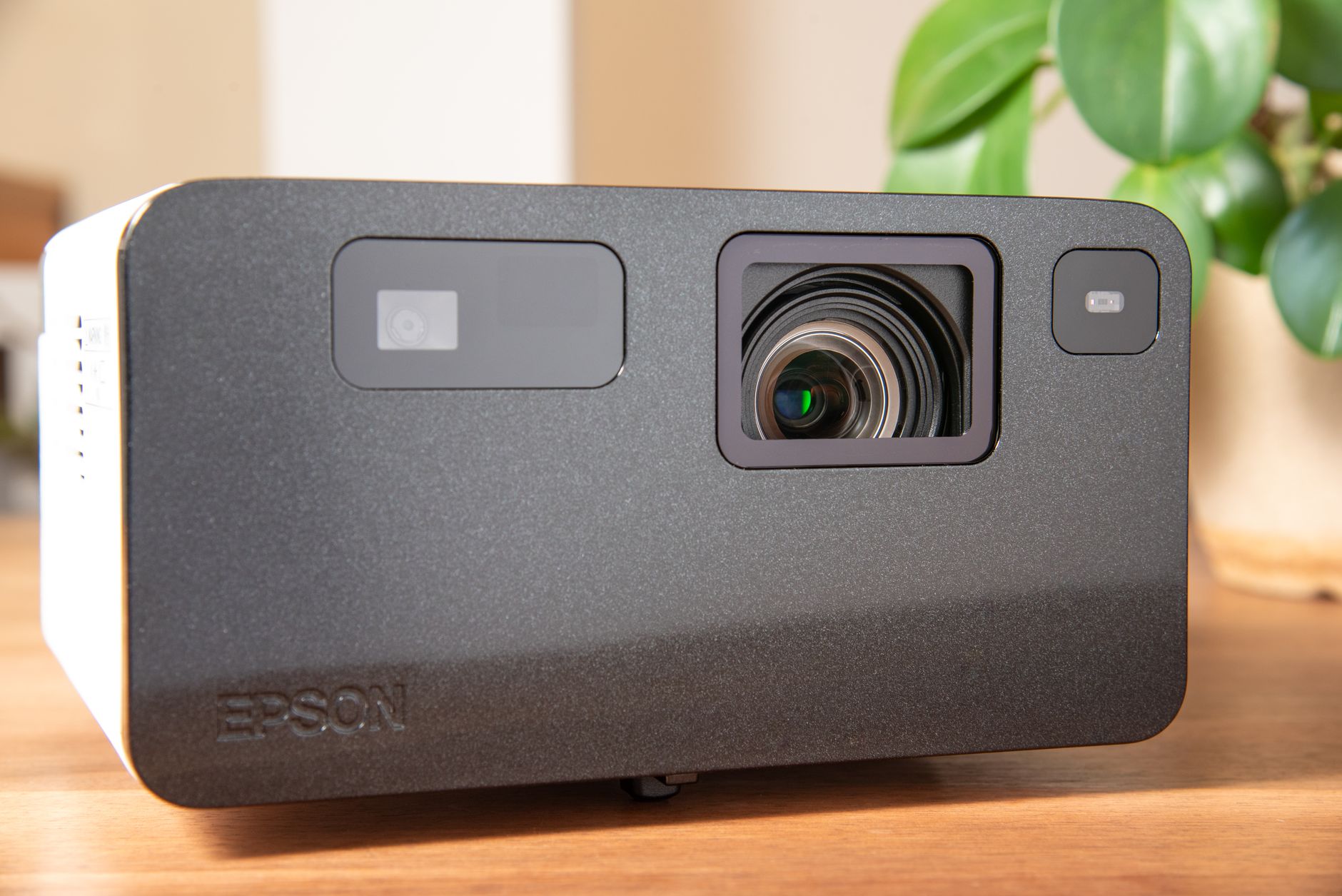 Photo by Nick Dimitrov / Pexels
Our Top Pick
BenQ TH685P 1080p Gaming Projector at $594 — The BenQ TH685P is the most popular gaming projector for a reason — 8.3ms lag, 3500 lumens, and 120Hz support deliver....
Budget Pick: Epson EpiqVision Mini EF21 Smart Laser Projector at $628.99 — The EpiqVision EF21 is the best all-in-one portable smart projector — 3LCD color accuracy, Google TV with Netflix bui....
Great for: Home theater enthusiasts who want a large screen without the cost of a big TV, movie-night hosts, and outdoor movie setups
Not ideal if: You watch in a bright room during the day — most projectors wash out significantly in ambient light
Input Lag by Game Type
For competitive FPS gaming (Valorant, CS2, Apex), input lag below 16ms is the threshold for responsive gameplay. For single-player games and RPGs, 25-35ms is acceptable.4K vs. 1080p: Where Current Value Sits
Brightness: Matching to Your Room
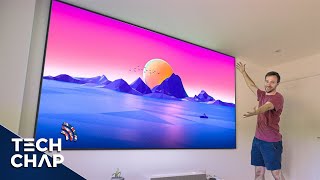
Brightness considerations: gaming rooms are rarely fully dark. 2500+ lumens handles a room with blackout curtains; 3500+ lumens works in a room with curtained windows and some ambient light.Short-Throw Projectors for Small Spaces
Related Guides

Frequently Asked Questions
What input lag is acceptable for gaming projectors?
Do gaming projectors support 4K 120Hz?
How dark does a room need to be for a gaming projector?
What's the minimum throw distance for a gaming projector?
Can I use a gaming projector for PS5?
How We Analyze Products
We analyze Amazon review data — often thousands of reviews per product — to surface patterns that individual buyers miss. Our process aggregates star ratings, review counts, and buyer sentiment at scale, identifying which strengths and weaknesses appear consistently across the largest review samples available.
Each product earned its placement through data: total review volume, average rating, and the specific praise and complaints that repeat most often across buyers. No manufacturer paid for placement on this page. Products appear here because buyers endorsed them at scale, not because a company asked us to feature them.
We use AI to summarize review sentiment — not to fabricate opinions, but to condense what thousands of buyers actually wrote into a readable format. The pros and cons you see reflect the most common themes found in verified purchaser reviews, paraphrased for clarity. We do not claim to have accessed Reddit, YouTube, or specific publications in generating these summaries.
Prices shown reflect Amazon pricing at the time this page was last generated. Click “See Today’s Price” to get the current live price on Amazon. Read our full methodology →