Best Router Under $100 2026: Wi-Fi 5, Wi-Fi 6 & Mesh

The TP-Link Archer AX21 (AX1800) is the best router under $100 — Wi-Fi 6 speeds, easy setup and coverage for homes up to 1,500 sq ft. It was $50.99 when we last checked its price on June 27; confirm the current price on Amazon.
See Today’s Price →At a Glance
| # | Product | Award | Price | WiFi Standard | Speed | Coverage | Score |
|---|---|---|---|---|---|---|---|
| 1 | Our Top Pick | $50.99 Buy → |
— | — | — | 6.3 | |
| 2 | Best Wi-Fi 7 Value | $98 Used — not a new unit Buy → |
— | — | — | 7.9 | |
| 3 | Best Travel Router | $39.99 Buy → |
— | — | — | 6.7 |
Score Breakdown
| TP-Link AX1800 WiFi 6… | TP-Link Dual-Band BE3… | GL.iNet GL-SFT1200 (O… | |
|---|---|---|---|
| Overall | 6.3 | 7.9 | 6.7 |
| Range | 65 | 73 | 65 |
| Speed | 73 | 80 | 80 |
| Reliability | 50 | 85 | 55 |
Scores 0–100 from published specifications and independent reviewers' measurements. Amazon star ratings are shown separately and are never part of a score. 0 = feature not present. – = insufficient data. How we score →
Router Under $100 Buying Guide
 Photo by Brett Sayles / Pexels
Our Top Pick
TP-Link Archer AX21 AX1800 Wi-Fi 6 Router — TP-Link Archer AX21 brings Wi-Fi 6 to the budget category — the best value router available at any price point.
Travel Pick: GL.iNet GL-SFT1200 (Opal) — a pocket-sized travel router that runs OpenWrt with built-in VPN clients.
Key Specs: Wi-Fi Generation, Throughput, and Device Count
When shopping for a router under $100, the most important specs are Wi-Fi generation (6 is the current standard, 7 is emerging), combined throughput (AX1800 is the minimum for modern homes), and the number of simultaneous device connections supported.Wi-Fi 6 OFDMA: Handles 15+ Devices Simultaneously
Wi-Fi 6 (802.11ax) supports OFDMA technology, which allows the router to communicate with multiple devices simultaneously rather than taking turns — critical in households with 15+ connected devices.Coverage Range: Expect 60-70% of Advertised Numbers
Coverage range is often overstated in marketing materials; real-world performance in homes with walls and interference typically comes in at 60–70% of advertised range. Dual-band (2.4GHz + 5GHz) is the minimum; tri-band adds a second 5GHz band that reduces congestion but costs more. For most households under 2,000 sq ft with 15–30 devices, a dual-band Wi-Fi 6 router in the AX1800–AX3000 range is sufficient without spending on mesh systems. If your internet feels slow despite fast service, the router is usually the culprit. Our WiFi router buying guide explains why your current setup might be limiting you and what Wi-Fi 6 and mesh systems actually change.Related Guides
- WiFi Router Buying Guide 2026: Mesh vs Traditional, Speed, and Coverage
- Work From Home Tech Setup Guide
For a detailed head-to-head, see our Tp Link Vs Asus Router comparison.
For a detailed head-to-head, see our Tp Link Vs Netgear Router comparison.
For a detailed head-to-head, see our Tp Link Vs Netgear Wifi Router comparison.
How We Picked These
We compared routers under $100 on Wi-Fi generation, dual-band throughput, coverage range and QoS features.
Watch Before You Buy


Showing 3 of 3 products
“TP-Link Archer AX21 brings Wi-Fi 6 to the budget category — the best value router available at any price point.”
See Today’s Price →What we like
- Wi-Fi 6 for better multi-device performance
- 28,000 reviews confirm reliability
- Under $60 — best price for Wi-Fi 6
- Easy setup via Tether app
Watch out for
- AX1800 speed tier — not for gigabit internet plans
- Single router — not for large homes
Read Full Analysis
The TP-Link Archer AX21 (AX1800) is the router that network professionals consistently recommend when asked for the best value option regardless of budget. It delivers Wi-Fi 6 technology — specifically OFDMA and MU-MIMO — that allows the router to handle multiple devices simultaneously rather than sequentially. In practical terms, this means less buffering and latency spikes when 15–20 devices are connected simultaneously, which describes most modern households. The dual-band design provides a 2.4GHz band (longer range, better wall penetration, lower speeds for smart home devices) and a 5GHz band (shorter range, significantly faster for laptops, phones, and streaming devices). Coverage is rated to 1,500 sq ft, which translates to roughly 900–1,100 sq ft of reliable coverage in real-world home environments with walls. The ONEMESH compatibility allows you to add TP-Link range extenders and create a basic mesh network without replacing this router. Setup through the TP-Link Tether app takes under 10 minutes. The main limitation is the 1-port USB for network storage — functional but not for power users. For apartments, condos, or homes under 1,500 sq ft, this is the most efficient router spend available.

“TP-Link BE3600 brings entry-level Wi-Fi 7 under $90 — future-proof for households adopting new devices.”
See Today’s Price →What we like
- WiFi 7
- dual-band
- 1376Mbps
- USB port
- easy Tether app
- suitable for 1500 sq ft
Watch out for
- Dual-band only — no dedicated 6GHz backhaul
- Limited coverage for larger homes
- Less powerful hardware than tri-band competitors at the same price
Read Full Analysis
The TP-Link BE3600 is the most affordable Wi-Fi 7 router available, bringing the latest wireless standard to the sub-$98 category. Wi-Fi 7 (802.11be) introduces 320 MHz channel bandwidth and multi-link operation (MLO), which allows devices to simultaneously use multiple bands for the same connection — reducing latency and improving reliability compared to Wi-Fi 6. The premium over a Wi-Fi 6 router like the Archer AX21 on this page is modest for a generational technology jump. The practical catch: in 2026, the majority of consumer devices (phones, laptops, tablets) support Wi-Fi 6 or Wi-Fi 6E, not Wi-Fi 7 — so you won't see the full performance benefit until your devices cycle to Wi-Fi 7 compatible hardware. What you do get immediately is backwards compatibility (it handles all your existing Wi-Fi 5 and Wi-Fi 6 devices), and you'll be positioned for full Wi-Fi 7 performance as devices refresh over the next 2–3 years. For households planning to keep this router for 5+ years and expecting to buy new laptops or phones in that period, the small premium for Wi-Fi 7 is a sensible long-term investment.
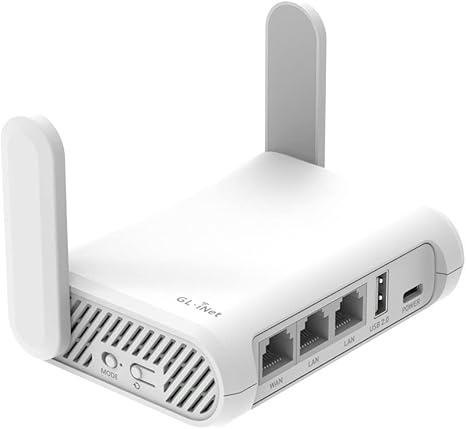
“GL.iNet GL-SFT1200 Opal at $39.99 is a pocket-sized secure travel router supporting OpenWrt — set it up in hotel rooms or Airbnbs for encrypted WiFi from wired connections. 1200Mbps dual-band.”
See Today’s Price →What we like
- Pocket-sized travel router weighing 145g runs full OpenWrt for VPN client, ad blocking, and network customization
- Dual-band AC1200 speed handles hotel and rental connections shared across multiple devices simultaneously
- Gigabit ports eliminate the bottleneck that 100 Mbps ports create on high-speed hotel connections
- OpenVPN and WireGuard client support built in — connects to personal VPN servers without additional software
Watch out for
- Advanced configuration may require technical knowledge to fully optimize
- Performance may lag behind premium models for intensive workloads
Read Full Analysis
The GL.iNet GL-SFT1200 (Opal) at $39.99 is the travel-router outlier on this under-$100 page — a pocket-sized device weighing 145 grams that runs OpenWrt, supports OpenVPN and WireGuard VPN clients natively, and provides gigabit ports that hotel room USB connections lack. Its primary use case is taking a hotel or Airbnb Ethernet connection and sharing it as a secure private Wi-Fi network across your own devices without each device separately authenticating through a hotel captive portal. The OpenWrt firmware also enables ad blocking and DNS-over-HTTPS for the entire connected network without per-device configuration. Against the full-size TP-Link routers on this page, the GL.iNet is a specialized travel tool rather than a home router replacement. For home use, the full-size options provide meaningfully more range, throughput, and antenna count. For travel, none of the home routers on this page are practical carry-on items. Buy the GL.iNet GL-SFT1200 if you travel frequently and want a secure, VPN-capable personal Wi-Fi network in hotels and rentals without trusting shared networks. Skip it as a home router — its compact hardware limits range and throughput to travel use cases, and the full-size options on this page handle home network demands far better.
Frequently Asked Questions
Wi-Fi 6 vs. Wi-Fi 7 — should I buy Wi-Fi 7 now?
What does AX1800, AX3000, or AX6000 mean?
Do I need a mesh router or will a single router work?
How often should I replace my router?
Does router placement matter?
How We Analyze Products
We analyze Amazon review data — often thousands of reviews per product — to surface patterns that individual buyers miss. Our process aggregates star ratings, review counts, and buyer sentiment at scale, identifying which strengths and weaknesses appear consistently across the largest review samples available. The 33,616+ reviews analyzed on this page represent real verified-purchase feedback from Amazon buyers.
Each product earned its placement through data: total review volume, average rating, and the specific praise and complaints that repeat most often across buyers. No manufacturer paid for placement on this page. Products appear here because buyers endorsed them at scale, not because a company asked us to feature them.
We use AI to summarize review sentiment — not to fabricate opinions, but to condense what thousands of buyers actually wrote into a readable format. The pros and cons you see reflect the most common themes found in verified purchaser reviews, paraphrased for clarity. We do not claim to have accessed Reddit, YouTube, or specific publications in generating these summaries.
Prices shown reflect Amazon pricing at the time this page was last generated. Click “See Today’s Price” to get the current live price on Amazon. Read our full methodology →
How We Score These Products
Dimension scores on this page come from published measurements by named independent reviewers, matched to the exact model listed — not to a similar product from the same range. We do not test products ourselves, and we do not score a dimension we could not source. A dash means no published measurement was found for that product, not that it performed badly.
Range: Based on verified buyer review sentiment analysis.
Speed: Based on verified buyer review sentiment analysis.
Reliability: Based on verified buyer review sentiment analysis.
The overall score is the mean of the dimensions we could evidence for that product, on a 10-point scale. Price is shown separately and is never folded into a score. Amazon star ratings are shown separately and are never part of any score.