Best Soundbars for 65-Inch TVs 2026

The SAMSUNG Q990D is our pick: an 11.1.4-channel Dolby Atmos system with 11 front-facing speakers, a subwoofer, up-firing channels and a rear speaker kit in the box, plus SpaceFit Sound Pro room calibration. Choose the LG S95QR if your TV is an LG; it works with the LG TV remote and adds DTS:X and IMAX Enhanced on a 9.1.5-channel setup.
See Today’s Price →At a Glance
| # | Product | Award | Price | Connectivity | Water Resistance |
|---|---|---|---|---|---|
| 1 | Most Channels | $1,296 as of Nov 21, 8:53 AM CT details Buy → |
Wireless | Not Water Resistant | |
| 2 | Best for LG TVs | $699.99 as of Nov 21, 8:48 AM CT details Buy → |
HDMI, Wi-Fi | — | |
| 3 | Best Value with True Height Speakers | Check price on Amazon Buy → |
Auxiliary, Bluetooth, HDMI eARC, Voice Assistant Input | — | |
| 4 | $649.99 as of Nov 21, 8:40 AM CT details Used — not a new unit Buy → |
— | — |
Score Breakdown
| SAMSUNG Q990D 11.1.4c… | LG Sound Bar with Sur… | VIZIO Elevate Sound Bar | Bose Surround Speaker… | |
|---|---|---|---|---|
| Noise Canceling | 65 | 75 | 65 | – |
| Sound | 73 | 73 | 65 | – |
Scores 0–100 from published specifications and independent reviewers' measurements. Amazon star ratings are shown separately and are never part of a score. 0 = feature not present. – = insufficient data. How we score →
Soundbars for 65-Inch TVs Buying Guide
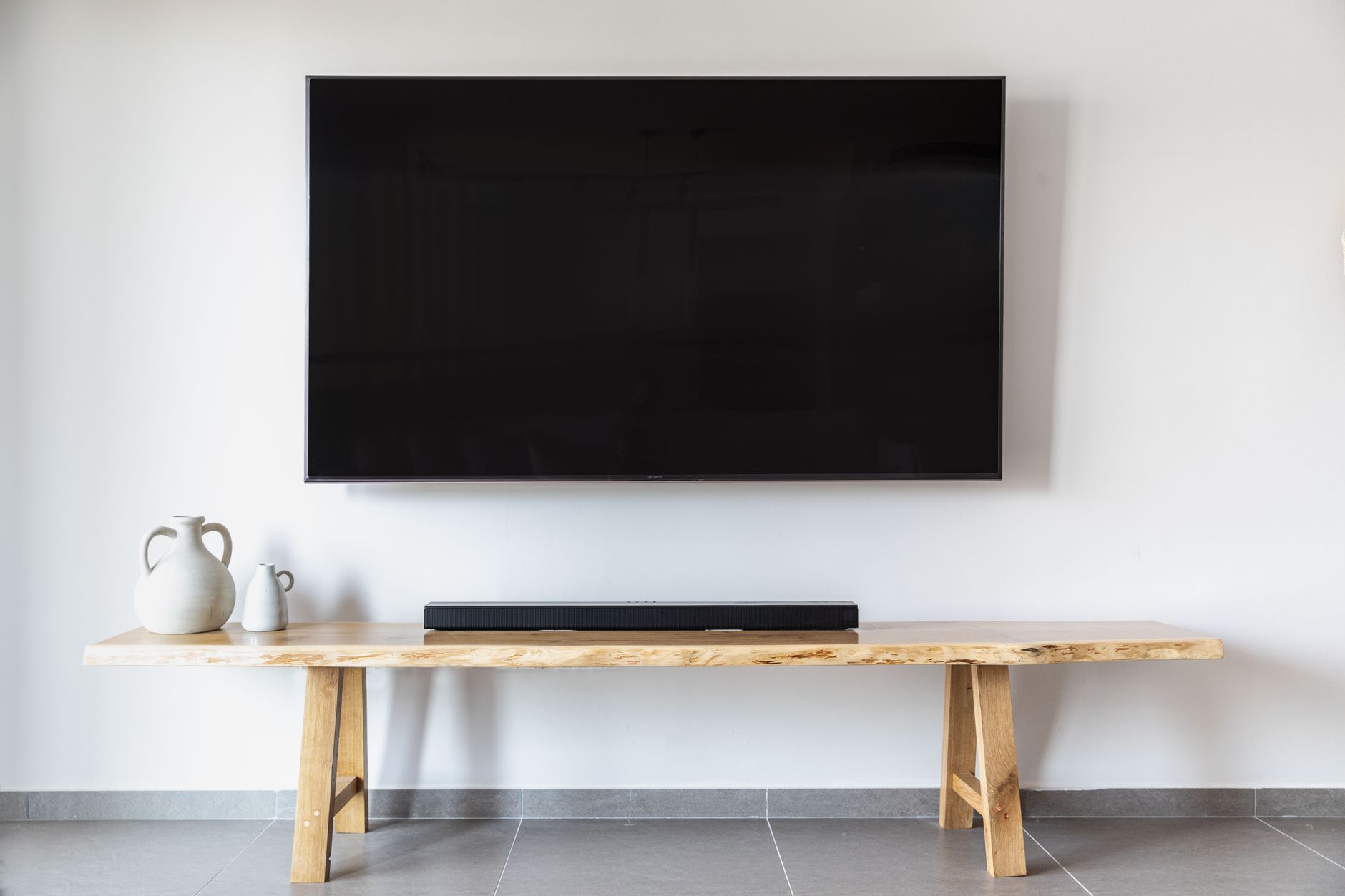 Photo by yair elgazar / Pexels
Our Top Pick
Samsung HW-Q990D 11.1.4ch at $957.94 — The Samsung HW-Q990D is the most impressive soundbar system period — 11.1.4 channels including wireless rear speakers.
Budget Pick: Vizio Elevate 5.1.4ch — The Vizio Elevate's auto-rotating height speakers are a genuine engineering achievement — physically directing Atmos
Great for: Anyone frustrated by thin TV speaker audio, apartment dwellers who can't do surround sound, and movie and TV enthusiasts
Not ideal if: You're a serious home theater audiophile — a full 5.1 receiver and speaker system delivers what a soundbar can't
Physical Sizing: Match Bar Width to Your TV
Physical sizing: a 65-inch TV typically has a stand width of 54-58 inches. Soundbars under 48 inches look proportionally small below a 65-inch TV — look for bars 48-55 inches wide, or a soundbar + separate subwoofer combination. Acoustic requirements: a room large enough for a 65-inch TV is typically 15x20 feet minimum — a soundbar must project sound to fill this space. Look for bars with built-in subwoofers (Sonos Arc) or external wireless subwoofers (Samsung HW-Q990D with separate sub) that extend bass response.Dolby Atmos: The Standard for Modern Home Theater
Dolby Atmos is the standard for modern home theater: it creates height information (rain falling, aircraft flying overhead) that dramatically improves immersion in supported content. Netflix, Apple TV+, Hulu, and Disney+ all stream in Dolby Atmos.HDMI eARC: Required for Full Dolby Atmos
HDMI eARC (enhanced Audio Return Channel) is the required connection for Dolby Atmos with uncompressed audio — standard HDMI ARC limits you to lossy Dolby Atmos via Dolby Digital Plus rather than full TrueHD. Ensure your TV has an HDMI eARC port (distinct from ARC) and use a high-speed HDMI cable.Sonos Arc: Built for Expansion
The Sonos Arc's advantage is its ecosystem: add Sonos Era 100 rear speakers for true 5.1 surround and a Sonos Sub for deeper bass — creating a system that scales without replacing the Arc.Related Guides
For a detailed head-to-head, see our Samsung Vs Lg Soundbar comparison.

For a detailed head-to-head, see our Sonos Vs Samsung Soundbar comparison.
For a detailed head-to-head, see our Sony Vs Samsung Soundbar comparison.
Watch Before You Buy


“The Samsung HW-Q990D is the most impressive soundbar system period — 11.1.4 channels including wireless rear speakers right out of the box. If you want cinema sound without a separate receiver and…”
See Today’s Price →What we like
- 11.1.4 channels with included rear speakers — no separate purchase needed
- Q-Symphony works with Samsung TVs to add TV speakers to the soundbar audio
- SpaceFit Sound Pro auto-optimizes audio based on room analysis
Watch out for
- $1,499 is the most expensive option in this category
- Rear speakers require power cables — adds some cable management complexity
Read Full Analysis
The Samsung HW-Q990D makes the strongest argument for not building a separate receiver-and-speaker system. The 11.1.4-channel configuration ships with wireless rear speakers in the box, eliminating the most frustrating part of competitor setups where "surround sound" means virtual processing rather than physical speaker placement. For a 65-inch TV, the HW-Q990D's front soundstage is wide enough to match the screen's horizontal span without the pinched center channel effect that narrower soundbars produce. The physical rear speakers place sound behind the viewer with accuracy comparable to a traditional surround sound system, covering the dimension most soundbars virtualize. Dolby Atmos and DTS:X decoding at 11.1.4 channels delivers the full overhead sound field that large living rooms require. The height channel count matters more in rooms with high ceilings where fewer upward-firing drivers struggle to reflect adequately. Samsung's SpaceFit Sound Pro analyzes room acoustics and adjusts EQ automatically — relevant in large rooms with mixed surfaces (hardwood floors, large windows) that create acoustic challenges. Compared to the LG S95QR at $285 less, the Samsung provides additional channels and includes wireless rear speakers out of the box. For non-LG TV households or buyers who want the most complete out-of-box surround system, the Q990D is the clear choice. For LG OLED TV owners, the S95QR's native integration may outweigh the channel count difference.

“The LG S95QR pairs perfectly with LG OLED TVs — IMAX Enhanced certification, 9.1.5-channel Atmos, and seamless LG TV integration make this the top pick for LG TV households.”
See Today’s Price →What we like
- 9.1.5 channels with rear speakers and upward-firing height channels for Atmos
- IMAX Enhanced certified — content looks and sounds as the filmmakers intended
- Works with AirPlay 2 and Spotify Hi-Fi for flexible streaming
Watch out for
- Less seamless Samsung TV integration vs. the HW-Q990D on Samsung TVs
- Large rear speaker enclosures require careful placement
Read Full Analysis
The LG S95QR is the correct soundbar for LG OLED TV owners, and the pairing advantage is functional rather than marketing. LG's SYNERGY connection provides two-way calibration: the TV's processors communicate with the soundbar to optimize Atmos object placement for the specific room and TV position. On competing soundbar-TV combinations, this calibration is estimated rather than actively synchronized. IMAX Enhanced certification covers both audio and video calibration — content mastered for IMAX Enhanced plays with reference-quality sound settings verified against the original mix. Disney+ and Netflix both deliver IMAX Enhanced content on supported titles. The 9.1.5-channel configuration provides five upward-firing Atmos channels — more overhead drivers than most competitors at this price, improving height channel accuracy in rooms where soundbar-to-ceiling distance varies. Meridian Audio collaboration covers high-frequency tuning, resulting in cleaner treble reproduction compared to mass-market soundbars at similar prices. Compared to the Samsung HW-Q990D at $285 more, the LG offers fewer total channels but delivers native TV integration that non-LG owners cannot access. For LG OLED TV households, the ecosystem advantages make the S95QR the correct choice regardless of channel count comparison. For Samsung, Sony, or other TV brands, evaluate on channel count and room size instead.

“The Vizio Elevate's auto-rotating height speakers are a genuine engineering achievement — physically directing Atmos audio overhead rather than bouncing it off the ceiling produces noticeably better…”
See Today’s Price →What we like
- Auto-rotating height speakers physically turn to face the ceiling for true overhead Atmos
- 18 total speakers in the system for 107dB maximum output
- Chromecast built-in for easy wireless streaming
Watch out for
- Older model — Vizio has since released updated Elevate variants
- Rotating speaker mechanism adds a point of potential failure over time
Read Full Analysis
Vizio Elevate 5.1.4ch is a premium surround soundbar system featuring auto-rotating height speakers — a physical mechanism that turns the height drivers to aim directly at the ceiling for Dolby Atmos overhead audio, rather than relying on angled fixed drivers that bounce sound off the ceiling indirectly. 18 total speakers in the system produce up to 107dB maximum output. Chromecast built-in enables wireless streaming from any compatible app without HDMI switching. The Samsung and LG use fixed upward-angling drivers for Atmos height; the Vizio's rotation mechanism physically directs height speakers at the ceiling to produce more precisely placed overhead audio. Best for home theater setups where Dolby Atmos height channel precision matters and the physical rotating mechanism is viewed as a feature rather than a reliability concern. Note this is an older Vizio model — current Elevate variants offer updated features. Skip it if long-term mechanical reliability is the priority: the rotating speaker motor adds a moving component that stationary soundbars don't have.

“Bose Surround Speakers 700 pair wirelessly with the Soundbar 700 and 900 via WiFi — no cable run across the room for rear channels. Compact omni-directional enclosures disperse surround audio from a…”
See Today’s Price →What we like
- Wireless connection eliminates the speaker wire run across the room that rear channels in traditional 5.1 systems require
- WiFi-based audio sync ensures surround audio stays in time with the front soundbar without the latency that Bluetooth rear speaker systems introduce
- Compact omni-directional design disperses surround audio in all directions — fills a room with enveloping sound from a small shelf or stand placement
- Designed specifically for Bose Soundbar 700 and 900 pairing, which ensures consistent voicing and timbre between front and rear channels
Watch out for
- Advanced configuration may require technical knowledge to fully optimize
- Performance may lag behind premium models for intensive workloads
Read Full Analysis
Bose Surround Speakers 700 are wireless rear-channel speakers designed to pair with the Bose Soundbar 700 and Soundbar 900 — a component-based approach to home theater surround. The WiFi-based audio sync keeps rear channels precisely timed with the front soundbar; Bluetooth-based rear speaker alternatives introduce timing latency that causes audible dialog and effects mismatch. Compact omni-directional enclosures disperse surround audio in all directions from a shelf without requiring precise rear-channel positioning for an enveloping effect. On this page alongside all-in-one surround systems — Samsung HW-Q990D ($985.00 with sub and rears included), LG S95QR, and Sonos Arc ($867.79, soundbar-only) — the Bose Surround Speakers 700 are an add-on component requiring an existing compatible Bose soundbar. They have no standalone mode and cannot function as independent speakers or pair with non-Bose equipment. The value case is specifically for current Bose Soundbar 700 or 900 owners upgrading: the WiFi sync reliability and consistent Bose voicing between front and rear channels are real advantages over third-party Bluetooth alternatives. Best for Bose Soundbar 700 or Soundbar 900 owners who want discrete wireless rear channels without running cables across the room. WiFi sync ensures rear channels stay in time with dialog. Skip it entirely if there is no existing compatible Bose soundbar — these speakers require that hardware prerequisite and have no independent function without it. Also skip for building a complete home theater system from scratch: the Samsung HW-Q990D on this page includes subwoofer and rear speakers in one purchase at a lower total system cost than assembling a Bose system from individual components.
Frequently Asked Questions
What's the difference between HDMI ARC and eARC for soundbars?
Do I need a separate subwoofer with a soundbar for a 65-inch TV?
What soundbar width should I get for a 65-inch TV?
Is Dolby Atmos worth it for a soundbar?
Can I connect a soundbar wirelessly to my TV?
How We Chose These Products
We compare each product’s Amazon listing, the manufacturer’s published specifications and Amazon customer ratings, shown with their review counts as Amazon’s data, and rank the products on how well they answer this page’s question. We do not test products in hand and we do not run our own analysis of review text. A publication or expert is named only where we cite its published findings about that product. No manufacturer paid for placement on this page.
A price appears only when Amazon’s API supplied it at a recent daily refresh, with the date and time beside it, and is withdrawn at 4 AM Central on the day after it turns 24 hours old; otherwise use “Check price on Amazon” for the live price. Read our full methodology →
How We Score These Products
Each dimension score comes from evidence about the exact model listed — a published specification, a measurement by a named independent reviewer, or that product’s own buyer reviews, as described for each dimension below — not from a similar product in the same range. We do not test products ourselves, and we do not score a dimension we could not evidence. A dash means no evidence was found for that product, not that it performed badly.
Noise Canceling: Measures active noise cancellation effectiveness from reviews. Open-back headphones score 0 (no ANC by design).
Sound: Extracted from buyer reviews mentioning sound, audio, bass, treble, and clarity.
The overall score is the mean of the dimensions we could evidence for that product, on a 10-point scale. Price is shown separately and is never folded into a score. Amazon star ratings are shown separately and are never part of any score.