Best Subwoofers for Beginners: Top Picks (2026)
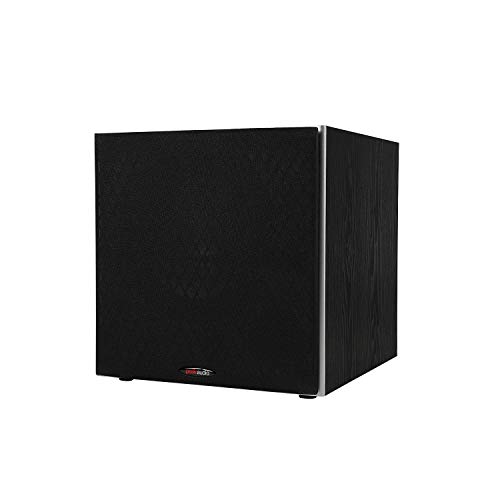
The Polk Audio PSW10 is the best first subwoofer for a home system: its 10-inch woofer and built-in 50-watt RMS amplifier connect to a receiver's sub output or a stereo amplifier's speaker wires, while the Sonos Sub 4 is built to pair with Sonos sound bars. Choose the Sonos Sub 4 if you already own a Sonos Arc Ultra, Arc or Beam.
See Today’s Price →At a Glance
| # | Product | Award | Price |
|---|---|---|---|
| 1 | Polk Audio PSW10 10" Subwoofer, B… Polk Audio |
Our Top Pick | $209 as of Nov 16, 1:51 PM CT details Buy → |
| 2 | Best for Sonos Owners | $899 as of Nov 16, 2:26 PM CT details Buy → |
|
| 3 | Best System Bundle | $279.99 as of Nov 16, 2:20 PM CT details Buy → |
|
| 4 | Best Plug-and-Play Car Sub | $199.99 as of Nov 16, 1:51 PM CT details Buy → |
|
| 5 |  Rockford Fosgate Punch P1-2X12 Lo… Rockford Fosgate |
Best Car Audio Bass | $489.99 as of Nov 16, 1:55 PM CT details Buy → |
Subwoofers for Beginners Buying Guide
 Photo by Anna Pou / Pexels
Subwoofers handle everything below 200Hz — the bass frequencies that speaker drivers cannot reproduce cleanly. Without a subwoofer, most home theater speakers and soundbars sound thin during movie explosions and bass-heavy music. Adding a dedicated sub fills in those missing frequencies and often makes the overall system sound dramatically better without replacing any other component.
How We Picked These
We compared subwoofers across frequency response (how low they can go), amplifier wattage, enclosure type (ported vs sealed), connection options, and room size suitability. Products selected for clean bass reproduction at each size and price tier — not just raw wattage numbers that marketing departments inflate.
Home Theater vs Car Audio vs Soundbar Systems
This list covers three distinct subwoofer categories. Home theater subwoofers (Polk Audio PSW10, Sonos Sub 4) connect to AV receivers or sound bars and are designed for living rooms. Car audio subwoofers (Rockford Fosgate, Bazooka) are built for vehicles and run on a car's 12-volt system; the Rockford enclosure needs a separate amplifier, while the Bazooka tube has one built in. Neither works as a home theater sub. A sound bar system with a wireless subwoofer (Yamaha SR-C30A) adds a bar and a sub in one box, the easiest setup for beginners who have no sound system yet.

Room Size and Wattage
Subwoofer wattage does not translate linearly to bass output — enclosure design, driver size, and room acoustics matter more than raw watts. A well-designed 10-inch sub like the Polk Audio PSW10, which Polk pitches for small-to-mid-size rooms, can sound better in a typical living room than a cheaply built 15-inch. For rooms under 500 sq ft, 8- to 10-inch subs are usually sufficient. 500-1,500 sq ft benefits from 10-12 inch drivers. Rooms over 1,500 sq ft or dedicated home theaters need 15-inch or dual-driver setups.
Connection Types
Most home theater subwoofers connect via LFE (Low Frequency Effects) RCA cable from an AV receiver, or via speaker-level inputs for connection directly to stereo amplifiers. The Sonos Sub 4 is wireless: it connects to your Sonos system over WiFi rather than a subwoofer cable. Car audio subs take their signal from the head unit and their power from the car's 12V system; unpowered enclosures like the Rockford also need a separate amplifier, while amplified tubes like the Bazooka accept line- or speaker-level inputs directly. Know your connection setup before choosing a subwoofer.
What to Avoid
Avoid choosing a subwoofer purely by wattage — a 3000-watt car audio sub does not belong in a living room. Skip under-sized subs for large rooms; an 8-inch sub in a 2,000 sq ft open-plan space will run at maximum volume constantly and distort. Verify your soundbar or receiver has a subwoofer output (LFE or sub out) before buying a dedicated sub — some budget soundbars have no sub output and cannot be expanded.
“A 10-inch powered subwoofer with a built-in 50-watt RMS amplifier, a ported cabinet, an 80-160 Hz crossover dial and both line- and speaker-level connections.”
See Today’s Price →What we like
- 10-inch Dynamic Balance woofer with a directed port
- Built-in 50-watt RMS amplifier, 100 watts peak
- Line-level and speaker-level inputs, plus speaker-level outputs
- Continuously variable 80-160 Hz crossover and a phase switch
- Detachable front grille
Watch out for
- Connects by cable, so plan a run from the receiver or amplifier
- Polk pitches it for small-to-mid-size rooms, not large open spaces
Read Full Analysis
The Polk Audio PSW10 is the straightforward first subwoofer for a home theater or stereo system. Its 10-inch Dynamic Balance woofer works with a directed port, and Polk pitches it for small-to-mid-size rooms. A built-in 50-watt RMS amplifier, 100 watts at peak, means it needs only a signal from your receiver or amplifier. It connects two ways: a line-level input from a receiver's subwoofer output, or speaker-level inputs and outputs for a stereo amplifier that has no sub out. A continuously variable 80-160 Hz crossover and a phase switch help it blend with your main speakers, Polk lists a 40-160 Hz frequency response, and the grille is detachable. It is timbre-matched to Polk's Monitor and T-series speakers but works with other brands. It connects by cable, so plan a cable run from the receiver to where the sub will sit.
Skip this if: Your sound bar has no subwoofer output, or you need a wireless sub

“A wireless, WiFi-connected subwoofer with dual force-canceling woofers in a ported cabinet, made to pair with Sonos Arc Ultra, Arc and Beam sound bars.”
See Today’s Price →What we like
- Dual force-canceling woofers in a figure-eight configuration cancel vibration against each other — the Sub sits on the floor without rattling shelves at moderate volume
- Wireless connection auto-pairs with compatible Sonos soundbars and speakers without running speaker wire across the room
- Trueplay calibrates the subwoofer's output against the room's specific acoustics the same way it tunes Sonos speakers
- Adds low-end impact that Sonos soundbars alone cannot produce regardless of volume or EQ settings
Watch out for
- Advanced configuration may require technical knowledge to fully optimize
- Performance may lag behind premium models for intensive workloads
Read Full Analysis
The Sonos Sub 4 is the subwoofer for a home that already runs a Sonos sound bar. It connects over WiFi rather than a subwoofer cable, and Sonos lists it to pair with the Arc Ultra, Arc and Beam. Inside, two Sonos-engineered drivers sit in a force-canceling layout that Sonos says virtually eliminates distortion, buzz and rattle, and a ported enclosure extends the bass response. The matte finish is designed to match the rest of a Sonos system, and because it needs only power and a network connection it can sit anywhere in the room within reach of an outlet. For a beginner the catch is the ecosystem: it is made to pair with Sonos speakers, so it is the add-on for an existing Sonos setup rather than the start of a new one. If you use a receiver and passive speakers, the Polk Audio PSW10 at the top of this page is the wired route to the same goal, more bass under your main speakers.
Skip this if: You do not own a Sonos Arc Ultra, Arc or Beam sound bar

“Yamaha's SR-C30A includes a wireless subwoofer pre-calibrated to the soundbar — zero guesswork about bass levels or crossover settings. The dedicated sub handles low frequencies that soundbar-only…”
See Today’s Price →What we like
- 23-inch sound bar plus a compact wireless subwoofer that stands upright or lies flat
- Virtual 3D surround, Clear Voice and Adaptive Low Volume
- Four sound modes: Standard, Stereo, 3D Movie and Game
- Bluetooth streaming, with HDMI, optical or aux connection to the TV
Watch out for
- Built as a pair: a system that already has a receiver and speakers is better served by a standalone sub
- Virtual surround only, with no rear speakers
Read Full Analysis
The Yamaha SR-C30A is a compact soundbar that includes a separate wireless subwoofer unit, making it a complete sound system rather than a standalone subwoofer. The sub unit is small — it can be tucked under a couch or behind furniture — and connects wirelessly to the soundbar. Yamaha's Clear Voice feature sharpens dialogue, and the system supports Dolby Digital and DTS for basic surround-sound processing from streaming sources. On a beginners subwoofer page, the SR-C30A occupies a distinct niche: it's a bundle that gets you a TV speaker upgrade and dedicated bass in one purchase. The Polk Audio PSW10 at the top of this page adds bass to a system you already have; the Yamaha replaces your TV's built-in speakers and adds bass at the same time. If you have a decent receiver and speakers, the Polk makes more sense. If you're starting from scratch with a TV and nothing else, the Yamaha delivers a noticeable audio improvement in a single box. A practical entry point for someone new to home audio who wants to stop relying on TV speakers without the complexity of a full receiver + speakers + sub system. The wireless subwoofer eliminates cable routing, and Yamaha's build quality is reliable at this price tier. The trade-off is future upgrade potential — you're locked into this system rather than building modular components.

“A 6-inch amplified bass tube for cars and trucks: a built-in 100-watt amplifier, line- and speaker-level inputs and mounting straps in an 18-inch tube.”
See Today’s Price →Read Full Analysis
The Bazooka BTA6100 is the plug-and-play way to add bass to a car or truck. The 6-inch dual voice coil woofer sits in Bazooka's patented tube enclosure, which the company tunes for corner loading in a trunk or cargo area, and an on-board two-channel amplifier rated at 100 watts max powers it, so there is no separate amp to buy. It accepts line-level or speaker-level inputs, and an 85 Hz low-pass filter and a subsonic filter at 35 Hz keep it working in the bass range. The tube measures about 18.4 x 6.9 x 8.2 inches, comes with straps for secure mounting and carries a one-year limited warranty. A 6-inch tube adds warmth and punch to music rather than the deep, loud bass of a 10- or 12-inch box, so it suits a beginner who wants an easy upgrade over maximum output.
Skip this if: You want deep, loud bass or a subwoofer for a home system
“Rockford Fosgate's dual 12-inch loaded enclosure delivers significant car audio output from a trusted manufacturer. Requires a separate amplifier to drive — best paired with a dedicated 400-600W car…”
See Today’s Price →Frequently Asked Questions
Do I need a subwoofer for a home theater?
What size subwoofer should a beginner get?
What is the difference between a ported and sealed subwoofer?
Can I use a car audio subwoofer at home?
Is the Sonos Sub worth the premium price?
How We Chose These Products
We compare each product’s Amazon listing, the manufacturer’s published specifications and Amazon customer ratings, shown with their review counts as Amazon’s data, and rank the products on how well they answer this page’s question. We do not test products in hand and we do not run our own analysis of review text. A publication or expert is named only where we cite its published findings about that product. No manufacturer paid for placement on this page.
A price appears only when Amazon’s API supplied it at a recent daily refresh, with the date and time beside it, and is withdrawn at 4 AM Central on the day after it turns 24 hours old; otherwise use “Check price on Amazon” for the live price. Read our full methodology →