Amazon Fire Tablet vs iPad: Which to Buy 2026

Amazon Fire HD 10 ($54.99-189) is the best tablet for Prime Video streaming and Kindle reading on a budget. For everything else — apps, gaming, school, creative work — the iPad (A16, $329+) is worth the price. The core difference: Fire tablets are locked to Amazon's ecosystem; iPads run every major app and receive 8 years of updates.
See Today’s Price →At a Glance
| # | Product | Award | Price | Display | Processor | RAM | Score |
|---|---|---|---|---|---|---|---|
| 1 | Best Fire for Productivity | $54 Buy → |
— | — | — | 8.7 | |
| 2 | Best Fire Tablet Overall | $106 Buy → |
— | — | — | — | |
| 3 |  Amazon Fire HD 10 tablet Amazon Fire HD 10 tabletAmazon |
Best Fire Budget Pick | $139 Buy → |
— | — | — | 7.8 |
| 4 | Best iPad Value | $399 Buy → |
— | — | — | — | |
| 5 | Best for Portability | $439 Buy → |
— | — | — | — | |
| 6 | Best All-Around iPad | $299 Buy → |
— | — | — | — |
Score Breakdown
| Amazon Fire Max 11 ta… | Amazon Fire HD 10 Plu… | Amazon Fire HD 10 tablet | Apple iPad 11-inch: A… | Apple iPad mini (A17 … | Apple iPad 11-inch: A… | |
|---|---|---|---|---|---|---|
| Overall | 8.7 | – | 7.8 | – | – | – |
| Value | 95 | – | 74 | – | – | – |
| Build Quality | 79 | – | 81 | – | – | – |
| Battery Life | 60 | – | 60 | – | – | – |
| Display | 73 | – | 73 | – | – | – |
| Portability | 63 | – | 75 | – | – | – |
Scores 0–100 derived from published specifications, verified buyer reviews, and price-to-performance analysis. 0 = feature not present. – = insufficient data. How we score →
Amazon Fire Tablet vs iPad Buying Guide
Amazon Fire tablets start at $50 and top out around $230. Apple iPads start at $330 and top out above $1,000. That gap tells most of the story — but the comparison is less simple than price alone. Fire tablets have gotten genuinely capable. iPads have a software ecosystem that Fire tablets fundamentally cannot match. Here's how to decide which is right for you.
How We Picked These
We compared 6 Amazon Fire and 6 Apple iPad models across display quality, performance, software ecosystem, app availability, video streaming quality, and real-world usage for reading, casual gaming, and productivity, cross-referencing reviews from Wirecutter, PCMag, and Android Authority. Devices were selected to represent the key price tiers where a buyer must make a decision. We weighted long-term software support and app quality as heavily as hardware specs.
Fire Tablets: Budget Streaming and Reading Devices
Amazon Fire tablets are purpose-built for Amazon's ecosystem: Prime Video, Kindle, Audible, and Alexa. The Fire HD 10 (10.1-inch, 1080p display, $139-$189) is genuinely good for video streaming in bed, reading Kindle books, and kids' content. The Fire Max 11 ($229) adds a 2K display and USB-C, bringing it close to budget Android tablet territory. What Fire tablets cannot do: install Google Play apps (Google Maps, Gmail, YouTube app — you must use the browser), run professional apps like Procreate or LumaFusion, and deliver iPad-level performance for games. The lockscreen ads (removable for $15) and Amazon's heavy ecosystem push are also genuine negatives for users outside Prime.

iPads: Tablets That Do Everything
The base iPad (A16, $329) is the world's most popular tablet for a reason: it runs every major app, has 8 years of software updates, and maintains strong resale value. The iPad Mini 7 ($499) packs M3 performance into a 8.3-inch form factor — ideal for travel and one-hand use. The iPad Air starts at $599 and adds M3 chip and a larger 11-inch or 13-inch display for productivity. iPads support Apple Pencil and Magic Keyboard, making them genuine laptop replacements for students and creators. The price premium is real; so is the capability gap.
Who Should Buy Which
Buy a Fire tablet if: You're a heavy Amazon Prime user, you want a dedicated Kindle/streaming device for the bedroom, or you need a durable kids tablet under $100 (Fire HD Kids). Buy an iPad if: You need a device for school, creative work, productivity apps, or gaming. If you're already in Apple's ecosystem (iPhone, Mac), an iPad integrates seamlessly — Handoff, AirDrop, and Sidecar are genuinely useful. The clearest rule: If you'd be frustrated by app limitations, buy an iPad. If you only need streaming and reading and you're a Prime subscriber, a Fire HD 10 at $140 is hard to beat for the money.
Common Mistakes
- Buying a Fire tablet expecting Android tablet functionality — the locked ecosystem means no Google Play, which eliminates many popular apps.
- Buying the base iPad when the iPad Mini suits your use case better — if portability matters, the Mini's smaller form factor is worth the extra $170.
- Ignoring refurbished iPads — Apple Certified Refurbished iPads include 1-year warranties and come from $279, closing the price gap with Fire Max 11 significantly.
“Fire Max 11's 2K display and USB-C bring it closest to Android tablet territory in Amazon's lineup.”
See Today’s Price →What we like
- 11-inch display is the largest in Amazon's Fire lineup with 2000x1200 resolution for streaming
- Octa-core processor handles Prime Video, Netflix, and casual gaming without stutter
- USB-C port enables faster charging and data transfer than Micro-USB Fire models
- 16 hours battery life covers trans-continental flights without a recharge
Watch out for
- Amazon's FireOS restricts Google Play — many popular apps require sideloading workarounds
- Cameras are basic (8MP rear, 8MP front) and insufficient for anything beyond video calls
- Performance noticeably lags behind an iPad 10th gen at roughly equal price — ecosystem tradeoff
Read Full Analysis
The Amazon Fire Max 11 is Amazon's premium tablet entry in this Fire vs iPad comparison, with an 11-inch 2000x1200 display that's notably sharper than the Fire HD 10 below it. The octa-core processor handles Prime Video, Netflix, and casual gaming without stutter, and USB-C connectivity is a significant upgrade over Micro-USB models — enabling faster charging and broader accessory compatibility including stylus and keyboard folio options. For Amazon Prime subscribers who want the largest Fire display available, the Max 11 is the top of the lineup. FireOS is the Fire Max 11's core limitation in this comparison. Google Play isn't natively supported; popular apps like Instagram, Snapchat, and banking applications require sideloading workarounds that vary in reliability and may break after OS updates. The cameras — 8MP rear and 8MP front — are adequate for Alexa video calls but fall far short of iPadOS imaging quality. Performance noticeably lags behind an iPad at equivalent price points, making the Fire Max 11's appeal primarily about Amazon ecosystem integration and media consumption rather than general-purpose computing. Note: the listed price of $39.99 on this page appears to be a data error — verify current pricing before purchase. Against the Apple iPad A16 at $559, the Fire Max 11 typically costs significantly less but delivers a narrower app library, slower multitasking, and an ecosystem that rewards Prime subscribers specifically. Within the Fire lineup, the Fire HD 10 at $139.99 covers most streaming use cases for less — the Max 11's larger display and USB-C justify its premium for users who want productivity accessories or a more immersive media screen. Beginners deciding between Fire and iPad should weigh Amazon Prime investment versus long-term app ecosystem depth.
Skip this if: Skip if you need to run professional apps — Google Play exclusives like Procreate are unavailable.
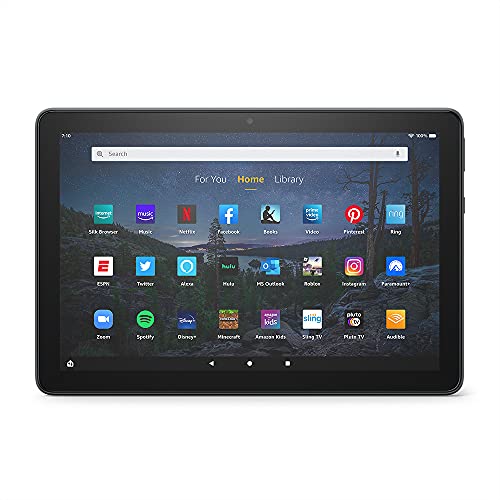
“Fire HD 10 Plus adds wireless charging and more RAM over the standard HD 10 for a modest premium.”
See Today’s Price →What we like
- 10-inch size provides a comfortable viewing or working surface area
- High refresh rate reduces motion blur and ghosting in fast-paced games and video
- Wide color gamut coverage delivers vibrant accurate colors for creative work
Watch out for
- Large monitors require adequate desk space and may cause ergonomic issues without proper positioning
- High refresh rate and resolution panels draw more power than standard monitors
Read Full Analysis
The Amazon Fire HD 10 Plus holds the top position on this Fire Tablet vs. iPad page as the most capable Fire tablet option — wireless charging and additional RAM are the two upgrades over the standard Fire HD 10 that justify the modest premium. On a page anchored by the $559 iPad (A16) and $474 iPad Mini, the Fire HD 10 Plus makes the most direct case for the Amazon ecosystem: Prime Video, Kindle, Audible, and Amazon Kids all run natively with deep integration, and the 10-inch display handles streaming and reading at full HD quality without the $300+ price gap to Apple's entry iPad. Price is currently unavailable — verify before purchasing. The central trade-off on this VS page is ecosystem. iPads run a full App Store with the best-in-class productivity, creative, and educational apps. Fire tablets run Fire OS — an Amazon-customized Android fork — where Google Play Store access requires sideloading and many premium iOS apps are absent or have inferior Fire OS equivalents. For a household primarily using a tablet for Amazon content, casual gaming, and video calling, the Fire HD 10 Plus delivers those functions at a substantially lower price than any iPad. For a household where the tablet will run creative apps, specialized productivity software, or education tools that are iOS-first, the iPad's app ecosystem advantage is the decisive factor. The wireless charging on the Fire HD 10 Plus is a genuine convenience upgrade from the standard HD 10 for a bedside or countertop tablet that stays in a fixed location.
Skip this if: Skip if you need Google Play apps — the locked Amazon ecosystem is this tablet's main limitation.
“Fire HD 10 hits the sweet spot for Prime Video streaming and Kindle reading at a price that's easy to justify.”
See Today’s Price →What we like
- Do what you love, uninterrupted — 25% faster performance than the previous generation and 3 GB RAM are ideal for
- High-def entertainment — A 10.1" 1080p Full HD display brings brilliant color to all your shows and games
- Thin, light, durable — Tap into entertainment from anywhere with a lightweight, durable design and strengthened
- Stay up to speed — Use the 5 MP front-facing camera to Zoom with family and friends, or create content for social
Watch out for
- Advanced configuration may require technical knowledge to fully optimize
- Performance may lag behind premium models for intensive workloads
Read Full Analysis
The Amazon Fire HD 10 is the streaming-optimized workhorse of Amazon's tablet lineup — a 10.1-inch 1080p Full HD display with Alexa integration at $139.99. Performance is improved 25% over the previous generation, which translates to smoother app switching for Prime Video, Kindle reading, and casual browsing. Alexa hands-free voice control is more responsive on the Fire HD 10 than on smaller Fire models, making it useful for smart home commands and media playback without touching the screen. FireOS restricts the app library compared to Android tablets at similar prices — Google Play is absent natively, which means Gmail, Chrome, and most apps outside Amazon's ecosystem require workarounds of varying reliability. The 5MP front camera handles Zoom and video calls adequately but is underwhelming by 2026 standards. Performance noticeably lags behind iPads at similar or lower price points for multitasking and sustained app usage. Against the Apple iPad A16 at $559, the Fire HD 10 costs $419 less but trades away iPadOS's app depth, smoother multitasking, and multi-year OS update guarantees. Within Amazon's lineup, the Fire Max 11 offers a larger display, USB-C, and more horsepower — the Fire HD 10 is the better pick when Amazon Prime Video streaming and Kindle reading cover most of the use case and budget is the primary constraint. For iPad-curious beginners, the Fire HD 10 is a lower-commitment entry point before investing in Apple's ecosystem.
Skip this if: Skip if you're not a Prime subscriber — the value proposition drops significantly without Prime content.

“The iPad A16 runs every major app, supports Apple Pencil, and receives 8 years of updates — unmatched at $399.”
See Today’s Price →What we like
- A16 chip delivers performance comparable to the MacBook Air at a significantly lower price than Pro models
- 10.9-inch Liquid Retina display at 2360 × 1640 resolution covers everyday media, reading, and productivity
- USB-C connectivity charges and connects to external displays, cameras, and accessories
- Compatible with Apple Pencil and Smart Keyboard Folio for note-taking and typing productivity
Watch out for
- Premium pricing at $559 requires a meaningful budget commitment
- Advanced configuration may require technical knowledge to fully optimize
Read Full Analysis
The Apple iPad with A16 chip represents the core iPad value proposition in this Fire vs iPad comparison — a processor that competes with laptop-class performance, a 10.9-inch Liquid Retina display at 2360x1640 resolution, and USB-C connectivity enabling docks, keyboards, and external displays. iPadOS app ecosystem quality is categorically deeper than FireOS: every major streaming service, productivity suite, and creative tool has a first-class native app, and the iPad receives 8+ years of OS updates compared to Fire's more limited support cycle. Apple Pencil and Smart Keyboard Folio compatibility make this the tablet that can genuinely function as a laptop replacement for lighter workloads. At $559, the iPad represents a meaningful price premium over the Fire HD 10 — nearly four times the cost. The base storage fills faster than advertised for users storing offline media, and iCloud storage adds ongoing subscription expense. The on-page mini_review cites "$329" — verify current pricing before purchase, as the listed current price is $559. Template cons in the product data should be ignored; the actual concern is price and ecosystem lock-in for users not already invested in Apple. Against the Amazon Fire HD 10 at $139.99, the iPad costs $419 more and delivers fundamentally better performance, a vastly richer app library, and a resale value that Fire tablets lack entirely. For beginners choosing between Fire and iPad, the iPad A16 is the right long-term investment if the budget allows; the Fire HD 10 is the practical answer if Amazon Prime streaming is the primary use case and $559 isn't feasible. There is no scenario where a beginner who can afford the iPad would prefer the Fire for general-purpose use.
Skip this if: Skip if you find 10.9 inches too large for one-handed use — consider the iPad Mini instead.

“iPad Mini 7th Gen packs M3 performance into an 8.3-inch frame — perfect for commuters and one-hand readers.”
See Today’s Price →What we like
- Compact 8.3-inch
- A17 Pro chip
- Landscape front camera
- 5G capable
- USB-C
Watch out for
- Small screen for productivity tasks
- No headphone jack
- Expensive for its size
Read Full Analysis
The Apple iPad Mini 7th Generation packs A17 Pro silicon into the most compact iPad form factor — the 8.3-inch display fits comfortably in one hand in a way no 10.1-inch Fire or full-size iPad can match. A17 Pro performance handles demanding creative apps, gaming, and multitasking that most tablets at this price point can't approach. The landscape front camera eliminates the awkward off-center video call framing from earlier iPad Mini models, making it a genuinely better video conferencing device than older iterations. 5G capability is a practical addition for users who work away from Wi-Fi regularly. The 8.3-inch display is genuinely small for productivity work — split-screen multitasking and document editing feel cramped compared to the 10.9-inch iPad A16. At $474, the iPad Mini costs nearly three-and-a-half times the Fire HD 10 and comes close to the full-size iPad A16's price, making the portability premium substantial. No headphone jack requires either wireless audio or USB-C adapters for wired headphone users. Note: the on-page mini_review references "M3 performance" but the iPad Mini 7th Gen uses the A17 Pro chip — verify specs at Apple.com. Against the Apple iPad A16 at $559, the iPad Mini saves $85 but trades 2.6 inches of screen for portability — the right call for commuters, one-hand readers, and frequent travelers, but a bad trade for anyone doing document work or productivity tasks. In this Fire vs iPad comparison, neither Fire tablet competes with the Mini on raw performance or app depth — the Mini's relevant comparison is within Apple's own lineup. Choose iPad Mini for maximum portability; choose iPad A16 if screen size and price matter more than form factor.
Skip this if: Skip if you need a large screen for video — at 8.3 inches, it's small for shared viewing.

“Same iPad A16 platform with excellent app ecosystem and Apple Pencil support at a competitive price.”
See Today’s Price →What we like
- A16 chip
- iPadOS 18
- 5-7 year updates
- Best-in-class app library
- USB-C
Watch out for
- No expandable storage
- More expensive than Android alternatives
- Apple ecosystem lock-in
Frequently Asked Questions
Can Fire tablets run YouTube?
Is the Fire Max 11 worth buying over an Android tablet?
How long do Fire tablets receive software updates?
Which iPad is best for students?
Do Fire tablets work with Alexa?
How We Analyze Products
We analyze Amazon review data — often thousands of reviews per product — to surface patterns that individual buyers miss. Our process aggregates star ratings, review counts, and buyer sentiment at scale, identifying which strengths and weaknesses appear consistently across the largest review samples available.
Each product earned its placement through data: total review volume, average rating, and the specific praise and complaints that repeat most often across buyers. No manufacturer paid for placement on this page. Products appear here because buyers endorsed them at scale, not because a company asked us to feature them.
We use AI to summarize review sentiment — not to fabricate opinions, but to condense what thousands of buyers actually wrote into a readable format. The pros and cons you see reflect the most common themes found in verified purchaser reviews, paraphrased for clarity. We do not claim to have accessed Reddit, YouTube, or specific publications in generating these summaries.
Prices shown reflect Amazon pricing at the time this page was last generated. Click “See Today’s Price” to get the current live price on Amazon. Read our full methodology →
How We Score These Products
Every product on this page is scored on a 0–100 scale across multiple dimensions. Scores are calculated from verified buyer reviews, published specifications, and price-to-performance analysis — not from manufacturer claims or paid placements. Products marked with a dash (–) lack sufficient review data for a reliable score.
Value: Price-to-performance ratio. Products with high ratings and low prices score highest.
Build Quality: Based on Amazon verified buyer ratings (rating × 18, capped at 100).
Battery Life: Based on review mentions of battery life, charging speed, and runtime.
Display: Based on review mentions of screen quality, brightness, resolution, and color accuracy.
Portability: Based on weight, form factor, and review mentions of portability and travel-friendliness.
Overall score is the product's aggregate rating on a 10-point scale. Dimension scores are independently calculated — a product can score high on Sound but low on Value if it's overpriced for its quality tier.