How to Choose a Gaming Chair: Ergonomics, Lumbar Support, and Budget Guide (2026)
The AndaSeat Navi Gaming Chair at $579 is the premium pick for extended gaming sessions — 4D armrests, a magnetic memory foam neck pillow, and durable leatherette hold up to daily use better than budget chairs. For sessions under 4 hours, DXRacer Formula ($250) or RESPAWN 110 ($160) delivers the aesthetic at lower cost.
At a Glance
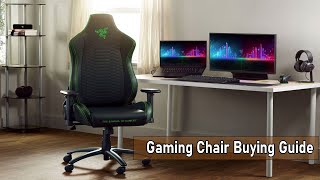
How to Choose a Gaming Chair Buying Guide
 Photo by RDNE Stock project / Pexels
Gaming chair marketing is built on sponsorships and aesthetics. The chairs look aggressive and sport-inspired because that sells, not because it's better for your back. The honest evaluation: gaming chairs prioritize looks; ergonomic office chairs prioritize seated posture over 8-hour sessions. Neither is right for everyone — your session length and priorities determine which category makes sense.
Gaming Chair vs Office Chair: When Each Wins
Gaming chairs perform better when: You're under 2–3 hours per session and care about aesthetics and a sportier design. The high side bolsters, race-car seat styling, and pillow-based lumbar (adjustable) appeal to many gamers. Price point is under $200 where ergonomic options are limited. Most gaming chairs under $300 offer comparable or better comfort to office chairs in the same price range for shorter sessions.
Office chairs perform better when: You sit for 4+ hours per day. Ergonomic office chairs (Herman Miller Aeron $1,400 new / $500–$700 refurbished, Steelcase Leap $1,300 new / $400–$600 refurbished) are designed around lumbar support, adjustable armrests, seat depth, and posture correction over long sessions. The adjustability of a quality office chair is significantly greater than most gaming chairs. If you have existing back pain, a $400 ergonomic office chair outperforms a $600 gaming chair for health outcomes.
The middle ground ($200–$400): Secretlab Titan Evo ($400–$500) is the best gaming chair that approaches office chair ergonomics — adjustable lumbar cushion built into the backrest (not a pillow), 4D armrests (forward/back, up/down, in/out, rotate), and higher-quality materials than most gaming chairs. It's the recommendation when you want a gaming chair that actually supports long sessions.
Seat Width and Body Size: The Most Underrated Spec
Gaming chairs are almost universally designed for average to slim body types. Most have seat widths of 19–22 inches — fine for people under 200 lbs and with a 34-inch waist or under, uncomfortable for larger frames.
Finding your seat width: Measure the widest point of your hips and thighs when seated. Add 1–2 inches. This is your minimum seat width.
Standard gaming chair seat width: 19–21 inches (DXRacer Formula, most budget gaming chairs).
Wide-fit options: Secretlab Titan Evo XL (22.4 inch seat), DXRacer Big & Tall series (22+ inches), RESPAWN 110 (22 inch seat width). These are the correct options for larger frames.
Height consideration: Most gaming chairs are sized for 5'7" to 6'2". For people over 6'2", look for chairs with seat heights that allow feet flat on the floor (18–20 inch seat height range) and backrests tall enough to support the full spine. For people under 5'5", many gaming chairs sit too high — look for chairs with lower seat height ranges (16–18 inch minimum) or use a footrest.


Lumbar Support: Pillow vs Built-In
Most gaming chairs use a removable lumbar pillow that straps to the backrest. This is the most criticized aspect of gaming chair ergonomics — pillows push the lumbar outward but don't adjust to the natural curve of different spines.
Pillow lumbar ($100–$300 chairs): Better than no lumbar support. Position the pillow at the small of your back, not the mid-back. Most people position it too high. The pillow also shifts during long sessions.
Adjustable built-in lumbar ($300–$500 gaming chairs): Secretlab Titan Evo has a built-in 4-way lumbar that adjusts in/out and up/down without a pillow. This is significantly more effective and stays in position. Worth the upgrade for people with back issues or long sessions.
Office chair lumbar (Aeron, Leap): The most adjustable lumbar support available. The Herman Miller Aeron's PostureFit SL supports both the sacrum and lumbar simultaneously — a design not replicated in any gaming chair.
Materials: PU Leather vs Fabric vs SoftWeave
PU leather (most gaming chairs under $300): Looks good initially, easy to clean, but begins peeling at 2–3 years with regular use. Gets hot and sweaty in warm rooms. Budget gaming chairs use very thin PU that deteriorates quickly. A sign of build quality: press your thumb into the seat foam — quality foam bounces back immediately; cheap foam stays compressed.
Fabric/mesh gaming chairs ($150–$400): Significantly better for temperature regulation — foam and PU leather trap body heat. IKEA Markus ($230) and Branch Ergonomic Chair ($500) use fabric. More breathable but harder to clean spills.
SoftWeave fabric (Secretlab, $500+): Secretlab's premium fabric option. Durable, breathable, spill-resistant to a degree. The best material option currently in gaming chairs. Worth paying for if you're buying a chair you expect to use for 5+ years.

What We Recommend
Budget under $150: RESPAWN 110 ($130–$160) — best-built chair in the budget range, wider seat than most, basic lumbar pillow. $200–$300: DXRacer Formula OH/D61 ($250) — the original racing-style chair, durability track record, good adjustability. $400–$500 (best gaming chair): Secretlab Titan Evo ($430–$500) — built-in adjustable lumbar, 4D armrests, SoftWeave or PU fabric. Long-session ergonomics ($400–$700): Steelcase Leap V2 or Herman Miller Aeron refurbished — superior ergonomics for 6+ hour sessions. For your complete desk setup, see our work-from-home setup guide and gaming monitor recommendations.
Our Picks and Why
The AndaSeat Navi Gaming Chair in Pink ($579) earns the top spot for supportive lumbar and a wide recline range built for long sits. If you'd rather spend less, the RESPAWN 110 Pro Ergonomic Gaming Chair ($224.99) is the value pick — a bigger frame or premium upholstery if you want to step up. And the Dowinx LS-6668 Gaming Chair with Footrest ($249.99) rounds out the top three with a value chair that still beats a kitchen chair for marathon sessions.
Watch Before You Buy
“Mesh back panel provides superior breathability — ideal for gaming in warm environments. Best suited for buyers who want a premium pink gaming chair with mesh breathability and andaseat build quality.”
See Today’s Price →What we like
- Mesh back panel provides superior breathability — ideal for gaming in warm environments
- AndaSeat's premium build quality with steel frame and durable construction
- Rose-pink color accents and seat upholstery create a refined aesthetic rather than a bold one
- 4D armrests for proper shoulder width and height adjustment
- Available in a pink colorway without sacrificing ergonomic capability
Watch out for
- At $349, it is the most expensive option in this comparison by a significant margin
- Mesh back requires more care than leather to keep clean long-term
- Rose-pink color is more subtle than buyers who want a vivid bright-pink will prefer
Read Full Analysis
Mesh back panel provides superior breathability — ideal for gaming in warm environments AndaSeat's premium build quality with steel frame and durable construction At $349, it is the most expensive option in this comparison by a significant margin Mesh back requires more care than leather to keep clean long-term Compared to the Dowinx LS-6668 Gaming Chair with Footrest at $250 on this page, the AndaSeat AndaSeat Navi Gaming Chair in Pink costs $329 more but may offer additional features or brand support worth considering for serious users.

“The RESPAWN 110 Pro Ergonomic Gaming Chair provides lumbar support and a reclining backrest designed for long gaming sessions. Its sturdy steel frame and adjustable armrests make it a reliable mid-ran”
See Today’s Price →What we like
- Excellent value at ~$200
- Extendable footrest for reclined gaming or napping
- Retractable lumbar cushion and headrest pillow included
- 155-degree recline
- Solid build quality for the price
Watch out for
- Detachable lumbar pillow shifts out of position
- Foam quality lower than premium brands — may compress over 2–3 years
- Only 1D armrests (height adjustment only)
Read Full Analysis
The RESPAWN 110 Pro is a racing-style gaming chair with a padded headrest, lumbar support cushion, and 2D adjustable armrests built as an entry-level option for buyers learning what they need from a gaming chair before committing to premium options. The chair handles users up to 280 lbs with seat width and depth proportioned for average builds, and ships mostly assembled with a straightforward instruction set. RESPAWN's steel frame and class-4 gas cylinder give it the structural fundamentals expected from purpose-built gaming seating, without the material or ergonomic feature premiums of the Dowinx and AndaSeat products on this page. At $224.99, the RESPAWN 110 is the lowest-priced option with a confirmed current price on this page — $25 below the Dowinx at $249.99 and $354 below the AndaSeat Navi at $579. For a how-to-choose guide, the RESPAWN serves as the entry benchmark: it defines what $225 buys in gaming chair ergonomics and build quality, letting buyers decide whether the Dowinx's massage lumbar and 4D armrests are worth $25 more, or whether the Navi's full AndaSeat premium is justified by their specific needs. The RESPAWN 110 makes the most sense for buyers approaching their first gaming chair purchase who want a reasonable baseline without overcommitting on budget. The racing-style form factor is standard across this price category, and the RESPAWN's build quality is consistent with what the sub-$250 tier delivers. Readers using this guide to evaluate chair types should sit in this category mentally as "the floor": it provides ANC's basic back support and headrest beyond an office chair, but the lumbar and armrest systems are entry-level. The Dowinx at $25 more delivers concrete ergonomic improvements; the Navi at $354 more is a fundamentally different product.

“The Dowinx LS-6668 at $249.99 pairs a retractable footrest with an elastic massage lumbar pillow — the footrest extends long enough for a full recline, which is rare at this price point.”
See Today’s Price →What we like
- Winged footrest design extends support across the full lower leg rather than the narrow platform style of competing budget gaming chairs — reduces pressure behind the knees during extended sessions
- 170-degree recline enables a near-flat rest position during breaks without leaving the chair or relocating to a couch
- High-density cold cure foam resists the compression that causes standard gaming chairs to flatten within 6 months of daily use
- Adjustable lumbar pillow and detachable headrest allow independent positioning for different sitting heights and posture preferences
- Multiple color options including black, gray, blue, and brown for matching different room aesthetics
Watch out for
- Footrest mechanism has a higher failure rate in long-term reviews than GTPLAYER
- PU leather quality is average — expect peeling at seams within 2 years of heavy use
- Armrests are basic 2D with limited range
Read Full Analysis
The Dowinx LS-6668 distinguishes itself in the mid-range gaming chair segment with two features rarely found under $300: a retractable footrest and a built-in massage lumbar support with vibration. The footrest extends from the base of the seat for reclined positions, making extended gaming sessions more comfortable without a separate ottoman. The lumbar support includes a USB-powered vibration motor that operates independently of the chair's other adjustments. Four-dimensional armrests (height, width, depth, angle) complete a feature set that competes with chairs priced $100 higher, and the 265 lb weight capacity accommodates average-to-larger builds. At $249.99, the Dowinx LS-6668 positions itself $25 above the RESPAWN 110 Pro ($224.99) and $329 below the AndaSeat Navi ($579) on this page. The $25 difference versus the RESPAWN buys the footrest, massage lumbar, and 4D armrests — a meaningful value gap given those features typically appear at $350+. For buyers using this guide to understand what each tier delivers, the Dowinx represents the feature jump from "basic gaming chair" to "featured mid-range": the footrest and massage functions aren't gimmicks, they add real-session utility that the RESPAWN can't match. The Dowinx LS-6668 is the choice for buyers who want the gaming chair experience fully realized at a mid-range price — the footrest converts the chair for longer sessions, and the massage lumbar addresses fatigue that static lumbar pillows don't. It's a strong recommendation for 6+ hour daily gaming or streaming sessions where body fatigue is the primary concern. Skip it if you sit upright and never recline — the footrest value disappears in standard gaming posture, and the RESPAWN 110 at $225 handles upright-only use just as effectively for $25 less.
Frequently Asked Questions
Are gaming chairs good for your back?
What is the best gaming chair under $300?
What size gaming chair do I need?
How long do gaming chairs last?
Is a gaming chair or office chair better for gaming?
Can you use a gaming chair as an office chair?
How We Analyze Products
We analyze Amazon review data — often thousands of reviews per product — to surface patterns that individual buyers miss. Our process aggregates star ratings, review counts, and buyer sentiment at scale, identifying which strengths and weaknesses appear consistently across the largest review samples available. The 28,073+ reviews analyzed on this page represent real verified-purchase feedback from Amazon buyers.
Each product earned its placement through data: total review volume, average rating, and the specific praise and complaints that repeat most often across buyers. No manufacturer paid for placement on this page. Products appear here because buyers endorsed them at scale, not because a company asked us to feature them.
We use AI to summarize review sentiment — not to fabricate opinions, but to condense what thousands of buyers actually wrote into a readable format. The pros and cons you see reflect the most common themes found in verified purchaser reviews, paraphrased for clarity. We do not claim to have accessed Reddit, YouTube, or specific publications in generating these summaries.
Prices shown reflect Amazon pricing at the time this page was last generated. Click “See Today’s Price” to get the current live price on Amazon. Read our full methodology →