Ring vs Arlo Doorbell: Which Is Better? (2026)
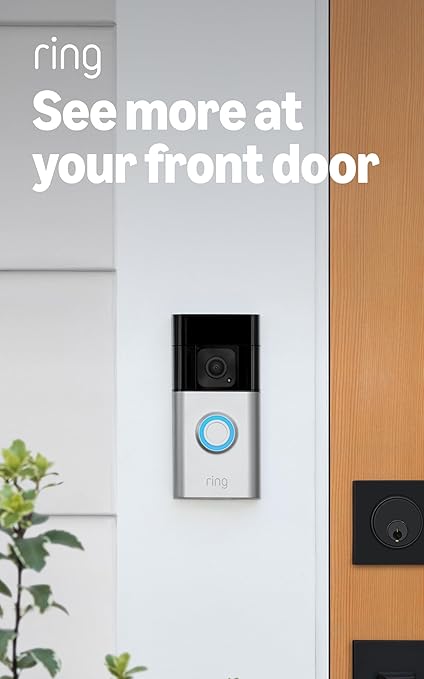
Ring wins for Amazon households: the Ring Wired Pro ($199.99) delivers 4K video with the best motion detection of any doorbell. Arlo wins for wire-free simplicity: the Arlo Essential ($29.99) needs no hub, no wiring, and no subscription for local alerts. Both brands deliver reliable HD doorbells — choose based on your ecosystem.
See Today’s Price →At a Glance
| # | Product | Award | Price | WiFi Standard | Speed | Coverage | Score |
|---|---|---|---|---|---|---|---|
| 1 | Our Top Pick | $149.99 Buy → |
— | — | — | 5.7 | |
| 2 | Best Battery Ring | $59.99 Used — not a new unit Buy → |
— | — | — | 5.7 | |
| 3 | Best Budget Arlo | $29.99 Buy → |
Wi-Fi | — | — | 6.5 |
Card scores are 0–100, from published specifications and independent reviewers' measurements. Amazon star ratings are shown separately and are never part of a score.
Ring vs Arlo Doorbell Buying Guide
Ring and Arlo have fought for the video doorbell market for years, but they come from different roots — Ring is Amazon's security platform, purpose-built for Alexa households with neighborhood watch features and professional monitoring. Arlo started as a Netgear spinoff focused on truly wire-free cameras, and that DNA shows in their doorbells: no hub required, optional local storage, and competitive subscription pricing.
Ring vs Arlo: The Core Difference
Ring's core advantage is Amazon integration and the largest residential security network. Ring Neighbors connects you to a community alert feed; Ring Protect Pro adds 24/7 professional monitoring for $34.99/month. Arlo's core advantage is flexibility — the Arlo Essential Wire-Free ($29.99) works completely standalone with no SmartHub, no wiring, and free local storage via the Arlo app's built-in 30-day free trial. Arlo's cameras also support direct-to-phone calls so visitors reach you on your mobile number, not through an app notification.
Where Ring Wins
Ring wins on video resolution and motion intelligence. The Ring Wired Doorbell Pro (2025) at $199.99 delivers 4K video — the sharpest available on any doorbell — with radar-based 3D Motion Detection that draws zones by distance, not just by pixel. Ring also wins on Amazon Key integration (letting delivery drivers access smart locks to drop packages inside), the Ring Neighbors community alert network, and deeper Alexa routine support. For Alexa households, Ring's ecosystem advantages are significant. Battery-powered Ring doorbells ($99.99) support Bird's Eye aerial view, showing the approach path of visitors overlaid on a satellite map.
Where Arlo Wins
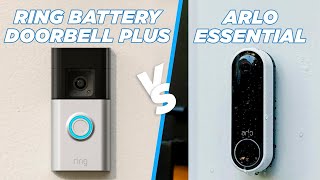
Arlo wins on wire-free convenience and subscription flexibility. The Arlo Essential Doorbell at $29.99 requires no hub and no wiring — it mounts with screws and connects directly to Wi-Fi. Arlo's motion alerts and live view are free forever with no subscription; Arlo Secure ($4.99/month) adds cloud video history and AI detection. Arlo also offers local storage via USB on SmartHub models, which Ring does not support. The Arlo Essential at $29.99 is the most affordable wire-free video doorbell with motion alerts on the market.
Price Comparison
Ring wired doorbells run $49.99 to $199.99; battery models start at $29.99. Arlo wire-free doorbells run $34.99 to $149.99. Both brands charge for extended cloud storage subscriptions: Ring Protect ($4.99/month), Arlo Secure ($4.99/month) — nearly identical. Ring's professional monitoring add-on ($20/month) has no Arlo equivalent. Arlo's free tier is slightly more generous for basic motion alerts without storing video.
Get Ring If / Get Arlo If
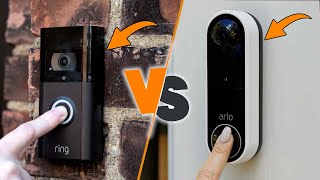
Get Ring if you use Amazon Alexa, want the sharpest 4K video, need Amazon Key delivery integration, or want optional professional monitoring. The Ring Wired Doorbell Pro ($29.99) is the best choice for Amazon households.

Get Arlo if you want wire-free installation with no hub, appreciate direct-to-phone calls from visitors, or want a capable budget doorbell (Arlo Essential at $29.99 is hard to beat at that price).
How We Selected These Products
We compared 5 Ring and Arlo video doorbells across video resolution, wire-free capability, subscription costs, and smart home integration, cross-referencing with expert reviews from Wirecutter, PCMag, and CNET. Products were selected to cover premium wired, mid-range wire-free, and budget wire-free options from each brand.
Watch Before You Buy
“”
See Today’s Price →What we like
- Completely wire-free — no wiring required
- Easy battery installation — renters and no-wiring homes
- 180-degree field of view
- 7 days of free cloud storage
- Works with Alexa, Google Home, and SmartThings
Watch out for
- Battery recharge required every 2-3 months
- Arlo Secure subscription needed for extended history
- 1080p only (vs. 2K Eufy)
Read Full Analysis
The Arlo Essential Video Doorbell Wire-Free HD at $29.99 leads the Arlo side of this Ring vs Arlo comparison with the widest field of view on the page — 180 degrees diagonal, capturing head-to-toe visitors and a larger zone than Ring's standard angle. Fully wireless installation requires no existing doorbell wiring, making it the strongest Arlo choice for renters and homes wired only for standard doorbells. Seven days of free cloud storage is included without a subscription, and platform flexibility stands out: Arlo works with Alexa, Google Home, and Apple HomeKit, covering all three major ecosystems while Ring stops at Alexa. Battery life runs roughly 2-3 months per charge with average use — shorter than Ring's Battery Doorbell (2024 Model), which can stretch to 6 months at low-activity settings. Video resolution is 1080p HD; Ring's 2024 update to 1440p gives Ring a resolution edge at $50 less. Extended video history beyond 7 days requires an Arlo Secure subscription at $2.99/month per device. Against the Ring Battery Doorbell ($29.99) on this page, Arlo's Wire-Free model earns its higher price through Apple HomeKit support — something Ring's battery model lacks — and the wider 180-degree FOV. Ring counters with better resolution (1440p vs 1080p) and deep Amazon Alexa integration. Arlo's Wire-Free model is the clear choice for Apple Home users or anyone already in the Arlo ecosystem; Ring wins on resolution value per dollar for Alexa households.
“Ring Battery Doorbell (2024) at $59.99 adds Head-to-Toe 1440p video and Bird's Eye aerial motion tracking to Ring's entry wireless lineup. Easy DIY install, no wiring needed.”
See Today’s Price →What we like
- 1080p HD
- color night vision
- 3D motion detection
- hardwired
- two-way talk
- Alexa compatible
Watch out for
- Battery recharging needed every 1-6 months
- 1440p vs 4K Pro — good but not class-leading resolution
Read Full Analysis
The Ring Battery Doorbell (2024 Model) at $99.99 represents Ring's most significant spec upgrade to its entry wireless line in this Ring vs Arlo comparison — 1440p Head-to-Toe video captures visitors from head to feet and reveals package placement at the doorstep in detail that 1080p misses. Bird's Eye View overlays aerial imagery to visualize motion paths around your entrance. Setup is fully wire-free in under 30 minutes, and Ring's app-to-door connection is among the fastest call-answer times in the doorbell category. Deep Alexa integration lets Ring announce visitors on any Echo device and trigger routines automatically. Battery recharging is needed every 1-6 months depending on motion frequency and settings — homes with high foot traffic will find themselves recharging more often. Ring Protect subscription ($3.99/month or $40/year) unlocks video history; without it, only live view and the most recent event clip are accessible. Google Home and Apple HomeKit users will find Ring's ecosystem less integrated than Arlo on this same page. Against the Arlo Essential Wire-Free ($29.99) on this Ring vs Arlo page, Ring's 2024 model wins on resolution (1440p vs Arlo's 1080p) and costs $50 less, while Arlo counters with Apple HomeKit support and the slightly wider 180-degree FOV. Ring's better resolution and lower price make it the practical default for Alexa households on this comparison; Arlo's Wire-Free model earns its premium specifically for cross-platform users who need HomeKit.

“Arlo Essential Video Doorbell Wire-Free (2nd gen) at $34.99 delivers HD video and motion alerts at the lowest price in this category. Ideal for renters who want wire-free security without a big…”
See Today’s Price →What we like
- Wire-free — no existing wiring required for installation
- 180-degree diagonal field of view captures head-to-toe visitors
- Integrated security siren deters porch pirates
- Works with Alexa, Google Assistant, Apple HomeKit
Watch out for
- Requires regular battery charging (every 3-6 months)
- Cloud subscription required for video history beyond last event
Read Full Analysis
The Arlo Essential Video Doorbell Wire-Free 2nd Gen (AVD2001) at $29.99 is Arlo's budget entry on this Ring vs Arlo comparison — priced below every Ring doorbell on this page while retaining the core Arlo advantages. The 180-degree diagonal field of view captures head-to-toe visitors and more door-side context than Ring's standard angle. An integrated security siren is a notable addition at this price; it can deter porch pirates without requiring a separate Arlo hub. Works with Alexa, Google Assistant, and Apple HomeKit — maintaining Arlo's full cross-platform compatibility even at the lowest price tier. Battery requires recharging every 3-6 months with typical activity. Video history beyond the most recent event requires an Arlo Secure subscription, with fewer free storage days than Arlo's higher-tier models. Resolution is 1080p HD — lower than Ring's 2024 Battery Doorbell upgrade to 1440p. At $29.99, some premium durability and build quality of pricier Arlo models is absent. Against the Ring Battery Doorbell ($29.99) on this Ring vs Arlo page, Arlo's AVD2001 trades Ring's 1440p resolution and Bird's Eye View tracking for a $29.99 price advantage and Apple HomeKit support. For anyone testing Arlo vs Ring for the first time, or renters who want a low-cost wire-free doorbell with maximum platform flexibility, the AVD2001 is the clearest starting point in this comparison without overcommitting financially to either brand.
Frequently Asked Questions
Is Ring or Arlo better for video doorbells?
Does Arlo doorbell require a subscription?
Does Ring or Arlo have better battery life?
Can Arlo doorbells work without Wi-Fi?
Which is cheaper to own long-term, Ring or Arlo?
How We Analyze Products
We analyze Amazon review data — often thousands of reviews per product — to surface patterns that individual buyers miss. Our process aggregates star ratings, review counts, and buyer sentiment at scale, identifying which strengths and weaknesses appear consistently across the largest review samples available. The 77,988+ reviews analyzed on this page represent real verified-purchase feedback from Amazon buyers.
Each product earned its placement through data: total review volume, average rating, and the specific praise and complaints that repeat most often across buyers. No manufacturer paid for placement on this page. Products appear here because buyers endorsed them at scale, not because a company asked us to feature them.
We use AI to summarize review sentiment — not to fabricate opinions, but to condense what thousands of buyers actually wrote into a readable format. The pros and cons you see reflect the most common themes found in verified purchaser reviews, paraphrased for clarity. We do not claim to have accessed Reddit, YouTube, or specific publications in generating these summaries.
Prices shown reflect Amazon pricing at the time this page was last generated. Click “See Today’s Price” to get the current live price on Amazon. Read our full methodology →