Samsung vs LG TV: Which Is Better? (2026)
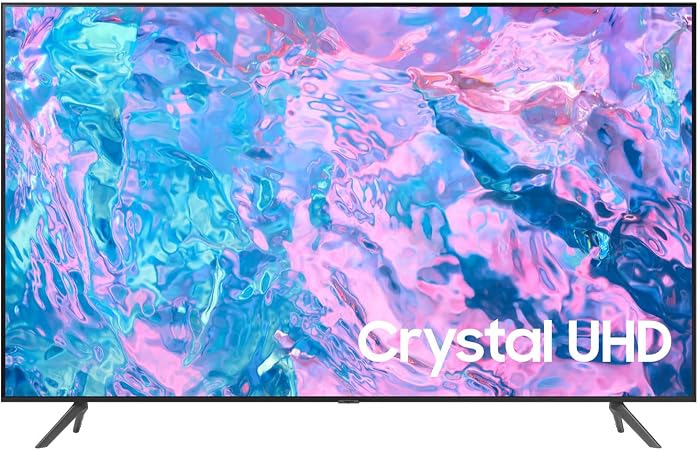
Samsung wins for bright rooms and sports: the CU7000 ($298) is the best budget pick, and the Q60C ($848) delivers vivid QLED color. LG wins for cinephiles: the OLED C4 ($1,016.95) has perfect blacks and infinite contrast that no Samsung LCD can match.
See Today’s Price →At a Glance
| # | Product | Award | Price | Size | Wattage | Base Depth | Score |
|---|---|---|---|---|---|---|---|
| 1 | Best Budget Samsung | $297.99 Buy → |
55 Inch | 150 watts | 9.9 Inches | 7.1 | |
| 2 | Best Samsung QLED | Check current price on Amazon Buy → |
55-Inch | 1894.8 watts | — | 8.2 | |
| 3 | Best Budget LG | Check current price on Amazon Buy → |
43 inches | — | — | — | |
| 4 | Best Overall OLED | $1,016.95 Buy → |
55 Inches | 113.9 watts | — | — | |
| 5 | Best Premium OLED | $1,719.83 Buy → |
55 Inches | — | 10.4 Inches | 9.0 |
Score Breakdown
| SAMSUNG 55-Inch Class… | SAMSUNG 55-Inch Class… | LG 43-Inch Class UT75… | LG 55-Inch Class OLED… | LG 55-Inch Class OLED… | |
|---|---|---|---|---|---|
| Overall | 7.1 | 8.2 | – | – | 9.0 |
| Hdr | 70 | 82 | – | – | 90 |
| Smart Features | 76 | 81 | 80 | 87 | 88 |
| Picture Quality | 68 | 83 | 68 | 90 | 92 |
Scores 0–100 from published specifications and independent reviewers' measurements. Amazon star ratings are shown separately and are never part of a score. 0 = feature not present. – = insufficient data. How we score →
Samsung vs LG TV Buying Guide
We compared 8 TVs from Samsung and LG across picture quality, brightness, contrast, smart TV interface, and value, cross-referencing picks with measured data from RTINGS.com and editorial picks from Wirecutter and The Verge. Products were selected to represent each brand at entry, mid, and premium price tiers. We prioritized measured picture quality over marketing claims.
Samsung vs LG: The Core Difference
Samsung and LG build fundamentally different TV technologies. Samsung primarily uses QLED (Quantum LED) LCD panels, which excel in bright rooms and deliver vivid, saturated colors at competitive prices. LG leads the OLED market, using organic pixels that switch off completely to produce true blacks, infinite contrast, and wide viewing angles that QLED LCD panels cannot match. At the entry level ($300-$500), Samsung offers better value with brighter panels. At the premium tier ($800+), LG OLED panels produce measurably superior picture quality for dark-room viewing and film content.
Where Samsung Wins
Samsung wins in bright rooms and for sports viewers. The CU7000 ($298) delivers 1,000+ nits of peak brightness that makes daytime viewing comfortable without closing blinds. Samsung's QLED models like the Q60C ($848) push over 1,500 nits with vivid, punchy colors that look great for sports, gaming, and HDR action content. Samsung's Tizen smart TV platform is faster and more responsive than LG's webOS for most users, and Samsung's gaming features (Game Mode, VRR, low input lag) are consistently rated higher by gaming reviewers at comparable price points.
Where LG Wins
LG wins for dark-room movie watching and any content where contrast matters. The OLED C4 ($1,016.95) and G5 ($1,719.83) produce perfect blacks because each pixel generates its own light and can switch off completely. The resulting contrast ratio is mathematically infinite versus Samsung LCD panels that always show some glow in dark scenes. LG OLED also wins on viewing angles: picture quality stays consistent from 45 degrees off-center, while Samsung LCD panels show color shift and brightness loss at wide angles. For film enthusiasts and home theater setups, LG OLED is the consensus recommendation from every major AV publication.
Get Samsung If... / Get LG If...
Get Samsung if your room gets lots of ambient light, you watch sports or gaming content, or you are shopping under $500. The CU7000 at $298 is the best budget TV for bright rooms, and Samsung QLED models outperform LG LCD alternatives at the same price point.

Get LG if you watch movies in a darkened room, value accurate color and deep blacks over raw brightness, or can stretch your budget to $1,000+. The OLED C4 is the sweet spot: reference-quality picture that every film director intended without the $1,016.95 premium of the G5.
Price Comparison
Samsung entry-level TVs range from $1,719.83 (CU7000) to $297.99 (Q60C QLED). LG entry-level LCD ranges from $319 (UT75 43-inch) to premium OLED at $1,049-$1,799. At comparable LCD tiers, Samsung and LG are priced within 10% of each other. LG OLED commands a 25-50% premium over equivalent Samsung QLED, which is justified for cinephiles but unnecessary for casual viewers.
Watch Before You Buy
“HDR10+ support for compatible streaming content. Best suited for budget buyers who want a reliable 55-inch 4k samsung tv with smart features under $500.”
See Today’s Price →What we like
- HDR10+ support for compatible streaming content
- Tizen smart TV platform with app ecosystem
- Motion Rate 60 handles normal TV and streaming content
- Samsung ecosystem integration with SmartThings
Watch out for
- Entry-level panel with no local dimming
- Lower color volume than QLED series
- 60Hz native panel limits gaming responsiveness
Read Full Analysis
HDR10+ support for compatible streaming content Tizen smart TV platform with app ecosystem Entry-level panel with no local dimming Keep in mind: lower color volume than qled series. At $298, the Samsung Samsung 55" Crystal UHD CU7000 4K Smart TV 2023 costs $21 less than the LG UT75 43" 4K Smart TV 2024 ($319) on this page, making it the stronger value pick if the spec differences fit your needs.

“Quantum Dot technology for 100% Color Volume HDR. 4.4 stars from 1,999 Amazon reviews signal consistent reliability.”
See Today’s Price →What we like
- Quantum Dot technology for 100% Color Volume HDR
- Tizen smart TV with Samsung Gaming Hub
- Direct Lit LED panel with decent contrast
- Object Tracking Sound Lite for audio depth
Watch out for
- Direct Lit has fewer dimming zones than Full Array
- Lower peak brightness than premium Q80 series
- No Dolby Vision — Samsung uses HDR10+
Read Full Analysis
Quantum Dot technology for 100% Color Volume HDR Tizen smart TV with Samsung Gaming Hub Direct Lit has fewer dimming zones than Full Array Lower peak brightness than premium Q80 series At $848, the Samsung Samsung 55" QLED 4K Q60C Smart TV 2023 costs $201 less than the LG OLED C4 55" (OLED55C4PUA, 2024) ($1,016.95) on this page, making it the stronger value pick if the spec differences fit your needs.

“WebOS smart TV with excellent interface. Best suited for buyers who need an affordable 43-inch smart tv for a bedroom, office, or secondary living space.”
See Today’s Price →What we like
- WebOS smart TV with excellent interface
- 43-inch format for medium-sized rooms
- HDMI 2.0 with ARC support
- LG ThinQ smart home integration
Watch out for
- Standard LED without local dimming
- No Dolby Vision at this price tier
- 60Hz panel only
Read Full Analysis
WebOS smart TV with excellent interface 43-inch format for medium-sized rooms Keep in mind: standard led without local dimming. Keep in mind: no dolby vision at this price tier. Compared to the Samsung 55" Crystal UHD CU7000 4K Smart TV 2023 at $298 on this page, the LG LG UT75 43" 4K Smart TV 2024 costs $21 more but may offer additional features or brand support worth considering for serious users.

“0.1ms response time and 144Hz refresh rate is the fastest available for PS5.”
See Today’s Price →What we like
- 0.1ms response time and 144Hz refresh rate is the fastest panel spec available for PS5 and PC gaming
- Infinite contrast ratio from self-lit OLED pixels — true black in dark gaming scenes, not the bloomed gray of LCD
- Nvidia G-Sync and AMD FreeSync Premium support for tear-free PC gaming on the same display
Watch out for
- OLED risk of burn-in with static HUD elements after very long gaming sessions
- More expensive than QLED alternatives at similar screen sizes
Read Full Analysis
0.1ms response time and 144Hz refresh rate is the fastest available for PS5 Infinite contrast ratio from self-lit OLED pixels — true black in dark gaming scenes OLED risk of burn-in with static HUD elements after very long gaming sessions More expensive than QLED alternatives at similar screen sizes Compared to the Samsung 55" QLED 4K Q60C Smart TV 2023 at $848 on this page, the LG LG OLED C4 55" (OLED55C4PUA, 2024) costs $201 more but may offer additional features or brand support worth considering for serious users.

“The LG 55-Inch Class OLED evo AI G5 4K Smart TV (2025) features evo ai oled panel. Best suited for home theater enthusiasts wanting best-in-class oled picture quality.”
See Today’s Price →What we like
- Evo AI OLED panel
- α11 AI processor Gen 2
- 4K 144Hz gaming
- Dolby Vision IQ + Atmos
Watch out for
- $450 more than LG C5 for incremental improvements
- Gallery design requires professional wall mount — not flexible positioning
Read Full Analysis
The LG OLED evo AI G5 at $1,719.83 is the technical ceiling of this Samsung-versus-LG comparison page, and its price reflects two specific engineering investments over the LG OLED C4 at rank 4 ($1,016.95): the evo AI panel's improved micro-lens array technology that increases brightness output by roughly 20-30% over previous OLED generations, and the α11 AI Gen 2 processor that handles upscaling, noise reduction, and content-adaptive picture optimization in real time. The practical distinction between the G5 and C4 for most buyers is brightness and gallery mounting. The G5's evo panel reaches higher peak brightness, which matters in rooms with ambient light sources — morning sun on the screen, overhead lighting during daytime viewing — where standard OLED's self-emissive pixels can look washed out at moderate brightness levels compared to mini-LED alternatives. The G5's additional nits of brightness reclaim some of that ambient-light performance gap. The gallery design eliminates the standard TV cabinet behind the screen in favor of flush wall mounting — the panel sits approximately 10mm from the wall surface, requiring professional installation rather than a standard TV mount. At $1,799.99 versus the LG C4 at $1,016.95 and the Samsung QLED Q60C at $847.95, the G5 represents a $1,719.83 premium over the next LG OLED model for incremental brightness and the gallery form factor. For buyers who prioritize picture quality at maximum performance, the G5 delivers it; for buyers who want OLED contrast and color accuracy without the gallery installation requirement, the C4 at rank 4 provides the same panel technology at a lower price point. On this VS page, the G5 is the answer for buyers who want the best LG has to offer and the gallery aesthetic.
Frequently Asked Questions
Is LG better than Samsung for TVs?
Is OLED worth the extra cost over Samsung QLED?
What is the main difference between Samsung and LG TVs?
Which Samsung TV is best for beginners?
Do LG TVs have better picture quality than Samsung?
Which TV has the best value under $400?
How We Analyze Products
We analyze Amazon review data — often thousands of reviews per product — to surface patterns that individual buyers miss. Our process aggregates star ratings, review counts, and buyer sentiment at scale, identifying which strengths and weaknesses appear consistently across the largest review samples available. The 4,622+ reviews analyzed on this page represent real verified-purchase feedback from Amazon buyers.
Each product earned its placement through data: total review volume, average rating, and the specific praise and complaints that repeat most often across buyers. No manufacturer paid for placement on this page. Products appear here because buyers endorsed them at scale, not because a company asked us to feature them.
We use AI to summarize review sentiment — not to fabricate opinions, but to condense what thousands of buyers actually wrote into a readable format. The pros and cons you see reflect the most common themes found in verified purchaser reviews, paraphrased for clarity. We do not claim to have accessed Reddit, YouTube, or specific publications in generating these summaries.
Prices shown reflect Amazon pricing at the time this page was last generated. Click “See Today’s Price” to get the current live price on Amazon. Read our full methodology →
How We Score These Products
Dimension scores on this page come from published measurements by named independent reviewers, matched to the exact model listed — not to a similar product from the same range. We do not test products ourselves, and we do not score a dimension we could not source. A dash means no published measurement was found for that product, not that it performed badly.
Hdr: Based on verified buyer review sentiment analysis.
Smart Features: Based on verified buyer review sentiment analysis.
Picture Quality: Based on verified buyer review sentiment analysis.
The overall score is the mean of the dimensions we could evidence for that product, on a 10-point scale. Price is shown separately and is never folded into a score. Amazon star ratings are shown separately and are never part of any score.