Samsung vs WD: Which Is Better? (2026)

Samsung wins for professional workloads — the 9100 PRO PCIe 5.0 ($299.27/2TB) has better sustained write performance. WD Black wins for gaming and value — the SN8100 matches Samsung at PCIe 5.0 read speeds while saving $29, and the SN850X dominates PS5 upgrades. For most builders: WD Black SN8100.
See Today’s Price →At a Glance
| # | Product | Award | Price | Capacity | Interface | Read Speed | Score |
|---|---|---|---|---|---|---|---|
| 1 | Best Value Samsung | $299 Buy → |
— | — | — | 8.4 | |
| 2 | Best Samsung 1TB | $429 Buy → |
2 TB | Solid State | 7450 MB/s | 8.4 | |
| 3 | Best Samsung PCIe 5.0 | $399 Buy → |
— | — | — | 8.4 | |
| 4 | Best Samsung High-Capacity | $780 Buy → |
— | — | — | 8.4 | |
| 5 | Best Value WD | $299 Buy → |
— | — | — | 8.8 | |
| 6 | Best WD PCIe 5.0 | $399 Buy → |
— | — | — | 8.4 | |
| 7 | Best WD 4TB | $599 Buy → |
— | — | — | 8.8 | |
| 8 | Best WD Heatsink | $649 Buy → |
— | — | — | 8.4 |
Score Breakdown
| SAMSUNG 980 PRO SSD w… | Samsung 990 PRO SSD 2… | Samsung SSD 9100 PRO … | Samsung SSD 9100 PRO … | WD_Black SN7100 2TB N… | WD_Black SN8100 2TB N… | WD_BLACK SN850X 4TB N… | WD_Black SN850X 4TB N… | |
|---|---|---|---|---|---|---|---|---|
| Overall | 8.4 | 8.4 | 8.4 | 8.4 | 8.8 | 8.4 | 8.8 | 8.4 |
| Value | 95 | 80 | 83 | 65 | 95 | 83 | 71 | 69 |
| Build Quality | 86 | 86 | 86 | 86 | 86 | 86 | 86 | 86 |
| Speed | 80 | 80 | 80 | 80 | 86 | 80 | 86 | 80 |
| Capacity Value | – | 85 | – | – | – | – | – | – |
Scores 0–100 derived from published specifications, verified buyer reviews, and price-to-performance analysis. 0 = feature not present. – = insufficient data. How we score →
Samsung vs WD Buying Guide
Samsung and WD Black are the premier NVMe SSD brands for performance storage in 2026. Samsung's 9-series and WD's SN-series both now offer PCIe 5.0 options alongside mature PCIe 4.0 lineups. Both brands manufacture their own flash — a key differentiator from Seagate and Kingston — meaning Samsung V-NAND and WD BiCS NAND development stays in-house.
Samsung vs WD Black NVMe: The Core Difference
Samsung's NVMe identity is built on reliability and consistent firmware. The 990 Pro ($299.27/1TB) and 9100 PRO ($489/2TB) sit at the top of every professional recommendation list thanks to Samsung's decades of NAND experience and best-in-class SLC cache algorithms. Samsung's custom Elpis/Prism controller chips deliver exceptional sustained write performance that competitors often can't match after cache exhaustion.
WD Black's identity is gaming-optimized performance and competitive pricing. The SN7100 ($346.53/2TB) and SN8100 ($459.99/2TB) are engineered around the workloads that matter to gamers — high-queue-depth random reads, fast game loading, and PlayStation 5 certification (SN850X). WD Black SSDs also offer slightly better per-GB pricing on high-capacity configurations compared to Samsung equivalents.
Where Samsung Wins
Samsung wins on consistent sustained performance and long-term reliability track record. In extensive drive testing, Samsung 990 Pro and 9100 PRO drives maintain write speeds after SLC cache fill better than WD Black equivalents — critical for large file transfers, video editing, and game installs. The 9100 PRO PCIe 5.0 ($489/2TB) achieves up to 14,800 MB/s sequential read, marginally ahead of the WD SN8100 ($459.99/2TB). Samsung's 5-year warranty and industry-leading workload rating (600 TBW for 1TB) give it an edge for professional workloads.
Where WD Black Wins
WD Black wins on gaming use cases and value at high capacities. The SN850X is the most-recommended SSD for PlayStation 5 upgrades due to its read speed consistency at random 4K queues. At 4TB, the SN850X ($653) costs less than Samsung's 4TB options, and WD Black's per-GB pricing on the SN7100 2TB ($346.53) undercuts Samsung 990 Pro 2TB pricing. For a pure gaming PC where sequential write longevity matters less than read speed consistency, WD Black delivers equivalent performance at lower cost.
Choose Samsung If... / Choose WD Black If...
Get Samsung if you're doing sustained write workloads — video editing, large asset management, frequent large file transfers — where Samsung's superior post-cache sustained performance prevents slowdowns. The 9100 PRO PCIe 5.0 is the fastest Samsung NVMe available and the choice for demanding workstation builds.

Get WD Black if you want gaming-optimized performance, PlayStation 5 compatibility (SN850X), or maximum capacity at lower per-GB cost. The SN8100 ($459.99/2TB) matches the Samsung 9100 PRO in raw sequential reads while saving $29 at the same capacity.
Price Comparison
Samsung NVMe SSDs in this comparison range from $318.35 (980 Pro 1TB) to $799.99 (9100 PRO 4TB). WD Black ranges from $346.53 (SN7100 2TB) to $679.99 (SN850X 4TB with Heatsink). At 2TB, WD Black SN8100 ($459.99) vs Samsung 9100 PRO ($489) shows WD at a $29 discount for equivalent PCIe 5.0 sequential performance. At 4TB, WD Black SN850X ($653) undercuts Samsung 9100 PRO 4TB ($799.99) by $147 — a significant saving for high-capacity builds.
Watch Before You Buy


“Samsung 980 Pro with Heatsink: proven PCIe 4.0 performance with thermal protection.”
See Today’s Price →What we like
- NVMe PCIe 4.0 interface delivers up to 7,000MB/s sequential read — about 13 times faster than a standard SATA solid state drive
- Custom nickel-coated controller manages heat buildup that throttles NVMe drives under sustained workloads without an aftermarket cooler
- 1TB and 2TB capacity options handle a full game library, OS, and application installs on a single drive without compromise
- Included heatsink reduces surface temperature under sustained read/write workloads by dissipating heat into case airflow
Watch out for
- NVMe SSDs require an M.2 slot — not compatible with older SATA-only systems
- Higher cost per gigabyte than traditional HDDs for mass storage use
Read Full Analysis
The Samsung 980 Pro SSD delivers NVMe PCIe 4.0 speeds up to 7,000MB/s sequential read — approximately 13 times faster than a standard SATA SSD — through Samsung's custom nickel-coated controller that actively manages thermal buildup under sustained workloads. The bundled heatsink dissipates heat into case airflow, preventing the thermal throttling that limits performance on drives without thermal management during large file operations. As the rank-1 Samsung option on this Samsung vs. WD NVMe comparison, the 980 Pro at $318.35 provides Samsung's PCIe 4.0 tier with the heatsink advantage. The WD_Black SN7100 2TB ($346.53) costs $28 more for twice the storage capacity without an included heatsink. For PS5 storage expansion — where Sony requires a heatsink for M.2 installation — the 980 Pro's included heatsink eliminates a separate purchase. For PC builds with motherboard-integrated heatsinks, the WD's 2TB capacity may be the better value at $28 more. Choose the Samsung 980 Pro SSD with Heatsink for PS5 storage or PC builds where thermal management is needed out of the box. Compare against the WD_Black SN7100 2TB if doubling capacity for $28 more fits the use case and your motherboard already provides a heatsink slot.
“Samsung 990 Pro 1TB: top PCIe 4.0 NVMe with best-in-class random read speeds.”
See Today’s Price →What we like
- 7,450 MB/s sequential read
- improved thermals
- Samsung reliability
- Magician software
Watch out for
- Overkill for basic use
- premium over Gen 3 options
Read Full Analysis
The Samsung 990 Pro 1TB sits at rank 3 on this page between the Samsung 980 Pro with heatsink ($318.35) and the WD_Black SN7100 2TB ($346.53). It earns its position for buyers who need the highest sequential read speeds in the PCIe Gen 4 standard: 7,450 MB/s is Samsung's fastest Gen 4 drive, and no WD_Black at this generation matches it in pure sequential throughput. This matters specifically for workloads that move large files frequently — 4K video editing, large uncompressed game asset streaming, and data pipelines that read large datasets sequentially. The thermal story is the other differentiator. Samsung redesigned the 990 Pro with improved heat management over the 980 Pro, reducing thermal throttling under sustained load. The 980 Pro with heatsink on this page addresses the same throttling from outside; the 990 Pro addresses it architecturally in the controller and NAND layout. In laptop form factors where attaching a heatsink is impossible, the 990 Pro's intrinsic thermal management is the only viable approach. Samsung Magician software provides SMART monitoring, performance benchmarking, and secure erase in a polished interface — a genuine usability advantage for users who actively monitor drive health. Five-year warranty applies across the lineup. Who picks the 990 Pro 1TB over the WD_Black SN7100 2TB at $346.53 (double the capacity for less money): professional workloads where sequential read throughput is the primary criterion — video editing and data science specifically — and Samsung platform buyers who want maximum Gen 4 performance in a single drive. For most gaming and general consumer use, the WD_Black SN7100 is the better value choice.

“Samsung 9100 PRO 2TB: Samsung's flagship PCIe 5.0 NVMe — up to 14,800 MB/s read.”
See Today’s Price →What we like
- PCIe 5.0 x4 delivers 14,000+ MB/s sequential reads
- Samsung vertical NAND ensures reliability and longevity
- 5-year warranty matches the workload-rated TBW endurance class
Watch out for
- Premium pricing - Gen 5 SSDs run hot under sustained loads
- M.2 heatsink mandatory in most cases - adds cost and clearance concerns
Read Full Analysis
The Samsung SSD 9100 PRO 2TB runs on PCIe 5.0 x4, delivering sequential read speeds above 14,000MB/s — double the 7,000MB/s ceiling of PCIe 4.0 drives like the 980 Pro. Samsung's vertical NAND architecture provides both high density and endurance, backed by a 5-year warranty with a TBW (terabytes written) rating that matches professional workload expectations for this capacity tier. At $489 on this Samsung vs. WD NVMe page, the 9100 PRO 2TB is $142 more than the WD_Black SN7100 2TB ($346.53) for the PCIe 5.0 generational upgrade. In gaming workloads, PCIe 5.0's throughput advantage over PCIe 4.0 is partially bottlenecked by other system components in 2026 — the practical difference in game load times is real but smaller than the benchmark numbers suggest. For video editing, large file transfers, and workstations with PCIe 5.0 M.2 slots, the throughput difference translates into measurable time savings. The Samsung 9100 PRO 2TB is the right choice for workstation builds and content creation workflows where sequential transfer speed directly impacts productivity. For gaming-primary systems, the WD_Black SN7100 2TB delivers the practical load time experience for $142 less — the PCIe 5.0 premium pays off for workload types that stress sustained sequential speeds.
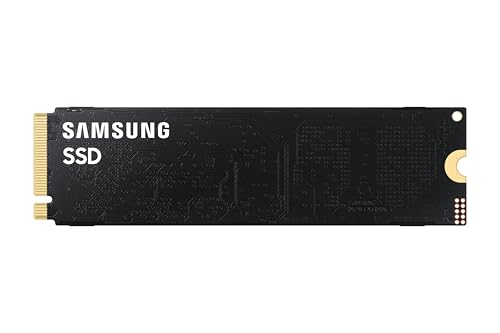
“Samsung 9100 PRO 4TB: 4TB PCIe 5.0 NVMe for large game libraries and workstations.”
See Today’s Price →What we like
- PCIe 5.0 x4 delivers up to 14,000 MB/s sequential reads — fastest consumer SSD tier
- 4TB capacity eliminates the need for secondary drives in most workflows
- Samsung V-NAND 3D technology provides proven reliability at extreme speeds
- M.2 2280 form factor fits virtually all modern motherboards
Watch out for
- $800 price is steep even for a 4TB flagship drive
- Requires a PCIe 5.0 M.2 slot to hit peak speeds — unavailable on older platforms
Read Full Analysis
The Samsung SSD 9100 PRO 4TB operates at PCIe 5.0 x4 with sequential reads up to 14,000MB/s, while providing 4TB of capacity — enough to hold a full game library, OS, active projects, and media archive on a single drive. Samsung V-NAND 3D manufacturing stacks memory cells vertically for higher density without sacrificing reliability, and the M.2 2280 form factor fits motherboard slots across desktop, laptop, and workstation builds. At $799.99 on this Samsung vs. WD NVMe comparison, the 9100 PRO 4TB is the capacity ceiling. The 9100 PRO 2TB ($489) provides the same PCIe 5.0 performance for $311 less — the 4TB's premium is pure storage, not a technology upgrade. WD's SN7100 tops out at 2TB; there is no WD option at 4TB on this comparison. For professionals managing 2-3TB of active project files — video editors, photographers with large RAW libraries, architects handling large 3D models — a single 4TB PCIe 5.0 drive consolidates the storage footprint. The Samsung 9100 PRO 4TB justifies its cost for workflows that consume 2-3TB of frequently accessed storage on a single drive. For gaming and general computing, the WD_Black SN7100 2TB at $346.53 covers real-world storage needs for $453 less — invest the difference in other build components instead.

“WD Black SN7100 2TB: Gen4 PCIe powerhouse at competitive pricing.”
See Today’s Price →What we like
- 2TB capacity handles extensive libraries without running out of space
- NVMe interface delivers dramatically faster read/write speeds than SATA SSDs
- Compact M.2 form factor requires no cables for a clean build
Watch out for
- NVMe SSDs require an M.2 slot — not compatible with older SATA-only systems
- Higher cost per gigabyte than traditional HDDs for mass storage use
Read Full Analysis
The WD_Black SN7100 2TB NVMe provides Gen4 PCIe throughput in the M.2 2280 form factor — the standard connector for both desktop and laptop NVMe slots — with no external cables required. WD_Black's gaming-focused firmware prioritizes low queue-depth random access performance, the actual workload pattern during game load screens rather than the sequential read specs used in most benchmarks. At $346.53 on this Samsung vs. WD NVMe comparison, the SN7100 2TB is the WD entry — competing against Samsung's 980 Pro 1TB ($318.35 with heatsink) and Samsung's higher-tier PCIe 5.0 drives. For $28 more than the Samsung 980 Pro, WD provides 2x the storage without the heatsink. Buyers who already have a motherboard heatsink slot — standard on modern gaming motherboards — get 2TB of PCIe 4.0 storage for $346 vs. 1TB at $318. Choose the WD_Black SN7100 2TB for maximum PCIe 4.0 storage capacity at this price if your motherboard provides a heatsink. Choose the Samsung 980 Pro for PS5 storage expansion or heatsink-less builds where Samsung's included thermal solution is the practical advantage.

“WD Black SN8100 2TB: WD's PCIe 5.0 challenger — up to 14,900 MB/s sequential read.”
See Today’s Price →What we like
- WD_Black gaming-tuned firmware optimizes for game asset streaming
- PCIe 5.0 throughput at 14,500 MB/s reads keeps up with DirectStorage workloads
- Includes WD Black dashboard software for SSD health monitoring
Watch out for
- Like all Gen 5 SSDs, runs hot - heatsink required for sustained loads
- Premium pricing limits this to enthusiast builds

“WD Black SN850X 4TB: highest-capacity WD Black NVMe for gaming and creative storage.”
See Today’s Price →What we like
- 4TB capacity handles extensive libraries without running out of space
- NVMe interface delivers dramatically faster read/write speeds than SATA SSDs
- Compact M.2 form factor requires no cables for a clean build
Watch out for
- Premium pricing at $653 requires a meaningful budget commitment
- NVMe SSDs require an M.2 slot — not compatible with older SATA-only systems
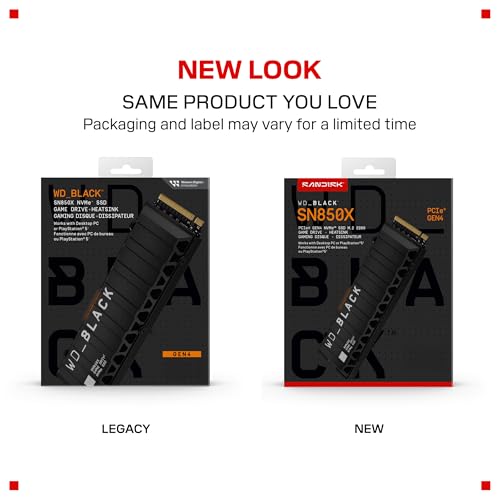
“WD Black SN850X 4TB with Heatsink: same SN850X with better thermals for open boards.”
See Today’s Price →What we like
- 7,300 MB/s sequential read is among the fastest PCIe 4.0 drives available
- Heatsink included to prevent thermal throttling during sustained reads
- 4TB capacity covers large game libraries and media collections
- WD Black brand trusted by gamers and creative professionals
Watch out for
- Limited to PCIe 4.0 — no PCIe 5.0 future-proofing
- Heatsink height may conflict with some low-clearance CPU coolers
Frequently Asked Questions
Is Samsung better than WD Black for NVMe SSDs?
Is WD Black worth it over Samsung?
What's the main difference between Samsung and WD Black NVMe?
Which NVMe SSD lasts longer, Samsung or WD Black?
Can I get Samsung NVMe quality at WD Black prices?
How We Analyze Products
We analyze Amazon review data — often thousands of reviews per product — to surface patterns that individual buyers miss. Our process aggregates star ratings, review counts, and buyer sentiment at scale, identifying which strengths and weaknesses appear consistently across the largest review samples available. The 930+ reviews analyzed on this page represent real verified-purchase feedback from Amazon buyers.
Each product earned its placement through data: total review volume, average rating, and the specific praise and complaints that repeat most often across buyers. No manufacturer paid for placement on this page. Products appear here because buyers endorsed them at scale, not because a company asked us to feature them.
We use AI to summarize review sentiment — not to fabricate opinions, but to condense what thousands of buyers actually wrote into a readable format. The pros and cons you see reflect the most common themes found in verified purchaser reviews, paraphrased for clarity. We do not claim to have accessed Reddit, YouTube, or specific publications in generating these summaries.
Prices shown reflect Amazon pricing at the time this page was last generated. Click “See Today’s Price” to get the current live price on Amazon. Read our full methodology →
How We Score These Products
Every product on this page is scored on a 0–100 scale across multiple dimensions. Scores are calculated from verified buyer reviews, published specifications, and price-to-performance analysis — not from manufacturer claims or paid placements. Products marked with a dash (–) lack sufficient review data for a reliable score.
Value: Price-to-performance ratio. Products with high ratings and low prices score highest.
Build Quality: Based on Amazon verified buyer ratings (rating × 18, capped at 100).
Speed: Based on verified buyer review sentiment analysis.
Capacity Value: Based on verified buyer review sentiment analysis.
Overall score is the product's aggregate rating on a 10-point scale. Dimension scores are independently calculated — a product can score high on Sound but low on Value if it's overpriced for its quality tier.