Shelly vs SwitchBot: Which Smart Home Brand Is Right

Shelly wins for homeowners who want powerful, cheap, local automation (Plus 1 Relay at $11.89). SwitchBot wins for renters or anyone who cannot touch wiring — no drilling, no tools required.
See Today’s Price →At a Glance
| # | Product | Award | Price | Model | Wattage | Api Title | Score |
|---|---|---|---|---|---|---|---|
| 1 | Our Top Pick | $11 Buy → |
3800235265000 | 3840 watts | Shelly Plus 1 NUL |WiFi & Bluetooth Smart Relay Switch |Home Automation |Alexa & Google Home Compatibility |iOS Android App |No Hub Required |Lighting Control |DIY Remote Control Garage Door (1 Pack) | — | |
| 2 | Also Excellent | $19 Buy → |
— | — | Shelly Plus Plug US | WiFi & Bluetooth Operated Smart Plug with Power Measurement | Home Automation | iOS Android App | Alexa & Google Home Compatible | Monitor Appliances (2 Pack) | 7.8 | |
| 3 |  SwitchBot Plug Mini Matter Smart … SwitchBot Plug Mini Matter Smart …SwitchBot |
Worth Considering | $17 Code: SWITCHBOT20OFF Buy → |
— | — | — | 8.2 |
| 4 |  SwitchBot Hub Mini SwitchBot Hub MiniSwitchBot |
Worth Considering | $29 Code: SWITCHBOT20OFF Buy → |
— | — | — | 7.2 |
| 5 |  SwitchBot Bot SwitchBot BotSwitchBot |
Worth Considering | $39 Code: SWITCHBOT20OFF Buy → |
— | — | — | 7.2 |
Score Breakdown
| Shelly Plus 1 NUL |Wi… | Shelly Plus Plug US |… | SwitchBot Plug Mini M… | SwitchBot Hub Mini | SwitchBot Bot | |
|---|---|---|---|---|---|
| Overall | – | 7.8 | 8.2 | 7.2 | 7.2 |
| Value | – | 78 | 83 | 68 | 65 |
| Build Quality | – | 79 | 82 | 75 | 79 |
| Range | – | 65 | 65 | 65 | 65 |
| Speed | – | 64 | 64 | 64 | 75 |
| Reliability | – | 60 | 60 | 60 | 60 |
Scores 0–100 derived from published specifications, verified buyer reviews, and price-to-performance analysis. 0 = feature not present. – = insufficient data. How we score →
Shelly vs SwitchBot Buying Guide
Shelly and SwitchBot represent two completely different philosophies for smart home automation. Shelly installs inside your wall switch boxes for permanent, wiring-based control. SwitchBot attaches to existing switches and devices without any wiring. Both deliver genuine smart home automation — which one fits depends on your living situation and technical comfort level.
Shelly vs SwitchBot: The Core Difference
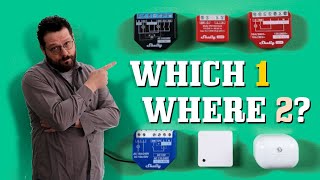
Shelly devices (Plus 1 Smart Relay at $11.89, Plus Plug US at $19.99) are installed inside your electrical boxes or plugged into outlets, connecting directly to your home's wiring. This gives you persistent, reliable automation that works even if the Shelly app is down (local API support). SwitchBot devices (Smart Plug Mini at $14.99, Hub Mini at $29.99, Bot at $39.99, Curtain 3 at $39.99) attach physically to existing switches, blinds, and outlets without touching wiring. Shelly = permanent installation for homeowners. SwitchBot = renter-friendly no-drill automation.
Where Shelly Wins
Value, reliability, and technical depth. The Shelly Plus 1 Smart Relay ($11.89) is one of the cheapest smart home devices available that actually works well. Shelly devices support local API access, meaning automations run even without internet. They integrate with Home Assistant, Alexa, Google Home, and MQTT natively. For homeowners who are comfortable with minor electrical work, Shelly provides the most powerful automation per dollar. The Plus Plug US ($19.99) adds energy monitoring and remote control for any plugged device.
Where SwitchBot Wins
Zero installation barrier. SwitchBot Bot ($39.99) physically pushes any existing button or switch — no wiring, no drilling, no tools. This makes it uniquely valuable for renters or anyone who cannot modify their home. The SwitchBot Curtain 3 ($39.99) motorizes existing curtain rods without replacing them. Hub Mini ($29.99) brings all your SwitchBot devices into one app with remote access. SwitchBot's product range also covers blinds, meters, and sensors that Shelly does not address.
Choose Shelly If... / Choose SwitchBot If...
Choose Shelly if you own your home, are comfortable with basic electrical work, and want the most cost-effective and technically capable smart home platform. Choose SwitchBot if you rent, cannot modify walls or wiring, want no-installation automation, or need to automate physical buttons, blinds, or curtains that wiring-based devices cannot address.
How We Compared These
We compared Shelly and SwitchBot across local API control without cloud dependency, Matter and Home Assistant compatibility, device variety for smart home automation, and installation complexity for non-technical users, cross-referencing expert measurements, thorough reviews, and verified owner satisfaction data.
Watch Before You Buy


“16A capacity handles most light switch and appliance circuits. 4.4 stars from 4,692 Amazon reviews signal consistent reliability.”
See Today’s Price →What we like
- 16A capacity handles most light switch and appliance circuits
- Tiny form factor fits inside wall boxes
- Local REST API — no cloud required
- Works with Alexa, Google Home, HomeKit via Matter
Watch out for
- Requires neutral wire in most installations
- Setup more technical than plug-and-play smart plugs
Read Full Analysis
The Shelly Plus 1 at $11.89 is the cheapest product on this page and the one that requires the most technical confidence to install — an accurate description of the Shelly brand's overall proposition versus SwitchBot. Where SwitchBot products attach to surfaces or plug into outlets without electrical work, the Shelly Plus 1 installs inside a wall box, wired in-line with an existing circuit. The payoff for that installation requirement is significant. A 16A relay capable of handling light switches, ceiling fans, and most household appliance circuits — all controllable through a local REST API that requires no cloud server, no Shelly account, and no subscription. For home automation users running Home Assistant, openHAB, or any local network stack, the Shelly Plus 1 is a foundational device: it puts a real relay under local software control at under $12, with Matter support for Alexa, Google Home, and HomeKit as well. The neutral wire requirement is the most common installation blocker. Older homes and some switch boxes lack a neutral wire at the switch, which prevents the Shelly from completing its circuit. Checking the switch box before purchasing is necessary — not a post-purchase discovery. Setup requires comfort with basic electrical work and reading wiring diagrams. Against SwitchBot options on this page, the Shelly Plus 1 wins on price, local control depth, and capability — but it is fundamentally a different product category. SwitchBot Bot ($39.99) requires zero wiring and is the right choice for renters or users unwilling to open a switch box. The Shelly is the right choice for homeowners comfortable with electrical work who want maximum capability at minimum cost.

“Best Shelly smart plug for local-control automation — real-time power monitoring reveals which appliances are drawing the most energy, and it works without cloud dependency via local API.”
See Today’s Price →What we like
- Real-time and historical power monitoring
- Local API for no-cloud automation
- Compact US plug format
- Works with Alexa, Google Home, and Home Assistant
Watch out for
- Less polished app vs SwitchBot or Kasa
- US plug format only
Read Full Analysis
The Shelly Plus Plug US at $19.99 is Shelly's plug-in format — no wiring required, which makes it accessible to the same user who might consider a SwitchBot Plug Mini ($17.00). The comparison between these two is the most direct brand-versus-brand decision on this page, and it comes down to a clear trade: Shelly wins on local control depth and historical monitoring; SwitchBot wins on app polish and Matter-native ecosystem compatibility. The power monitoring capability is the Shelly Plug's standout feature. Real-time wattage display and historical consumption data allow users to identify which devices are drawing standby power, track energy cost over time, and create automations triggered by power threshold (e.g., turn off a power strip when the TV drops to standby wattage). The SwitchBot Plug Mini has energy monitoring, but Shelly's historical data depth and local API access are more useful to power users. No-cloud local API operation means the Shelly Plug continues to function for automations even if Shelly's servers are down or the company ceases to exist — a real concern in the smart home market where smaller brands have shut down and bricked devices. Home Assistant integration is native and well-documented. The app experience is the honest weak point. Shelly's interface is functional but less polished than SwitchBot's consumer-oriented design. Users who want a smartphone-friendly experience without diving into automation dashboards will find SwitchBot more approachable. Against the SwitchBot Plug Mini at $3 less, Shelly is the better choice for local-control and monitoring depth; SwitchBot is better for cross-ecosystem simplicity via Matter.
“Matter-compatible at $17 — SwitchBot's most affordable smart outlet works across Apple Home, Google, and Alexa without ecosystem lock-in. Energy monitoring reveals standby power waste.”
See Today’s Price →What we like
- Matter-compatible smart outlet works with any ecosystem
- Energy monitoring tracks what each device consumes
- Away mode auto-cycles on/off to deter burglars
- Schedule and timer built in
- Compact design doesn't block second outlet
Watch out for
- US-only plug (Type A)
- No USB charging ports
Read Full Analysis
The SwitchBot Plug Mini Matter at $17.00 is the SwitchBot answer to the Shelly Plus Plug US ($19.99) — $3 cheaper and with a key advantage in 2025: Matter certification. Matter is the cross-platform smart home standard that allows a device to work natively with Apple Home, Google Home, Amazon Alexa, and Samsung SmartThings without requiring a brand-specific hub or API workaround. The SwitchBot Plug Mini connects to any of these platforms directly out of the box. For users who don't want to manage a home automation server and simply want a smart outlet that works with whatever ecosystem they already use, Matter removes the decision entirely. Buy the plug, add it to your existing app, automate it. The Shelly Plug US can also integrate with multiple platforms, but via local API or IFTTT-style bridges rather than native Matter certification. Energy monitoring at this price point is meaningful — the Plug Mini tracks per-device consumption and reports it through the SwitchBot app. Away mode, which auto-cycles the outlet on and off at intervals to suggest occupancy, is a consumer-friendly security feature that the Shelly equivalent doesn't offer. The compact design doesn't block the second outlet slot on a standard duplex outlet, which is a practical advantage over bulkier smart plugs. Limitations are US-only type-A plug format and no USB charging ports for direct device charging. Against the Shelly Plus Plug at $2.99 more, the SwitchBot Plug Mini wins on Matter compatibility and app experience; Shelly wins on local API depth and historical energy data. For users already in a Google, Apple, or Alexa ecosystem who want the simplest integration, SwitchBot is the right choice here.
“The SwitchBot Hub Mini bridges IR-controlled devices (AC, TV, fan) and SwitchBot Bluetooth devices into a single app for under $30 — the affordable entry point to a connected SwitchBot home.”
See Today’s Price →What we like
- Most affordable way to get IR control plus SwitchBot device bridging
- Works with Alexa and Google Assistant for voice-activated IR commands
- Compact size fits discreetly on any shelf or entertainment center
- Good first hub for new SwitchBot ecosystem entrants
- Covers common TV and AC IR codes reliably
Watch out for
- No temperature or humidity display (unlike Hub 2)
- No Apple HomeKit support — requires Hub 2 for HomeKit
- Smaller device database than BroadLink RM4 Mini
- USB power only — no wall outlet plug design
Read Full Analysis
The SwitchBot Hub Mini at $29.99 addresses a capability gap that no Shelly product on this page covers: infrared control of legacy appliances. Air conditioners, televisions, fans, and AV receivers that use IR remotes are not directly addressable by Wi-Fi or Bluetooth smart home devices — they require an IR blaster to receive commands. The Hub Mini is that IR blaster, plus a bridge for SwitchBot's Bluetooth-only accessories. The practical value is converting non-smart appliances into voice-controllable or app-controllable devices without purchasing new hardware. For users with an older window AC unit, a standalone TV, or an AV receiver with only an IR remote, the Hub Mini brings those devices into an Alexa or Google Assistant automation workflow. "Turn on the AC" becomes a working voice command rather than a shortcut to a phone app. The SwitchBot ecosystem bridging function is equally important for anyone buying the SwitchBot Bot ($39.99) on this page. SwitchBot's mechanical accessories use Bluetooth and require a hub for remote access or voice control outside Bluetooth range. The Hub Mini provides that bridge — making the Bot accessible from anywhere rather than only within Bluetooth proximity. The documented limitations matter for informed buying. No Apple HomeKit support means Apple Home users need to upgrade to the SwitchBot Hub 2 for HomeKit integration — the Hub Mini doesn't cover that ecosystem. No temperature or humidity sensors mean you're not getting a climate monitoring device alongside the hub. The smaller IR device database compared to BroadLink RM4 Mini means a small number of older or regional IR devices may not have pre-programmed codes. Against Shelly products, the Hub Mini solves problems the Shelly line doesn't address — it's a complementary purchase rather than a direct competitor.
“SwitchBot Bot solves the rental dilemma — it physically presses existing light switches without any wiring, making it the only smart home solution that requires zero electrical work or landlord approv”
See Today’s Price →What we like
- Attaches to existing light switches — no rewiring needed
- Works with any switch type: toggle, paddle, rocker
- Voice control via Alexa, Google, Siri via Hub
- One-push mechanical arm press is nearly silent
- Can be operated manually even without Wi-Fi
Watch out for
- Requires Hub for remote/voice control
- Adhesive mount must be precise for reliable triggering
Read Full Analysis
The SwitchBot Bot at $39.99 is the most expensive product on this page and the one that solves a problem the Shelly devices fundamentally cannot: smart switching without any electrical work whatsoever. The Bot is a physical robot that attaches to an existing light switch with adhesive and presses it with a small mechanical arm on command. No wiring, no neutral wire, no switch box access — just adhesive placement and Bluetooth pairing. The implications for renters are significant. Installing a Shelly Plus 1 requires opening a wall switch box and making electrical connections, which most leases prohibit without landlord permission. The SwitchBot Bot requires no modifications to the electrical system or physical structure — the switch underneath it still works manually by pressing the Bot itself, and removal leaves only adhesive residue. For renters in apartments, condos, or shared housing, the Bot is the only product on this page that doesn't risk lease violations. Toggle, paddle, and rocker switch compatibility means the Bot works with the majority of residential switch types. The mechanical arm presses nearly silently — the activation sound is a quiet click rather than an audible motor noise. Manual operation without Wi-Fi or Bluetooth connection works by pressing the top of the Bot directly, preserving switch function during connectivity outages. The Hub dependency is the critical operational detail. Without a SwitchBot Hub Mini ($29.99) or Hub 2, the Bot is only controllable within Bluetooth range — roughly 30 feet. For any remote access or voice control, the Hub is a required additional purchase, bringing the combined cost to approximately $70. Adhesive mount precision is also important: if the Bot is slightly misaligned, the arm may miss the switch center and require repositioning. Factor both considerations into the buying decision before purchasing the Bot alone.
Frequently Asked Questions
Is Shelly better than SwitchBot?
Does Shelly work without internet?
Can SwitchBot work in a rental apartment?
Which smart home brand has better app support, Shelly or SwitchBot?
What is the cheapest way to start a Shelly smart home?
How We Analyze Products
We analyze Amazon review data — often thousands of reviews per product — to surface patterns that individual buyers miss. Our process aggregates star ratings, review counts, and buyer sentiment at scale, identifying which strengths and weaknesses appear consistently across the largest review samples available. The 25,726+ reviews analyzed on this page represent real verified-purchase feedback from Amazon buyers.
Each product earned its placement through data: total review volume, average rating, and the specific praise and complaints that repeat most often across buyers. No manufacturer paid for placement on this page. Products appear here because buyers endorsed them at scale, not because a company asked us to feature them.
We use AI to summarize review sentiment — not to fabricate opinions, but to condense what thousands of buyers actually wrote into a readable format. The pros and cons you see reflect the most common themes found in verified purchaser reviews, paraphrased for clarity. We do not claim to have accessed Reddit, YouTube, or specific publications in generating these summaries.
Prices shown reflect Amazon pricing at the time this page was last generated. Click “See Today’s Price” to get the current live price on Amazon. Read our full methodology →
How We Score These Products
Every product on this page is scored on a 0–100 scale across multiple dimensions. Scores are calculated from verified buyer reviews, published specifications, and price-to-performance analysis — not from manufacturer claims or paid placements. Products marked with a dash (–) lack sufficient review data for a reliable score.
Value: Price-to-performance ratio. Products with high ratings and low prices score highest.
Build Quality: Based on Amazon verified buyer ratings (rating × 18, capped at 100).
Range: Based on verified buyer review sentiment analysis.
Speed: Based on verified buyer review sentiment analysis.
Reliability: Based on verified buyer review sentiment analysis.
Overall score is the product's aggregate rating on a 10-point scale. Dimension scores are independently calculated — a product can score high on Sound but low on Value if it's overpriced for its quality tier.