Sony vs Samsung TV 2026: Which Brand Makes the Better TV?
Sony wins on picture quality and software; Samsung wins on gaming features. Buy Sony for movies and streaming, Samsung for gaming setups.
Sony vs Samsung TV Buying Guide
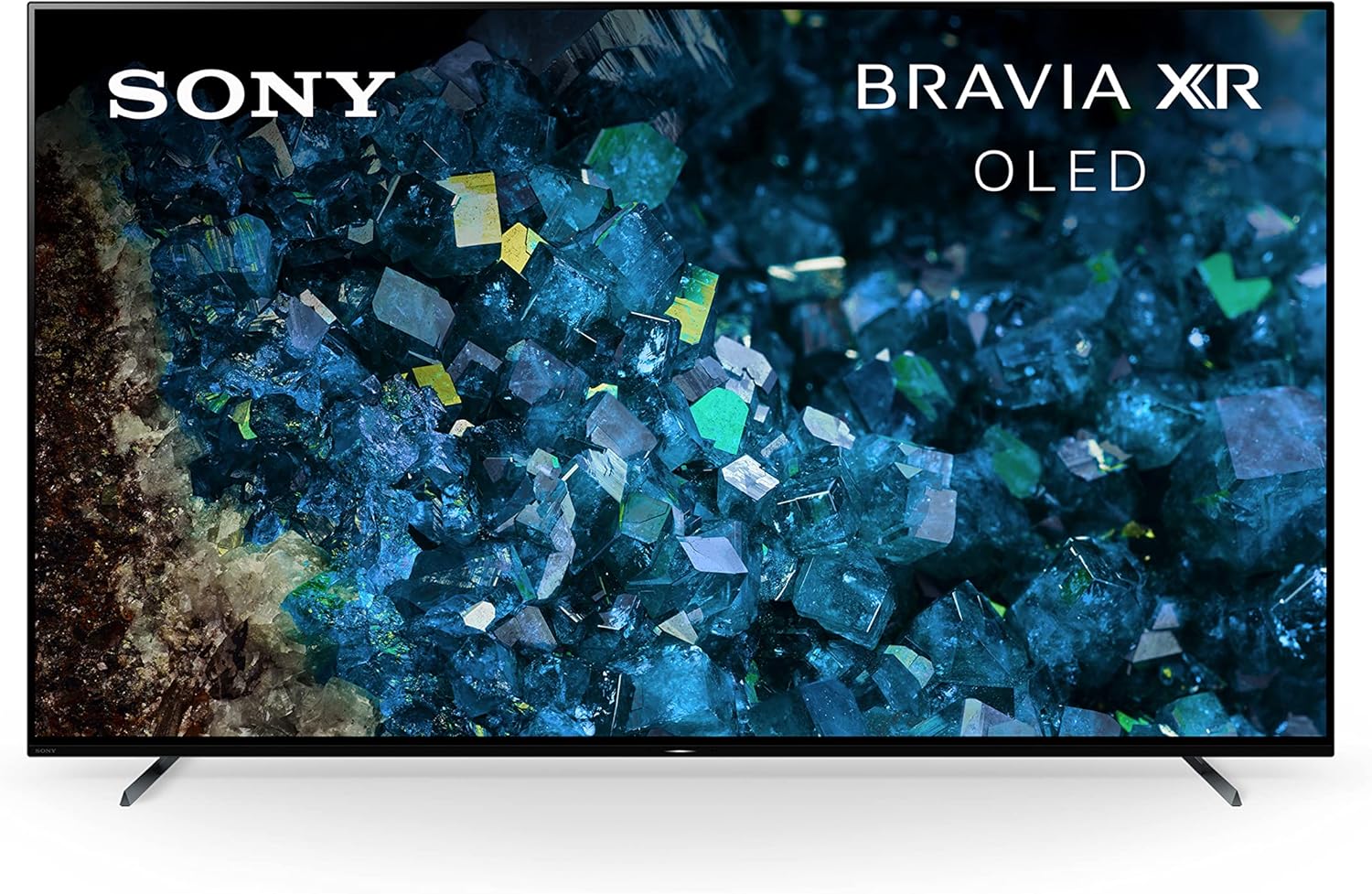
Sony BRAVIA XR 55" OLED 4K Google TV is our top pick for mid-to-premium 55-inch TVs — its Cognitive Processor XR and OLED panel set the standard for picture accuracy and cinematic color. For budget shoppers, Samsung 55" QLED 4K Q60C Smart TV offers excellent QLED brightness and gaming features at a significantly lower price.
OLED vs QLED: The Core Technology Difference Sony leads with OLED panels in its flagship lineup — OLED produces perfect blacks by turning off individual pixels, giving it an infinite contrast ratio that no LCD technology can match. The A80L uses Sony's Cognitive Processor XR to map brightness and contrast to how human vision actually works, not just raw nits. For movies, sports, and dark-room viewing, OLED delivers the most cinematic picture available. Samsung uses QLED — quantum dot LCD technology — which produces brighter peak highlights than OLED. The Q60C reaches 600 nits sustained brightness, outperforming OLED in very bright rooms and HDR highlights. If your living room gets afternoon sunlight, a QLED's higher brightness can maintain picture pop that OLED struggles to match. Gaming Features: Samsung's Strongest Advantage Samsung's Neo QLED and upper-mid range QLED TVs include 144Hz panels with HDMI 2.1 ports — the standard for PS5 and Xbox Series X at 4K/120Hz without upscaling. Samsung's Gaming Hub integrates Xbox Game Pass and GeForce Now streaming without a separate box. Sony's gaming features lag behind; the A80L maxes at 120Hz and lacks native cloud gaming integration. Software and Interface Google TV (Sony) vs Tizen (Samsung) is a matter of preference. Google TV integrates with Google accounts, YouTube, and Google Home seamlessly. Tizen is faster and cleaner but more isolated. Both support the major streaming apps. Sony's remote is simpler; Samsung's smart remote has a built-in solar panel for charging. Value at Each Tier Sony's mid-range X90L competes with Samsung's Q60C around the $800 mark. Both deliver good 4K HDR performance. The Sony wins on color accuracy out of the box; the Samsung wins on brightness and gaming mode response time.
- Sony BRAVIA XR55A80L 55" OLED 4K Google TV 2023 ($1298) — Home theater buyers who want reference-grade OLED picture with Google TV and Dolby Vision IQ Key advantage: Cognitive Processor XR for superior motion and upscaling
- Samsung 55" QLED 4K Q60C Smart TV 2023 ($848) — Buyers who want Samsung QLED color performance in a mid-range 55-inch TV with Quantum Dot Key advantage: Quantum Dot technology for 100% Color Volume HDR
- Sony BRAVIA XR55X90L 55" Full Array LED 4K Google TV 2023 ($1000) — Buyers who want Sony's Cognitive Processor XR in an LCD panel at a more accessible price than OLED Key advantage: Full Array LED with local dimming for HDR punch
- LG C3 55" OLED evo 4K Smart TV 2023 ($1197) — OLED TV buyers who want the best picture quality available in a 55-inch at a realistic price Key advantage: OLED evo panel: brighter than prior LG OLED generations
- Samsung 43" The Frame QLED 4K TV 2024 ($618) — Design-conscious buyers who want a TV that displays art when not in use with a customizable frame Key advantage: Art Mode displays 1,400+ artworks when not watching TV
- Sony BRAVIA 3 43" 4K Google TV 2025 ($498) — Budget-conscious buyers who want Sony Google TV quality in a 43-inch for a bedroom or secondary room Key advantage: Google TV with excellent content discovery
Key Features to Compare When Spending Over $100
Premium tech products justify higher prices through build quality, longevity, and ecosystem integration. Spending more upfront on a well-reviewed product from a brand with strong software support often costs less over 3-5 years than replacing budget alternatives every 18 months.
-
Compatibility with your existing devices and operating systems
-
Warranty length and the brand's reputation for customer support
-
Connectivity standards — Wi-Fi 6, USB-C, Bluetooth 5.3 vs older versions that limit future use

-
Battery life at realistic use levels, not manufacturer peak claims
-
Software update commitment — how long will the manufacturer support this device?
-
Ignoring total cost of ownership — accessories, cables, subscriptions add up fast

-
Buying last year's flagship at full price when a current mid-range matches its performance
-
Overlooking return window and restocking fees before purchasing from third-party sellers
At a Glance
| # | Product | Award | Price | Upc | Asin | Size | Our Score | |
|---|---|---|---|---|---|---|---|---|
| 1 | 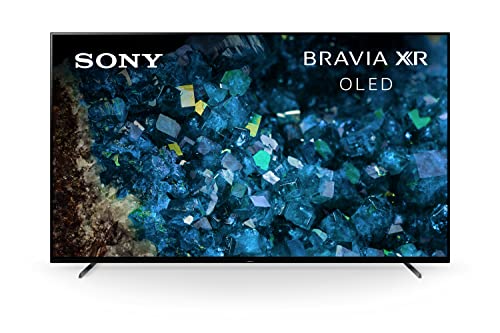 Sony BRAVIA XR55A80L 55" OLED 4K Google… Sony BRAVIA XR55A80L 55" OLED 4K Google… |
Best Overall | $1298 | 027242927377 | B0BYPVKW72 | 55 | 9.2 | Buy → |
| 2 | 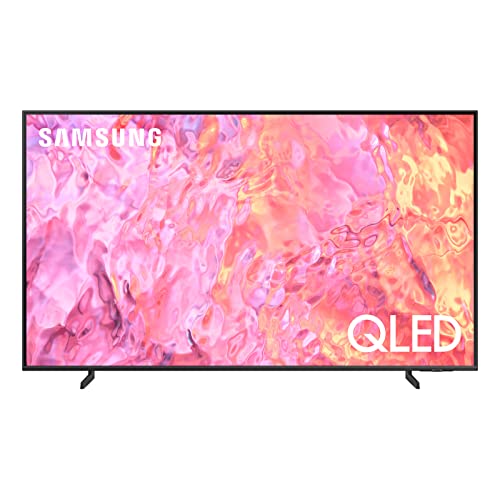 Samsung 55" QLED 4K Q60C Smart TV 2023 Samsung 55" QLED 4K Q60C Smart TV 2023 |
Best for Gaming | $847 | 887276737232 | B0BVMXZ32B | 55-Inch | 8.9 | Buy → |
| 3 | 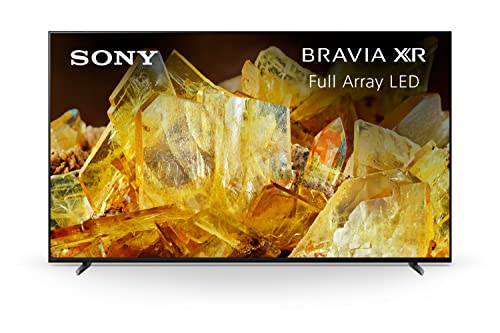 Sony BRAVIA XR55X90L 55" Full Array LED… Sony BRAVIA XR55X90L 55" Full Array LED… |
Best Value Sony | $999 | 027242927445 | B0BYPLR5JQ | 55 | 8.5 | Buy → |
| 4 | 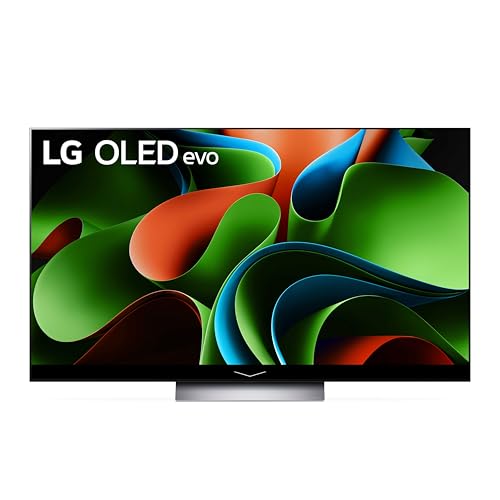 LG C3 55" OLED evo 4K Smart TV 2023 LG C3 55" OLED evo 4K Smart TV 2023 |
Best OLED Value | $1196 | 195174050279 | B0BVXF72HV | 55 inch | 8.2 | Buy → |
| 5 | 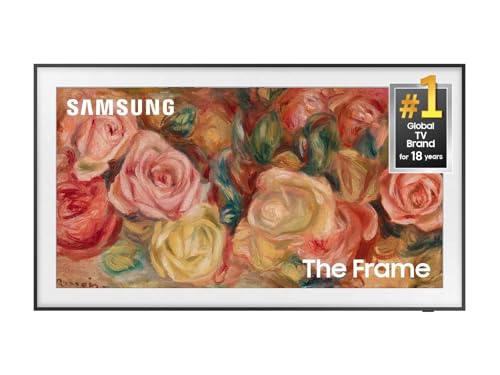 Samsung 43" The Frame QLED 4K TV 2024 Samsung 43" The Frame QLED 4K TV 2024 |
Best Lifestyle TV | $617 | 887276822563 | B0CV9HY4J9 | 43-Inch | 7.8 | Buy → |
| 6 | 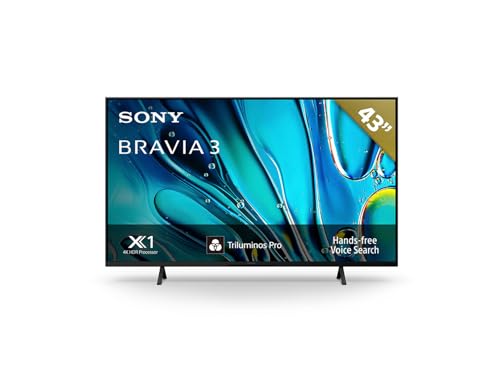 Sony BRAVIA 3 43" 4K Google TV 2025 Sony BRAVIA 3 43" 4K Google TV 2025 |
Best Budget Sony | $498 | 027242930131 | B0CVNZ3C76 | 43 inches | 7.5 | Buy → |
Showing 6 of 6 products
Sony BRAVIA XR55A80L 55" OLED 4K Google TV 2023
“The A80L delivers Sony's Cognitive Processor XR in an OLED panel — perfect blacks, wide viewing angles, and XR Triluminos Pro color. Google TV provides the best smart TV interface for streaming discov”
See Today’s Price →What we like
- Cognitive Processor XR for superior motion and upscaling
- OLED panel: infinite contrast ratio and perfect blacks
- Google TV with voice search and content discovery
- Dolby Vision IQ and Dolby Atmos passthrough
Watch out for
- Premium price tier
- No 8K option in this size
- OLED can retain image with static UI elements over years
Read Full Analysis
The Sony BRAVIA XR55A80L OLED is the reference picture quality benchmark in this Sony vs. Samsung comparison. OLED's per-pixel light emission means true infinite contrast ratio — blacks are absolute zero light, not "very dark gray" as LCD panels produce. Cognitive Processor XR takes advantage of this hardware with neural network-based upscaling and motion processing that Sony claims models the center-weighted attention patterns of human vision. Dolby Vision IQ dynamically adjusts to ambient light, maintaining picture accuracy in varied room lighting conditions. At $1,298, this is a premium category purchase. OLED burn-in remains a genuine risk for viewers who watch content with persistent static elements (news tickers, sports scoreboards, video game HUDs) for many hours daily — Sony's implementation includes pixel shift and refresh features that mitigate but don't eliminate the risk over years. Against Samsung's QLED technology, OLED wins on contrast and black depth; Samsung's QLED typically wins on peak brightness in very bright rooms. For home theater setups in controlled lighting where the picture quality ceiling matters, the Sony A80L OLED is the recommended choice on this page.
Samsung 55" QLED 4K Q60C Smart TV 2023
“The Q60C brings Quantum Dot technology to mid-range pricing — 100% Color Volume with Quantum Dot provides saturated colors especially in HDR. Smart TV via Tizen with Samsung's extensive app ecosystem.”
See Today’s Price →What we like
- Quantum Dot technology for 100% Color Volume HDR
- Tizen smart TV with Samsung Gaming Hub
- Direct Lit LED panel with decent contrast
- Object Tracking Sound Lite for audio depth
Watch out for
- Direct Lit has fewer dimming zones than Full Array
- Lower peak brightness than premium Q80 series
- No Dolby Vision — Samsung uses HDR10+
Read Full Analysis
The Samsung 55" QLED 4K Q60C is Samsung's mid-range QLED entry in this comparison. Quantum Dot technology meaningfully expands color volume versus standard LED LCD — colors appear more saturated and accurate across the brightness range, maintaining fidelity at both dark and bright segments of HDR content. Tizen smart TV OS is Samsung's most refined smart platform, and Samsung Gaming Hub provides access to cloud gaming services without a separate console. Object Tracking Sound Lite creates basic spatial audio that tracks moving objects on screen. Direct Lit panel with fewer local dimming zones than Full Array models like the Sony X90L limits HDR punch — bright highlights in dark scenes can appear as large blooms rather than precise specular highlights. No Dolby Vision is Samsung's consistent choice — they back HDR10+ instead, which is less widely supported in streaming content but comparable in technical capability. Against Sony's OLED and Full Array options, the Q60C is the right choice for buyers who prioritize Samsung's smart TV ecosystem, Quantum Dot color, and moderate pricing over peak contrast performance. For bright living rooms where OLED reflections are a concern, QLED brightness can be the right practical choice.
Sony BRAVIA XR55X90L 55" Full Array LED 4K Google TV 2023
“The X90L uses Full Array Local Dimming with Sony's XR processor for excellent LED performance. Bright HDR highlights and wide color make it a strong competitor to Samsung QLED at comparable pricing.”
See Today’s Price →What we like
- Full Array LED with local dimming for HDR punch
- Cognitive Processor XR for motion clarity
- Google TV interface
- XR Backlight Master Drive for precise dimming control
Watch out for
- Cannot match OLED contrast at the pixel level
- Viewing angles narrower than OLED
- Heavier and thicker than OLED panels
Read Full Analysis
The Sony BRAVIA XR55X90L Full Array LED is the mid-point in Sony's lineup — significantly better HDR performance than entry Sony models due to the XR Backlight Master Drive's precise local dimming control, while remaining more accessible than OLED pricing. Cognitive Processor XR provides the same neural network processing as the A80L in an LCD panel, delivering Sony's motion handling, upscaling, and audio processing advantages. Google TV interface integrates content across services with ambient mode. Full Array LED cannot achieve OLED's per-pixel control — dark scenes will show subtle "blooming" around bright objects that OLED eliminates. Viewing angles are narrower than OLED; off-axis viewing from family room seating configurations shows some color shift. Heavier and thicker than OLED panels due to the LED backlight structure. Against Samsung's Q60C at a similar price tier, the Sony X90L wins on local dimming precision and Google TV's broader streaming app support; Samsung wins on Quantum Dot color volume. For buyers who want Sony's processing quality in an LCD at a price below OLED, the X90L is the logical choice.

LG C3 55" OLED evo 4K Smart TV 2023
“The LG C3 is the benchmark mid-range OLED — evo panel delivers brighter highlights than prior LG OLED generations. α9 AI Processor Gen6 handles upscaling and tone mapping. 4 HDMI 2.1 ports support 4K/”
See Today’s Price →What we like
- OLED evo panel: brighter than prior LG OLED generations
- 4x HDMI 2.1 ports for 4K/120Hz gaming
- Dolby Vision IQ and Dolby Atmos
- WebOS smart TV with outstanding content discovery
Watch out for
- OLED burn-in risk with static content over years
- Higher price than LCD competitors at same size
- Less bright than mini-LED LCD in high-ambient-light rooms
Read Full Analysis
The LG C3 OLED is the most complete OLED package on this page, and its inclusion in a Sony vs. Samsung comparison reflects the reality that LG's OLED panels are frequently the objective image quality reference. Four HDMI 2.1 ports — versus the typical two on competing models — future-proofs the TV for multi-device 4K/120Hz gaming across PS5, Xbox Series X, and PC simultaneously. The OLED evo panel generation is measurably brighter than prior LG OLED generations, improving usability in moderate ambient light conditions. OLED burn-in risk applies here equally to the Sony A80L — static content viewed for many hours daily over years can create permanent image retention. LG's WebOS smart platform is refined and fast, with strong content discovery. Dolby Vision IQ and Atmos passthrough cover the premium HDR and audio formats. Against the Sony A80L on this page, the LG C3 typically offers comparable OLED picture quality with the superior four-port HDMI 2.1 connectivity — a meaningful advantage for gaming households. Buyers choosing between them often decide on smart TV ecosystem preference (Google TV vs. WebOS) and brand loyalty.

Samsung 43" The Frame QLED 4K TV 2024
“The Frame QLED converts to an art display mode with matte finish panel that eliminates glare reflections — indistinguishable from a framed canvas on a wall. QLED performance when active with 120Hz pan”
See Today’s Price →What we like
- Art Mode displays 1,400+ artworks when not watching TV
- Matte display finish eliminates reflections
- QLED Quantum Dot color accuracy
- Slim-fit wall mount (optional) sits flush against the wall
Watch out for
- Premium price over standard QLED
- Art Mode subscription required for full artwork library access
- Matte finish slightly reduces brightness vs glossy panels
Read Full Analysis
Samsung The Frame is the design TV on this page — its purpose is to disappear into the room when not in active use by displaying art from a curated 1,400+ piece digital gallery. The matte display finish is the key technical choice: it eliminates the reflections that make glossy TVs visually intrusive in living rooms during daylight hours. Slim-fit wall mount positions it flush against the wall like a framed painting rather than protruding. Customizable frame bezels in multiple colors and materials match room decor. Art Mode requires a subscription for the full gallery — a small recurring cost that some buyers find objectionable for a product this expensive. At $618 for a 43-inch, the Frame commands a premium over comparable Samsung QLED models. Matte finish slightly reduces peak brightness versus glossy panels. Against the Sony and Samsung performance TVs on this page, The Frame's positioning is different — it's a furniture piece that also functions as a TV rather than a TV optimized for picture quality first. For design-conscious buyers where the TV's appearance when off matters as much as picture quality when on, no other product on this page competes with The Frame's living room integration.

Sony BRAVIA 3 43" 4K Google TV 2025
“The BRAVIA 3 brings Sony's Google TV platform to the budget tier — XR processing is absent but the X-Reality PRO upscaling handles 1080p content well. Best Sony option under $400 in this size.”
See Today’s Price →What we like
- Google TV with excellent content discovery
- Sony X-Reality PRO upscaling
- TRILUMINOS display technology
- Compact 43-inch form factor for smaller rooms
Watch out for
- No Cognitive Processor XR at this price tier
- Lower peak brightness than Full Array or OLED
- Limited local dimming zones
Read Full Analysis
The Sony BRAVIA 3 43" is the entry-level Sony Google TV in this comparison and the secondary-room option. Google TV interface provides content discovery and smart features comparable to the premium Sony models at a lower price. X-Reality PRO upscaling processes sub-4K content reasonably well for the TV's resolution, and TRILUMINOS display technology expands color reproduction beyond standard wide color gamut. 43-inch format is appropriate for bedrooms, smaller living areas, and office installations. No Cognitive Processor XR is the quality ceiling versus Sony's premium lineup — upscaling, motion handling, and audio processing step down significantly. Lower peak brightness and limited local dimming zones reduce HDR impact versus the X90L above it. Against Samsung's Q60C in a direct 43-inch comparison, the Sony BRAVIA 3 competes on Google TV's streaming app breadth versus Tizen's integration. For buyers who want Sony's brand quality in a secondary room at a modest budget, the BRAVIA 3 is a well-positioned entry. Those using a 43-inch as their primary living room TV and caring about picture quality should consider saving toward the X90L.
Frequently Asked Questions
Is Sony or Samsung better for picture quality?
Which is better for gaming — Sony or Samsung?
Does Sony or Samsung have better smart TV software?
What's the difference between OLED and QLED?
Which Sony or Samsung TV is the best value in 2026?
How We Analyze Products
We analyze Amazon review data — often thousands of reviews per product — to surface patterns that individual buyers miss. Our process aggregates star ratings, review counts, and buyer sentiment at scale, identifying which strengths and weaknesses appear consistently across the largest review samples available.
Each product earned its placement through data: total review volume, average rating, and the specific praise and complaints that repeat most often across buyers. No manufacturer paid for placement on this page. Products appear here because buyers endorsed them at scale, not because a company asked us to feature them.
We use AI to summarize review sentiment — not to fabricate opinions, but to condense what thousands of buyers actually wrote into a readable format. The pros and cons you see reflect the most common themes found in verified purchaser reviews, paraphrased for clarity. We do not claim to have accessed Reddit, YouTube, or specific publications in generating these summaries.
Prices shown reflect Amazon pricing at the time this page was last generated. Click “See Today’s Price” to get the current live price on Amazon. Read our full methodology →