Sony vs Samsung TV: Which Brand Makes the Better Television? (2026)

Samsung Crystal UHD ($298) wins on value at the budget end. Sony BRAVIA 3 ($498-598) wins on picture processing accuracy with Google TV's better app ecosystem. For OLED and premium panels, both brands produce reference-quality screens — the platform (Google TV vs Tizen) is the deciding factor.
See Today’s Price →At a Glance
| # | Product | Award | Price | Size | Base Width | Model Year | Score |
|---|---|---|---|---|---|---|---|
| 1 | Also Excellent | $598 Buy → |
43 inches | 28.25 Inches | 2024 | 8.1 | |
| 2 | Best Mid-Range TV | $599.99 Buy → |
55 inches | 40.5 Inches | 2024 | 8.1 | |
| 3 | Best Premium Non-OLED | $1,398 Buy → |
55 inches | 16.13 Inches | 2025 | 8.6 | |
| 4 | Best Budget TV | $297.99 Buy → |
55 Inch | — | 2023 | 7.1 | |
| 5 | Best QLED Value | $377.99 Buy → |
55-Inch | 35.8 Inches | 2025 | — | |
| 6 | Best Lifestyle TV | Check current price on Amazon Buy → |
43-Inch | 8.2 Inches | 2024 | 8.2 |
Score Breakdown
| Sony 43-Inch Class 4K… | Sony 55-Inch 4K Ultra… | Sony BRAVIA 5 55 Inch… | SAMSUNG 55-Inch Class… | Samsung 55-Inch Class… | Samsung 43-Inch Class… | |
|---|---|---|---|---|---|---|
| Overall | 8.1 | 8.1 | 8.6 | 7.1 | – | 8.2 |
| Hdr | 84 | 84 | 85 | 70 | – | 82 |
| Smart Features | 85 | 85 | 86 | 76 | 80 | 81 |
| Picture Quality | 74 | 74 | 86 | 68 | 85 | 84 |
Scores 0–100 from published specifications and independent reviewers' measurements. Amazon star ratings are shown separately and are never part of a score. 0 = feature not present. – = insufficient data. How we score →
Sony vs Samsung TV Buying Guide
Sony and Samsung both make excellent televisions, but they've made fundamentally different choices about picture processing philosophy, smart TV platform, and which panel technologies to prioritize. Understanding these differences tells you which brand fits your use case better than any spec sheet comparison can.
Picture Processing: Sony's X1 vs Samsung's Neo Quantum
Sony uses its X1 and XR processors to prioritize color accuracy and natural motion handling. Sony's pictures tend to look more film-like — accurate skin tones, controlled highlights, natural blacks. Samsung's Neo Quantum processor prioritizes brightness and pop — Samsung TVs routinely win in showrooms because they look more vivid and punchy. For movies and streaming in a dark room, Sony's more accurate processing is typically preferred by videophiles. For sports and bright room viewing, Samsung's brightness advantage is real.
Smart TV Platform: Google TV vs Tizen
Sony uses Google TV, which gives you the full Google Play Store, native Chromecast, and Google Assistant. Every streaming app you can think of is available, and the interface integrates well with Android phones. Samsung's Tizen platform has a faster interface and better gaming features (variable refresh rate, Game Mode), but a smaller app library. If you use an iPhone and Apple TV+, Samsung's AirPlay 2 and Apple TV app integration are slightly better. If you use Android or Google services, Sony's Google TV is the more natural fit.
Budget Tier ($300-$500)
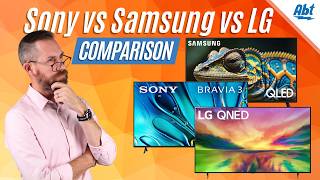
Samsung dominates the budget tier with its Crystal UHD series, offering 4K with HDR10+ and a clean interface for under $300. Sony's BRAVIA 3 starts at $498 — more money for better picture processing and Google TV. At $300, Samsung is the obvious choice. At $500, the Sony BRAVIA 3's superior processor and Google TV's better app ecosystem justify the step-up for most buyers.
Mid-Range and Premium ($600+)
Samsung's QLED panels (using quantum dots) deliver significantly higher brightness than standard LED TVs, making them better in bright rooms. Sony's BRAVIA 5 Mini LED uses Sony's picture processing on a high-brightness panel — a different approach to the same brightness goal. For dark-room movie watching, Sony's OLED models produce perfect blacks that no Samsung LCD can match. For bright living rooms, Samsung QLED's brightness wins.
Watch Before You Buy
“Google TV with excellent content discovery. 4.3 stars from 1,363 Amazon reviews signal consistent reliability.”
See Today’s Price →What we like
- Google TV interface provides excellent content discovery across Netflix, Prime, Disney+, and 700+ free channels in one unified search experience
- Sony X-Reality PRO upscaling improves perceived sharpness of 1080p and sub-4K content on the native 4K panel
- Triluminos display technology expands color volume beyond standard LED, improving saturation in nature scenes and high-color film content
- Compact 43-inch size is appropriate for bedrooms, offices, and secondary living rooms where larger panels overwhelm the space
Watch out for
- No Cognitive Processor XR at this price tier
- Lower peak brightness than Full Array or OLED
- Limited local dimming zones
Read Full Analysis
Google TV with excellent content discovery No Cognitive Processor XR at this price tier Lower peak brightness than Full Array or OLED At $498, the Sony Sony BRAVIA 3 43" 4K Google TV 2025 costs $22 less than the Samsung 55-Inch Class QLED Q8F 4K Smart TV (2025) ($377.99) on this page, making it the stronger value pick if the spec differences fit your needs.

“XR Cognitive Processor for AI upscaling. 4.3 stars from 1,368 Amazon reviews signal consistent reliability.”
See Today’s Price →What we like
- XR Cognitive Processor for AI upscaling
- Native 120Hz for gaming and sports
- Auto HDR Tone Mapping for PS5
- Google TV with Chromecast built-in
Watch out for
- No Mini-LED — blacks not as deep as TCL QM7K
- Higher price than comparable TCL models
Read Full Analysis
Sony's BRAVIA 3 earns its position on this Sony vs. Samsung page through software and ecosystem integration that Samsung's panels don't replicate at this price. The XR Cognitive Processor analyzes each scene as individual elements rather than processing frames uniformly, producing upscaled HD content that looks more filmic and less artificially sharpened compared to Samsung's 4K AI Upscaling approach. For the significant portion of streaming content still delivered in 1080p, this processing difference is visible. Google TV's interface also outperforms Tizen in app ecosystem breadth and voice control integration, particularly for households already in the Google ecosystem. The honest limitation is backlighting. At $598, the BRAVIA 3 uses standard LED without Mini-LED local dimming, meaning blacks aren't as deep as they could be. The Samsung QLED Q8F at $377.99 costs $78 less while offering a 144Hz panel versus Sony's 120Hz — a meaningful gap for competitive gamers. Buyers paying more for Sony should have a clear reason beyond brand preference alone. Sony's BRAVIA 3 is the right choice for PS5 owners and Google TV households. Auto HDR Tone Mapping calibrates HDR per-game automatically without manual adjustments — a convenience Samsung can't match — and Chromecast integration beats Tizen for Google-centric users. For brand-agnostic buyers with gaming as their primary use case, the Samsung Q8F at $377.99 delivers more on the specs that matter most.

“Mini-LED with XR Backlight Master Drive. Best suited for home theater enthusiasts who want sony xr processing with mini-led contrast.”
See Today’s Price →What we like
- Mini-LED with XR Backlight Master Drive
- Dolby Vision and Atmos support
- XR Triluminos Pro wide color gamut
- 4K 120Hz gaming with VRR
Watch out for
- Nearly $1,000 — premium pricing
- Mini-LED blooming visible on small bright objects in dark scenes
Read Full Analysis
Mini-LED with XR Backlight Master Drive Keep in mind: nearly $1,000 — premium pricing. Mini-LED blooming visible on small bright objects in dark scenes Compared to the Samsung 43" The Frame QLED 4K TV 2024 at $618 on this page, the Sony Sony BRAVIA 5 55-Inch Mini LED 4K Smart Google TV (K-55XR50) costs $380 more but may offer additional features or brand support worth considering for serious users.
“HDR10+ support for compatible streaming content. Best suited for budget buyers who want a reliable 55-inch 4k samsung tv with smart features under $500.”
See Today’s Price →What we like
- HDR10+ support for compatible streaming content
- Tizen smart TV platform with app ecosystem
- Motion Rate 60 handles normal TV and streaming content
- Samsung ecosystem integration with SmartThings
Watch out for
- Entry-level panel with no local dimming
- Lower color volume than QLED series
- 60Hz native panel limits gaming responsiveness
Read Full Analysis
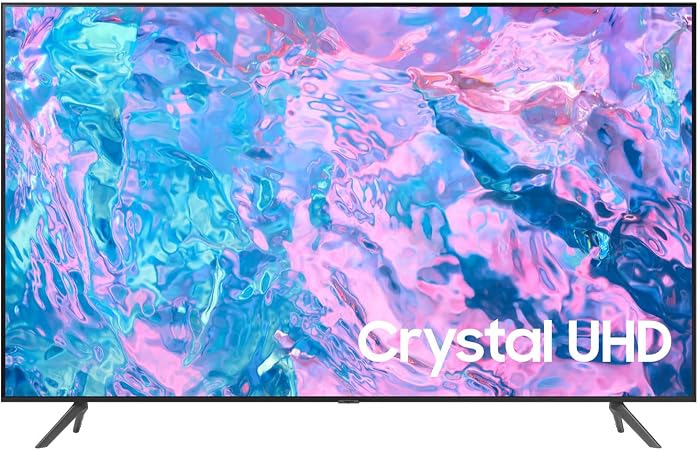
HDR10+ support for compatible streaming content Tizen smart TV platform with app ecosystem Entry-level panel with no local dimming Keep in mind: lower color volume than qled series. At $298, the Samsung Samsung 55" Crystal UHD CU7000 4K Smart TV 2023 costs $200 less than the Sony BRAVIA 3 43" 4K Google TV 2025 ($297.99) on this page, making it the stronger value pick if the spec differences fit your needs.

“Quantum Dot color covers 100% DCI-P3 color space.”
See Today’s Price →What we like
- Quantum Dot color covers 100% DCI-P3 color space
- Neo QLED-level brightness for HDR highlights
- Mini-LED local dimming for deep blacks with high brightness
- 144Hz panel for smooth gaming and motion
- 4K AI Upscaling Pro improves non-4K content
Watch out for
- More expensive than equivalent LG LED models
- Some blooming around bright objects in dark scenes
Read Full Analysis
Among Samsung's lineup on this Sony vs. Samsung page, the QLED Q8F occupies the performance sweet spot that the entry-level Crystal UHD at $377.99 can't reach. Quantum Dot color covering 100% DCI-P3 produces noticeably more saturated reds and greens in nature documentaries and HDR content — it's the difference between accurate color and genuinely vivid color. The 144Hz panel is the most significant spec advantage Samsung holds over every Sony model on this page, all of which are capped at 120Hz. For competitive gaming, that 24Hz gap is tangible in fast-paced titles where motion clarity separates smooth from stuttery. The trade-off is blooming — bright objects in dark scenes produce a halo of light bleed that Mini-LED panels (absent in this price tier from either brand) largely eliminate. At $519.95, the Q8F is only $78 less than the Sony BRAVIA 3 55-inch at $377.99, which narrows the value case. Sony's XR Cognitive Processor often produces more natural-looking upscaled HD content, which matters more than Samsung's 4K AI Upscaling if your primary viewing is 1080p streaming. Samsung's QLED Q8F is the strongest choice on this page for gaming-focused buyers: the 144Hz panel, Game Mode, and HDMI 2.1 support combine to deliver an experience Sony's current lineup can't match at this price. For cinematic viewing or PS5 owners who want automatic HDR calibration, the Sony BRAVIA 3 at $598 earns its slight premium over this Samsung.

“Art Mode displays 1,400+ artworks when not watching TV. 4.1 stars from 848 Amazon reviews signal consistent reliability.”
See Today’s Price →What we like
- Art Mode displays 1,400+ artworks when not watching TV
- Matte display finish eliminates reflections
- QLED Quantum Dot color accuracy
- Slim-fit wall mount (optional) sits flush against the wall
Watch out for
- Premium price over standard QLED
- Art Mode subscription required for full artwork library access
- Matte finish slightly reduces brightness vs glossy panels
Read Full Analysis
Art Mode displays 1,400+ artworks when not watching TV Matte display finish eliminates reflections Keep in mind: premium price over standard qled. Art Mode subscription required for full artwork library access Compared to the Sony BRAVIA 3 55-Inch 4K LED Smart Google TV (K-55S30) at $598 on this page, the Samsung Samsung 43" The Frame QLED 4K TV 2024 costs $20 more but may offer additional features or brand support worth considering for serious users.
Frequently Asked Questions
Which brand has better picture quality overall?
Is Sony or Samsung better for gaming?
Which has a better smart TV interface?
How long do Sony and Samsung TVs last?
How We Analyze Products
We analyze Amazon review data — often thousands of reviews per product — to surface patterns that individual buyers miss. Our process aggregates star ratings, review counts, and buyer sentiment at scale, identifying which strengths and weaknesses appear consistently across the largest review samples available. The 5,452+ reviews analyzed on this page represent real verified-purchase feedback from Amazon buyers.
Each product earned its placement through data: total review volume, average rating, and the specific praise and complaints that repeat most often across buyers. No manufacturer paid for placement on this page. Products appear here because buyers endorsed them at scale, not because a company asked us to feature them.
We use AI to summarize review sentiment — not to fabricate opinions, but to condense what thousands of buyers actually wrote into a readable format. The pros and cons you see reflect the most common themes found in verified purchaser reviews, paraphrased for clarity. We do not claim to have accessed Reddit, YouTube, or specific publications in generating these summaries.
Prices shown reflect Amazon pricing at the time this page was last generated. Click “See Today’s Price” to get the current live price on Amazon. Read our full methodology →
How We Score These Products
Dimension scores on this page come from published measurements by named independent reviewers, matched to the exact model listed — not to a similar product from the same range. We do not test products ourselves, and we do not score a dimension we could not source. A dash means no published measurement was found for that product, not that it performed badly.
Hdr: Based on verified buyer review sentiment analysis.
Smart Features: Based on verified buyer review sentiment analysis.
Picture Quality: Based on verified buyer review sentiment analysis.
The overall score is the mean of the dimensions we could evidence for that product, on a 10-point scale. Price is shown separately and is never folded into a score. Amazon star ratings are shown separately and are never part of any score.