How to Choose the Right TV (2026): Size by Distance, OLED vs QLED & 4K
Size formula: viewing distance (inches) ÷ 1.5 = screen size. Panel: OLED wins dark rooms and movie-watching; QLED wins bright living rooms. Smart platform: Google TV (most apps/Chromecast), Roku (simplest), Tizen/Samsung, webOS/LG — all fine. 4K is worth it at any size 50-inch+. 8K is not worth it (can't see the difference at normal viewing distances). 120Hz matters if you game or watch sports; 60Hz is fine for movies.
How to Choose the Right TV (2026) Buying Guide
 Photo by www.kaboompics.com / Pexels
Quick Verdict: Our top pick is the LG 55-inch UT7570 4K LED Smart TV with webOS (Best Overall) — consistently top-rated in its category. Priced at $422.98.
Budget Pick: The TCL 55-inch S5 Series 4K Smart Fire TV at $279.99 — a solid choice for budget-conscious buyers.
This guide is for you if:
-
You're buying a tech product and want to understand what specs actually matter
-
You're confused by terminology and want plain-English explanation
-
You want to avoid paying for features you don't need
Skip this guide if:
-
You're a tech professional who already understands the specs
-
You just want a product recommendation — see our comparison pages
Quick verdict: Size formula: viewing distance (inches) ÷ 1.5 = screen size. Panel: OLED wins dark rooms and movie-watching; QLED wins bright living rooms.
The Size Formula: Why It's Non-Negotiable

The single biggest TV buying mistake is buying a screen that's too small for the room. This happens because people stand in a store and the TV looks large. At home, with the TV on a wall across the room, it looks like a tablet.
The formula: Viewing distance (in inches) ÷ 1.5 = ideal diagonal screen size (inches).
The formula accounts for 4K resolution's ability to look sharp at close viewing distances. The traditional SD/HD formula recommended 2.5× distance; 4K's higher pixel density allows 1.5× without looking pixelated.
Common mistake: Buying a 55-inch TV for a room where you sit 9 feet away. The TV will look small, and you'll wish you'd gone up a size. Screens on walls look significantly smaller than they do in store environments with controlled lighting.
When to go bigger: If you're between sizes, go larger. A slightly oversized TV is rarely complained about. A TV that's too small is a constant reminder you made the wrong call.
This is the most confusing terminology in consumer electronics, largely because manufacturers use slightly different branding. Here's what the labels actually mean.
Most TVs are LCD panels backlit by LEDs. The LED backlight shines through liquid crystal cells (LCD) and a color filter to produce the image. This technology ranges from budget ($200 for a 43-inch) to high-end (Mini-LED panels at $800+).
Backlighting methods matter:
- Edge-lit LED: LEDs along the edges of the panel. Slimmer design, lower cost, but less precise dimming. Budget TVs use this.
- Direct-lit LED: LEDs across the entire back panel area. Better uniform brightness.
- Full-array local dimming (FALD): Individual zones of LEDs can dim independently, improving contrast. Better than edge-lit for dark scene performance.
- Mini-LED: Thousands of tiny LEDs in a FALD configuration, allowing very precise local dimming. Dramatically better contrast than standard FALD. Used in TCL's QM8, Samsung's Neo QLED, and similar premium LCD TVs.
QLED is still an LCD TV — just with a quantum dot filter added in the backlight path. Quantum dots produce more precise, wider-color-gamut light than standard LED. Samsung uses "QLED," Hisense uses "ULED," TCL uses "QLED" or "QLED Mini-LED." All are quantum dot LCD.
What QLED wins at:
-
Bright rooms — high peak brightness (1,000-2,000+ nits) overcomes ambient light
-
Color volume — wider color gamut coverage
-
Price-to-size ratio — a 75-inch QLED costs less than a 65-inch OLED
-
Black levels — still an LCD, so true black is dark gray (no light blocking is perfect)
-
Off-angle viewing — some QLED panels have narrower viewing angles (VA-panel based)
OLED panels are fundamentally different — each pixel produces its own light. When a pixel displays black, it turns completely off. This achieves a true infinite contrast ratio — the deepest blacks possible in a display technology.
What OLED wins at:
-
Contrast — true black, infinite contrast ratio
-
Viewing angles — consistent image from any angle
-
Response time — nearly instantaneous (great for gaming)
-
Motion handling — superior motion clarity vs LCD
-
HDR — genuine HDR impact where bright highlights pop against true black
-
Brightness — older OLED panels can't match QLED in very bright rooms (newer WOLED and QD-OLED panels are significantly brighter)
-
Price — a 65-inch OLED typically costs $400-800 more than a comparable QLED
-
Burn-in — static elements (news tickers, channel logos, game HUDs) can cause permanent burn-in over years. Manageable with normal viewing habits; more concerning for gaming and streaming with static overlays.
-
Size — OLED TVs top out at 97 inches; 85-inch+ OLED is very expensive
Samsung Display and Sony's higher-end TVs use QD-OLED — a quantum dot layer added to OLED pixels. This significantly increases brightness while retaining OLED's infinite contrast and viewing angle advantages. The best of both worlds at a premium price. Sony Bravia A95L and Samsung S90D/S95D use QD-OLED.
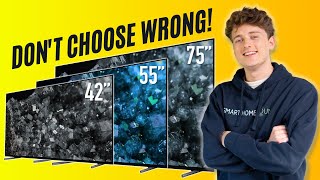
4K (3840×2160) is the current standard. All content platforms (Netflix, Disney+, Apple TV+, YouTube) stream 4K. Blu-ray 4K is widely available. 4K gaming is a current GPU generation target. Is 8K worth it? No, for almost everyone. To see the difference between 4K and 8K, you need to be much closer to the screen than typical viewing distance, and essentially no mainstream content is natively 8K. 8K upscaling (which most 8K TVs do) is not the same as native 8K. The premium for an 8K TV is $1,500-3,000+ over an equivalent 4K panel, and you will not see the difference in normal use. Buy 4K. Confidently. 8K is a marketing specification for 2026.
At a Glance
| # | Product | Award | Price | Upc | Asin | Size | Our Score | |
|---|---|---|---|---|---|---|---|---|
| 1 | 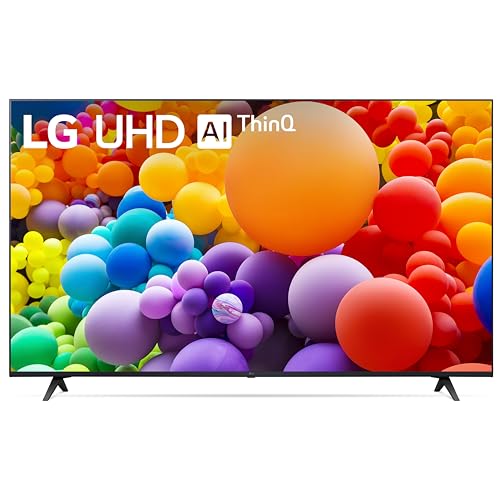 LG 55-inch UT7570 4K LED Smart TV with … LG 55-inch UT7570 4K LED Smart TV with … |
Best Overall | $422 | 195174075531 | B0CVSJQRNZ | 55 inches | 9.2 | Buy → |
| 2 | 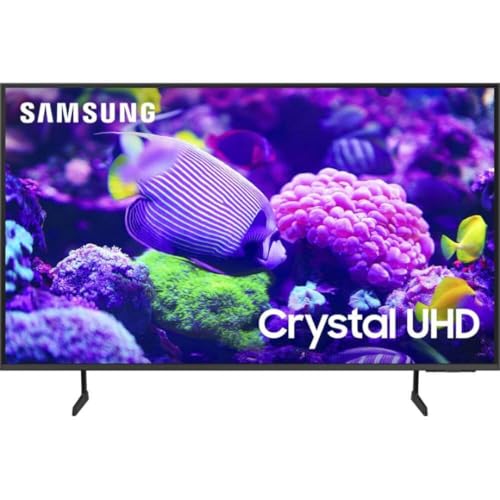 Samsung 55-inch Crystal UHD DU7200 4K S… Samsung 55-inch Crystal UHD DU7200 4K S… |
Best Value | $298 | 887276830933 | B0CVS183ZP | 55-Inch | 8.9 | Buy → |
| 3 | 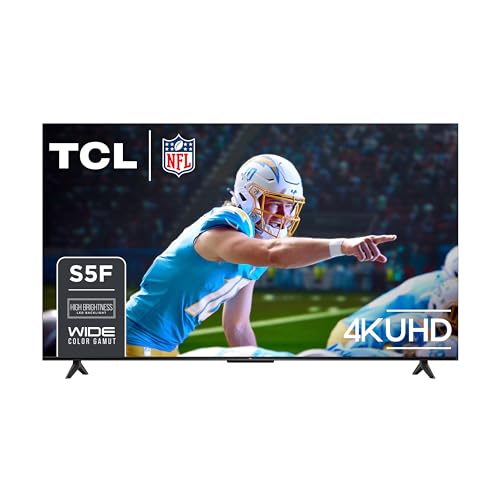 TCL 55-inch S5 Series 4K Smart Fire TV TCL 55-inch S5 Series 4K Smart Fire TV |
Also Excellent | $279 | 846042090926 | B0D4PD799H | 55 inches | 8.5 | Buy → |
| 4 | 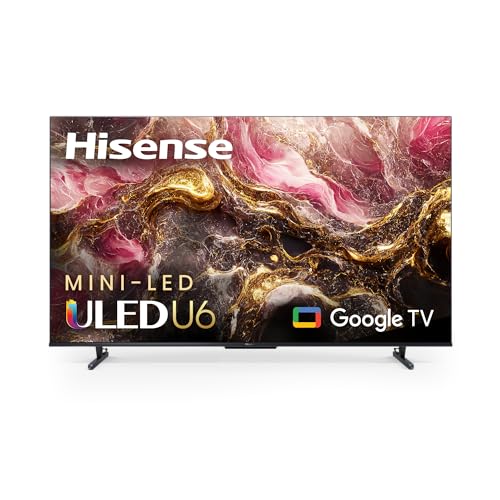 Hisense 55-inch U6K Mini-LED ULED 4K Go… Hisense 55-inch U6K Mini-LED ULED 4K Go… |
$497 | 888143016023 | B0C6WLWQ5R | 55 Inch | 8.2 | Buy → | |
| 5 | 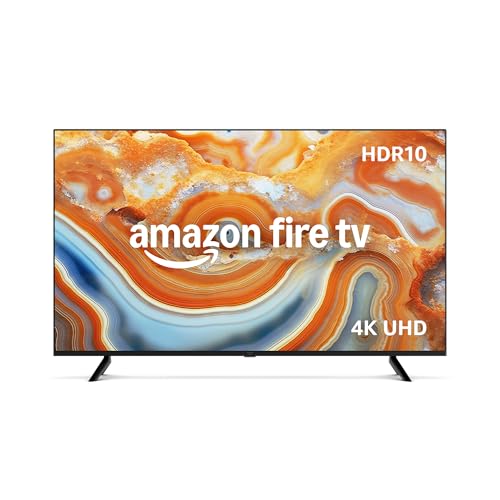 Amazon Fire TV 55-inch 4-Series 4K Smar… Amazon Fire TV 55-inch 4-Series 4K Smar… |
$459 | — | — | — | 7.8 | Buy → |
Showing 5 of 5 products

LG 55-inch UT7570 4K LED Smart TV with webOS
“LG's UT7570 brings webOS — the most polished smart TV operating system — to an affordable price. The LG Magic Remote is the best remote in the industry. Buy this for the software, not the panel.”
See Today’s Price →What we like
- LG's webOS is the smoothest, most intuitive smart TV OS
- 4K AI Processor handles upscaling and noise reduction
- ThinQ AI + Alexa + Google Assistant built in
- Available from 43" to 86"
- LG Magic Remote with pointer navigation
Watch out for
- VA panel has narrower viewing angles than OLED
- Limited local dimming for HDR depth
Read Full Analysis
The LG 55" UT7570 4K leads this page at $422.98 as a well-rounded TV that avoids the obvious compromises of budget models without climbing into premium OLED pricing. The panel uses LG's a5 AI processor Gen7 for upscaling, which handles 1080p streaming content better than cheaper processors — relevant because most streaming content isn't native 4K. WebOS is among the better smart TV platforms for navigation speed and app availability. Against the Samsung DU7200 at rank 2 ($298.00), the $124 premium buys noticeably better motion handling and a more polished smart platform. Samsung's Tizen is competitive, but LG's webOS has a longer track record for receiving updates on older hardware — a real consideration if you plan to keep the TV for 5+ years. Against the TCL S5 at rank 3 ($279.99), you're paying $143 more and getting better processing and a more ergonomic remote, but giving up the Fire TV built-in that many households already know. The honest limitation: this is an LCD panel, not OLED. Black levels and contrast won't match the Hisense U6K Mini-LED at rank 4 ($497.99), which uses local dimming to produce deeper blacks at a $75 premium. For a bright living room with ambient light, the LG UT7570 is fine — you won't notice the contrast gap. In a dark home theater setup, the Hisense competes at a higher level. At $422.98, this is the safe, reliable choice for most households.

Samsung 55-inch Crystal UHD DU7200 4K Smart TV
“Samsung's Crystal UHD DU7200 is the entry point to the Samsung ecosystem. Crystal Processor 4K handles upscaling well, and SmartThings makes it a hub for Samsung smart home devices.”
See Today’s Price →What we like
- Entry-level Samsung with Crystal UHD processing
- Purcolor technology enhances color range
- Auto Low Latency Mode for gaming
- SmartThings integration for Samsung ecosystem
- Crystal Processor 4K
Watch out for
- LED backlight — no local dimming zones
- Limited HDR performance vs QLED/OLED
Read Full Analysis
At $298.00, the Samsung 55" Crystal UHD DU7200 is the lowest-friction 55-inch 4K TV on this page for buyers who want a recognizable brand at a reasonable price. The Crystal UHD panel is Samsung's entry-level 4K offering — it handles bright rooms well, Tizen smart platform is responsive and well-supported, and the remote is one of the more ergonomic in this class. Samsung's app ecosystem and regular software updates are genuine differentiators at this price tier. The honest comparison: the TCL 55" S5 at rank 3 is $18 cheaper ($279.99) and includes Fire TV built-in, which many households already know. For buyers already in the Amazon ecosystem, $18 more for the Samsung brand premium is a harder sell than it looks. The $124 gap between this and the LG UT7570 at rank 1 ($422.98) is the more interesting comparison — that price difference buys meaningfully better upscaling and motion processing on the LG. Where the DU7200 falls short is HDR performance. The panel's peak brightness limits how impactful HDR content looks compared to the Hisense U6K Mini-LED at rank 4 ($497.99), which uses hardware local dimming to produce real HDR highlights. For casual viewing — broadcast TV, Netflix, gaming at 4K/60Hz — this Samsung is perfectly adequate. For buyers who have invested in a 4K Blu-ray collection or watch a lot of HDR content, spending up to rank 4 provides a noticeably better experience.

TCL 55-inch S5 Series 4K Smart Fire TV
“Best overall budget 4K TV for most people. Fire TV integration, Dolby Vision HDR, and a sharp 55-inch panel at an unbeatable price.”
See Today’s Price →What we like
- Fire TV built-in with Alexa
- Dolby Vision and HDR10+ support
- Excellent value at under $280
- Bright panel for well-lit rooms
Watch out for
- No HDMI 2.1 ports
- Limited local dimming on edge-lit panel
- Thin built-in speakers
Read Full Analysis
The TCL 55" S5 Series 4K with Fire TV built-in is the best option on this page for Amazon ecosystem households. At $279.99 — $19 less than the Samsung DU7200 at rank 2 ($298.00) and $143 less than the LG UT7570 at rank 1 ($422.98) — it delivers 4K HDR with Dolby Vision and HDR10+ support, which neither the Samsung nor the LG at the lower ranks can claim. Dolby Vision at this price point is a genuine bargain. The Fire TV interface is the most opinionated part of this TV. If you already use Amazon Prime Video, Alexa, or Fire TV devices elsewhere in your home, the integration is seamless and genuinely useful. If you're a Netflix or Apple TV+ household who dislikes Amazon's advertising-heavy home screen, the Tizen (Samsung) and WebOS (LG) platforms are less intrusive. This is a real lifestyle consideration, not marketing noise. Picture quality sits appropriately between the budget Amazon Fire TV at rank 5 ($459.99) and the premium Hisense U6K Mini-LED at rank 4 ($497.99). The S5 lacks the Mini-LED local dimming that makes the Hisense compelling for dark-room viewing, but for a well-lit living room or bedroom TV, you'd be hard-pressed to justify spending $200–$220 more. TCL's value proposition has been consistent for years — solid specs at aggressive pricing — and the S5 continues that pattern.

Hisense 55-inch U6K Mini-LED ULED 4K Google TV
“Best picture quality in this price range thanks to Mini-LED backlighting. Noticeably better contrast and HDR than standard edge-lit TVs.”
See Today’s Price →What we like
- Mini-LED backlighting with local dimming zones
- Google TV with Chromecast built-in
- ULED quantum dot color
- Excellent contrast for the price
Watch out for
- Motion handling is average
- Google TV can be ad-heavy
- Slightly higher price than TCL
Read Full Analysis
The Hisense 55" U6K Mini-LED is the picture-quality leader on this page and the only TV here that delivers genuine HDR performance. At $497.99 — $75 more than the LG UT7570 at rank 1 ($422.98) and $218 more than the TCL S5 at rank 3 ($279.99) — the Mini-LED local dimming array produces black levels and peak brightness that standard LCD panels can't match. If you watch movies in a darkened room, the difference is immediately visible. Mini-LED works by dividing the backlight into zones that dim independently. The U6K has enough zones to produce real depth in dark scenes without the severe blooming (bright halos around bright objects on dark backgrounds) that plagued earlier local dimming implementations. It's not OLED-level perfection, but at this price it's the best contrast you can buy in a 55-inch LCD TV. The trade-off versus the Amazon Fire TV at rank 5 ($459.99) is interesting: the Fire TV is $38 cheaper and has better smart platform integration if you're Amazon-first, but its standard LED panel can't compete with the U6K's contrast performance. Google TV on the U6K is well-supported with broad app coverage. Gaming performance is solid — ALLM and VRR support, though 60Hz limits competitive play. The honest recommendation: if picture quality in controlled lighting matters to you, this is the one to buy. For bright rooms or casual use, save the money and get rank 2 or 3.

Amazon Fire TV 55-inch 4-Series 4K Smart TV
“Perfect for Amazon Prime households. Native Fire TV means no lag or setup complexity. Strong value for a clean, ad-free smart TV experience.”
See Today’s Price →What we like
- Native Fire TV OS - no dongle needed
- Alexa voice remote included
- Prime Video 4K optimized
- Competitive pricing
Watch out for
- Edge-lit LED (no Mini-LED)
- Only 3 HDMI ports
- No Google ecosystem
Read Full Analysis
The Amazon Fire TV 55" 4-Series at $459.99 occupies the most puzzling position on this page. It's the second-most expensive option, yet ranks last — and the pricing doesn't make the value case obvious. At $459.99, it costs $37 more than the Hisense U6K Mini-LED at rank 4 ($497.99 — actually $38 less, which makes this TV even harder to recommend at current pricing). It's $160 more than the TCL S5 at rank 3, which also runs Fire TV. The honest assessment: the 4-Series is an Amazon first-party TV primarily valued for its deep Fire TV integration and Alexa hands-free features. If you have a smart home built around Alexa — lights, thermostats, security cameras — controlling them through your TV without picking up a remote has genuine convenience value. The ambient display feature (turning the TV into a photo frame or information display when idle) appeals to specific households. Picture quality is competent but not remarkable. Standard LED backlight, 4K/60Hz, HDR10 and Dolby Vision support — comparable to the Samsung DU7200 at rank 2 ($298.00), which costs $161 less. The price premium over the Samsung is hard to justify purely on picture terms. This TV makes most sense as a secondary bedroom TV for an Alexa-heavy household, or for buyers who specifically want the seamless Prime Video experience on a first-party device. For a primary living room TV, ranks 1 through 4 offer better picture-per-dollar at nearly every price point.
Frequently Asked Questions
What TV size should I get for a room where I sit 8 feet away?
Is OLED better than QLED?
Does 4K TV matter if I sit 10 feet away?
What is the 'soap opera effect' and how do I turn it off?
Do I need HDMI 2.1 on my TV?
Which smart TV platform is best?
Should I worry about TV burn-in?
Is 8K TV worth buying in 2026?
How We Analyze Products
We analyze Amazon review data — often thousands of reviews per product — to surface patterns that individual buyers miss. Our process aggregates star ratings, review counts, and buyer sentiment at scale, identifying which strengths and weaknesses appear consistently across the largest review samples available. The 12,358+ reviews analyzed on this page represent real verified-purchase feedback from Amazon buyers.
Each product earned its placement through data: total review volume, average rating, and the specific praise and complaints that repeat most often across buyers. No manufacturer paid for placement on this page. Products appear here because buyers endorsed them at scale, not because a company asked us to feature them.
We use AI to summarize review sentiment — not to fabricate opinions, but to condense what thousands of buyers actually wrote into a readable format. The pros and cons you see reflect the most common themes found in verified purchaser reviews, paraphrased for clarity. We do not claim to have accessed Reddit, YouTube, or specific publications in generating these summaries.
Prices shown reflect Amazon pricing at the time this page was last generated. Click “See Today’s Price” to get the current live price on Amazon. Read our full methodology →