Air Compressor Types Explained (2026 Buying Guide)
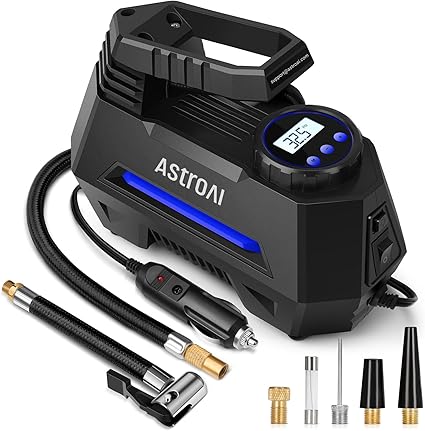
Match the compressor to the job: a portable inflator for tyres and sports gear, a pancake or hotdog for nail guns, a stationary two-stage for spray and air tools. For the portable end the AstroAI AIRUN H Tire Inflator is $27.19.
At a Glance
| # | Product | Award | Price |
|---|---|---|---|
| 1 | Best Portable | Check current price on Amazon Buy → |
|
| 2 |  2340N5-V 5hp 80 gal Two-Stage Com… 2340N5-V 5hp 80 gal Two-Stage Com…Ingersoll Rand |
Industrial Pick | $2,584.99 Buy → |
| 3 |  AVID POWER Tire Inflator Portable… AVID POWER Tire Inflator Portable…AVID POWER |
Budget Pick | Check current price on Amazon Buy → |
Air Compressor Types Explained (2026 Buying Guide) Buying Guide
 Photo by Andrea Piacquadio / Pexels
Air compressors look similar from the outside — a tank, a motor, a gauge — but the internal design determines what tasks they can power, how long they last, and whether you can work continuously or must wait for the tank to refill. Getting the wrong type means a compressor that cannot power your tools or one that is oversized for the task.
Pancake vs Hot Dog vs Twin-Stack vs Vertical
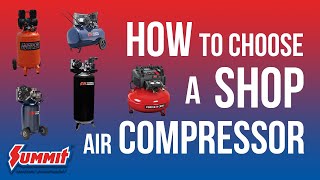
These are tank shape descriptions, not performance specs — but tank shape determines portability and storage footprint. Pancake tanks are flat cylinders, low to the ground, and hard to tip over — the most stable portable form. The California Air Tools 6310 pancake at $120 is the standard. Hot dog tanks are horizontal cylinders on legs — easy to carry but tip easily. Twin-stack (two horizontal tanks) doubles capacity without adding height. Vertical tanks stand upright and are used in garage and shop setups where floor space is limited — 20-60 gallon capacity. The tank shape matters for storage; the tank capacity (gallons) and output (SCFM) determine whether the compressor powers your tools.
PSI and SCFM — The Specs That Actually Matter
PSI (pounds per square inch) is the pressure the compressor builds. Most pneumatic tools need 90 PSI to operate. A compressor rated at 150 PSI max means it can sustain 90 PSI output while the motor runs — fine for any air tool. SCFM (standard cubic feet per minute) is the volume of air delivered at a given pressure — this is the critical spec for matching compressor to tool. A nailer needs 0.5-2.5 SCFM at 90 PSI — almost any portable compressor handles this. A die grinder needs 4-8 SCFM. A sandblaster needs 10-25 SCFM. An HVLP spray gun needs 3-7 SCFM. The rule: your compressor must deliver at least as much SCFM as your most demanding tool. Running below required SCFM means the compressor cannot keep up and the tool loses power mid-use.
Oil-Free vs Oil-Lubricated Pumps
Oil-free compressors use Teflon-coated pistons that run dry. They are maintenance-free, work in any orientation, and produce no oil contamination in the air line — critical for painting and food use. The trade-off: oil-free pumps run hotter and wear faster. A quality oil-free compressor lasts 3-5 years under regular use. Oil-lubricated compressors have a reservoir and dipstick — you check and change oil like a small engine. They run cooler, quieter, and last 2-3x longer (10-15 years). The California Air Tools 8010 is oil-free and exceptionally quiet (60 dB) for shop use. The Rolair JC10 is oil-lubricated and built for sustained professional use. For painting: oil-free is required (or use a dedicated oil separator). For general shop use and long run times: oil-lubricated.
Tank Size: How Much Do You Need?
For nailers and intermittent tools: 6-gallon is enough. The compressor refills between shots and the nailer never runs continuously. For spray painting or sandblasting: 20-60 gallon minimum. These tools run continuously and demand more air volume than a small tank can sustain — the motor will run constantly trying to keep up, overheat, and wear prematurely. For tire inflation: 1-6 gallon handles it. For a full shop with air tools in continuous use: 60+ gallon with a 5 HP motor. General rule: match tank size to your most demanding tool's run time, not to the tool's peak PSI.
Noise Levels
Standard compressors run at 70-90 dB — loud enough to require hearing protection in a closed garage. Quiet compressors (California Air Tools, Makita MAC700) run at 56-68 dB — safe for conversation in the same room. Quiet models cost 30-50% more but are worth it for garage shops adjacent to living areas or for anyone doing extended work. The California Air Tools 6310 at 60 dB is the quiet-compressor benchmark; it can run in an apartment garage without neighbor complaints.
See Our Compressor Comparisons
We have compared and ranked the best options for every application: best air compressors overall, best air compressors for beginners, best for home garage use, and best under $200.
What is actually on this page
- AstroAI AIRUN H Tire Inflator Portable Air Compressor Air — $27.19. Pocketable size at under 2 lbs - fits in a glove box or backpack. Against it: Slow on large tires - full SUV tire takes 5-8 minutes per.
- 2340N5-V 5hp 80 gal Two-Stage Compressor — $2,584.99. Two-stage compression delivers higher PSI with cooler running temperatures. Against it: Three-phase power is uncommon in residential settings - check service panel first.
- AVID POWER Tire Inflator Portable Air Compressor — $52.79. LCD display shows real-time and target PSI with auto-shutoff. Against it: Hose is short - you'll often need to position the inflator close to the valve.
Which one to take
The AstroAI AIRUN H Tire Inflator Portable Air Compressor Air at $27.19 suits drivers and cyclists who want emergency inflation without a 12V outlet. The 2340N5-V 5hp 80 gal Two-Stage Compressor at $2,584.99 suits commercial shops, body shops, and industrial users running multiple air tools simultaneously. The AVID POWER Tire Inflator Portable Air Compressor at $52.79 suits households that need one inflator for car, bike, and sports use.
“The AstroAl Portable Air Compressor is a compact inflator designed for tires, sports equipment, and inflatables on the go. Its portable form factor makes it a practical keep-in-the-car tool for…”
See Today’s Price →What we like
- Pocketable size at under 2 lbs - fits in a glove box or backpack
- Auto-shutoff at preset PSI prevents over-inflation of car or bike tires
- USB-C rechargeable battery lasts for several full inflations on a charge
Watch out for
- Slow on large tires - full SUV tire takes 5-8 minutes per
- Not suitable for shop tools - designed for tires, sports balls, and air mattresses only
Read Full Analysis
The AstroAl represents the cordless tire inflator class -- a fundamentally different tool type than the stationary shop compressors ranked above it on this page. At under 2 lbs with USB-C charging, it fits in a glove box and handles the job most car owners actually face: topping off a low tire on the road, inflating a bike tire, or filling a sports ball. The auto-shutoff at a preset PSI prevents over-inflation without requiring the user to watch a gauge. This compressor type is not for shop tools -- CFM output is far too low to cycle a nail gun or run an impact wrench. On this types-explained page the AstroAl defines the portable consumer inflator class: the answer to "I just need something small in my car" that does not require any dedicated shop equipment. For buyers comparing compressor types, this is the correct choice only for tire and recreational inflation tasks.
“The Ingersoll Rand 2-Stage 230V Three-Phase compressor is built for industrial and professional shop environments, delivering the sustained CFM output that demanding pneumatic tools and production…”
See Today’s Price →What we like
- Two-stage compression delivers higher PSI with cooler running temperatures
- Three-phase 230V power for industrial-grade continuous duty cycles
- Cast-iron crankcase and forged crankshaft for long-haul reliability
Watch out for
- Three-phase power is uncommon in residential settings - check service panel first
- Premium pricing puts this firmly in the commercial category
Read Full Analysis
The Ingersoll Rand 2-Stage represents the industrial-grade fixed compressor class -- machinery, not a portable tool. Two-stage compression feeds each piston stage in sequence: the first stage compresses air to an intermediate pressure, passes it through an intercooler, then the second stage brings it to full working PSI. This produces cooler, denser compressed air with less thermal stress on the pump, which is why two-stage units dominate shops running continuous duty cycles. At $2,584.99, this is a professional investment requiring three-phase 230V power -- typically found in commercial garages, fabrication shops, and auto body facilities rather than residential garages. On this types page it defines the upper boundary of the stationary shop compressor class: the configuration that production-level pneumatic demand requires when a single-stage unit cannot keep pace with back-to-back tool use across multiple operators.
“The Avid Power Tire Inflator is a handheld air compressor aimed at quick tire inflation without a trip to a gas station. It suits everyday drivers who want a straightforward, portable solution for…”
See Today’s Price →What we like
- LCD display shows real-time and target PSI with auto-shutoff
- Four nozzle adapters handle car tires, bike tires, sports balls, and air mattresses
- 12V car adapter and 110V wall adapter both included
Watch out for
- Plastic body feels less robust than premium aluminum competitors
- Hose is short - you'll often need to position the inflator close to the valve
Read Full Analysis
The Avid Power represents the budget entry to the portable tire inflator class -- a 12V/110V dual-power inflator that covers the same basic use case as the AstroAl above it at a lower price point. The LCD display with auto-shutoff and four included nozzle adapters make it versatile for multi-purpose inflation tasks: car tires, bike tires, sports balls, and air mattresses all covered with one tool. The 12V car adapter means no battery to charge and no risk of running out of power roadside. The plastic construction is less rigid than premium units and the short hose requires positioning the inflator close to the valve stem, which can be awkward on rear tires. For a driver who wants basic tire-inflation capability without spending much, this inflator type represents the accessible floor of the portable compressor category on this types-explained page.
Frequently Asked Questions
What air compressor do I need for a nail gun?
What is SCFM and why does it matter?
Is oil-free or oil-lubricated better?
How loud are air compressors?
Can a small compressor run an impact wrench?
How We Analyze Products
We analyze Amazon review data — often thousands of reviews per product — to surface patterns that individual buyers miss. Our process aggregates star ratings, review counts, and buyer sentiment at scale, identifying which strengths and weaknesses appear consistently across the largest review samples available. The 106,593+ reviews analyzed on this page represent real verified-purchase feedback from Amazon buyers.
Each product earned its placement through data: total review volume, average rating, and the specific praise and complaints that repeat most often across buyers. No manufacturer paid for placement on this page. Products appear here because buyers endorsed them at scale, not because a company asked us to feature them.
We use AI to summarize review sentiment — not to fabricate opinions, but to condense what thousands of buyers actually wrote into a readable format. The pros and cons you see reflect the most common themes found in verified purchaser reviews, paraphrased for clarity. We do not claim to have accessed Reddit, YouTube, or specific publications in generating these summaries.
Prices shown reflect Amazon pricing at the time this page was last generated. Click “See Today’s Price” to get the current live price on Amazon. Read our full methodology →