Best Electrical Fish Tape (2026): Running Wire Through Walls and Conduit
The 16.4-foot heavy-duty fish tape at $10 is the right tool for homeowners and DIYers — compact, retractable, handles most residential wire-pulling tasks. For pulling wire through 10m or less of conduit, the retractable 10m model at $10 with a built-in reel cover makes one-person operation easier.
Electrical Fish Tape (2026) Buying Guide
 Photo by Nikola Tomašić / Pexels
What Electrical Fish Tape Is and When You Need It
Fish tape (also called draw tape or wire puller) is a semi-rigid tape used to route new wire through existing walls, conduit, and ceiling cavities. You push the tape from one end, navigate it to the exit point, attach the new wire, and pull the tape back — bringing the wire with it.
Without fish tape, adding a new outlet, running coax to a new TV location, or adding a circuit means cutting open walls, running wire visibly along baseboards, or hiring an electrician. With fish tape, it's a 30-minute job.

When fish tape is the right tool:
-
Adding an outlet or switch in an existing wall
-
Running HDMI, ethernet, or speaker wire through finished walls

-
Pulling wire through conduit (electrical, HVAC control, data)
-
Fishing wire from an attic or basement to a wall box
-
Running wire from a panel to a new circuit
-
Very long runs (100+ feet of conduit): a fish pole or fiberglass rod set works better than tape
-
Tight conduit with multiple bends: conduit-specific pull string is easier
-
Open construction (before drywall): just staple the wire directly, no fish tape needed
Short Tape vs. Long Tape: Matching the Tool to the Job
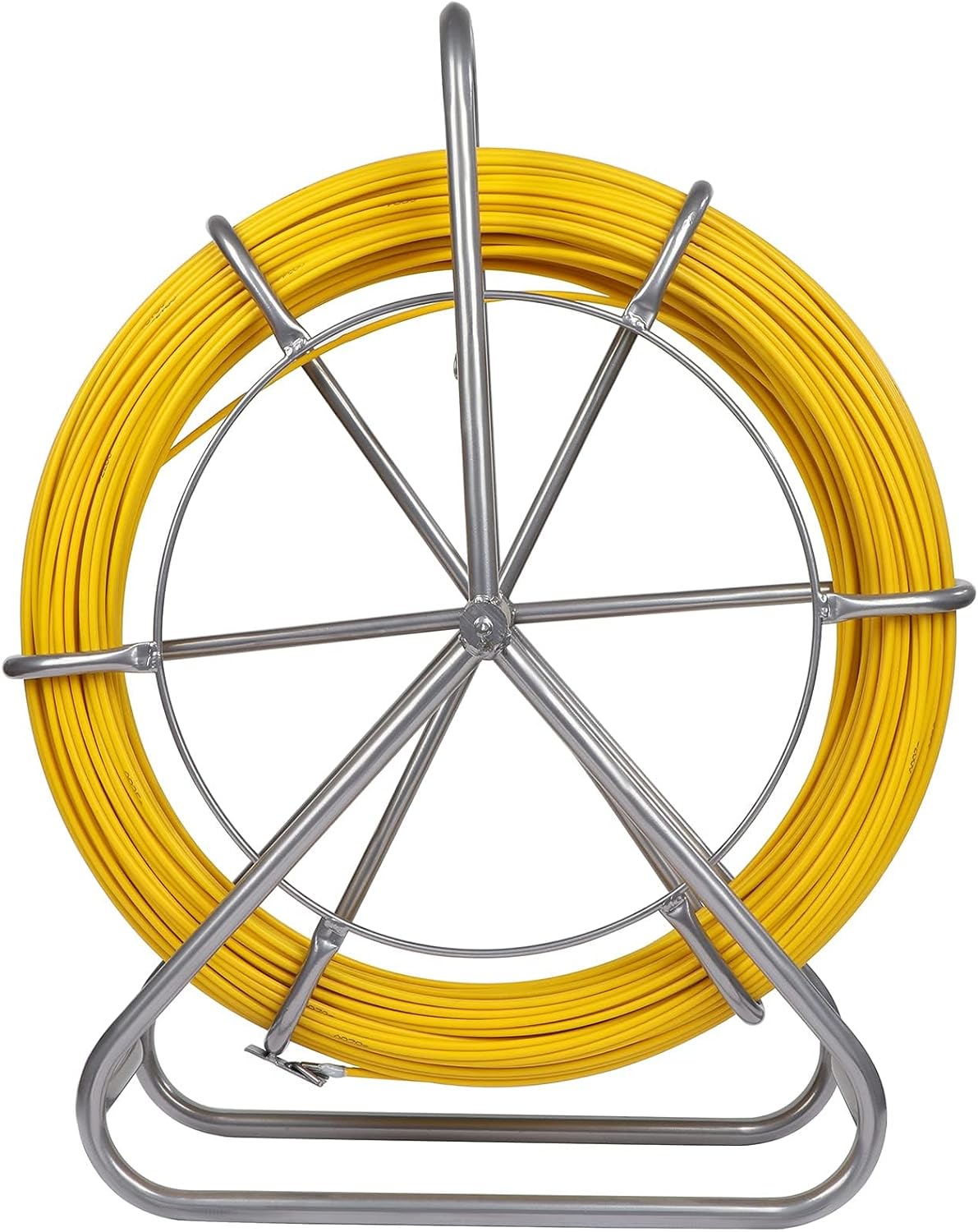
Steel fish tape: Traditional. Semi-rigid, good for pushing through walls and conduit. Conducts electricity — you MUST de-energize any circuit before using steel tape near it. Cheaper. Fiberglass fish tape (duct rodder): Non-conductive. Safer when working near energized circuits, though best practice remains de-energizing everything. Lighter weight for longer tapes. More flexible, which helps navigate bends in conduit. The 656-foot option here is fiberglass specifically for safety and flexibility on long runs. The short steel tapes here have insulated handles, but the tape body itself conducts. Always de-energize before fishing wire regardless of tape material.
How to Use Fish Tape: The Basic Technique
1. Map your route. Know where the tape needs to go — from the box, through the wall cavity, to the exit point. If fishing through a wall, locate stud bays with a stud finder. Check for blocking (horizontal fire stops) that may require drilling.
2. Create the exit path. For adding an outlet: cut the rough opening with a drywall saw. For existing boxes: remove the box cover.
3. Push the tape from the destination box. Counterintuitively, push the tape from the box where the wire will end up, not where you're feeding it from. This keeps the hook end where you can attach wire.
4. Attach the wire. Strip 4–6 inches of wire insulation. Bend the bare wire through the fish tape hook and fold it back. Tape the connection with electrical tape — the key: tape it smooth so it slides through any tight sections without catching.
5. Pull the tape back. Pull steadily with one hand while your helper at the far end guides the wire into the wall. Don't yank — smooth, steady pressure prevents the wire from catching.
Retractable (both short tapes here): The tape lives in a sealed case and retracts automatically. Compact, no tangling, easier one-person operation. Sufficient for short runs. Open-reel (professional trade tapes): A flat open spool. Easier to coil large amounts of tape, faster to pay out on long runs. Required for tapes over 50 feet — a retractable mechanism can't handle that length reliably. The 656-foot fiberglass duct rodder uses an open reel with a wheel stand — standard for commercial-length runs.
Do I need to turn off electricity to use fish tape? Best practice: yes, always de-energize the circuit before fishing wire. Steel fish tape conducts electricity. Even fiberglass tape can conduct if it contacts a live wire. Treating all circuits as live until verified is the correct safety approach. What's the difference between fish tape and a fish stick/glow rod? Fish tape is flat and semi-rigid — good for walls and conduit. Fish sticks (glow rods) are fiberglass poles in 4-foot sections you connect together — better for open attic spaces, crawlspaces, and situations where you need to push the tape around obstructions that a flat tape can't navigate. How do I get fish tape past a firestopping block in a wall? Drill a small hole through the fire block from above (in attic) or below (in basement). This is standard practice in retrofit wiring — fire blocks are the single biggest obstacle to fishing through walls and require planning before starting. Can fish tape be used to pull data cable (ethernet, coax)? Yes — fish tape is the standard tool for pulling any cable type through walls and ceilings, including ethernet, coax, speaker wire, and low-voltage data cable. The technique is identical regardless of cable type. My fish tape keeps kinking. What am I doing wrong? Usually caused by forcing the tape around tight bends — fish tape prefers gentle curves. For tight turns, reduce the lead angle and use smaller forward pushes. Also: make sure the tape is extended enough that you have the tip past the bend before pushing hard. Kinked tape can be straightened by pulling it tightly between two fixed points, but deep kinks weaken the tape permanently.

At a Glance


Showing 3 of 3 products
Fish Tape Wire Puller 16.4 ft Heavy Duty for Running Electrical Wire
“A 16-foot fish tape is the minimal-investment option for homeowners running a single wire from one stud bay to the next — the short length is a real limitation but sufficient for its specific use case”
See Today’s Price →What we like
Watch out for
Read Full Analysis
The 16.4-Foot Heavy Duty Fish Tape Wire Puller is the correct tool for most residential DIY wire-pulling jobs. Semi-rigid steel tape with a hook end for attaching wire, a comfortable grip handle, and a compact retractable case that keeps the tape from tangling between uses. Covers wall fishing, ceiling cable pulls, and short conduit runs in one or two rooms. At $10, it's priced correctly for a tool that most homeowners use a few times per year — low barrier to owning one, high value when you actually need to add a circuit or run a TV cable through a wall.
Electrical Fish Tape 10m 3mm Wire Puller Retractable for Running Wire
“A 10m retractable fish tape is the right DIY tool for short wire runs — replacing a light switch, adding an outlet, or running cable through a single stud bay without investing in professional-grade t”
See Today’s Price →What we like
Watch out for
Read Full Analysis
The Electrical Fish Tape 10m retractable model keeps the tape in a closed housing with automatic retraction — eliminating the tangles and coiling hassle of open-reel tapes for short runs. The 3mm wire thickness provides enough rigidity to push through typical wall cavities without buckling. The small footprint makes it easy to store in a toolbox between uses. At $10, it's essentially the same price as the 16.4-foot model but with the convenience of automatic retraction. Best for occasional use where the tape cleanup time after a job matters.
Fiberglass Fish Tape 656 ft Non-Conductive Duct Rodder with Wheel Stand
“Fiberglass fish tape is the safety and flexibility upgrade for electricians working near energized circuits or through complex conduit bends — the non-conductive material eliminates the shock risk tha”
See Today’s Price →What we like
Watch out for
Read Full Analysis
The Fiberglass Non-Conductive 656-ft Duct Rodder with Wheel Stand is the professional-grade solution for long conduit runs. At 656 feet (200m), it handles commercial building conduit, underground runs, and any installation where multiple hundreds of feet of wire need to be pulled. The fiberglass construction is non-conductive — the safest material when working near energized conduit systems. The wheel stand pays out and retracts the tape without tangling on long pulls. This is professional electrical contractor equipment; for most homeowners, the $10 retractable tape is the right tool. For electricians, HVAC technicians, or data cable installers who pull wire through long conduit regularly, this is the correct investment.
Frequently Asked Questions
Do I need to turn off electricity before using fish tape?
What's the difference between fish tape and glow rods?
How do I get fish tape past fire blocking in a wall?
Can fish tape pull ethernet or coax cable?
How long of a fish tape do I need for home projects?
How We Analyze Products
We analyze Amazon review data — often thousands of reviews per product — to surface patterns that individual buyers miss. Our process aggregates star ratings, review counts, and buyer sentiment at scale, identifying which strengths and weaknesses appear consistently across the largest review samples available. The 607+ reviews analyzed on this page represent real verified-purchase feedback from Amazon buyers.
Each product earned its placement through data: total review volume, average rating, and the specific praise and complaints that repeat most often across buyers. No manufacturer paid for placement on this page. Products appear here because buyers endorsed them at scale, not because a company asked us to feature them.
We use AI to summarize review sentiment — not to fabricate opinions, but to condense what thousands of buyers actually wrote into a readable format. The pros and cons you see reflect the most common themes found in verified purchaser reviews, paraphrased for clarity. We do not claim to have accessed Reddit, YouTube, or specific publications in generating these summaries.
Prices shown reflect Amazon pricing at the time this page was last generated. Click “See Today’s Price” to get the current live price on Amazon. Read our full methodology →