Best Heat Gun for Beginners 2026: Versatile Heat Tool
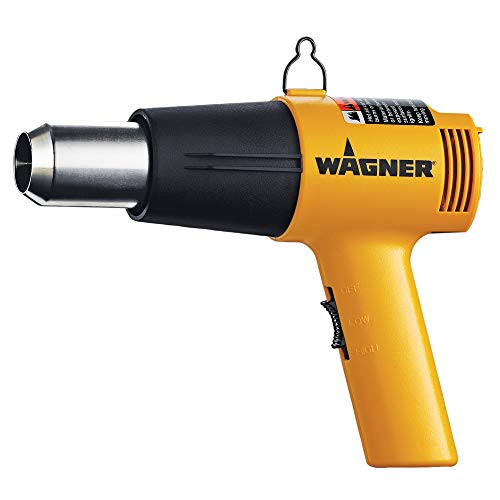
The Wagner HT1000 covers every beginner heat gun task — paint stripping, heat-shrink tubing, sticker removal, and craft projects — at the lowest price with reliable performance. Upgrade to BLACK+DECKER for dual-temperature control or Milwaukee for cordless freedom.
See Today’s Price →At a Glance
| # | Product | Award | Price |
|---|---|---|---|
| 1 | Best Overall | $29 as of Nov 21, 3:40 PM CT details Buy → |
|
| 2 |  BLACK+DECKER Heat Gun BLACK+DECKER |
Best for Most Beginners | $26.47 as of Nov 21, 3:40 PM CT details Buy → |
| 3 |  Milwaukee Electric Tool 2688-20 C… Milwaukee |
Best Cordless | $118.78 as of Nov 21, 3:41 PM CT details Buy → |
Heat Gun for Beginners Buying Guide
 Photo by ThisIsEngineering / Pexels
The Wagner Spraytech HT1000 at $24.50 is the heat gun that beginners actually need — two heat settings (750 and 1000 degrees F), a built-in stand for hands-free use, and no confusing temperature dials. Strips paint, shrinks tubing, and bends PVC pipe in a single tool under $25.
---
Heat guns look like hairdryers but operate at 500°F-1,100°F — far beyond what any hair tool can achieve. Key specs: temperature range (750°F handles most tasks; 1,000°F+ for thick paint), airflow volume (measured in CFM — higher moves more heat to larger areas), temperature settings (single = simple; dual = more versatile; variable = maximum control), and nozzle attachments (deflector, concentrator, glass protector). For beginners: two temperature settings (low and high) is all you need. Single-temperature heat guns are limiting — you will want the lower setting for heat-shrink tubing and craft projects.
Who This Is For
Homeowners, DIYers, and professionals who need reliable performance from everyday tools without paying professional-grade prices. The tools in this category handle 95% of home repair, maintenance, and improvement tasks that come up regularly.
What to Look For
- Build material quality: Cast zinc alloy and steel components outlast plastic in high-stress applications. For tools used less than weekly, plastic construction is adequate; for frequent use, invest in metal components at the point of stress.

- Ergonomics for extended use: Rubberized grip handles, balanced weight distribution, and reduced vibration matter when using tools for more than 10–15 minutes continuously. Cheap tools cause hand and wrist fatigue quickly.
- Warranty and parts availability: Quality tool brands (Milwaukee, Stanley, DEWALT, Klein) stand behind products with multi-year warranties and available replacement parts. No-name brands have no support infrastructure.
- Task match: A tool that's slightly over-spec for your most demanding task will last longer and perform better than one that's at its maximum rated capacity. A 20% headroom rule (buy for 120% of your typical load) prevents premature wear.
Common Mistakes to Avoid
Using tools for applications outside their rated use is the most common cause of both tool failure and user injury. Read the tool's rated capacity and respect it. Also, tools stored in humidity (unheated garages, basements) develop rust and corrosion that shortens lifespan — use a dehumidifier or store metal tools with a light coat of tool oil.
Price Context
Products in this category range $24.50–$125.49. At this price tier, Wagner and comparable quality brands offer the best balance of durability and cost. Spending 20–30% more typically buys professional-grade durability; spending 30% less buys tools that fail at the most inconvenient moments.
Watch: Best Impact Driver? by Project Farm
Watch Before You Buy


“Wagner Spraytech HT1000 Heat Gun: Two temperature settings (750°F and 1,000°F), basic operation with no complex controls. Handles paint stripping, vinyl removal, heat-shrink tubing, and crafts…”
See Today’s Price →What we like
- Two temperature settings, 750 and 1,000 degrees F
- Two fan speeds for more control
- Integrated stand for hands-free use keeps the hot nozzle off the work surface
- Corrosion-resistant nozzle and a built-in hanging hook
- ETL listed to UL and CSA safety standards, per its listing
Watch out for
- Two fixed temperatures, with no setting below 750 degrees F
Read Full Analysis
For a first-time buyer, that review volume provides a near-complete map of every use case, failure mode, and technique tip before the purchase is made. Two temperature settings (750 degrees F and 1,000 degrees F) cover the full range of beginner heat gun tasks: paint stripping, vinyl wrap removal, heat shrink tubing, and craft projects. At 1.2 lbs, the HT1000 is the lightest heat gun in this comparison by a significant margin. For extended handheld use -- following a vinyl seam around a car panel or stripping paint from a window frame -- the weight difference is felt after 15 minutes of continuous work. The 6-foot cord provides adequate reach for most workshop tasks without an extension cord. Versus the Black+Decker, the Wagner saves $15.49 with an identical temperature range and more verified reviews. The limitation of two fixed temperatures is a shared constraint of both budget models on this page. The Milwaukee M12 provides variable cordless operation for buyers who need that capability, but for beginners the Wagner HT1000 is the correct first heat gun purchase.
“BLACK+DECKER HG1300 Heat Gun 750F/1000F: Identical temperature range to the Wagner with a slightly more ergonomic grip and trigger design. Dual-temperature settings, four nozzle attachments…”
See Today’s Price →What we like
- Two heat settings, 750 and 1,000 degrees F
- 1,350-watt corded gun with unlimited runtime
- 3-position side handle for grip and control
- Built-in stand for easier, safer cooldown
- Glass protect nozzle included
Watch out for
- Two fixed heat settings, with no adjustable temperature
Read Full Analysis
The Black+Decker HG1300 Heat Gun at $39.99 targets the same beginner market as the Wagner HT1000 at rank 1 with an identical dual-temperature range (750 degrees F and 1,000 degrees F) at a $15.49 premium. The incremental value over the Wagner comes from two areas: the integrated stand that tips the gun up when set down on a work surface (a genuine burn-risk reduction for hot nozzles left flat), and four nozzle attachments included -- deflector, concentrator, reflector, and spread -- that cover more task types without a separate purchase. The ergonomic grip and trigger design is more comfortable for extended use than the Wagner pistol grip, which matters on longer paint stripping sessions where hand position becomes a fatigue factor. Lightweight construction keeps the tool manageable throughout a project. Black+Decker is a widely distributed brand with accessible warranty service at most hardware retailers. Versus the Wagner, the Black+Decker costs $15.49 more and delivers the nozzle set and integrated stand. If those features are relevant to the planned use cases, the premium is justified. For buyers whose primary use is basic paint stripping, vinyl removal, or heat shrink without need for nozzle variations, the Wagner is the more cost-efficient choice. Both are budget-tier tools far below the Milwaukee M12 cordless.
“Milwaukee M12 Cordless Heat Gun 2688-20: Battery-powered freedom for automotive work, outdoor projects, and anywhere a cord is inconvenient. Operates on the Milwaukee M12 12V system. Temperature…”
See Today’s Price →What we like
- Cordless: runs on Milwaukee M18 18V lithium-ion batteries
- Compact design, per its listing
- Works away from outlets with no cord to manage
Watch out for
- Sold tool-only: battery and charger not included
- Its listing gives no temperature or airflow figures
Read Full Analysis
The Milwaukee M12 is the only cordless heat gun in this comparison and the choice is straightforward for the use cases where a cord is actually a problem: automotive work under a hood, roofing jobs, outdoor pipe thawing, and any multi-location application where running an extension cord adds friction. The M12 platform's battery sharing with Milwaukee's compact tool lineup means tradespeople already in the M12 ecosystem can add this tool without a separate battery investment. Tool-only, factor in the cost of an M12 battery and charger if you don't already own them — that adds $40-$80 to the real entry cost. The 875°F maximum temperature is lower than corded models on this page, which matters for professional heat-shrink, paint stripping, and heavy soldering tasks. For beginners using a heat gun for household applications — shrink wrap, vinyl wrapping, sticker removal — 875°F handles all of it. The cordless advantage is most valuable when portability is the actual reason you're using a heat gun.
Frequently Asked Questions
What can a beginner use a heat gun for?
What temperature do I need for stripping paint?
Is a heat gun dangerous to use?
Can a heat gun remove car window tint?
What is the difference between a heat gun and a hair dryer?
How We Chose These Products
We compare each product’s Amazon listing, the manufacturer’s published specifications and Amazon customer ratings, shown with their review counts as Amazon’s data, and rank the products on how well they answer this page’s question. We do not test products in hand and we do not run our own analysis of review text. A publication or expert is named only where we cite its published findings about that product. No manufacturer paid for placement on this page.
A price appears only when Amazon’s API supplied it at a recent daily refresh, with the date and time beside it, and is withdrawn at 4 AM Central on the day after it turns 24 hours old; otherwise use “Check price on Amazon” for the live price. Read our full methodology →