Best Thickness Planers for Beginners 2026

The WEN PL1303 ($351) is the best beginner planer — 15-amp motor, 13-inch capacity, and a two-speed setting for handling hardwoods. The RIDGID R4330 ($375) is a solid alternative with consistent results across wood types.
See Today’s Price →At a Glance
Showing 3 of 3 products
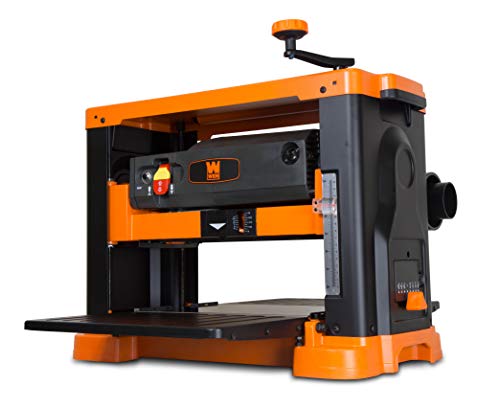
WEN PL1303 15-Amp 13-Inch Three-Blade Benchtop Thickness Planer
“The best value benchtop planer — 13" width (wider than DEWALT), two feed speeds, and solid 15-amp performance at $60 less than the DW734.”
See Today’s Price →What we like
- 13" width (wider than DEWALT DW734)
- Two feed speeds (16 and 26 FPM)
- Under $370
- Reversible double-sided knives
Watch out for
- WEN brand less proven than DEWALT
- Slightly less refined than premium options
- Louder than Makita
Read Full Analysis
The WEN PL1303 adds a meaningful feature over basic benchtop planers: two feed speeds. Low speed (16 FPM) is ideal for hardwoods — more passes per foot means a smoother surface and less stress on the cutterhead. High speed (26 FPM) moves softwoods through quickly for efficient stock preparation. The three-blade cutterhead produces a noticeably smoother surface than two-blade alternatives at the same setting, reducing the amount of hand sanding required after planing. The 15-amp motor handles 13-inch wide boards in oak and maple consistently. Depth adjustment is smooth with a clearly marked scale. The included dust hood channels chips upward and works well with a standard shop vac. At $351, it is a modest step up from the Delta but the two-speed option and three-blade cutterhead make it worth the premium for anyone who plans to work with both softwood and hardwood regularly. If you know furniture making with mixed species is in your future, buy the WEN over the Delta.

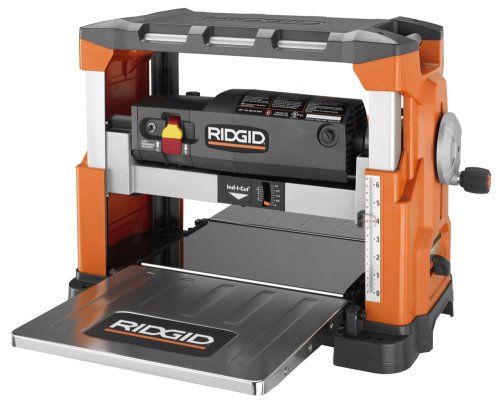
RIDGID R4330 13-Inch Thickness Planer
“Solid 13" planer with RIDGID build quality and potential Lifetime Service Agreement — good value at Home Depot for buyers wanting long-term coverage.”
See Today’s Price →What we like
- 13" cutting width
- RIDGID LSA eligible (register within 90 days)
- Reasonable price point
- Reliable 15-amp motor
Watch out for
- Home Depot exclusive
- Must register for LSA within 90 days
- Less refined surface finish than Makita
Read Full Analysis
The RIDGID R4330 brings two distinct advantages: RIDGID's Lifetime Service Agreement (LSA) and a steel cutterhead that holds up to harder use than some competitors. If the tool ever fails due to defects in materials or workmanship, RIDGID repairs or replaces it — a meaningful commitment for a $375 tool. The 15-amp motor and three-knife cutterhead handle 13-inch stock in hardwoods without the strain that affects budget alternatives during heavy sessions. Feed rate is consistent and the depth-lock knob keeps the setting stable across long milling runs. The dust collection port is on the side rather than top, which works better in some shop layouts. At $374.99 it is priced competitively with the WEN PL1303. The LSA warranty tips the decision for anyone who plans to use this machine frequently over many years — if you are building multiple pieces of furniture annually, a warrantied machine that you can register and have serviced is worth the identical price point.

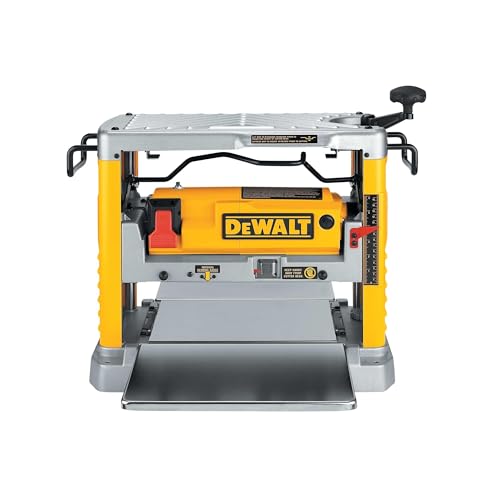
DEWALT DW734 15-Amp 12-1/2-Inch Benchtop Planer
“The DW734 has been the benchmark benchtop planer for over 15 years — reliable three-knife cutter, powerful 15-amp motor, and DeWalt's proven build quality.”
See Today’s Price →What we like
- 15-amp motor for hardwood processing
- Three-knife disposable cutter system
- Turret depth stops for repeatable settings
- Decades of proven reliability
Watch out for
- Single feed speed (no slow fine-cut option)
- 12.5" width limit
- Louder than spiral cutterhead models
Read Full Analysis
The DEWALT DW734 is the benchmark benchtop planer that serious hobbyists and small shops rely on. The three-blade cutterhead at 96 cuts per inch (versus 64 CPM on two-blade alternatives) produces a glass-smooth surface that requires minimal sanding — a real time saver across a furniture project. The extra-long in-feed and out-feed tables reduce snipe without needing separate extension rollers. Fan-assisted chip ejection keeps the work area cleaner than most benchtop alternatives. The material removal gauge shows exactly how much depth is being removed before you engage — a useful learning tool for beginners calibrating their passes. At 80 lbs it is heavier than other entries but that mass contributes to stability and vibration reduction. The 15-amp motor handles 12.5-inch wide boards (slightly narrower than 13-inch competitors) in any domestic hardwood without difficulty. For beginners who want to invest in a machine that professional woodworkers respect and use — and who want the smoothest possible surface from each pass — the DW734 is the right long-term choice.
Thickness Planers for Beginners Buying Guide
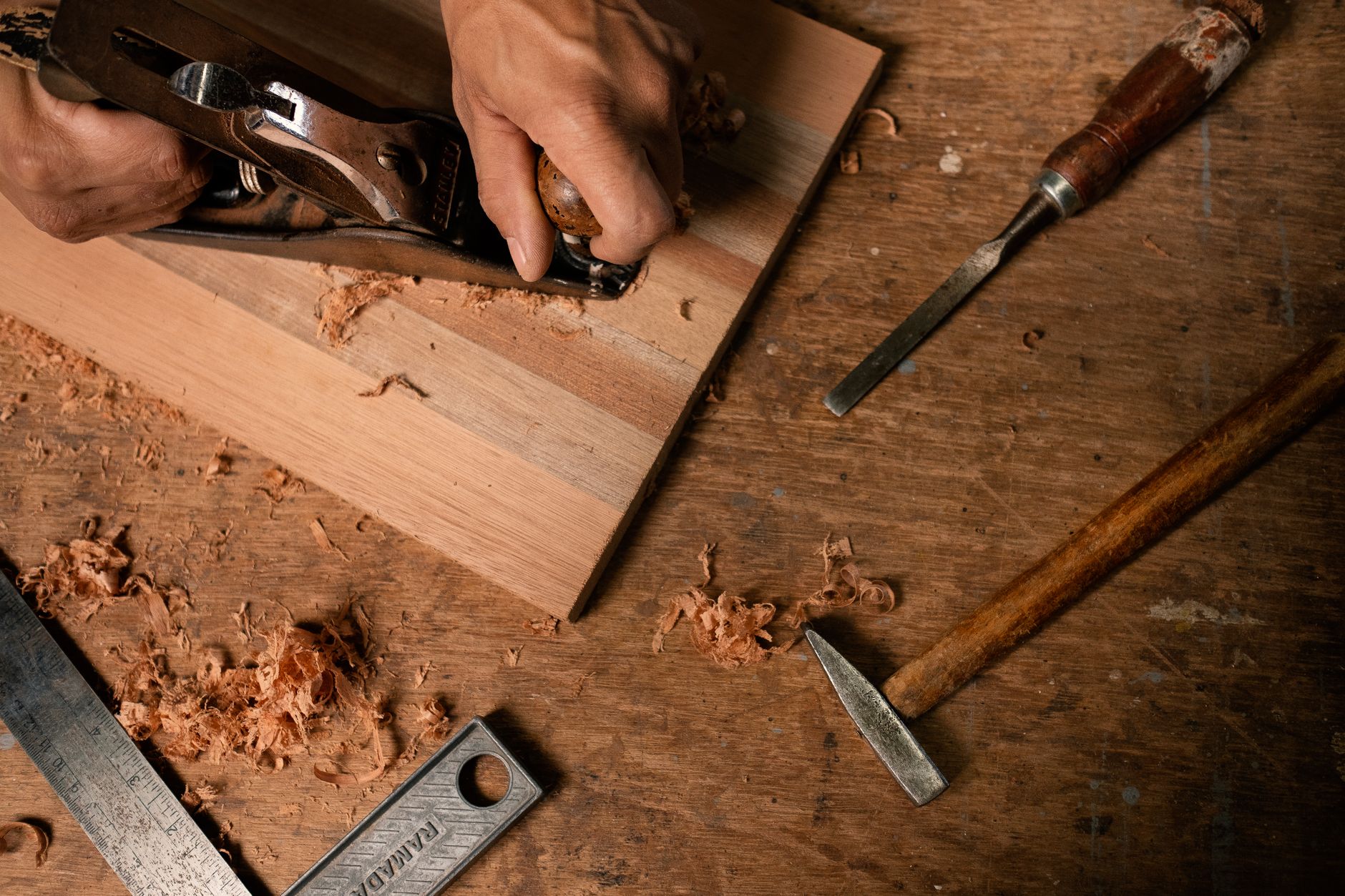 Photo by Daniel Reche / Pexels
WEN PL1303 15-Amp 13-Inch Three-Blade Benchtop Thickness Planer — The best value benchtop planer — 13" width (wider than DEWALT), two feed speeds, and.... At $351.21, it offers the best overall value. [See today's price](https://www.amazon.com/dp/B0947GY7G8?tag=myawesomebuy2-20).
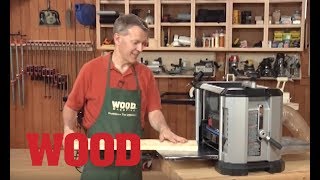
RIDGID R4330 13-Inch Thickness Planer ($374.99) — Solid 13" planer with RIDGID build quality and potential Lifetime....
DEWALT DW734 15-Amp 12-1/2-Inch Benchtop Planer — The DW734 has been the benchmark benchtop planer for over 15 years —....
A thickness planer mills rough lumber to a consistent, flat thickness — it is what turns a warped board from the lumber yard into a usable furniture component. Understanding planer basics prevents the most common beginner mistake: taking too deep a cut. Most benchtop planers remove a maximum of 1/8 inch per pass, but beginners should start at 1/16 inch or less per pass, especially on hardwood. Feed rate matters: slower is better for figured wood and hardwoods. The most important spec for beginners is width capacity — 12.5 to 13 inches covers most furniture lumber. Cutting depth range (how thin and how thick the machine can mill) determines versatility. Look for models with a depth stop to repeat exact thicknesses. Snipe — the slight over-cut at the start and end of a board — is common on benchtop planers; extension tables or in-feed/out-feed rollers reduce it dramatically. Noise is significant: benchtop planers are loud (90+ dB). Plan for hearing protection and, if possible, dust collection — they produce large volumes of shavings. Three-blade cutterheads produce a smoother surface than two-blade models at the same feed rate.
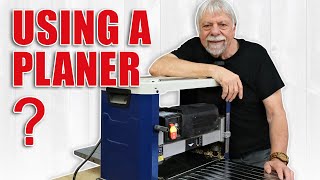
If budget is the priority, go with the RIDGID R4330 13-Inch Thickness Planer; if you want the best overall, choose the WEN PL1303 15-Amp 13-Inch Three-Blade Benchtop Thickness Planer; if you need best performance, the DEWALT DW734 15-Amp 12-1/2-Inch Benchtop Planer is your pick.
[Best Sandpaper Brand?](https://www.youtube.com/watch?v=VP2XqXYEZkU) by Project Farm
Snipe Prevention: The Most Common Beginner Mistake
Snipe is the deeper cut at the very beginning and end of a board where the planer head dips as the board enters and exits the feed rollers — it leaves a noticeably thinner section 3-6 inches from each end. All thickness planers produce some snipe; the goal is minimizing it. To reduce snipe: support both the infeed and outfeed ends of the board at the exact height of the planer table using roller stands or outfeed tables (the Delta 22-680Y includes extension rollers for this reason). Take lighter final passes (1/64 inch or less) rather than one heavy finish pass. Leave boards 4-6 inches longer than needed and cut the sniped ends off after planing. Never let the board tip down as it exits the feed rollers.
Feeding Lumber Correctly: Direction, Speed, and Prep
Always feed lumber so the grain runs downhill from the infeed end — feeding against the grain causes tearout. For figured or reversing grain, make very light passes (1/32 inch or less) to reduce tear risk. Feed boards one at a time; never side-by-side on the same pass unless they are exactly the same thickness (the higher board will get pushed into the lower one). Remove loose knots, embedded metal, and paint before planing — metal chips destroy carbide knives immediately. all three planers on this page use disposable or reversible knives that can be rotated or replaced when dull; budget for replacement knife sets when purchasing the machine.
Frequently Asked Questions
What wood can a beginner planer handle?
What is snipe and how do I prevent it?
How thick of a cut should a beginner take?
Do I need a jointer before a planer?
How loud are benchtop planers?
How We Analyze Products
We analyze Amazon review data — often thousands of reviews per product — to surface patterns that individual buyers miss. Our process aggregates star ratings, review counts, and buyer sentiment at scale, identifying which strengths and weaknesses appear consistently across the largest review samples available. The 4,291+ reviews analyzed on this page represent real verified-purchase feedback from Amazon buyers.
Each product earned its placement through data: total review volume, average rating, and the specific praise and complaints that repeat most often across buyers. No manufacturer paid for placement on this page. Products appear here because buyers endorsed them at scale, not because a company asked us to feature them.
We use AI to summarize review sentiment — not to fabricate opinions, but to condense what thousands of buyers actually wrote into a readable format. The pros and cons you see reflect the most common themes found in verified purchaser reviews, paraphrased for clarity. We do not claim to have accessed Reddit, YouTube, or specific publications in generating these summaries.
Prices shown reflect Amazon pricing at the time this page was last generated. Click “See Today’s Price” to get the current live price on Amazon. Read our full methodology →