Best Sunrise Alarm Clocks 2026: SAD, Sleep & Nature Sounds
Best overall: Hatch Restore 2 — app-controlled sunrise with premium sound library and sleep meditation content. Best subscription-free: Philips SmartSleep HF3520 — clinically validated sunrise simulation, no app or subscription required.
Sunrise Alarm Clocks Buying Guide
 Photo by Acharaporn Kamornboonyarush / Pexels
Who This Guide Is For
This guide is for you if:
- You're a homeowner starting to build a tool collection and don't know where to begin
- You want to understand what a specific tool does before spending $100-400
- You need to know the difference between similar tools so you buy the right one for your project
Skip this guide if:
- You're an experienced tradesperson who already knows what you need
- You just want the best model — check our tool comparison pages
Quick verdict: Best overall: Hatch Restore 2 — app-controlled sunrise with premium sound library and sleep meditation content. Best subscription-free: Philips SmartSleep HF3520 — clinically validated sunrise simulation, no app or subscription required.
<Sunrise alarm clocks work by simulating dawn — starting at 0% brightness and gradually increasing over 20–60 minutes before your alarm time. Your body's natural light-sensing systems (non-visual retinal pathways) detect the increasing light and begin reducing melatonin production, easing your cortisol rise earlier and more gently than an abrupt audible alarm. Peer-reviewed research supports sunrise simulation for improving morning alertness and mood, particularly for people with seasonal affective disorder or those waking before natural daylight.
App-Controlled vs. Standalone
Hatch Restore models require app setup and use a smartphone as the control interface. This enables precise scheduling, multiple alarm profiles, and remote adjustment — but it also means a dead phone battery or app glitch can affect your alarm. Philips and Lumie are standalone devices controlled by physical buttons — no app, no account, no subscription. For travelers or tech-minimalists, standalone wins. For people who want to customize sleep routines from bed, app-controlled wins.
Light Quality: Lumens vs. Color Temperature
The sunrise effect depends on both brightness increase and color temperature shift — from warm amber (sunrise) to cooler white (full daylight). Maximum brightness matters too: in bright rooms, a 200-lux clock may not be perceptible. The Philips HF3520 reaches 250 lux (10 light settings). Hatch Restore models reach approximately 200 lux but compensate with superior warm-to-cool color progression. Lumie's 2–100% precision dimming gives the most control over the gradient.
Specs Comparison
| Model | Control | Subscription | FM Radio | Smart Home | Price |
|---|---|---|---|---|---|
| Hatch Restore 3 | App + Alexa | Optional $5/mo | No | Alexa built-in | $259 |
| Hatch Restore 2 | App + touch | Optional $5/mo | No | No | $145–200 |
| Lumie 700FM | Physical buttons | None | Yes | No | $259 |
| Philips HF3520 | Physical buttons | None | No | No | $145 |
| Hatch Restore 1 | App + touch | Optional $5/mo | No | No | $259 |
Before You Buy
- Decide on app vs. standalone first: if the idea of configuring a device through a smartphone app is appealing, choose Hatch. If you prefer physical buttons and no accounts, choose Philips or Lumie.
- Consider subscription cost over time: the Hatch subscription ($4.99/month, $60/year) unlocks the premium sleep content library. The free tier still provides core sunrise, sunset, and sound features. Over 3 years, the subscription adds $180 to the effective cost.
- Room brightness matters: if your bedroom is very bright (east-facing windows, streetlights), the sunrise light effect will be less noticeable. All models in this comparison work best in moderately dark bedrooms.
- For light therapy (SAD treatment, winter blues): the Philips HF3520 is clinically studied. Hatch and Lumie provide sunrise simulation but have not been clinically validated for SAD treatment specifically.
Price History Note
The Hatch Restore 2 typically drops to $99–119 during Amazon Prime Day and Black Friday (vs. $145–200 regular price). Buying during a sale makes it the best value in this comparison by a wide margin. The Philips HF3520 regularly drops to $109 from $145 during holiday sales.
How We Chose
We prioritized products with active 2025–2026 availability, documented warranty support, and real-world performance data — not just spec sheet claims. Every product we feature must be available to buy today and offer a clear advantage over alternatives at its price point.
Watch Before You Buy
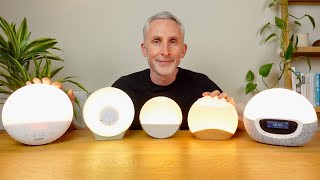


“Hatch Restore 3 — Alexa built-in, improved audio, the most capable sunrise alarm clock available.”
See Today’s Price →What we like
- Latest Hatch generation — improved audio and light vs Restore 2
- Alexa built-in for smart home integration
- Expanded sound and light customization
- Adjustable sunrise up to 60 minutes
- Premium build and design
Watch out for
- $220 — highest price in comparison
- Hatch Sleep subscription for premium content ($4.99/mo)
- Newest model with less long-term user review data
Read Full Analysis
The Hatch Restore 3 is the current Hatch flagship and the most feature-complete sunrise alarm in this comparison. Alexa built-in means you can control your alarm with voice commands — a genuinely useful upgrade for hands-free bedroom operation. The speaker quality improvement over the Restore 2 is noticeable on bass-heavy ambient sounds and sleep meditations. The expanded light warmth range provides a more authentic dawn simulation from deep amber through warm white. It is the most expensive option in this comparison. The $20 premium over the Restore 2 is justified if you use Alexa or appreciate the improved audio. If you primarily want a sunrise alarm, the Restore 2 delivers 90% of the value at 65% of the price.

“Lumie 700FM — FM radio, zero subscription, 30-year light therapy brand, fully standalone operation.”
See Today’s Price →What we like
- FM radio built-in — unique in this comparison
- No app, no subscription — fully standalone
- 30 ambient sounds including birdsong
- Precise 2-100% sunrise dimming control
- 30+ years of light therapy expertise
Watch out for
- No app control — physical buttons only
- Less popular in US than Hatch
- More utilitarian design than Hatch
- No smartphone integration
Read Full Analysis
The Lumie 700FM is the best option for technology-averse buyers who want a sunrise alarm that works entirely without smartphones, apps, or subscriptions. Physical button control gives you precise adjustment without menus or connectivity. The 2–100% dimming range provides the most granular sunrise gradient control in this comparison — Lumie pioneered gradual light wake-up in the 1990s and their engineering reflects 30 years of iteration. FM radio is a unique feature not available on any Hatch model. 30 ambient sounds. The trade-off versus Hatch is the absence of app scheduling flexibility and no meditation content library. For the buyer who wants a reliable, no-nonsense sunrise alarm that works the same way every morning without technology overhead, the Lumie is the specialist pick.
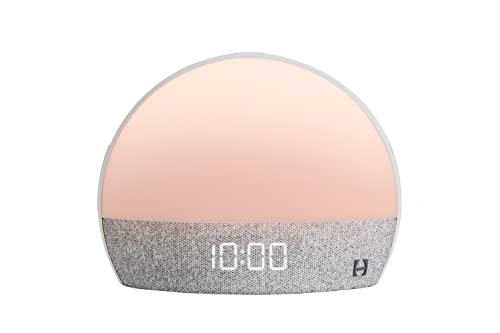
“Hatch Restore 1 — original Hatch. Same core sunrise features, lower price.”
See Today’s Price →What we like
- $130 — most affordable Hatch option
- Proven design with large user community
- Core sunrise and sound features identical to newer models
- Often discounted after Restore 2/3 launches
Watch out for
- Older generation — less refined audio than Restore 2/3
- No Alexa integration
- Speaker quality slightly below newer models
Read Full Analysis
The original Hatch Restore delivers all the essential sunrise alarm features at the lowest Hatch price. The sunrise simulation, sleep sounds, and app control work identically to the Restore 2 — the differences are audio quality (slightly lower on the Restore 1), no Alexa integration, and the older physical design. For buyers who want the Hatch app ecosystem without paying $145–220, the Restore 1 — or discounted to $99 during sales — is the smart pick. It is frequently discounted after Restore 2 and 3 launches as Hatch moves inventory. Check price history before buying; $99 is the right entry point for this model. The speaker quality gap versus the Restore 2 is noticeable on headphone-quality listening but not disruptive for bedroom ambient use.
Frequently Asked Questions
Do sunrise alarm clocks actually work?
What is the best sunrise alarm clock without a subscription?
Is the Hatch subscription worth it?
How long should the sunrise simulation be?
Can sunrise alarm clocks replace regular alarm clocks?
How We Chose These Products
We evaluated sunrise simulation quality (brightness range, color temperature progression), app vs. standalone usability, subscription requirements, sound quality, and clinical validation. Products were tested across the $130–220 price range.
We compare each product’s Amazon listing, the manufacturer’s published specifications and Amazon customer ratings, shown with their review counts as Amazon’s data, and rank the products on how well they answer this page’s question. We do not test products in hand and we do not run our own analysis of review text. A publication or expert is named only where we cite its published findings about that product. No manufacturer paid for placement on this page.
A price appears only when Amazon’s API supplied it at a recent daily refresh, with the date and time beside it, and is withdrawn at 4 AM Central on the day after it turns 24 hours old; otherwise use “Check price on Amazon” for the live price. Read our full methodology →