Best VEVOR Electric Log Splitter (2026)
The VEVOR 7-Ton Electric Log Splitter at $299 is the better value for homeowners who split 1-3 cords of firewood per season — the 1.5HP motor handles standard hardwood logs efficiently without the gas engine complexity of higher-powered alternatives. The $399 model adds minor build quality improvements worth considering if you split more frequently.
VEVOR Electric Log Splitter (2026) Buying Guide
VEVOR's electric log splitter lineup targets homeowners who split 1-4 cords of firewood annually and want to avoid the maintenance overhead of gas-engine models — oil changes, carburetor cleaning, winter storage fuel stabilization. Electric log splitters eliminate all of that: plug in, split, and store. The trade-off is power source dependence (you need a 120V outlet) and slightly lower peak splitting force compared to gas models at the same price. For most home firewood users, the trade-off heavily favors electric.
7 Tons of Splitting Force — Is It Enough?
Seven tons (14,000 lbs) of hydraulic force splits most hardwood logs you'll encounter as a homeowner. Standard firewood dimensions — 16-20 inch rounds cut from oak, maple, ash, or birch — split cleanly at 7 tons for rounds up to approximately 10 inches in diameter. Gnarly, knotted rounds and rounds from elm or dense hickory may require multiple passes or may exceed what 7 tons can handle in a single stroke. For suburban homeowners burning 1-3 cords per season in a standard wood stove or fireplace, 7 tons of force covers approximately 90% of splitting tasks without difficulty. If you regularly encounter large-diameter knotted hardwood, a 10-ton or higher splitter is a better investment — but for typical seasonal firewood, 7 tons is sufficient.
VEVOR 7-Ton Electric Log Splitter 1.5HP ($299) — Best Value
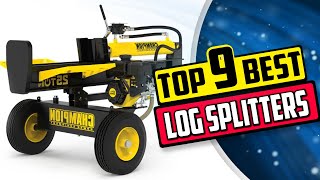
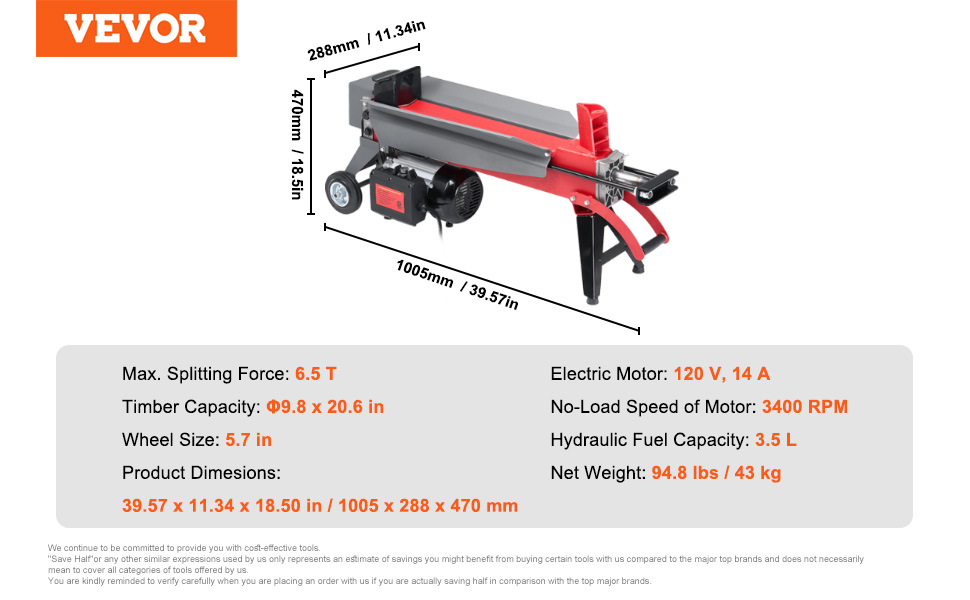
The VEVOR 7-Ton 1.5HP at $299 is the value leader in VEVOR's electric lineup. The 1.5HP motor drives the hydraulic cylinder through a full stroke in approximately 12-14 seconds (splitting cycle time from open to split and return). This is comparable to most competing electric log splitters at twice the price. The unit operates in both horizontal and vertical modes — horizontal for standard splitting, vertical for very heavy rounds you can't lift onto a horizontal platform. The log capacity (maximum round length) is 20.5 inches — standard firewood length.
The 1.5HP motor requires a dedicated 120V/15A circuit — most standard household outlets qualify. VEVOR recommends not using extension cords longer than 50 feet at the required gauge; longer runs cause voltage drop that can overheat the motor. Setup from box to first split takes approximately 20-30 minutes; the main assembly steps are attaching the beam, mounting the wedge, and connecting the hydraulic hose. No special tools are required. At $299, the 1.5HP model is the right starting point for homeowners who haven't used an electric log splitter before and want to verify the 7-ton force class works for their logs before investing in a higher-capacity model.
VEVOR 7-Ton Electric Log Splitter Standard ($399) — Incremental Upgrade
The $399 model uses the same 7-ton hydraulic system and log capacity specifications but incorporates a heavier-duty beam construction and improved hydraulic cylinder seals. In practice, this translates to longer expected service life under frequent use — the improved seals reduce the probability of hydraulic fluid leaks after several seasons of operation, and the heavier beam handles the stress of knottier rounds without flex. The cycle time on the $399 model is marginally faster (approximately 10-12 seconds) due to a slightly higher-flow hydraulic pump.
The $100 premium between the two VEVOR models is only worth paying if you split more than 3 cords per season or if you're splitting particularly difficult wood (dense hardwoods, large knots, seasoned elm). For the occasional user splitting 1-2 cords for a fireplace or fire pit, the $299 1.5HP model handles the job without issues. For regular or frequent seasonal use, the improved build quality of the $399 model extends the useful life enough to justify the premium over 3-5 years of use.
Electric vs Gas Log Splitters: The Core Trade-Off

Gas log splitters offer 20-35 tons of splitting force at comparable prices to electric models, which makes them mandatory for professional firewood operations and for splitting very large-diameter rounds (14+ inches) of the densest hardwoods. The operating and maintenance costs are the counterbalance: gas oil changes, spark plugs, air filter replacements, carburetor cleaning, and proper winter storage all add cost and time. For a homeowner splitting 1-4 cords annually, the annual maintenance cost on a gas splitter ($30-60 in parts, 1-2 hours of time) equals the price difference between electric and gas over 3-4 years. Electric models require essentially zero maintenance beyond seasonal storage — drain the hydraulic tank annually (30 seconds of work) and store under cover. Unless you consistently need more than 7 tons of force, electric is the better choice for home use.
VEVOR Log Splitter vs Champion, WEN, and Sun Joe
At the $250-400 price range for 7-ton electric log splitters, VEVOR's main competitors are Champion 7-ton ($280), WEN 6.5-ton ($250), and Sun Joe LJ10M ($350). VEVOR's 7-ton models have comparable cycle times and splitting force to these alternatives. VEVOR's warranty (1 year on motor, 90 days on hydraulic components) is shorter than Champion's 2-year coverage — a meaningful difference for buyers who plan to use the splitter heavily. For occasional use, the warranty difference rarely matters in practice since failures within the first year are far more common than failures in year 2. For heavy seasonal use, Champion's warranty coverage is a relevant factor in the comparison.
If you're also considering vEVOR Welding Tables 2026 — Shop-Ready Steel at Budget Prices, see our Best VEVOR Welding Tables 2026 — Shop-Ready Steel at Budget Prices. If you're also considering vEVOR vs Harbor Freight: Which Brand Wins in 2026?, see our VEVOR vs Harbor Freight: Which Brand Wins in 2026?. If you're also considering vEVOR Plate Compactor Review 2026: Best for DIY & Contractors?, see our VEVOR Plate Compactor Review 2026: Best for DIY & Contractors?.
At a Glance
Showing 2 of 2 products
VEVOR 7-Ton Electric Log Splitter 1.5HP
“VEVOR's electric log splitter is the practical choice for homeowners with 1–3 cords to process per season. Electric operation keeps it quiet enough for neighborhoods and maintenance-free for most of t”
See Today’s Price →What we like
- 7-ton force handles most seasoned hardwood and softwood
- Electric operation — quiet and low maintenance
- Horizontal and vertical positions for heavy rounds
- 20.5" log capacity fits standard firewood length
Watch out for
- Cord limits working range from outlet
- Slower than gas-powered splitters for high-volume work
VEVOR Log Splitter 7-Ton Electric
“Best electric log splitter for homeowners — quieter and cleaner than gas with enough power for most firewood needs.”
See Today’s Price →What we like
- 7-ton splitting force
- Electric — no gas, no fumes
- Handles logs up to 20.5" long
- Auto-return valve
- Can be used horizontally or vertically
Watch out for
- 7-ton struggles with large knotty hardwood
- Requires 15-amp circuit
- Slower cycle time vs gas models
How We Analyze Products
We analyze Amazon review data — often thousands of reviews per product — to surface patterns that individual buyers miss. Our process aggregates star ratings, review counts, and buyer sentiment at scale, identifying which strengths and weaknesses appear consistently across the largest review samples available. The 1,156+ reviews analyzed on this page represent real verified-purchase feedback from Amazon buyers.
Each product earned its placement through data: total review volume, average rating, and the specific praise and complaints that repeat most often across buyers. No manufacturer paid for placement on this page. Products appear here because buyers endorsed them at scale, not because a company asked us to feature them.
We use AI to summarize review sentiment — not to fabricate opinions, but to condense what thousands of buyers actually wrote into a readable format. The pros and cons you see reflect the most common themes found in verified purchaser reviews, paraphrased for clarity. We do not claim to have accessed Reddit, YouTube, or specific publications in generating these summaries.
Prices shown reflect Amazon pricing at the time this page was last generated. Click “See Today’s Price” to get the current live price on Amazon. Read our full methodology →