Hand Tools Every Homeowner Needs (2026 Complete Guide)
The Craftsman 298-Piece Mechanics Tool Set at $379 is the most comprehensive all-in-one recommendation — SAE and metric socket coverage in one case eliminates the separate set purchases this guide otherwise budgets for at $100-150 total.
At a Glance
| # | Product | Award | Price |
|---|---|---|---|
| 1 |  CRAFTSMAN Mechanics Tool Set, 298… CRAFTSMAN Mechanics Tool Set, 298…Craftsman |
Our Top Pick | $279 Buy → |
| 2 | Best Organized | Check current price on Amazon Buy → |
|
| 3 | Best Starter | $59.99 Buy → |
Hand Tools Every Homeowner Needs (2026 Complete Guide) Buying Guide
 Photo by Anastasia Shuraeva / Pexels
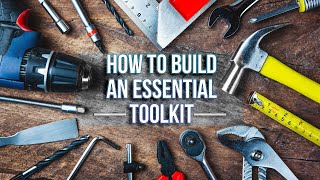
Most homeowners build their tool collection reactively — one tool at a time when a project demands it. The result is a drawer of duplicates in some areas and blind spots in others. This guide defines the 18 hand tools that handle 95% of home repair and improvement tasks, grouped by priority so you know what to buy first.
Tier 1: Buy These First (Core 8)
These eight tools handle the repair calls that happen in every home within the first year: 16-oz claw hammer — the right weight for framing and finishing; too light (12 oz) requires more swings, too heavy (24 oz) is for demolition. Stanley FatMax at $18 is the standard. Tape measure, 25-foot — the most used measuring tool in any home. A 25-foot self-locking blade reaches both directions. Stanley 25-foot at $12. Flathead and Phillips screwdrivers — a 4-piece set covers all household fasteners for $10-15. Klein Tools screwdrivers are the benchmark for grip and tip durability. Utility knife — for opening boxes, cutting drywall, and trimming weatherstripping. The Milwaukee FASTBACK at $14 locks securely and uses quick-change blades. 6-inch slip-joint pliers (Channellock 526, $18) — grips pipes, wire, and hardware that fingers cannot hold. 4-foot and 2-foot level — for hanging pictures, mounting shelves, and checking tile. A torpedo level ($8) for small work and a 2-foot level ($15-25) for most projects. Adjustable wrench, 10-inch — the one wrench that fits what you do not have a fixed wrench for. Crescent 10" at $22. Allen wrench set (hex key set) — for furniture assembly, bicycle maintenance, and machine screws. Most furniture ships with one wrench but an 18-piece SAE+metric set ($10) covers everything.
Tier 2: Add These in Year 2-3
Locking pliers (Vise-Grips) — clamp onto fasteners and hold while you work. The IRWIN 6LN 6-inch at $16 is the original and still the best. Needle-nose pliers — for reaching into electronics, bending wire, and retrieving small parts from tight spaces. Long-nose needle-nose (8-inch, $12-18). Hacksaw — cuts pipe, bolts, metal hardware, and plastic. The Stanley 20-044 at $11 handles most cutting needs; get a pack of 10 extra blades. Hand saw — for cutting lumber when a circular saw is overkill. A 15-tooth-per-inch crosscut saw handles most wood cuts cleanly. Stud finder — for mounting anything to a wall safely. The Zircon MultiScanner i520 at $50 finds studs, AC wires, and metal pipes. Do not trust cheap single-LED finders. Rubber mallet — for furniture assembly, tile work, and tapping parts without marring surfaces. A 12-oz mallet ($12) handles most tasks. Pry bar — for pulling nails, removing trim, and opening paint cans without ruining a screwdriver. Stanley 18-inch at $12.
Tier 3: For Specific Projects
These three tools pay for themselves in the first project that requires them: pipe wrench (for plumbing), chisels (for carpentry and door hardware), and a combination square (for precise woodworking layout). A pipe wrench ($25) handles every residential plumbing fitting. A 3-piece chisel set ($20-30) covers mortise work, door hinge installation, and trim fitting. A combination square ($15-20) marks perfect 90° and 45° angles. See our best tool sets under $100 and best new homeowner toolkits for bundled sets that cover most of Tier 1 and 2 in one purchase.
What Quality Level to Buy
For hand tools, buy mid-range and keep them for decades — not budget or pro. Budget tools (import sets under $20 for a full set) use soft steel and plastic handles that fail under real use. Pro tools (Snap-on, Wiha, Knipex) are engineered for daily trade use and priced accordingly — overkill for a homeowner who uses a screwdriver once per month. The mid-range sweet spot: Klein Tools for screwdrivers and pliers ($12-20 each), Stanley or Irwin for measuring and cutting tools, Channellock for specialty pliers, Crescent for wrenches. All of these have lifetime warranties on defects and are sold at hardware stores everywhere — replacement and warranty service is easy.

Organizing and Storing Hand Tools
A good tool bag ($30-50) holds the core 8 and travels with you through the house. A wall-mounted pegboard with hooks ($30-40) keeps the full collection visible and accessible. The worst organization is a junk drawer — tools get damaged by contact and are impossible to find quickly. See our best tool bags guide for bag recommendations. When a tool is used, it goes back immediately — the habit that keeps the collection organized longer than any storage system.

Tools to Skip
Multi-tools with 40 attachments that do nothing well: skip. Cordless screwdrivers as a first tool: skip — a good screwdriver is faster and never needs charging. Aluminum-handle tools: skip — they transmit vibration and are slippery when wet. Tool sets from single brands that bundle everything: fine for gifting, but the weak links (cheap hammer, no-name pliers) drag down an otherwise useful kit. Build the list above one at a time and each tool will be right for its purpose.
What is actually on this page
- CRAFTSMAN Mechanics Tool Set — $279. Hard case keeps the full set organized and portable — essential for a 298-piece set that would otherwise scatter across the garage. Against it: 298-piece set bulky to store and transport.
- DEKOPRO 158 Piece Tool Set-General Household Hand Tool Kit — $49.99. 158 pieces span hand tools, hex keys, bits, and sockets in one blow-molded case. Against it: Many specialty sizes are rarely needed by homeowners — most pieces will sit unused.
- REXBETI 219-Piece Pink Tool Set — $59.99. Covers the essential 20 tools most homeowners use 90% of the time. Against it: No automotive or electrical tools — targeted at apartment and light home repair use.
Which one to take
The CRAFTSMAN Mechanics Tool Set at $279 suits homeowners, serious DIYers, and hobby mechanics who want the most comprehensive socket and hand tool set with warranty protection in one purchase. The DEKOPRO 158 Piece Tool Set-General Household Hand Tool Kit at $49.99 suits value-focused buyers: DIY homeowners and skilled tradespeople who need dependable tools for regular projects and repairs. The REXBETI 219-Piece Pink Tool Set at $59.99 suits value-focused buyers: DIY homeowners and skilled tradespeople who need dependable tools for regular projects and repairs.
“298-piece set covers sockets, ratchets, extensions, wrenches, and screwdrivers. Best suited for homeowners and diyers wanting a comprehensive socket and tool set.”
See Today’s Price →What we like
- 298-piece set covers sockets, ratchets, extensions, wrenches, and screwdrivers in a single purchase — the most comprehensive coverage in this comparison
- Hard case keeps the full set organized and portable — essential for a 298-piece set that would otherwise scatter across the garage
- Complete SAE and metric coverage eliminates the guesswork of which drive sizes are included
- Craftsman full lifetime warranty applies to the entire set — defective or broken pieces can be replaced without the original receipt
Watch out for
- 298-piece set bulky to store and transport
- CRAFTSMAN quality tier below Snap-On or Mac Tools for professionals
- Some pieces are duplicates in the full set
Read Full Analysis
The most comprehensive single-purchase option for a homeowner building a complete tool collection. At $279, the 298-piece set delivers sockets, ratchets, extensions, wrenches, and screwdrivers in a hard case — avoiding the fragmented cost of buying individual tool sets that typically total $350-400 for comparable coverage. Craftsman full lifetime warranty applies to every piece with no receipt required, a practical advantage over generic brands in this lineup. The REXBETI ($59.99) in this comparison is a better starting point for apartment renters who need 20 essential tools; the Craftsman is for homeowners who will actually use the full range over years of maintenance projects. The only real concession is bulk: 298 pieces in a hard case is not a compact kit. Storage organization is built into the molded hard case with designated slots that keep individual pieces sorted by size — a practical advantage over shallow roll bags where tools mix together and become hard to locate mid-project.
“”
See Today’s Price →What we like
- 158 pieces span hand tools, hex keys, bits, and sockets in one blow-molded case
- Chrome vanadium steel construction is hardened to professional standards
- Organized case layout allows quick visual inventory — every tool has a labeled slot
- Suitable for automotive, HVAC, and appliance repair tasks beyond basic home maintenance
Watch out for
- Many specialty sizes are rarely needed by homeowners — most pieces will sit unused
- Heavy carry case at this piece count — not a convenient portable field kit
Read Full Analysis
The middle ground in this comparison between the REXBETI starter set and the CRAFTSMAN professional set. At 158 pieces with a blow-molded organized case, DEKOPRO delivers automotive, HVAC, and appliance repair capability without the CRAFTSMAN price. The labeled slot layout is the standout feature — every piece has a defined position, making it immediately visible when something is missing after a job. Chrome vanadium steel meets professional hardness standards at a price point where many competitors use softer alloys. The main tradeoff: many of the 158 pieces are specialty sizes a homeowner will rarely reach for, and the full case is heavy for a field carry. Best suited to a garage workbench, not a portable kit.

“”
See Today’s Price →What we like
- Covers the essential 20 tools most homeowners use 90% of the time
- Compact storage case keeps tools organized in a closet or utility drawer
- Rubber-grip handles provide comfortable control for extended household maintenance
- Under $60 is complete without buying individual tools at higher per-unit cost
Watch out for
- No automotive or electrical tools — targeted at apartment and light home repair use
- Shallow socket set only — deep-recessed bolts require additional socket depth extension
Read Full Analysis
The right first tool purchase for apartment renters and first-time homeowners at $59.99. The 20 essential tools cover the maintenance scenarios that come up in the first year of homeownership: hanging artwork, assembling furniture, minor plumbing repairs, and electrical panel cover removal. Compact enough to store in a closet drawer or car trunk without a dedicated toolbox. Against the CRAFTSMAN 298-piece ($279) in this guide, the REXBETI is not trying to be a complete professional set — it is the minimum viable toolkit for someone who does not yet know what they will need most. The rubber-grip handles are comfortable for occasional household use. When projects get more complex, the CRAFTSMAN is the clear step-up.
Frequently Asked Questions
What hand tools does every homeowner need?
How much should I spend on a starter tool set?
What is the most important hand tool to own?
Should I buy a tool set or individual tools?
What hand tools do I need to hang shelves and pictures?
How We Analyze Products
We analyze Amazon review data — often thousands of reviews per product — to surface patterns that individual buyers miss. Our process aggregates star ratings, review counts, and buyer sentiment at scale, identifying which strengths and weaknesses appear consistently across the largest review samples available. The 5,643+ reviews analyzed on this page represent real verified-purchase feedback from Amazon buyers.
Each product earned its placement through data: total review volume, average rating, and the specific praise and complaints that repeat most often across buyers. No manufacturer paid for placement on this page. Products appear here because buyers endorsed them at scale, not because a company asked us to feature them.
We use AI to summarize review sentiment — not to fabricate opinions, but to condense what thousands of buyers actually wrote into a readable format. The pros and cons you see reflect the most common themes found in verified purchaser reviews, paraphrased for clarity. We do not claim to have accessed Reddit, YouTube, or specific publications in generating these summaries.
Prices shown reflect Amazon pricing at the time this page was last generated. Click “See Today’s Price” to get the current live price on Amazon. Read our full methodology →