How to Choose a Power Drill (2026 Buying Guide)

The Makita CT225SYX 18V LXT Combo Kit at check current price is the top combo recommendation — pairing an 18V drill and impact driver on a shared LXT battery platform halves the total accessory count compared to buying separate tools from different brands.
See Today’s Price →At a Glance
| # | Product | Award | Price |
|---|---|---|---|
| 1 | Also Excellent | $199 Used — not a new unit Buy → |
|
| 2 |  Hitachi DS18DBFL2 18V Cordless Li… Hitachi DS18DBFL2 18V Cordless Li…Metabo HPT |
Brushless Pick | $189.98 Buy → |
| 3 | Heavy Duty | Check current price on Amazon Buy → |
How to Choose a Power Drill (2026 Buying Guide) Buying Guide
 Photo by Christina & Peter / Pexels
Choosing a power drill comes down to four variables: voltage, chuck size, motor type, and whether you need a hammer function. Get these right and any mid-range drill from DeWalt, Milwaukee, or Makita lasts 10+ years. Get them wrong and you'll own two drills instead of one.
Voltage: How Much Power Do You Actually Need?
Drill voltage is the most misunderstood spec. Higher voltage means more torque, not more speed. A 12V drill handles 95% of household tasks: driving screws, drilling through wood, installing shelving. An 18V/20V drill is necessary for concrete anchors, large holes in hardwood, or frequent all-day use. The 12V wins on weight (under 2 lbs vs 3.5-4 lbs) — a real factor when working overhead or in tight spaces. For DIY homeowners: 12V is enough. For contractors or serious DIYers: 18V/20V. The DeWalt DCD701 12V ($129) and ATOMIC DCD703F1 20V ($159) straddle this line well. One-battery-platform rule: buy the voltage your other tools use so batteries are interchangeable.
Chuck Size: 3/8" vs 1/2"
The chuck is the jawed collar that grips drill bits. A 3/8" chuck handles bits up to 3/8" diameter — covers nearly all household and light construction tasks. A 1/2" chuck handles larger bits for heavy drilling: 1/2" spade bits, hole saws, and larger auger bits. Most homeowner-grade drills are 3/8". Most contractor drills are 1/2". If you're only driving screws and drilling pilot holes, 3/8" is fine. If you're drilling 3/4" holes for door hardware or running electrical, get the 1/2" chuck. Keyless chucks (tighten by hand) are universal now — avoid keyed chucks except on drill presses.
Brushless vs Brushed Motor
Brushless drills cost $20-40 more but last 2-3x longer and run cooler. A brushed motor has carbon contacts that wear down and need replacement every 2-5 years under regular use. A brushless motor has no contacts — just magnets and electronics. For occasional use, brushed drills (like the Black+Decker LDX120C at $39) are fine. For weekly or heavier use, pay the premium for brushless. The motor type is often listed in the product name: "ATOMIC", "COMPACT BRUSHLESS", or spelled out in specs.
Hammer Drill or Not?
A hammer drill adds a rapid pounding action that drives the bit into concrete and masonry. Without this, a standard drill will overheat and stall on concrete. If you ever need to drill into brick, concrete, or cinderblock — even once — get a hammer drill. The DeWalt DCD778 20V Hammer Drill ($179) does both modes. If you're certain you'll never hit masonry, save $30-50 with a standard drill. Hammer drills are louder and heavier; don't buy one "just in case" if your work is purely wood and drywall.
What to Avoid
Avoid no-name drills under $40 — the gearboxes strip under load within a year. Avoid buying a corded drill unless you have a specific reason (sustained drilling in concrete, shop use). Avoid buying a kit with a drill + circular saw if you don't need both — kits are only value when you'd buy both tools anyway. Don't buy a 60V or 80V drill for homeowner use — these are demolition-tier tools with batteries that cost $100+ each. Stick to 18V/20V MAX for best accessory availability and battery cost.
Our Recommendations
For first-time buyers: the DeWalt DCD701B 12V ($99 bare tool) is the most capable compact drill available. For serious DIY: the Milwaukee 2801-20 M18 COMPACT ($129 bare) offers the best bang in the 18V class. For contractors: the DeWalt DCD800B 20V MAX Brushless ($179) handles sustained workloads. See our full best cordless drills comparison and best cordless drills under $100 for verified current prices.
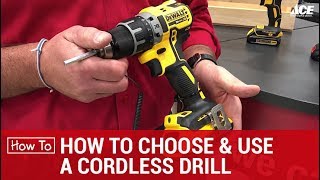
Watch Before You Buy
“”
See Today’s Price →What we like
- Includes both a compact driver drill and an impact driver on a single 18V LXT battery platform
- 18V LXT is Makita flagship battery system — compatible with 100+ Makita tools for long-term expandability
- Two included batteries allow one to charge while the other works, eliminating downtime mid-project
Watch out for
- No current price listed — verify current availability and pricing before purchasing
- Combo format costs more than a single driver — best value for users who need both tool types immediately
“”
See Today’s Price →What we like
- Brushless motor extends battery life and motor longevity compared to brushed-motor drills in the same class
- Includes two 1.5Ah batteries, reducing the chance of being stranded mid-job without a charged cell
- Compact body keeps weight down for overhead drilling and work in tight or confined spaces
Watch out for
- No current price listed — Hitachi rebranded to Metabo HPT; verify the product is still available before purchasing
- 1.5Ah batteries are smaller capacity options — shorter runtime on continuous high-draw drilling tasks

“”
See Today’s Price →What we like
- SDS-Plus chuck accepts standard rotary hammer bits for setting concrete anchors, breaking masonry, and chiseling
- Rotary hammer impact action delivers force directly along the drill axis — far more effective in concrete than a standard drill
- Anti-vibration handle reduces hand and arm fatigue during extended concrete drilling sessions
Watch out for
- Bulky and overkill for woodworking or standard screw-driving tasks — this is a dedicated masonry tool
- No current price listed — verify availability before purchasing
Frequently Asked Questions
What voltage drill do I need for home use?
Is a brushless drill worth the extra cost?
Do I need a hammer drill for concrete?
What is the difference between a drill and an impact driver?
How long do cordless drill batteries last?
Should I buy a drill kit or bare tool?
How We Analyze Products
We analyze Amazon review data — often thousands of reviews per product — to surface patterns that individual buyers miss. Our process aggregates star ratings, review counts, and buyer sentiment at scale, identifying which strengths and weaknesses appear consistently across the largest review samples available. The 1,151+ reviews analyzed on this page represent real verified-purchase feedback from Amazon buyers.
Each product earned its placement through data: total review volume, average rating, and the specific praise and complaints that repeat most often across buyers. No manufacturer paid for placement on this page. Products appear here because buyers endorsed them at scale, not because a company asked us to feature them.
We use AI to summarize review sentiment — not to fabricate opinions, but to condense what thousands of buyers actually wrote into a readable format. The pros and cons you see reflect the most common themes found in verified purchaser reviews, paraphrased for clarity. We do not claim to have accessed Reddit, YouTube, or specific publications in generating these summaries.
Prices shown reflect Amazon pricing at the time this page was last generated. Click “See Today’s Price” to get the current live price on Amazon. Read our full methodology →