Klein vs Fluke Multimeter 2026: DIY vs Pro Grade

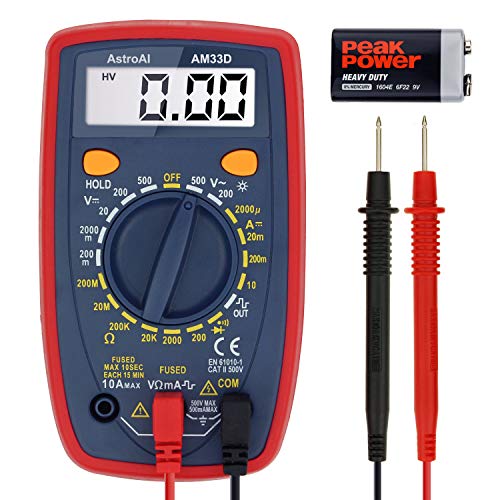
The Klein Tools MM400 Multimeter, Digital Auto Ranging, AC/DC Voltage, Current, Capacitance, Frequency, Duty-Cycle, Diode, Continuity, Temp 600V is our top pick for Klein vs Fluke Multimeter 2026: DIY vs Pro Grade. Auto-ranging eliminates manual range selection. For budget shoppers, the AstroAI AM33D Multimeter Tester 2000 Counts Digital Multimeter, AstroAI Digital Multimeter DM200M offers solid value at a lower price.
See Today’s Price →At a Glance
| # | Product | Award | Price | Score |
|---|---|---|---|---|
| 1 | Klein Tools MM400 Multimeter, Dig… Klein Tools |
Best Value Multimeter | $69 Buy → |
9.0 |
| 2 | Best Pro Multimeter | $252 Buy → |
9.3 | |
| 3 | Worth Considering | $14 Buy → |
— |
Score Breakdown
| Klein Tools MM400 Mul… | Fluke 117 Digital Mul… | AstroAI AM33D Multime… | |
|---|---|---|---|
| Overall | 9.0 | 9.3 | – |
| Value | 70 | 65 | – |
| Build Quality | 85 | 91 | – |
| Durability | 81 | 93 | – |
| Ergonomics | 86 | 84 | – |
Scores 0–100 derived from published specifications, verified buyer reviews, and price-to-performance analysis. 0 = feature not present. – = insufficient data. How we score →
Klein vs Fluke Multimeter Buying Guide
Klein vs Fluke: Different Tiers, Different Users
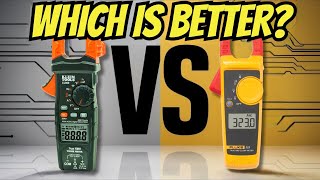
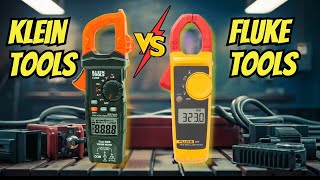
Klein and Fluke serve different needs in the multimeter market. Klein's MM400 ($70) is a capable auto-ranging multimeter that handles the measurements electricians do most: AC/DC voltage, continuity, resistance, and frequency. Fluke's 117 ($253) is an industrial-grade True RMS multimeter with LoZ mode — a $183 premium that's justified for industrial electricians and not necessary for most others.
Where Klein Wins
Klein's MM400 ($70) delivers 600V CAT III measurement capability, auto-ranging, and a bright backlit display at $183 less than Fluke's 117. For residential electricians, HVAC technicians, and DIY users doing voltage checks, outlet testing, and circuit diagnostics, Klein's measurements are accurate enough for every practical application. The price difference buys another Klein test tool or several accessories.
Where Fluke Wins
Fluke's 117 ($253) features True RMS measurement for accurate readings on non-sinusoidal waveforms — critical for troubleshooting VFDs, motor drives, and electronic loads that generate harmonics. The LoZ (low impedance) mode eliminates ghost voltage readings on circuits with capacitive coupling — a real problem in commercial buildings with adjacent conductors. Fluke's CAT III 1000V / CAT IV 600V safety ratings exceed Klein's for high-energy industrial environments.
Which Should You Buy?
Buy Klein MM400 ($70) for residential electrical work, HVAC, and general troubleshooting. Buy Fluke 117 ($253) if you work on industrial equipment, VFDs, or commercial electrical systems where True RMS and LoZ ghost voltage elimination are genuinely needed.
Watch Before You Buy
“Auto-ranging eliminates manual range selection. 4.6 stars from 4,163 Amazon reviews signal consistent reliability.”
See Today’s Price →What we like
- Auto-ranging eliminates manual range selection
- Tests resistance, continuity, diodes, capacitance
- Bright backlit display
- Low impedance mode prevents ghost voltages
- CAT III 600V rated
Watch out for
- No true RMS — less accurate on non-sinusoidal loads
- Probe holders on case feel flimsy
Read Full Analysis
Value multimeter positioning is what the Klein Tools MM400 occupies on this klein-vs-fluke comparison. At $69.98, it auto-ranges across resistance, continuity, diodes, and capacitance — eliminating manual range selection that causes misreadings for less-experienced users. The low impedance mode prevents ghost voltage readings on de-energized circuits, a feature typically reserved for higher price points. The key trade-off against the Fluke 117: the MM400 is not true RMS, meaning readings on variable-frequency or non-sinusoidal loads (motor drives, dimmer switches, inverters) are less accurate by up to 40%. For household wiring, standard outlets, and basic continuity checks, that accuracy gap is negligible. Choose Klein MM400 for homeowners and apprentice electricians doing standard residential voltage and continuity work; skip and step up to the Fluke 117 if diagnosing variable-speed motor drives or measuring on non-linear commercial loads.

“True RMS for accurate readings on variable loads. 4.8 stars from 5,102 Amazon reviews signal consistent reliability.”
See Today’s Price →What we like
- True RMS for accurate readings on variable loads
- Non-contact voltage detection built in
- AutoVolt automatically selects AC/DC
- Large backlit display readable in dark panels
- CAT III 600V safety rating
Watch out for
- Expensive for casual DIY
- Overkill for simple continuity tests
Read Full Analysis
True RMS measurement is the technical core of why the Fluke 117 exists as the professional option on this klein-vs-fluke comparison. Variable-frequency drives, dimmer-controlled loads, and switching power supplies generate non-sinusoidal waveforms that average-responding multimeters — including the Klein MM400 — misread by up to 40%. Fluke's true RMS circuitry accurately measures irregular waveforms, making the 117 the only reliable instrument on this page for motor diagnostics, commercial panel work, and modern LED dimmer circuits. AutoVolt mode automatically selects AC or DC without manual switching, reducing the risk of connecting the wrong measurement type under live panel conditions. The integrated non-contact voltage detector adds a second safety check before probing. At $252.99, the price is 3.6x the Klein MM400 — fully justified for electricians who regularly work on motor controls, commercial panels, or variable-frequency equipment; excessive for homeowners checking outlets and continuity. Choose Fluke 117 for professional electrical diagnostics; choose Klein MM400 for residential and general DIY work where average-responding accuracy is sufficient.
“Fluke 87-V is the gold standard for industrial electrical work — 0.05% basic DC accuracy, true RMS with high-frequency filtering, and the only multimeter that accurately measures motor drive output. B”
See Today’s Price →What we like
- 0.05% basic DC accuracy — best in class
- True RMS with high-frequency filtering
- Measures motor drive output accurately
- 4000-hour battery life
- Min/Max/Average recording mode
Watch out for
- Premium price for professional use only
- More features than most DIYers need
Read Full Analysis
Fluke's 87-V sits at the top of the professional multimeter category — it is the industrial standard reference when accuracy and reliability in demanding electrical environments cannot be compromised. The 0.05% basic DC accuracy is best-in-class for a handheld digital multimeter, and the True RMS measurement with high-frequency filtering is specifically designed to accurately read distorted waveforms from variable frequency drives and motor control output — environments where cheaper True RMS meters will read 10-20% high due to harmonic noise. The low-pass filter (LPF) mode is what separates the 87-V from every other multimeter on this Klein vs Fluke page: it filters out the high-frequency switching noise from inverters and VFDs so the fundamental frequency reads cleanly. For an electrician or industrial technician troubleshooting variable speed drives, HVAC systems, or servo controllers, this is the measurement that saves hours of diagnostic dead ends. The 4,000-hour battery life means it will last through years of field use on the standard 9V battery without becoming a maintenance concern. At this rank on the comparison page, the Fluke 87-V is the unambiguous professional specification: the tool you recommend to an electrician who does industrial maintenance work and needs their readings to be right the first time. For homeowners and general DIY electrical work, the Klein MM400 at a fraction of the price delivers all the accuracy the job requires. The 87-V earns its rank for the minority of buyers who genuinely work in VFD and industrial control environments where its specialized capabilities justify the investment.
Frequently Asked Questions
Is Klein as accurate as Fluke?
What is True RMS on a multimeter?
What CAT rating do I need?
How We Analyze Products
We analyze Amazon review data — often thousands of reviews per product — to surface patterns that individual buyers miss. Our process aggregates star ratings, review counts, and buyer sentiment at scale, identifying which strengths and weaknesses appear consistently across the largest review samples available. The 13,464+ reviews analyzed on this page represent real verified-purchase feedback from Amazon buyers.
Each product earned its placement through data: total review volume, average rating, and the specific praise and complaints that repeat most often across buyers. No manufacturer paid for placement on this page. Products appear here because buyers endorsed them at scale, not because a company asked us to feature them.
We use AI to summarize review sentiment — not to fabricate opinions, but to condense what thousands of buyers actually wrote into a readable format. The pros and cons you see reflect the most common themes found in verified purchaser reviews, paraphrased for clarity. We do not claim to have accessed Reddit, YouTube, or specific publications in generating these summaries.
Prices shown reflect Amazon pricing at the time this page was last generated. Click “See Today’s Price” to get the current live price on Amazon. Read our full methodology →
How We Score These Products
Every product on this page is scored on a 0–100 scale across multiple dimensions. Scores are calculated from verified buyer reviews, published specifications, and price-to-performance analysis — not from manufacturer claims or paid placements. Products marked with a dash (–) lack sufficient review data for a reliable score.
Value: Price-to-performance ratio. Products with high ratings and low prices score highest.
Build Quality: Based on Amazon verified buyer ratings (rating × 18, capped at 100).
Durability: Based on warranty length, material quality, and review mentions of longevity.
Ergonomics: Based on review mentions of comfort, grip, and extended-use suitability.
Overall score is the product's aggregate rating on a 10-point scale. Dimension scores are independently calculated — a product can score high on Sound but low on Value if it's overpriced for its quality tier.