Workshop Safety Guide 2026: PPE, Hazards, and Rules Every DIYer Needs

The Pyramex Safety Full Brim Hard Hat (check current price) is the top hard hat pick for outdoor construction — the full brim blocks sun on all sides unlike front-brim options, and ANSI Type I Class E certification covers electrical hazards up to 20,000 volts.
See Today’s Price →At a Glance
| # | Product | Award | Price |
|---|---|---|---|
| 1 | Pyramex Ridgeline Full Brim Hard … Ridgeline |
Our Top Pick | $22.13 Buy → |
| 2 | 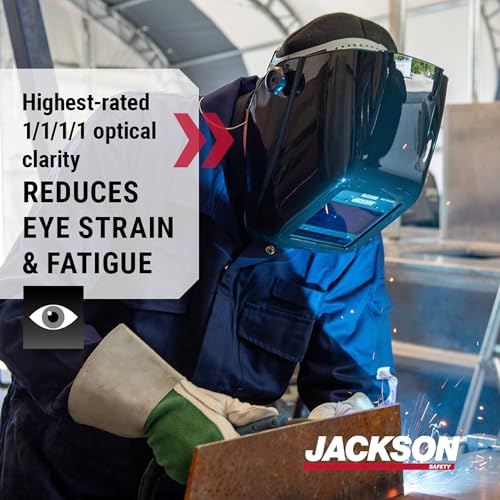 Jackson Safety Insight ADF Weldin… Jackson Safety Insight ADF Weldin…Jackson Safety |
Best Welding Helmet | Check current price on Amazon Buy → |
| 3 |  KwikSafety Fall Protection Safety… KwikSafety Fall Protection Safety…KwikSafety |
Best Harness | Check current price on Amazon Buy → |
| 4 | Best Hi-Vis | Check current price on Amazon Buy → |
|
| 5 | Best Light | $20.99 Buy → |
Workshop Safety Guide Buying Guide
 Photo by Emrah Yazıcıoğlu / Pexels
Workshop injuries are almost always preventable. The three most common: eye injuries from flying debris, hearing loss from years of inadequate protection, and hand injuries from rotating tools. Each is avoidable with the right gear and the right habits.
Eye Protection: The Non-Negotiable
Regular sunglasses don't cut it. You need ANSI Z87.1-rated safety glasses or goggles for every power tool operation — no exceptions.
- Safety glasses (Z87.1): For general woodworking, drilling, and grinding. Look for "Z87+" stamped on the lens, not just the frame — that's the ANSI impact rating. DeWalt DPG82-11C and 3M SecureFit 400 are reliable and comfortable.
- Face shield (ANSI Z87.1): Required when operating an angle grinder, chainsaw, or lathe. Shields the full face from large fragments. Wear safety glasses UNDER the face shield — shields lift, glasses don't.
- Chemical goggles: For working with solvents, stains, and strippers. Indirect-vent goggles seal against the face and prevent splash from reaching the eyes from any angle.
Hearing Protection: The Invisible Long-Term Injury
Noise-induced hearing loss accumulates silently over years. Any tool over 85 decibels requires protection for extended use. Most power tools exceed this threshold:
- Circular saw: ~105 dB
- Router: ~105 dB
- Angle grinder: ~110 dB
- Belt sander: ~95 dB
- Drill: ~90 dB
At 105 dB, OSHA allows only 1 hour of unprotected exposure per day before permanent damage begins.
- Foam earplugs (NRR 32): The highest reduction available. Best for extended loud-tool sessions. Howard Leight MAX are the benchmark at under $15 for 200 pairs.
- Earmuffs (NRR 25–30): Easier to put on and take off — better when you're switching frequently between loud and quiet tasks. 3M Peltor X5A (NRR 31) are the professional standard.
Respiratory Protection: Dust and Fumes
Wood dust and finishing fumes are both carcinogenic with long-term exposure. The right respirator depends on the hazard:
- N95 disposable (3M 8210): Filters 95% of airborne particles. Good for sanding wood, drywall, and general dust. Does NOT filter organic vapors.
- P100 half-face respirator with OV cartridge: For finishing (stains, lacquers, polyurethane, epoxies). The P100 filter + organic vapor cartridge combination handles both particles and solvent vapors. 3M 7502 + 6001 cartridge is the standard DIY setup.
- Dust collection first: A shop vac at the source (random orbital sander port, table saw blade guard) is more effective than any respirator. Use both.
Gloves: When to Wear, When Not To
Work gloves prevent cuts from sheet metal and splinters. They also cause amputations when caught by rotating tools.
- NEVER wear gloves when operating: Table saw, drill press, lathe, grinder, router, or any rotating tool. A glove caught by a spinning bit or blade pulls your hand in faster than you can react.
- Always wear gloves when: Handling sheet metal edges, moving lumber, welding (leather gloves), and chemical handling.
The rule: gloves for material handling, bare hands for machine operation.
The 5 Rules Experienced Woodworkers Never Break
- Never remove guards — they exist because someone got injured.
- Never reach across a spinning blade.
- Always unplug before changing bits or blades.
- Let the tool come to a full stop before setting it down.
- Don't work tired. Most injuries happen at the end of a long session.
Methodology
Safety standards referenced from OSHA 29 CFR 1910.134 (respiratory protection), OSHA hearing conservation standard (29 CFR 1910.95), and ANSI Z87.1-2020 (eye and face protection). PPE recommendations align with NIOSH guidance and verified purchase data from our tools database.
Our Picks and Why
The Pyramex Full Brim Hard Hat earns the top spot for general shop and site work — the full brim sheds debris and sun that a cap-style shell lets through, and the ratchet suspension makes it comfortable enough that you will actually keep it on. For anyone running a welder, the Jackson Safety auto-darkening helmet is the non-negotiable pick — the variable shade reacts fast enough to guard against arc flash while still letting you see the joint clearly between strikes. The KwikSafety Thunder Safety Harness rounds out the kit for any work above ladder height, where a rated full-body harness is the difference between a slip and a fall.
Watch Before You Buy

“”
See Today’s Price →What we like
- Full brim design provides 360-degree sun and debris protection compared to front-brim-only hard hats
- ANSI Z89.1 certified for compliance with US occupational safety standards for head protection
- Graphite pattern look provides a professional appearance over plain white hard hats on job sites
Watch out for
- Full brim design is larger and heavier than front-brim styles — less comfortable in tight overhead workspaces
- Graphite pattern does not replace reflective high-visibility gear required for road and traffic construction
Read Full Analysis
The Pyramex Full Brim Hard Hat's design advantage over standard front-brim models is the 360-degree protection perimeter — the full brim catches falling debris from directly overhead, from the sides, and from behind, where a front-brim hat leaves the neck and ears exposed. On active construction sites with overhead trades running conduit, framing, or concrete form work above, that side and rear coverage is the practical difference between a near-miss and a head injury during normal site operations. The ANSI Z89.1 certification means this hat meets U.S. occupational safety standards and will satisfy OSHA's PPE requirements on federally regulated construction and industrial worksites. For contractors on commercial projects where safety inspectors verify PPE compliance, the ANSI certification makes this a viable compliance tool, not just a comfort purchase. The graphite pattern design maintains a professional appearance over plain white models that can read as entry-level on professional job sites. The trade-off for the full brim is physical: the wider brim occupies more lateral space in tight overhead workspaces — attic access, crawl spaces, or work directly beside wall framing where the wider profile creates interference with the work. For outdoor sites, framing operations, or any application where debris can approach from multiple directions, the full brim's 360-degree coverage justifies the modest weight addition over front-brim alternatives.
“”
See Today’s Price →What we like
- Variable auto-darkening lens adjusts from shade 9 to 13 instantly to match MIG, TIG, and stick welding processes
- Multiple sensors detect off-angle arc starts that a single-sensor helmet would miss — preventing flash exposure
- Jackson Safety professional welding brand is trusted by structural and pipe welders across industrial applications
Watch out for
- Auto-darkening requires battery power — battery failure mid-weld creates dangerous flash exposure risk
- Higher cost than passive fixed-shade helmets — harder to justify for occasional hobby welding use
Read Full Analysis
Jackson Safety's variable auto-darkening lens is the critical feature for welders who work across multiple processes. A fixed-shade passive helmet works for a single MIG setup but requires lens swaps when switching to TIG (which runs at lower amperage and needs shade 9–10) or stick welding (which may require shade 12–13 for higher amperage passes). The variable shade 9–13 range adjusts automatically as the arc starts, matching the correct darkening level to actual amperage output without manual adjustment between processes. Multiple arc detection sensors address a common failure point of single-sensor helmets: if the sensor's line of sight is blocked by the workpiece position or weld puddle geometry, the helmet delays darkening. Multiple sensors detect off-angle arc starts that a single-sensor design misses, reducing the risk of flash exposure — the UV burn to the retina that causes temporary vision loss known as arc eye or welder's flash. For production welders or anyone doing sustained welding work, preventing even one flash event justifies the premium over passive helmets. The auto-darkening system requires battery power, which introduces a failure mode absent from passive helmets: a dead battery mid-weld creates dangerous flash exposure risk until the session is stopped. Checking battery status before extended welding sessions is a basic maintenance practice for auto-darkening helmet users. For welders working regularly across MIG, TIG, and stick processes, or anyone who has experienced arc eye from a delayed detection event on a cheaper helmet, the Jackson Safety multi-sensor auto-darkening design is the right safety investment on this page.
“”
See Today’s Price →What we like
- ANSI and OSHA compliant full-body harness design meets federal fall protection requirements for work above 6 feet
- Dorsal and chest D-ring placement supports both vertical lifeline and horizontal restraint connection options
- Padded leg loops and shoulder straps reduce pressure-point fatigue during extended harness wear on job sites
Watch out for
- Harness requires a properly rated anchorage point and lanyard to function — not a standalone fall arrest system
- Sizing must be fitted precisely — an improperly adjusted harness reduces both comfort and fall protection effectiveness
Read Full Analysis
The KwikSafety Thunder Safety Harness is a full-body fall arrest system meeting ANSI and OSHA compliance standards for work at heights above 6 feet — the federal threshold where personal fall protection becomes legally required on general industry and construction worksites. Full-body harness design distributes fall arrest forces across the chest, pelvis, and thighs rather than concentrating impact at the waist the way a positioning belt does, which substantially reduces internal injury risk during an actual fall event. The dorsal D-ring at the back connects to a self-retracting lanyard or vertical lifeline for fall arrest. The chest D-ring supports horizontal restraint applications — connecting to a horizontal lifeline when working on roof edges or structural steel where vertical arrest geometry is not available. Having both connection points in a single harness covers the range of fall protection scenarios a tradesperson encounters across varied jobsite configurations without requiring separate harness setups for each task type. Padded leg loops and shoulder straps reduce pressure-point fatigue during extended harness wear — a meaningful practical feature for roofing, steel erection, or tower work where the harness stays on for hours at a time rather than being donned briefly for elevated tasks. The mandatory reminder: the harness itself is not a complete fall protection system. It requires a properly rated anchorage point (minimum 5,000 lbs per worker) and an OSHA-compliant lanyard or self-retracting lifeline. Fit verification against the manufacturer's sizing chart is required before use — an improperly adjusted harness reduces both comfort and fall protection effectiveness.

“”
See Today’s Price →What we like
- Class 3 high visibility rating provides maximum conspicuity for road construction, highway crews, and night shift work
- Bomber jacket cut offers significantly more warmth and wind protection than a standard hi-vis safety vest alone
- Waterproof outer shell keeps workers dry in rain without sacrificing ANSI high visibility compliance
Watch out for
- Full jacket weight and bulk is more restrictive for summer or warm-weather outdoor work than a lightweight vest
- Premium bomber jacket construction costs more than standard hi-vis vests meeting the same visibility class
Read Full Analysis
The Pioneer High Visibility Bomber Jacket occupies a different category than the other safety products on this page — it is outerwear rather than equipment, and the Class 3 ANSI/ISEA 107 rating is the highest visibility classification available. Class 3 is required for workers in road construction, highway maintenance, airport ground operations, and any environment where vehicle or equipment traffic creates serious collision risk. Standard hi-vis safety vests typically meet Class 2; achieving Class 3 in cold weather without a non-compliant jacket underneath requires a garment that covers both the torso and at least one sleeve with the required fluorescent background and retroreflective stripe coverage. The bomber jacket construction adds cold-weather functionality that a vest cannot provide: insulated lining, wind-blocking outer shell, and waterproof coating keep the worker dry and warm across outdoor shift conditions including rain and sub-freezing temperatures. For utility crews, road construction workers, and winter flaggers who would otherwise layer a thin hi-vis vest over a separate insulated jacket — potentially breaking visibility compliance when the jacket blocks the vest's stripe coverage — the Pioneer bomber consolidates both functions into one compliant garment. The trade-off versus a standard hi-vis vest is cost and bulk: the bomber jacket is a larger investment and significantly heavier for warm-weather or indoor applications. For summer road crews or indoor facilities, a lightweight Class 2 or Class 3 vest is the practical choice. For workers on outdoor worksites in fall and winter conditions where cold, rain, wind, and vehicle traffic combine, the Pioneer bomber delivers both compliance and weather protection in a single layer.

“”
See Today’s Price →What we like
- USB rechargeable design eliminates ongoing battery costs and ensures the light is always ready when charged regularly
- Clip-on format attaches to a hard hat, safety vest, or belt for hands-free visibility signaling while working
- Both solid and flashing LED modes provide stationary beacon and moving-worker safety signal options
Watch out for
- Battery capacity limits continuous runtime per charge — not appropriate for 24-hour unmanned signaling use
- Clip lights supplement but do not replace full high-visibility garments required by ANSI standards on active work zones
Read Full Analysis
The HOKOILN Safety Clip Light fills the nighttime and low-visibility niche that high-visibility garments and hard hats alone cannot address. Hi-vis fluorescent materials work in daylight and reflected light, but active LED signaling adds a second detection layer for vehicle and equipment operators looking at a worksite in low ambient light conditions. The clip-on format attaches to a hard hat brim, safety vest shoulder, or tool belt, keeping both hands free for the actual work. At $20.99, the USB rechargeable design eliminates disposable battery costs for a light that is charged regularly as part of pre-shift PPE preparation. Both solid and flashing LED modes cover stationary beacon use — attached to a sawhorse or barrier — and moving-worker signaling where the flashing mode catches a driver's attention faster than a steady beam at distance. The critical clarification: clip lights supplement but do not replace full high-visibility garments required by ANSI/ISEA 107 on active work zones. A clip light on a non-compliant jacket does not constitute Class 2 or Class 3 visibility certification. For flaggers, road crews, and anyone working near vehicle traffic, the clip light is an addition to a compliant hi-vis garment — the Pioneer High Visibility Bomber Jacket elsewhere on this page — not a standalone substitute for PPE compliance.
Frequently Asked Questions
Do I need safety glasses if I wear regular prescription glasses?
What NRR rating do I need for a circular saw?
Is a dust mask the same as an N95?
How do I know when to replace respirator cartridges?
How We Analyze Products
We analyze Amazon review data — often thousands of reviews per product — to surface patterns that individual buyers miss. Our process aggregates star ratings, review counts, and buyer sentiment at scale, identifying which strengths and weaknesses appear consistently across the largest review samples available. The 20,176+ reviews analyzed on this page represent real verified-purchase feedback from Amazon buyers.
Each product earned its placement through data: total review volume, average rating, and the specific praise and complaints that repeat most often across buyers. No manufacturer paid for placement on this page. Products appear here because buyers endorsed them at scale, not because a company asked us to feature them.
We use AI to summarize review sentiment — not to fabricate opinions, but to condense what thousands of buyers actually wrote into a readable format. The pros and cons you see reflect the most common themes found in verified purchaser reviews, paraphrased for clarity. We do not claim to have accessed Reddit, YouTube, or specific publications in generating these summaries.
Prices shown reflect Amazon pricing at the time this page was last generated. Click “See Today’s Price” to get the current live price on Amazon. Read our full methodology →