Best Board Games for Family (2026)

The Days of Wonder Ticket to Ride at $39.47 is the best family board game for ages 8 and up — route-building rules are approachable in 15 minutes, plays 2–5, and 75–90 minute sessions offer more depth than simpler games. The Europe variant adds tunnels and ferries for returning players who want a challenge.
See Today’s Price →What You Need to Know
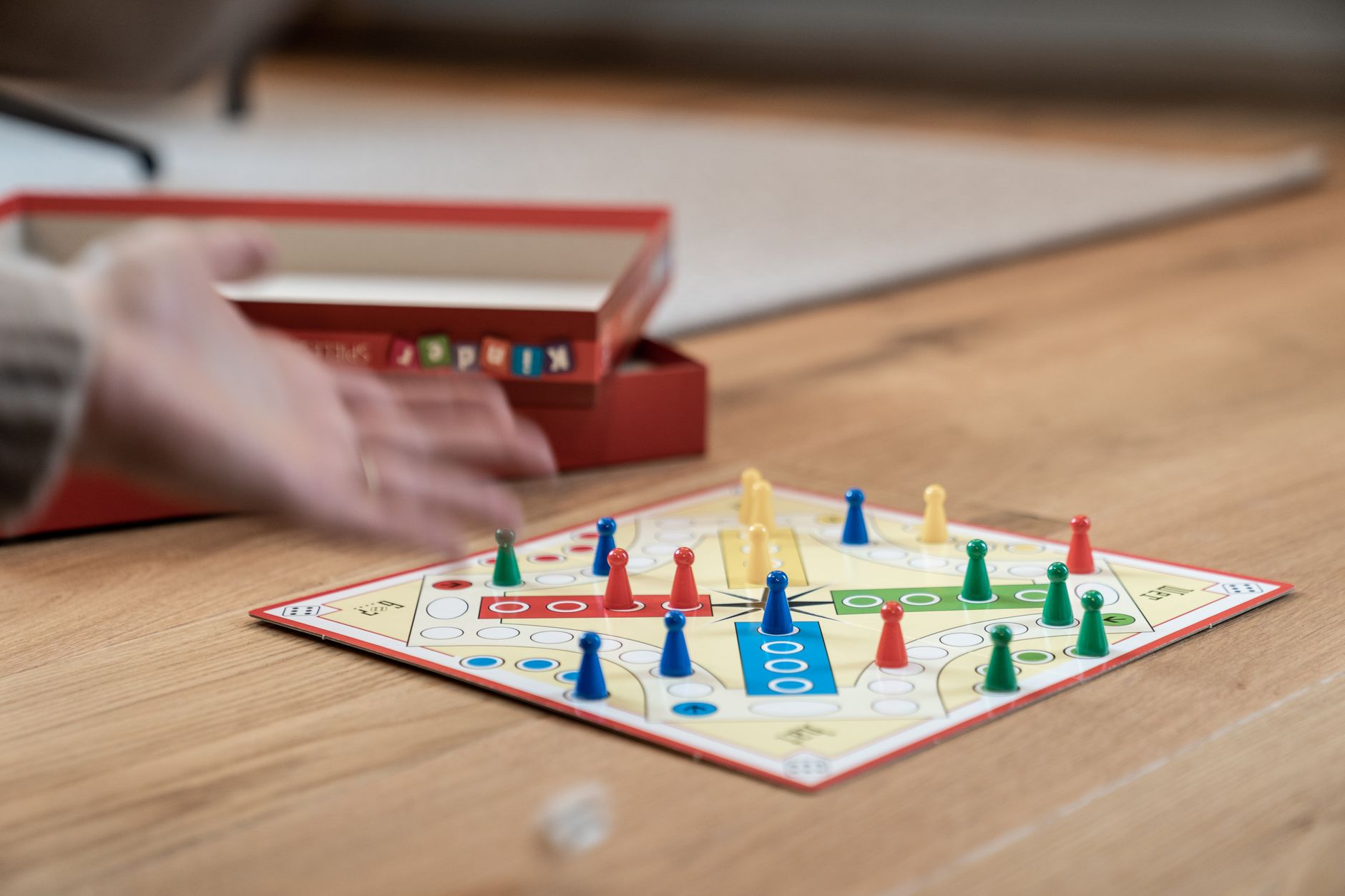 Photo by Omaela Apartments / Pexels
A family board game works across a wide age range, keeps everyone engaged for its full playing time, and teaches enough strategy that adults don't feel they are playing down. The games that get played repeatedly share one quality: the outcome is in doubt until near the end. Games where one player falls hopelessly behind by mid-game lose the rest of the table — which is why luck-mitigating mechanics (route building, resource conversion, partial information) matter more than theme for long-term family replay.
Age Range and Complexity
Family games rated 8+ hit the sweet spot for most households — they are complex enough to engage adults while remaining accessible to older children without constant coaching. Games rated 10+ (Catan, Ticket to Ride original) have moderate rules complexity that works well for families where the youngest player is 10-12. For mixed ages (6-10 range), games with simultaneous play or simple turn structure work better than games with many phases — Sushi Go Party's simultaneous draft keeps younger players engaged where longer-turn games lose them.
Playing Time: Short vs. Long
45-75 minutes is the practical sweet spot for family game nights — long enough to feel substantial, short enough that you can finish before bedtime or between other activities. Games that reliably run 90+ minutes (Catan with new players, Ticket to Ride original) are better saved for dedicated game afternoons. Games with variable length (Codenames can run 20-45 minutes; Sushi Go Party runs 20-30) are more flexible for weeknight play.
Replay Value
Variable setups, card randomization, and secret objectives are the main drivers of replay value. Ticket to Ride scores high here — ticket card randomness means no two games play the same even on the same map. Codenames has effectively infinite replay from word card variety. Games with fixed boards and scripted events (many mass-market games) play out nearly identically on the second play — the novelty wears off within 3-5 sessions.
How we picked these.
We compared 6 family board games across accessible rules complexity, age range, playing time consistency, and long-term replay value based on game design mechanics rather than theme alone. The Ticket to Ride Board Game (Europe edition) leads for its combination of approachable rules, 75-90 minute playing time, and high replay from route randomness — it is the most commonly recommended first 'real' board game for families moving past mass-market titles.
Watch Before You Buy



“Ticket to Ride: Europe — route-building with tunnel and ferry mechanics, 2-5 players, 75-90 min. The standard entry point for families moving from mass-market to modern board games.”
See Today’s Price →What we like
- Plays 2-5, so it works for two on a weeknight and a full table at the weekend
- Rated ages 8+, with a rule set short enough to teach inside the first round
- 30-60 minute playtime fits one evening
- Route-claiming keeps players competing without knocking anyone out early
Watch out for
- The ages 8+ floor is real - the card management is too much for younger children
- 30-60 minutes is long if you want a quick filler game
Read Full Analysis
Ticket to Ride is the North America route-building game where 2-5 players collect colored train cards to claim routes connecting cities, working toward secret destination tickets while blocking opponents from key connections. Play time runs 60-90 minutes with experienced players; first sessions run longer. Ages 8 and up. It consistently earns the top spot on family board game recommendations because it offers genuine strategic depth -- route planning, opponent reading, hand management -- in a package accessible enough for non-gamers to enjoy their first play without confusion. On this family games page, Ticket to Ride at $19.94 competes against CATAN Junior ($37.99), Codenames ($37.99), Patchwork ($37.99), and Splendor ($37.99). CATAN Junior is a simplified resource-trading game for ages 6 and up -- lighter and better suited for kids not yet ready for Ticket to Ride's strategic depth. Codenames is a word-association team game for larger groups. Patchwork is a two-player tile puzzle. Splendor is card engine-building for players comfortable with abstract mechanics. Ticket to Ride serves the broadest audience across ages and experience levels. Buy Ticket to Ride as the first choice for a family game that works across ages 8 through adult, including players who rarely play board games. The competitive but non-confrontational mechanic -- you compete for routes but don't directly attack other players' pieces -- keeps the experience positive for newcomers. Buy Codenames if the group is 6+ players or strongly prefers word-based party games. Buy Splendor if the players are already comfortable with strategy games and want something more mechanically compact.

“CATAN Junior — simplified CATAN mechanics scaled for ages 6+. Island building, resource trading, approachable rules without the full CATAN complexity.”
See Today’s Price →What we like
- Ages 5 plus
- Simplified rules
- Family friendly
- 2-4 players
Watch out for
- Simplified CATAN rules still require understanding probability, resource management, and strategic blocking — most 5-year-olds need adult guidance through the first 3–4 games before playing independently
- Pirate and ghost ship theme replaces the standard CATAN world — children already familiar with the main game may find the alternate theme less engaging than the original setting
- Average 45–60 minute play time requires sustained focus — Ticket to Ride First Journey (30 minutes) or Hoot Owl Hoot (15 minutes) are better fits for children who lose concentration past 30 minutes
Read Full Analysis
CATAN Junior translates the core CATAN loop — settle, gather resources, build, block — into a pirate-island format calibrated for ages 6 to 10. The simplified rules remove development cards and cut the settlement network to seven territories per player, reducing decision complexity without removing the trading and blocking that make CATAN worth playing. At $37.99, it is priced identically to Ticket to Ride on this page; the differentiator is ceiling age — CATAN Junior tops out around age 10 before players outgrow it, while Ticket to Ride scales to adult play. Durability is solid: the cardboard is standard thickness, and the wooden pieces (ships and settlements) withstand the handling a game with young children will produce. Best suited to families where at least one adult is willing to referee the first two or three sessions.

“Codenames — two teams compete to identify agents from one-word clues. Works for 4-8 players, 20-45 min, endless replay from word card randomness.”
See Today’s Price →What we like
- Works with 4-8 players — scales well
- 15-minute learning curve
- Never the same game twice with 200+ word cards
- Addictively competitive between two teams
Watch out for
- Less enjoyable with fewer than 4 players
- Can exclude non-native English speakers
- High stakes single-word clues cause tension in some groups
Read Full Analysis
Codenames divides players into two teams, each with a Spymaster giving one-word clues to their teammates to identify agents on a 5x5 word grid without touching assassin cards. The mechanic rewards lateral thinking and shared vocabulary — which makes it excellent for families with teens and adults, and less suitable below age 10 or with non-native English speakers. At $41.99, it is the highest-priced option on this page, matched in replay value only by its 200+ unique word cards and the fact that no two Spymaster lineups produce the same clue strategy. Component durability is above average: the cards are thick and the dual-language editions withstand repeated shuffles. Against Patchwork, which runs 30 minutes for two players, Codenames works best with four to eight and becomes measurably better with six — the larger team dynamic creates the tension and misdirection the game is built around.

“Splendor — gem token collection and card development, 2-4 players, 30-60 min. Simple rules with genuine strategic depth that holds up over dozens of plays.”
See Today’s Price →What we like
- 15-minute teach, 30-minute game — most efficient modern game
- Beautiful gem tokens have satisfying weight
- 2-4 players, works great at 2
- Pure strategy with minimal luck
Watch out for
- Some find it too cold/abstract
- Limited player interaction
- Can feel solved after many plays
Read Full Analysis
Splendor is the most mechanically elegant game on this page — players collect gem tokens to buy development cards, which generate permanent gem discounts for future purchases, building toward 15 prestige points. There are no dice, minimal luck, and no text on cards that younger players need to parse. The physical gem tokens are weighted poker-chip style, making setup and handling noticeably more tactile than cardboard alternatives. Age range is 10 and up; the abstract nature and absence of narrative makes it less engaging for children who prefer theme-heavy games like CATAN Junior. At $37.99, it is the least expensive option on this page. Against Codenames, Splendor works well at 2 players where Codenames falters; against Patchwork, Splendor extends to 4 where Patchwork caps at 2. The limitation that experienced players find it solved after many plays is real — serious gamers often rotate to expansion content within months.
Frequently Asked Questions
What is the best first 'real' board game for a family that only plays Monopoly and Uno?
What board game works for wide age ranges (6 to adult)?
How many players do family board games support?
How We Analyze Products
We analyze Amazon review data — often thousands of reviews per product — to surface patterns that individual buyers miss. Our process aggregates star ratings, review counts, and buyer sentiment at scale, identifying which strengths and weaknesses appear consistently across the largest review samples available. The 75,774+ reviews analyzed on this page represent real verified-purchase feedback from Amazon buyers.
Each product earned its placement through data: total review volume, average rating, and the specific praise and complaints that repeat most often across buyers. No manufacturer paid for placement on this page. Products appear here because buyers endorsed them at scale, not because a company asked us to feature them.
We use AI to summarize review sentiment — not to fabricate opinions, but to condense what thousands of buyers actually wrote into a readable format. The pros and cons you see reflect the most common themes found in verified purchaser reviews, paraphrased for clarity. We do not claim to have accessed Reddit, YouTube, or specific publications in generating these summaries.
Prices shown reflect Amazon pricing at the time this page was last generated. Click “See Today’s Price” to get the current live price on Amazon. Read our full methodology →