How to Choose Remote Control Toys for Kids and Adults (2026)
For ages 5-8, get an indoor RC car under $30 with a simple 2-channel controller. Ages 9-12 can handle 4-channel RC vehicles and beginner drones under $60. Teens and adults doing serious RC as a hobby should start around $100-150 for quality that won't frustrate them. The Traxxas Rustler ($150) is the beginner-serious benchmark for ground vehicles.
What You Need to Know
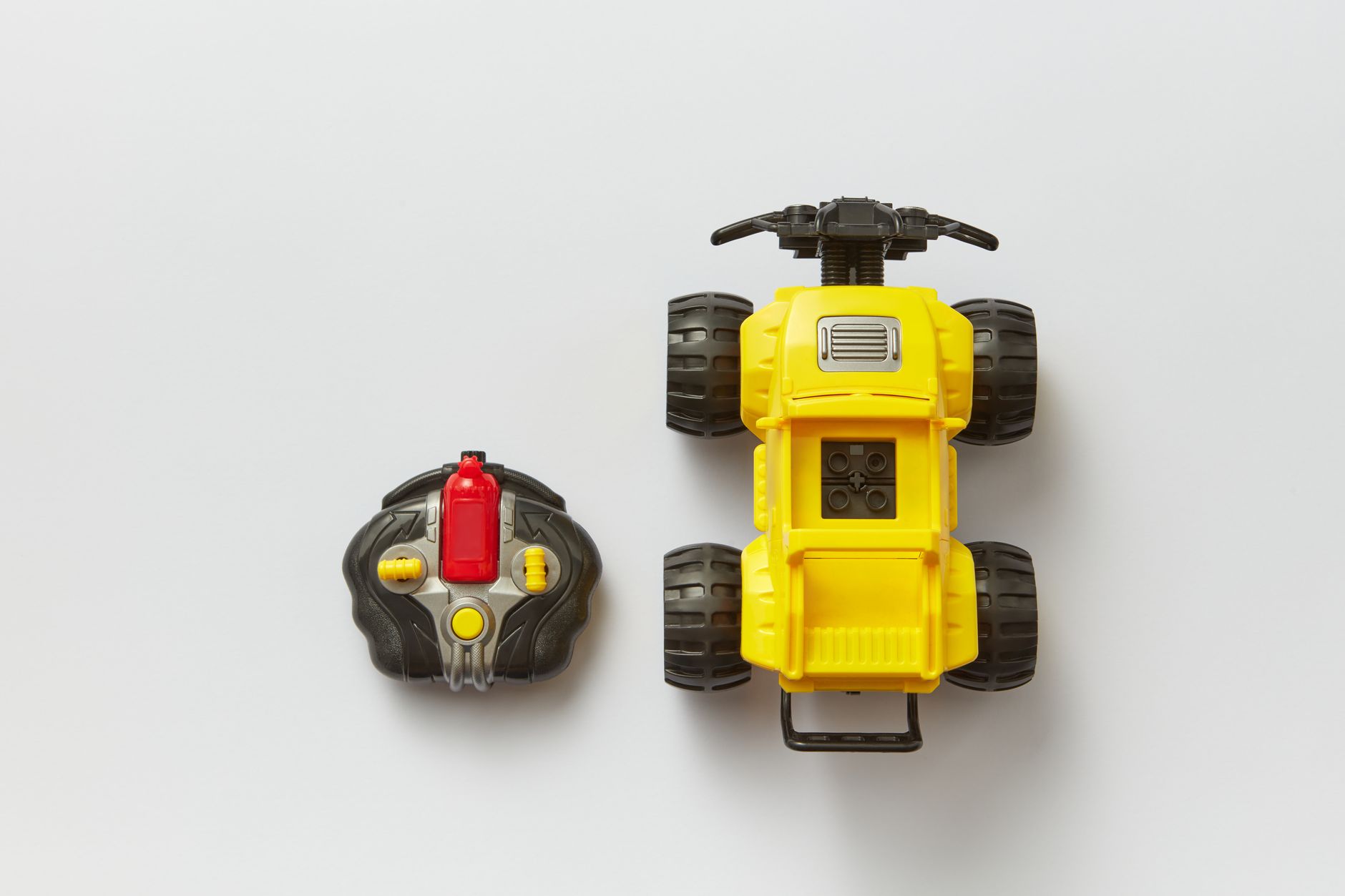 Photo by DS stories / Pexels
The RC toy category spans 5-year-olds crashing $20 cars into walls to grown adults racing $400 buggies on purpose-built tracks. What works for one completely fails for another. Getting the wrong RC toy is one of the most common gift-buying mistakes — a complex 4WD off-road truck given to a 6-year-old becomes a frustrating broken toy within a day.
RC Toy Types: What They Are and Who They're For
RC Cars (On-Road): Designed for smooth surfaces (pavement, gym floors). Fast and agile but flip easily on rough terrain. Best for kids who will use them in driveways or hallways. Most toy-grade RC cars ($15-50) fall into this category. Speed is the appeal; durability is often the weakness. RC Trucks and Off-Road Buggies: Higher ground clearance, wider wheelbase, designed for bumpy terrain. Traxxas, ARRMA, and Team Associated dominate the quality end. Entry point for serious hobby-grade starts at $150+. These last years with proper maintenance — toy-grade off-road RC ($20-50) is a false economy; the plastic bends and breaks within months. RC Drones: Huge range from $30 beginner drones to $1,200+ DJI cinematography drones. For kids 10+, the Holy Stone HS720 ($130) is a popular starter camera drone. Indoor micro-drones (DJI Tello, $99) are more appropriate for new pilots — forgiving when they crash into walls. RC Helicopters: Harder to fly than drones (less stable). Single-rotor helis require real skill. Coaxial helicopters (two rotors) are more beginner-friendly but still more challenging than drones. Generally outclassed by drones for most use cases in 2026.
Key Specs That Actually Matter
Frequency (2.4GHz vs. older): All modern RC toys use 2.4GHz — it auto-syncs and doesn't interfere with other RC vehicles nearby. This is now standard; don't worry about it. Battery life vs. charge time: Most toy-grade RC vehicles run 20-30 minutes on a charge that takes 1-2 hours. Hobby-grade LiPo batteries run 25-45 minutes and charge in 45-90 minutes. Having two batteries is the single biggest quality-of-life upgrade — keeps kids occupied while one charges. Range: Indoor RC: 100-200 feet is plenty. Outdoor use: look for 200-400 feet minimum. Drone range is especially important; many $30 drones lose signal at 50 feet. Speed: Measured in MPH. Toy-grade RC cars: 10-20 MPH. Fast hobby-grade: 40-70 MPH. For young kids, slower is better — they can actually control it. Kids 10+ who are into racing should look for 25+ MPH. 4WD vs. 2WD: 4WD provides better traction and stability, especially off-road. 2WD is lighter and often faster but sloppier to control. For beginners, 4WD is more forgiving.
Age and Skill Matching
Ages 4-6: Toy-grade indoor RC car, 2-channel (forward/backward + left/right steering). Simple joystick controller. $15-25. Avoid anything with a pistol-grip controller — the two-stick layout is easier for small hands. Ages 7-9: Any basic 4-channel RC vehicle or beginner drone. They can handle proportional steering. $30-60 range. Holy Stone F181W drone ($45) and Traxxas LaTrax are common starter picks. Ages 10-13: Ready for proper hobby-grade RC with LiPo batteries and brushless motors. Can handle drones with GPS features. Traxxas Stampede ($200) or similar. Ages 14+/Adults: Full hobby-grade. Budget $150+ for an RC vehicle that will actually perform and last. DJI Mini 3 ($299) for drones.
Indoor vs. Outdoor
This is the most overlooked buying decision. Indoor RC cars: smaller (1:24 or 1:28 scale), lower speed, tighter turn radius. Running a fast 1:10 scale RC car indoors means constant wall crashes and broken bumpers. Outdoor RC: needs weatherproofing (IP rating or at minimum water-resistant electronics), higher ground clearance, more power. Drones: flying indoors without collision avoidance is an advanced skill. Beginner drone pilots should start outside in a large open area. Small indoor drones (DJI Tello, Ryze) use downward-facing sensors to hover stably indoors.
Common Mistakes and What They Cost
Buying toy-grade off-road RC for outdoor serious use — $30 trucks die after 2-3 hard sessions on real terrain. The fix costs more than the truck. Skipping extra batteries — the included battery lasts 20 minutes. A second battery doubles play time and costs $10-20. Buying a racing drone for a first-time pilot — they crash repeatedly, break props, and often destroy the drone in the first session. Start with an $80-100 beginner drone designed to take crashes. Underestimating the learning curve for helicopters and drones — both require 10-20 hours of practice before confident control. RC cars are much more intuitive for beginners.
What We Recommend
For young kids (under 8): A basic 2-channel RC car like the Hosim RC Car ($20-30) — simple, durable, and immediately fun. For ages 9-12 who want a "real" RC car: the Traxxas LaTrax Rally ($90) — hobby-grade build quality at an entry price. For beginners wanting a drone: Holy Stone HS720 ($130) has GPS, auto-hover, and return-to-home so crashes from signal loss are minimized. For serious RC hobbyists starting out: Traxxas Rustler 4WD ($150) — the most-recommended first hobby-grade truck by the RC community. See our best backyard games for kids and best coding robots for more outdoor toy options.
How We Analyze Products
We analyze Amazon review data — often thousands of reviews per product — to surface patterns that individual buyers miss. Our process aggregates star ratings, review counts, and buyer sentiment at scale, identifying which strengths and weaknesses appear consistently across the largest review samples available.
Each product earned its placement through data: total review volume, average rating, and the specific praise and complaints that repeat most often across buyers. No manufacturer paid for placement on this page. Products appear here because buyers endorsed them at scale, not because a company asked us to feature them.
We use AI to summarize review sentiment — not to fabricate opinions, but to condense what thousands of buyers actually wrote into a readable format. The pros and cons you see reflect the most common themes found in verified purchaser reviews, paraphrased for clarity. We do not claim to have accessed Reddit, YouTube, or specific publications in generating these summaries.
Prices shown reflect Amazon pricing at the time this page was last generated. Click “See Today’s Price” to get the current live price on Amazon. Read our full methodology →