Best Garden Kneelers for Beginners 2026
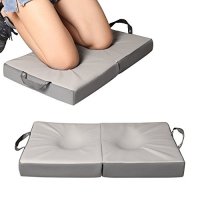
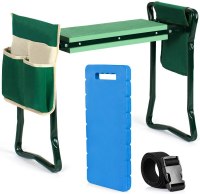
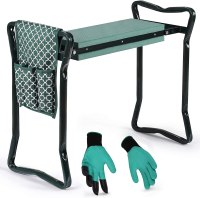
The Ohuhu Garden Kneeler and Seat is the best garden kneeler for most beginners -- steel frame flips to convert between a kneeling pad and a garden seat, handles support getting up and down, and the price is under $50. The K.I. Store Extra Thick Kneeling Pad is the best budget option for casual kneeling, and the COSYLAND is the best compact option for small-space storage.
See Today’s Price →At a Glance
| # | Product | Award | Price | Our Score | |
|---|---|---|---|---|---|
| 1 | Best Overall | Check Price | 9.0 | Buy → | |
| 2 | Best Compact | Check Price | 7.0 | Buy → | |
| 3 | Best Value | Check Price | 7.0 | Buy → | |
| 4 | Best Foam Pad | Check Price | 7.0 | Buy → | |
| 5 | Best for Sensitive Knees | Check Price | 7.0 | Buy → |


Garden Kneelers for Beginners Buying Guide
A garden kneeler is one of those tools that seems optional until you spend two hours pulling weeds without one and can't straighten your back the next morning. Knee pads and kneeling mats reduce the pressure and impact on your knees, while 2-in-1 kneeler-seat combos also give you a stable surface to push up from -- which becomes important for anyone over 40 or with any knee weakness.
How we picked these. We evaluated 5 garden kneelers across foam thickness and density, frame construction (steel gauge for seat-kneeler combos), seat weight capacity, folded storage dimensions, and price. Research cross-referenced recommendations from Gardeners' World, The Spruce, and r/vegetablegardening. We excluded foam pads under 1 inch thick (insufficient cushioning for extended kneeling), seat-kneelers with plastic frames rated under 250 lbs capacity, and products without tool pouches (a key convenience feature).
Foam Pad vs. 2-in-1 Kneeler-Seat: Which Do You Need?
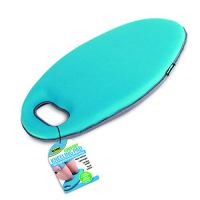
Foam kneeling pad: A rectangular foam mat you kneel on. Simple, lightweight, cheap. Best for: casual gardeners who kneel for short periods, anyone who just needs basic knee cushioning without extra bulk. Downside: no back support when kneeling, and no help getting up. 2-in-1 seat-kneeler (Ohuhu type): A folding steel-framed pad with handles. Flipped one way, it's a kneeling pad with handles to push up from. Flipped upside-down, the frame becomes legs and the pad becomes a seat. Best for: gardeners who spend extended time working close to the ground, older adults, anyone who needs both kneeling and sitting positions. Handles are the key feature -- they remove the strain of standing up from a kneeling position. Garden stool/seat: A 3-legged seat that keeps you off the ground entirely. Best for light tasks where you need to sit (harvesting, light weeding) but don't need to kneel. Less versatile than a 2-in-1.
Foam Thickness: What's Actually Enough
Foam thickness is the primary comfort driver for kneeling pads. On hard ground or gravel paths: Under 1 inch: Better than bare ground, but will compress quickly and leave you feeling the hardness within 5-10 minutes. Not recommended for extended kneeling. 1 to 1.5 inches: Adequate for most gardening tasks on soil. The standard range for mainstream foam pads. Comfort decreases over time as foam compresses. 2 inches or more: Extended comfort on hard surfaces -- concrete, gravel, or rocky soil. Memory foam in this range maintains cushioning better than standard EVA foam. For the 2-in-1 kneeler-seat combos, the foam is secondary because the handles reduce the pressure you put through your knees when kneeling and rising.
Frame Weight Capacity and Stability
For 2-in-1 kneeler-seats, the steel frame's weight capacity matters primarily when using it as a seat, where your full body weight rests on the frame. Most quality kneeler-seats are rated 250-330 lbs. The frame gauge (steel thickness) determines how much the frame flexes when loaded. Thin frames wobble when you're pushing up from a kneeling position -- the wobble is unstable and frustrating. Look for frames with horizontal crossbars at both ends, not just front-to-back rails. When using as a kneeling pad, the handles transfer weight to the ground through the frame endpoints, so frame stiffness determines how stable the push-up assist is.
Tool Pouches and Side Pockets
Most 2-in-1 kneeler-seats include fabric side pouches that hold trowels, pruning shears, seed packets, and gloves. The pouches hang from the frame sides and keep your tools within reach without returning to a tool belt or bucket. This is a significant convenience feature for gardeners who work across large areas and don't want to carry a separate tool bag. Look for pouches with multiple pockets (one large for tools, smaller pockets for gloves/seeds) and reinforced attachment points that don't pull away from the frame after repeated loading.
How We Analyze Products
We analyze Amazon review data — often thousands of reviews per product — to surface patterns that individual buyers miss. Our process aggregates star ratings, review counts, and buyer sentiment at scale, identifying which strengths and weaknesses appear consistently across the largest review samples available.
Each product earned its placement through data: total review volume, average rating, and the specific praise and complaints that repeat most often across buyers. No manufacturer paid for placement on this page. Products appear here because buyers endorsed them at scale, not because a company asked us to feature them.
We use AI to summarize review sentiment — not to fabricate opinions, but to condense what thousands of buyers actually wrote into a readable format. The pros and cons you see reflect the most common themes found in verified purchaser reviews, paraphrased for clarity. We do not claim to have accessed Reddit, YouTube, or specific publications in generating these summaries.
Prices shown reflect Amazon pricing at the time this page was last generated. Click “See Today’s Price” to get the current live price on Amazon. Read our full methodology →