Best Garden Twine 2026: Jute, Sisal & Plant Training
Natural jute twine is the best all-around garden string — biodegradable, gentle on plant stems, and strong enough for tomato cages and trellis work. The 2-Pack 1600 ft ($9.99) is the best value for frequent gardeners. For a single working spool, PerkHomy Jute at $5.99-$6.99 per 600-800 ft is excellent — affordable enough to replace when worn and natural enough to compost at season end.
Garden Twine Buying Guide
 Photo by www.kaboompics.com / Pexels
## How to Choose Garden Twine
Garden twine seems like a trivial purchase until you're halfway through tying up your tomatoes and realize the string you chose is cutting into the stems, rotting in a week, or impossible to unknot. Here's what separates good garden twine from frustrating garden twine.
Natural jute twine is the traditional and widely preferred choice for most garden uses. Jute is plant-derived, biodegradable, and gentle on plant stems — the rough texture provides grip without the cutting effect of monofilament. It breaks down naturally in the soil at the end of the season, so you don't need to remove every piece before composting. It handles most garden uses from tomato staking to bean trellising to bundling garlic for drying. The main limitation of jute: moisture exposure degrades it faster than synthetic options. Outdoor use through an entire rainy growing season may require replacing twine mid-season, though most users find jute lasts the full season with adequate quality (2mm thickness). Synthetic twine (polyester, nylon, polypropylene) is stronger, waterproof, and more UV-resistant. Better for permanent or semi-permanent installations like trellises meant to last multiple seasons. The downside: not biodegradable, can cut into soft plant stems if tied too tightly, and must be fully removed and disposed of at season end.
- 1-1.5mm: Too thin for heavy loads (large tomato plants, squash vines). Breaks easily under fruit weight.
- 2mm: The standard for most garden use. Strong enough for tomatoes, peppers, eggplant, beans, cucumbers. Gentle enough not to cut stems.
- 3-4mm: For heavy loads (winter squash, pumpkins) or non-plant uses (bundling stakes, securing row covers).
All four products in this guide are 2mm — the correct all-purpose garden twine size.

PerkHomy Natural Jute Twine (Brown, 600 ft): Best Single Spool Value
At $5.99 for 600 feet, PerkHomy's brown jute is the most affordable per-foot option in this guide. Brown is the natural jute color — no dye additives. The 600 ft spool is a practical working quantity for a home vegetable garden through a full season. The 2mm thickness handles staking, trellising, and bundling without cutting into plant tissue. Machine-spun for consistent thickness (unlike hand-wound twine which varies in diameter).
PerkHomy Natural Jute Garden Twine (Green, 800 ft): Best Color for Garden Use

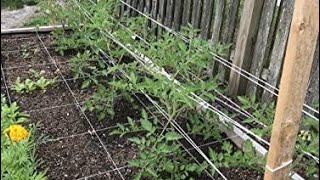
Green-dyed jute provides camouflage against foliage — useful for trellised plants where twine visibility is aesthetically important. The dye is applied to the jute before spinning, not a surface coating, so it doesn't transfer to plant stems. The 800 ft quantity is 33% more than the brown spool at only $1 more. Green twine is the preferred choice for front-yard gardens, ornamental vegetable patches, and anywhere aesthetics matter.
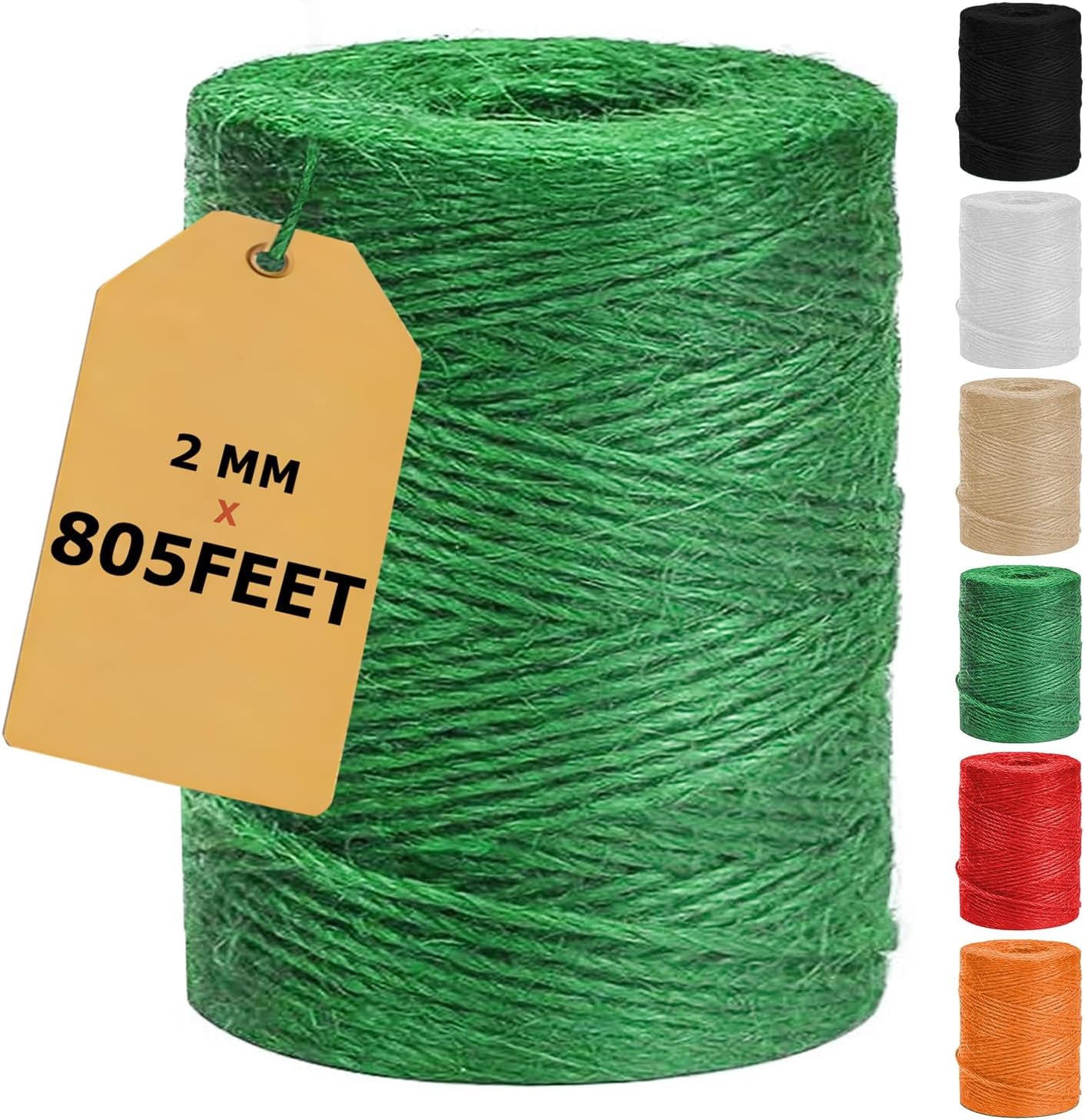
Vanhench Garden Twine (Green, 805 ft): Best for Heavy-Duty Tying
The Vanhench green twine at $8.99 for 805 ft uses a slightly denser weave than the PerkHomy options — noticeable in the stiffness when working with it. The denser weave provides better abrasion resistance for applications where the twine contacts rough surfaces (wire trellises, wooden stakes, cage rings). For gardeners who prefer a firmer twine that knots and stays knotted more reliably than soft jute, Vanhench is the choice.
Natural Jute 2-Pack 1600 ft: Best for Heavy-Use Gardens
Two 800 ft spools at $9.99 ($0.0062 per foot) is the best per-foot value in this guide. For market gardeners, CSA farms, large home vegetable operations, or anyone who goes through twine quickly, having 1600 ft on hand eliminates mid-season reorders. Two spools also means you can keep one in the tool shed and one in the garden cart without constantly moving a single spool.
Incorrect tying is as harmful as no support at all:
1. Use a figure-8 knot: Wrap the twine around the stake, cross it over itself, then loop around the plant stem. The X between stake and stem creates a soft buffer that prevents the stem from rubbing directly against the stake.
2. Tie loose: The plant stem expands as it grows. A tight tie applied in June becomes a tourniquet by August. You should be able to slide a finger between the twine and the stem.
3. Tie at multiple heights: A single tie near the top of a plant concentrates all the load at one point. Tie every 8-12 inches of height for plants over 18 inches tall.
What to Look For When Buying Garden Twine
Diameter: 2mm for general garden use. Don't go thinner for heavy crops. Material: Natural jute for most uses. Synthetic if you need multi-season durability. Length per spool: 600-800 ft covers most home gardens for a season. Buy more if you use it frequently. Biodegradability: Natural jute can go in the compost pile at season end with any plant debris still attached.Garden twine is a commodity — all four products in this guide are functional for their intended purpose. Buy the quantity that matches your expected use (don't buy 1600 ft for a two-plant balcony garden) and the color that suits your garden aesthetic. The $4 difference between the cheapest and most expensive option in this guide is not meaningful.
At a Glance
| # | Product | Award | Price | Our Score | |
|---|---|---|---|---|---|
| 1 |  Natural Jute Twine String Brown 2mm 160… Natural Jute Twine String Brown 2mm 160… |
Best Overall | $9 | 9.2 | Buy → |
| 2 |  PerkHomy Natural Jute Garden Twine Gree… PerkHomy Natural Jute Garden Twine Gree… |
Best Green Twine | $6 | 8.9 | Buy → |
| 3 |  Vanhench Garden Twine Green String for … Vanhench Garden Twine Green String for … |
Best Heavy Duty | $8 | 8.5 | Buy → |
| 4 |  PerkHomy Natural Jute Twine Brown 2mm 6… PerkHomy Natural Jute Twine Brown 2mm 6… |
Best Budget Pick | $5 | 8.2 | Buy → |
Showing 4 of 4 products
Natural Jute Twine String Brown 2mm 1600 ft 2-Pack
“The 2-pack is the best value buy for gardeners who go through twine quickly across a large garden.”
See Today’s Price →
PerkHomy Natural Jute Garden Twine Green 2mm 800 ft
“Biodegradable jute twine that stakes plants without leaving synthetic waste in your soil.”
See Today’s Price →
Vanhench Garden Twine Green String for Plants 805 ft
“A long-lasting supply of green garden twine that handles staking, training, and bundling all season.”
See Today’s Price →
PerkHomy Natural Jute Twine Brown 2mm 600 ft
“Natural brown jute works equally well for garden use and craft projects like wrapping and decorating.”
See Today’s Price →Frequently Asked Questions
What's the difference between garden twine and regular string?
Can I compost jute garden twine?
How much garden twine do I need for tomatoes?
Is green or brown twine better for gardens?
How do I prevent twine from cutting into plant stems?
How We Analyze Products
We analyze Amazon review data — often thousands of reviews per product — to surface patterns that individual buyers miss. Our process aggregates star ratings, review counts, and buyer sentiment at scale, identifying which strengths and weaknesses appear consistently across the largest review samples available. The 17,250+ reviews analyzed on this page represent real verified-purchase feedback from Amazon buyers.
Each product earned its placement through data: total review volume, average rating, and the specific praise and complaints that repeat most often across buyers. No manufacturer paid for placement on this page. Products appear here because buyers endorsed them at scale, not because a company asked us to feature them.
We use AI to summarize review sentiment — not to fabricate opinions, but to condense what thousands of buyers actually wrote into a readable format. The pros and cons you see reflect the most common themes found in verified purchaser reviews, paraphrased for clarity. We do not claim to have accessed Reddit, YouTube, or specific publications in generating these summaries.
Prices shown reflect Amazon pricing at the time this page was last generated. Click “See Today’s Price” to get the current live price on Amazon. Read our full methodology →