Best Lawn Fertilizer (2026)

Milorganite All-Purpose Slow-Release Fertilizer is the best lawn fertilizer for most homeowners — organic nitrogen source, no burn risk, and results that last 10-12 weeks per application.
See Today’s Price →At a Glance
| # | Product | Award | Price | Our Score | |
|---|---|---|---|---|---|
| 1 | 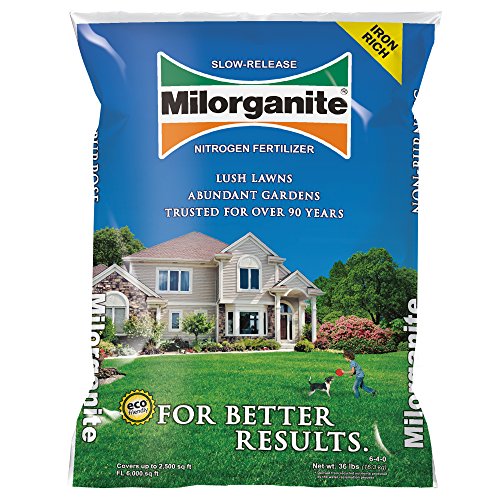 Milorganite All-Purpose Slow-Release Ni… Milorganite All-Purpose Slow-Release Ni… |
Best Overall | $17 | 9.1 | Buy → |
| 2 | 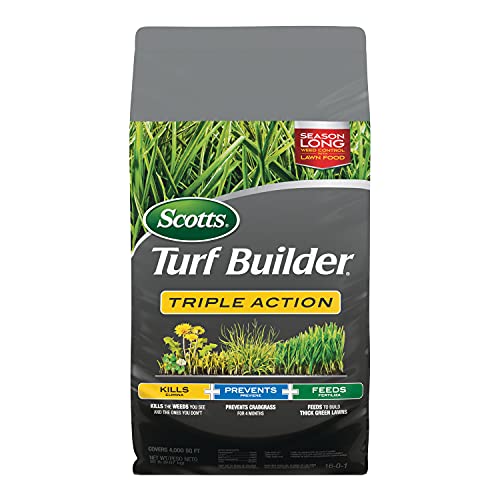 Scotts Turf Builder Triple Action, Weed… Scotts Turf Builder Triple Action, Weed… |
Best Spring Fertilizer | $42 | 8.8 | Buy → |
| 3 |  The Andersons PGF Complete 16-4-8 Ferti… The Andersons PGF Complete 16-4-8 Ferti… |
Best Professional Grade | $59 | 8.6 | Buy → |
| 4 | 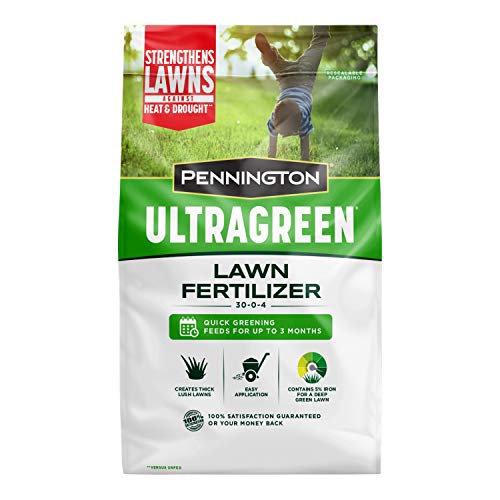 Pennington UltraGreen Lawn Fertilizer 3… Pennington UltraGreen Lawn Fertilizer 3… |
Best for Quick Green-Up | $23 $20 Coupon -15% | 8.3 | Buy → |
Showing 4 of 4 products
Milorganite All-Purpose Slow-Release Nitrogen Fertilizer, 6-4-0, 32 lb
“Milorganite is the safest and most forgiving lawn fertilizer available. The organic nitrogen cannot burn grass regardless of application rate or heat — and it builds soil health over years of use, not”
See Today’s Price →What we like
- Organic nitrogen source — zero burn risk even in heat
- Slow-release formula feeds for 10-12 weeks per application
- Improves soil health over time with organic matter
- Safe for children and pets after application
- Works on all grass types — warm and cool season
Watch out for
- Lower nitrogen concentration than synthetic fertilizers — more bags needed for large lawns
- Results slower to appear than synthetic quick-release products
- Biosolid base has a strong smell on application day
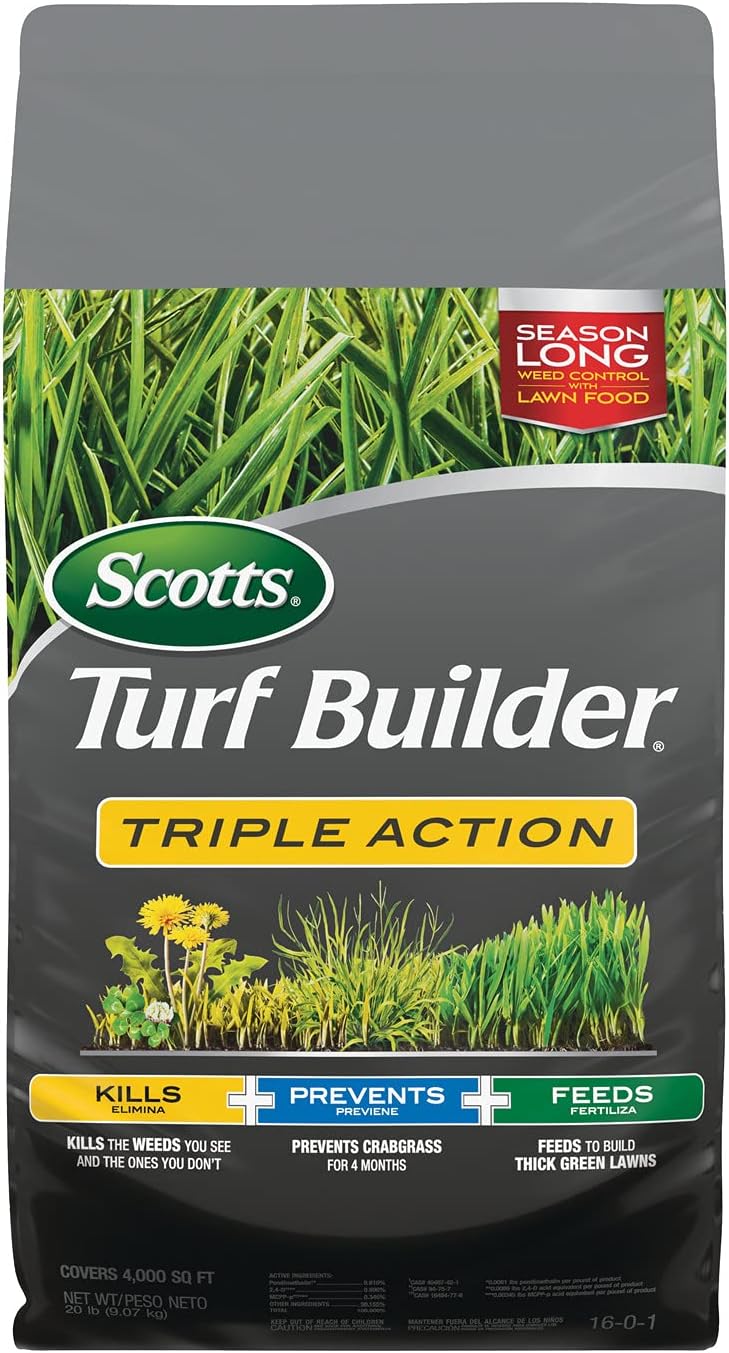
Scotts Turf Builder Triple Action, Weed Killer, Preventer, and Fertilizer, 20 lb
“Scotts Triple Action is the most efficient spring lawn product available. Fertilizing, killing existing weeds, and preventing crabgrass in one pass saves time and money versus separate products applie”
See Today’s Price →What we like
- 3-in-1: feeds grass, kills existing broadleaf weeds, and prevents crabgrass
- Covers 4,000 sq ft per bag
- Spring application timing is the highest-impact lawn maintenance step of the year
- Kills over 90 weeds including dandelions, clover, and chickweed
- Works in one application — no separate herbicide step
Watch out for
- Cannot seed after application — pre-emergent prevents all seed germination
- Do not use on newly seeded lawn areas
- Timing-critical — must apply before soil temps reach 55 degrees F for crabgrass prevention

The Andersons PGF Complete 16-4-8 Fertilizer with Humic DG, 5,000 sq ft
“Andersons PGF Complete is the professional-grade option for homeowners who want more than just green color — the humic acid DG technology improves soil structure and nutrient retention over time, prod”
See Today’s Price →What we like
- 16-4-8 balanced NPK with 7% Humic DG for soil health
- Dispersing granule technology delivers humic acid into root zone
- Professional-grade formula used by golf courses and sports turf managers
- Improves nutrient uptake efficiency
- Works across all grass types
Watch out for
- Higher cost per square foot than consumer brands
- Humic acid benefits are long-term — not an instant green-up product
- Requires accurate spreading calibration for best results

Pennington UltraGreen Lawn Fertilizer 30-0-4, 14 lb
“Pennington UltraGreen 30-0-4 is the right fertilizer when you need a fast visual result — the high nitrogen content produces rapid green-up, and the iron deepens the color. Apply carefully at the labe”
See Today’s Price →What we like
- High nitrogen (30-0-4) for rapid visible green-up
- Lower cost per bag than professional options
- Iron content deepens grass color beyond nitrogen alone
- Suitable for established lawns needing a quick visual result
- Easy-spread granular format
Watch out for
- High nitrogen concentration requires careful spreading — burn risk if over-applied
- No phosphorus — not for newly seeded or bare areas
- No weed prevention component
Lawn Fertilizer (2026) Buying Guide
 Photo by Engin Akyurt / Pexels
Lawn fertilizer is one of the most over-complicated product categories for homeowners. The basics are simpler than the marketing suggests — grass needs nitrogen, the timing and rate matter more than the brand, and the right fertilizer for spring is wrong for fall. Understanding these fundamentals prevents wasted money and lawn damage from over-application.
NPK Numbers: What They Mean for Your Lawn
Every fertilizer bag lists three numbers: N-P-K (nitrogen, phosphorus, potassium). Nitrogen (N) drives green leaf growth — the biggest number in most lawn fertilizers. Phosphorus (P) supports root development — useful for new seeding, less important for established lawns. Potassium (K) improves stress resistance, drought tolerance, and disease resistance. For an established lawn that needs greening: high nitrogen, low phosphorus, moderate potassium. For a newly seeded area: balanced N-P-K including phosphorus to support seedling root development.
Slow-Release vs. Quick-Release
Quick-release nitrogen (water-soluble urea) produces fast visible results — green grass within 7-10 days. It is consumed by the plant quickly and washed out by rain — reapplication needed every 4-6 weeks. High heat with quick-release nitrogen burns grass. Slow-release nitrogen (coated or organic) feeds steadily over 8-12 weeks. No burn risk. Milorganite is slow-release organic — it produces results over weeks, not days, but requires fewer applications and cannot damage the lawn.
Timing: The Lawn Calendar That Matters
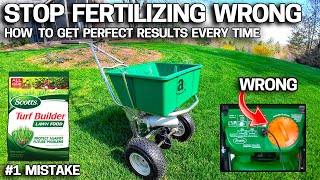
Cool season grasses (fescue, bluegrass, rye) grow actively in spring and fall — fertilize in these periods. Summer fertilizing cool-season lawns during heat stress is a burn and disease risk. Warm season grasses (Bermuda, Zoysia, St. Augustine) grow in summer — fertilize in late spring through summer. Do not fertilize dormant grass in winter. The two most important application windows for most lawns: early spring (before the main growth flush) and fall (to build root reserves for winter).
Watch Before You Buy
Frequently Asked Questions
When should I fertilize my lawn?
What do the three numbers on a fertilizer bag mean?
What is the difference between slow-release and quick-release fertilizer?
How do I prevent lawn fertilizer from burning my grass?
Can I fertilize my lawn if I have pets or children?
How We Analyze Products
We analyze Amazon review data — often thousands of reviews per product — to surface patterns that individual buyers miss. Our process aggregates star ratings, review counts, and buyer sentiment at scale, identifying which strengths and weaknesses appear consistently across the largest review samples available.
Each product earned its placement through data: total review volume, average rating, and the specific praise and complaints that repeat most often across buyers. No manufacturer paid for placement on this page. Products appear here because buyers endorsed them at scale, not because a company asked us to feature them.
We use AI to summarize review sentiment — not to fabricate opinions, but to condense what thousands of buyers actually wrote into a readable format. The pros and cons you see reflect the most common themes found in verified purchaser reviews, paraphrased for clarity. We do not claim to have accessed Reddit, YouTube, or specific publications in generating these summaries.
Prices shown reflect Amazon pricing at the time this page was last generated. Click “See Today’s Price” to get the current live price on Amazon. Read our full methodology →