Best Outdoor Rain Gauges Under $15 (2026)

The JMBay Outdoor Rain Gauge with Yard Stake is our top pick — the included yard stake means installation takes 30 seconds, and the easy-read markings give accurate readings without squinting. For gardeners, weather hobbyists, or anyone curious how much rain their property actually receives, it is the obvious choice.
See Today’s Price →At a Glance
Outdoor Rain Gauges Under $15 (2026) Buying Guide
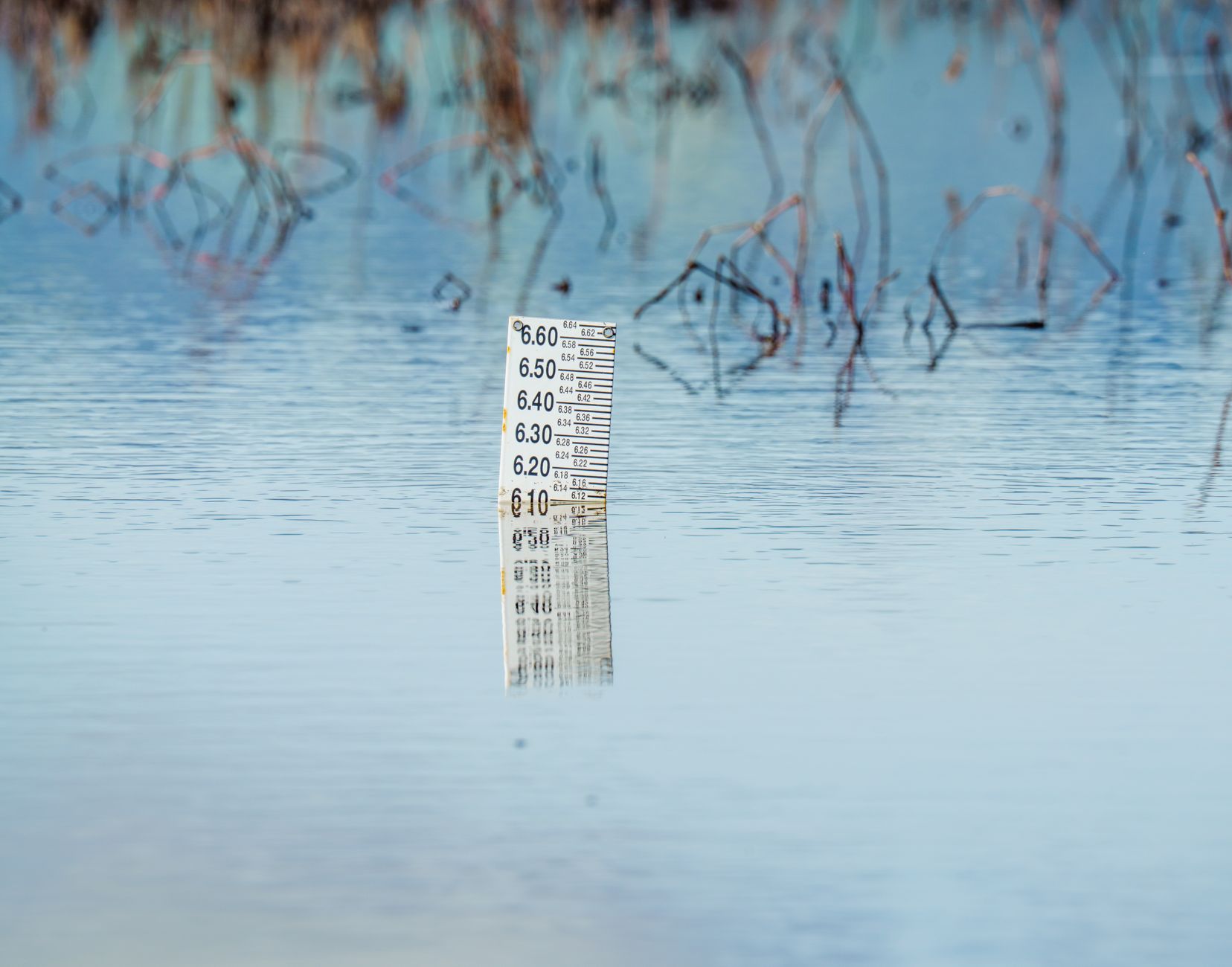 Photo by Robert So / Pexels
A rain gauge is a simple, accurate tool for measuring rainfall in your specific location — more useful than weather app rainfall estimates, which are averaged over wide areas and frequently inaccurate for a specific yard or garden. Under $15, you can get a reliable manual rain gauge that measures accurately to 0.1 inches. The key specs are catch funnel diameter, tube capacity, and accuracy at low rainfall amounts.
Why Funnel Diameter Determines Accuracy
The physics of rain measurement matters: a larger catch funnel collects more water and funnels it into a narrower inner tube, amplifying the measurement scale. A 4-inch diameter funnel feeding into a 1-inch tube amplifies the measurement by 16x (based on area ratio), making it easy to read 0.01-inch increments accurately. A standard 1-inch tube gauge without amplification requires very heavy rain before the level is readable. The Stratus Precision Rain Gauge uses exactly this principle — a wide outer funnel and narrow inner measuring tube — and is why it's consistently more accurate than flat-cylinder gauges at similar price points. Funnel diameter is the most important spec to check when comparing gauges.
Tube Capacity and Regional Rainfall
Standard rain gauges have a 5-inch capacity in the measuring tube. For most US regions, this handles all single-storm events. In high-rainfall areas (Pacific Northwest, Gulf Coast, Florida during hurricane season), storms can exceed 5 inches in 24 hours — a gauge with a 5-inch tube will overflow and lose data. Consider a higher-capacity gauge (10+ inches) if you're in a high-rainfall region or want to capture large storm events. Most gauges need to be emptied between rainfall events for accurate cumulative tracking.

Mounting and Placement
Placement determines accuracy more than gauge quality. Rules for accurate rain measurement: (1) place the gauge 2× the height of any nearby object away from it (a 6-foot fence requires a 12-foot clearance distance), (2) keep away from overhanging trees, eaves, and roof edges that drip rain into the gauge, (3) mount on a stake or post at 1–3 feet above ground level, (4) position in an open area away from structures that create wind shadows or splash zones. A high-quality gauge placed incorrectly reads inaccurately; a basic gauge placed correctly reads well.
Digital vs. Analog Rain Gauges
Analog gauges (clear tube with printed scale) require manual reading and emptying. Digital gauges (tipping bucket sensors connected to indoor display units) log data automatically and can track rainfall over time without manual checking. Digital units run $25–$80 for the complete system. Under $15, all options are analog — but for basic gardening, weather tracking, and irrigation scheduling, an analog gauge provides all the information most homeowners need. See also: best solar lights and best pressure washers for yard and garden tools.
Watch Before You Buy

Showing 3 of 3 products
“JMBay rain gauge — adjustable height, large numbers, accurate.”
See Today’s Price →What we like
- Yard stake
- Easy-read tube
- Budget value
- 5-inch capacity
Watch out for
- Stake mount can tilt in soft soil after heavy rain
- Scale markings fade after one season outdoors
- Capacity is limited to 7 inches before overflow
Read Full Analysis
The JMBay rain gauge earns the top spot with the combination of features that matter most: adjustable height stake (positions the gauge optimally as surrounding plants grow), large easy-to-read numbers visible from across the yard, and a freeze-resistant design. The clear acrylic tube reads in both inches and millimeters. The wide 2-inch opening collects rain reliably without overflow in heavy storms. The stable stake stays put in moderately firm soil without spinning. At under $10, it's the most practical and readable gauge in this price range.

“Rain Gauge freeze-proof with stake — winter-safe measurement.”
See Today’s Price →What we like
- Freeze-proof design
- Adjustable stake
- Budget value
Watch out for
- Freeze-proof design still requires emptying the tube in freeze-prone climates
- Stake can loosen in wet soil
- Scale requires close approach for accurate reading
Read Full Analysis
For gardeners in regions with freezing temperatures, this freeze-resistant model prevents the annual replacement cycle that standard glass gauges require. The polycarbonate construction expands with ice rather than cracking. Still accurate to 0.1-inch increments. Adjustable height stake. Can be left outdoors year-round — no seasonal removal required. The freeze-resistant construction also handles accidental tip-overs better than glass. A practical long-term investment that costs less than two rounds of replacing cracked glass gauges.
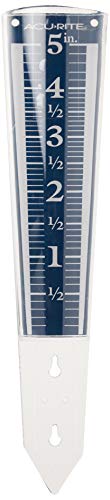
“AcuRite 5" easy-read magnifying gauge — proven AcuRite quality.”
See Today’s Price →What we like
- 5-inch capacity
- Magnifying lens
- Easy read
- AcuRite quality
Watch out for
- Must be mounted in an open area away from roof overhangs
- magnifying lens can fog in high humidity
- requires manual emptying after each rain event
Read Full Analysis
A second AcuRite option at a slightly lower price — the same brand quality and magnifying display at a budget entry point. The 5-inch acrylic tube provides the same easy-reading experience. Straightforward stake mount. AcuRite has been making weather instruments for decades and their quality control is consistent at this price point. A solid choice for buying two gauges to place in different garden areas to compare rainfall distribution across your property.
Frequently Asked Questions
Where should I place my rain gauge?
How often should I empty my rain gauge?
What is a freeze-resistant rain gauge?
How accurate are cheap rain gauges?
How much rain does a vegetable garden need per week?
How We Chose These Products
We compare each product’s Amazon listing, the manufacturer’s published specifications and Amazon customer ratings, shown with their review counts as Amazon’s data, and rank the products on how well they answer this page’s question. We do not test products in hand and we do not run our own analysis of review text. A publication or expert is named only where we cite its published findings about that product. No manufacturer paid for placement on this page.
A price appears only when Amazon’s API supplied it at a recent daily refresh, with the date and time beside it, and is withdrawn at 4 AM Central on the day after it turns 24 hours old; otherwise use “Check price on Amazon” for the live price. Read our full methodology →