Best Pool Shock Treatments (2026)

Clorox Pool and Spa Shock XtraBlue is the best pool shock for most backyard pools — effective at standard shock doses, includes algae-fighting additives, and widely available.
See Today’s Price →At a Glance
| # | Product | Award | Price | Our Score | |
|---|---|---|---|---|---|
| 1 | 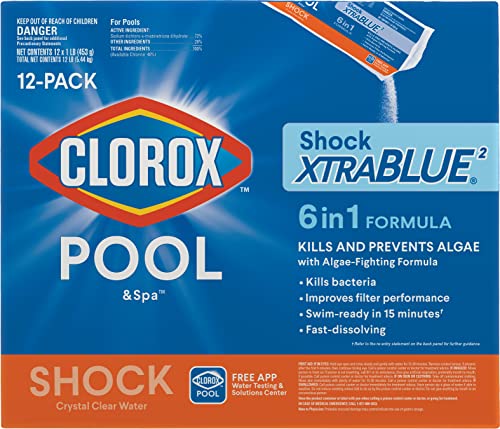 Clorox Pool and Spa Shock XtraBlue, 12-… Clorox Pool and Spa Shock XtraBlue, 12-… |
Best Overall | $77 | 9.0 | Buy → |
| 2 |  In The Swim Pool Shock Granular Chlorin… In The Swim Pool Shock Granular Chlorin… |
Best High-Concentration | $49 | 8.7 | Buy → |
| 3 | 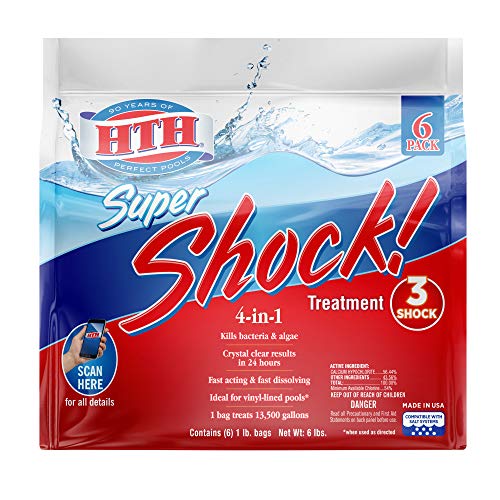 HTH Super Shock Treatment for Swimming … HTH Super Shock Treatment for Swimming … |
Best for Small Pools | $43 $33 Coupon -24% | 8.2 | Buy → |
| 4 | 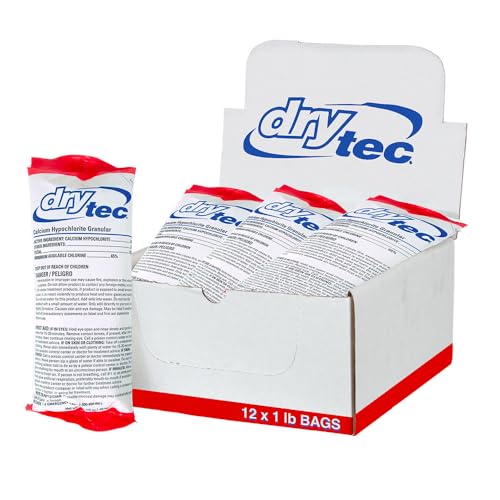 DryTec 1-1901-12 Calcium Hypochlorite P… DryTec 1-1901-12 Calcium Hypochlorite P… |
Best Professional Grade | $79 | 8.4 | Buy → |
Showing 4 of 4 products
Clorox Pool and Spa Shock XtraBlue, 12-Pack, 1 lb Each
“Clorox XtraBlue is the standard pool shock for a reason — it treats both the chlorine demand and the algae problem simultaneously, and the 12-pack provides value for a full season of weekly shocking.”
See Today’s Price →What we like
- Trusted brand with consistent chlorine concentration
- XtraBlue formula includes clarifiers and algaecide
- 12-pack provides a full season of shock treatments
- Fast-dissolving granules work without pre-dissolving
- Compatible with all pool surfaces and sanitizers
Watch out for
- Raises calcium hardness slightly with each treatment
- Contains cyanuric acid (stabilizer) — can accumulate in outdoor pools
- Not for indoor pools or hot tubs
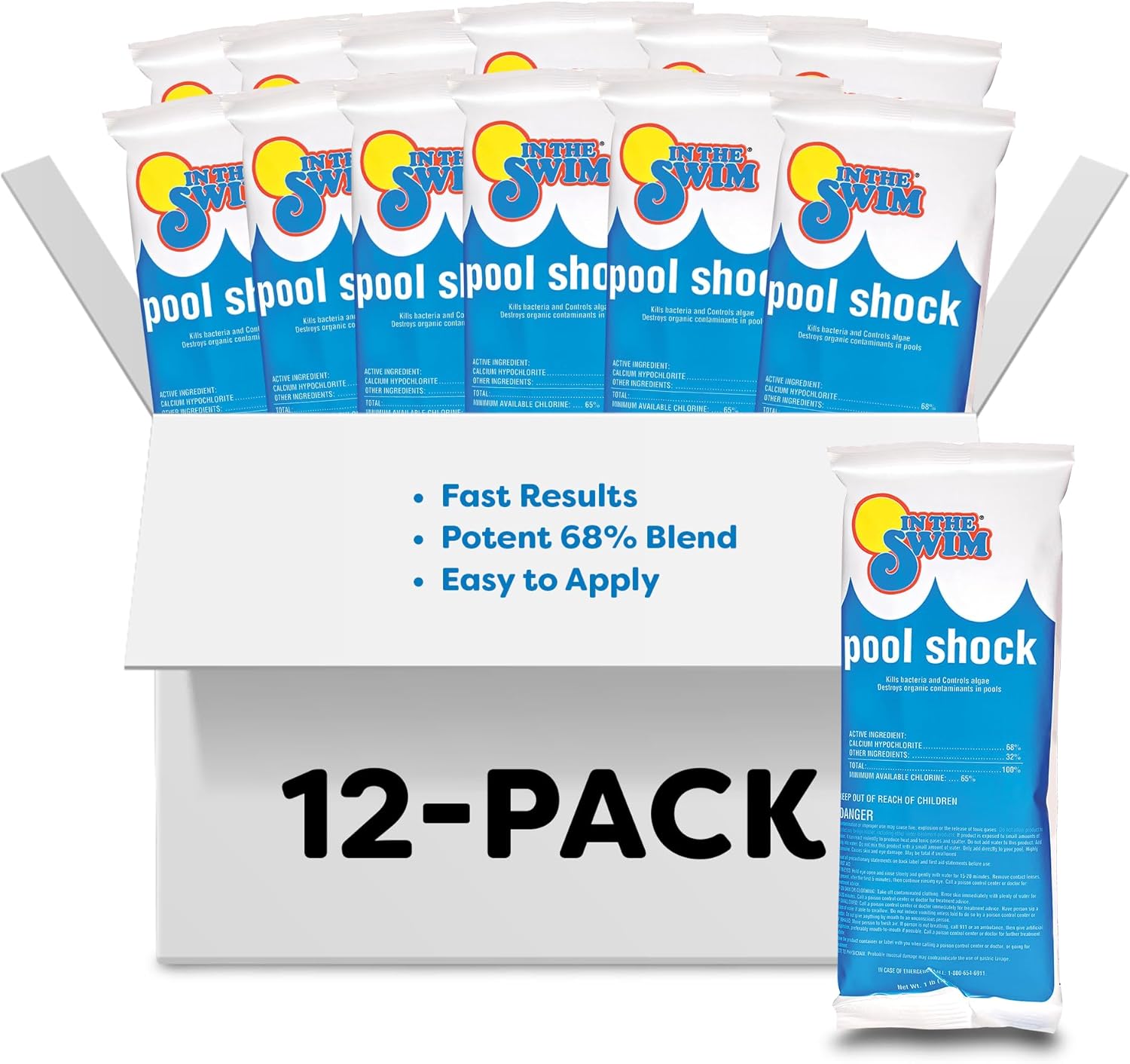
In The Swim Pool Shock Granular Chlorine, 68% Cal-Hypo, 12-Pack, 1 lb Each
“In The Swim Cal-Hypo is the right choice when you need maximum shock power — the 68% concentration delivers a harder chlorine hit than stabilized products, and it will not add to CYA buildup in outdoo”
See Today’s Price →What we like
- 68% calcium hypochlorite — higher concentration than most consumer shock products
- No cyanuric acid (stabilizer) — will not raise CYA levels
- 12-pack provides good per-pound value
- Works at shock doses for heavy contamination and algae kill
- Ideal for pools where stabilizer levels are already high
Watch out for
- Must pre-dissolve in bucket before adding to pool to prevent bleaching
- Raises calcium hardness — can contribute to scaling in hard water areas
- Shorter shelf life than stabilized products once opened

HTH Super Shock Treatment for Swimming Pools, 6-Pack, 1 lb Each
“HTH Super Shock is the right size for smaller above-ground pools and owners who shock less frequently. The 6-pack prevents stocking more product than you will use in a season.”
See Today’s Price →What we like
- Fast-acting formula clears cloudy water in 24 hours
- Available in smaller 6-pack quantities for smaller pools
- Works in all pool types
- No pre-dissolving required
- HTH brand is widely available for refills
Watch out for
- Higher cost per pound than 12-pack options
- Contains stabilizer — CYA accumulates in outdoor pools over time
- 6-pack provides fewer treatments per purchase

DryTec 1-1901-12 Calcium Hypochlorite Pool Shock, 1 lb Each, 12-Pack
“DryTec is the professional-grade cal-hypo choice for pools where CYA management is a priority. No stabilizer means it will not compound existing CYA buildup — the right pick for pools that have been o”
See Today’s Price →What we like
- Professional-grade calcium hypochlorite formula
- No stabilizer (CYA) — safe for pools with elevated CYA levels
- High chlorine concentration per pound
- 12-pack value for regular shocking schedule
- Trusted by pool service professionals
Watch out for
- Must pre-dissolve before adding to pool to prevent staining
- Raises calcium hardness — monitor in hard water areas
- More expensive per pound than HTH or Clorox
Pool Shock Treatments (2026) Buying Guide
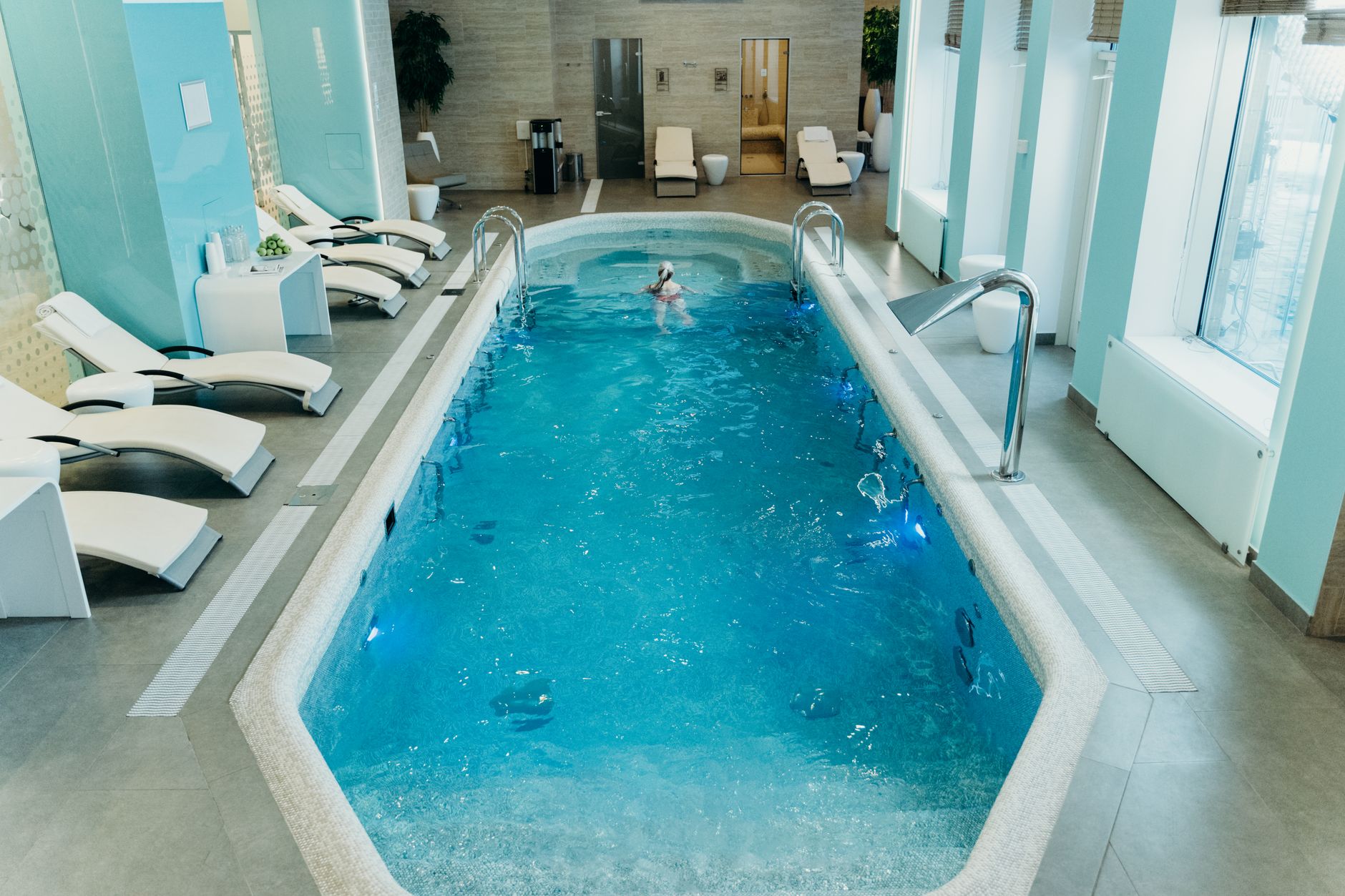 Photo by cottonbro studio / Pexels
Pool shock is one of the most misunderstood maintenance products in the category. Many pool owners shock too infrequently, at the wrong dose, or with the wrong product for their chemistry situation. Understanding the basics prevents wasted product and recurring algae problems.
Calcium Hypochlorite vs. Dichloro vs. Non-Chlorine Shock
Calcium hypochlorite (cal-hypo) is the strongest and most cost-effective shock. It contains no stabilizer (cyanuric acid) — important for pools with elevated CYA levels. Must be pre-dissolved before adding to avoid bleach spots. Sodium dichloro (dichlor) shock contains stabilizer — it raises CYA with every treatment. Convenient for seasonal pools starting from a fresh water fill, but problematic if CYA is already high. Non-chlorine shock (potassium monopersulfate) oxidizes contaminants without adding chlorine — useful for pools needing oxidation without disrupting chlorine levels, but does not kill algae or replace chlorine shock for contamination events.
When to Shock Your Pool
Shock after every heavy bather load (pool party, lots of kids). Shock after heavy rain or runoff that dilutes chemistry and introduces contaminants. Shock at the first sign of algae (green tint, slippery walls). Shock when free chlorine tests at zero and the pool has a combined chlorine reading above 0.2 ppm. Most pool service professionals recommend weekly shocking during swim season, regardless of visible issues — proactive is cheaper than reactive treatment.
How Much Shock to Use
Standard shocking dose is typically 1 lb of shock per 10,000 gallons of pool water to raise free chlorine to 5-10 ppm. Algae treatment requires breakpoint chlorination — typically 3-5x the normal shock dose. Read the product label for specific dosing based on pool volume. Under-shocking is the most common mistake — using half the required dose treats symptoms without resolving the underlying bacteria or algae population.
When to Swim After Shocking
After adding cal-hypo or dichlor shock, wait until free chlorine drops below 3 ppm before swimming — typically 8-24 hours depending on pool size, sunlight, and water temperature. Test with a test strip or kit before allowing swimmers. Running the pump continuously after shocking circulates and disperses the treatment more quickly. Shock at night so UV degradation is minimized during the treatment period.
Watch Before You Buy
Frequently Asked Questions
What is pool shock and when do I need to use it?
What is the difference between calcium hypochlorite and dichlor pool shock?
How much shock do I need for a standard pool?
Can I swim after shocking my pool?
How do I prevent green pool water and algae?
How We Analyze Products
We analyze Amazon review data — often thousands of reviews per product — to surface patterns that individual buyers miss. Our process aggregates star ratings, review counts, and buyer sentiment at scale, identifying which strengths and weaknesses appear consistently across the largest review samples available.
Each product earned its placement through data: total review volume, average rating, and the specific praise and complaints that repeat most often across buyers. No manufacturer paid for placement on this page. Products appear here because buyers endorsed them at scale, not because a company asked us to feature them.
We use AI to summarize review sentiment — not to fabricate opinions, but to condense what thousands of buyers actually wrote into a readable format. The pros and cons you see reflect the most common themes found in verified purchaser reviews, paraphrased for clarity. We do not claim to have accessed Reddit, YouTube, or specific publications in generating these summaries.
Prices shown reflect Amazon pricing at the time this page was last generated. Click “See Today’s Price” to get the current live price on Amazon. Read our full methodology →