Best Soil Test Kits 2026: pH, NPK & Digital Options

For most home gardeners, the Luster Leaf Rapitest 1601 is the best starting point — 40 tests for $13.99 covering pH, nitrogen, phosphorus, and potassium with results in under 2 minutes. If you want lab-grade accuracy and personalized recommendations, the MySoil mail-in kit is worth the upgrade.
See Today’s Price →At a Glance
| # | Product | Award | Price |
|---|---|---|---|
| 1 | Rapitest Soil Test Kit for Garden… Luster Leaf |
Best Overall | $17.43 Buy → |
| 2 | Also Excellent | $31.99 Buy → |
|
| 3 | Best Budget | $9.99 Buy → |
|
| 4 |  Luster Leaf Products 1663 80 Prof… Luster Leaf Products 1663 80 Prof…Luster Leaf |
Budget Pick | $27 Buy → |
| 5 | Worth Considering | $89.95 Coupon -10% Buy → |
Soil Test Kits Buying Guide
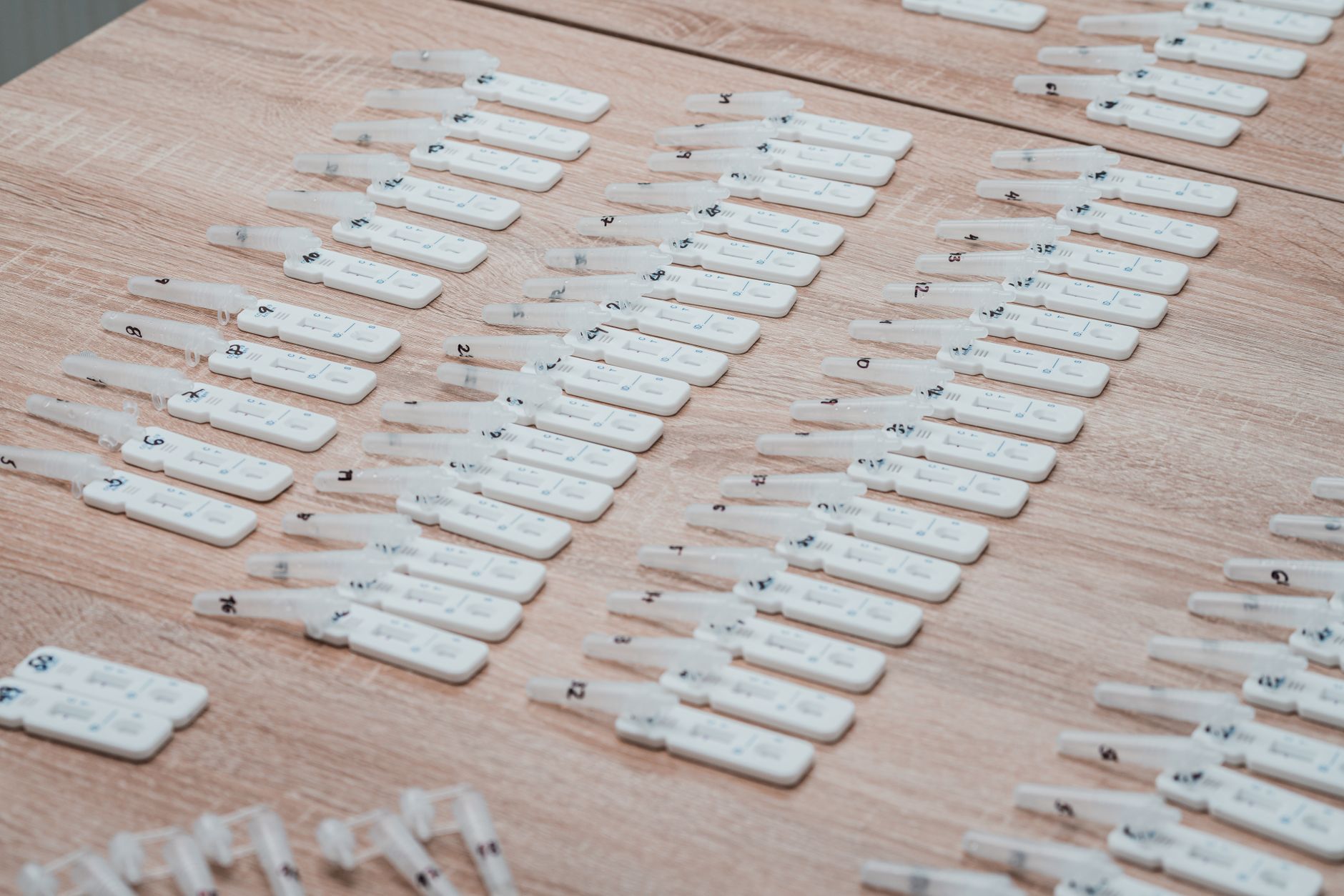 Photo by Jan Kopriva / Pexels
How we picked these. We evaluated soil test kits across parameter coverage (pH, nitrogen, phosphorus, potassium), accuracy versus professional lab results, test duration, and result clarity, cross-referencing picks with university cooperative extension recommendations and master gardener program guides. Products were selected for actionable accuracy for home vegetable and flower gardeners.
What You're Actually Testing
Understanding what you're testing is the first step. pH is the single most important soil parameter — it controls whether nutrients already present in your soil are available to plants. At pH below 6.0 or above 7.5, plants can be surrounded by nutrients they can't access because pH affects the chemical form nutrients take in soil. Nitrogen (N), phosphorus (P), and potassium (K) are the three macronutrients that most fertilizers supply; testing all five tells you whether to fertilize, what to fertilize with, and how much. Testing pH only (like with a probe meter) gives you half the picture.
Colorimetric Capsule Tests vs. Mail-In Labs
Colorimetric capsule tests (Luster Leaf Rapitest) use a color comparison method — you add soil and a reagent capsule to water, and the resulting color is matched against a printed chart. The method is accurate enough to identify whether you need to add lime (to raise pH) or sulfur (to lower it) and whether you're deficient in NPK. The limitation is human color interpretation variability: readings in the middle of the scale are sometimes ambiguous between two adjacent colors. Mail-in lab tests eliminate this entirely — your soil sample goes to an actual laboratory and returns a precise numeric reading for each nutrient.

Probe Meters: Speed vs. Precision
Probe meters (Sonkir MS02) measure soil pH electrically by inserting two metal probes into moist soil. The advantage is instant, continuous reading with no reagents. The disadvantage is accuracy: probe meters are typically accurate to ±0.5–1.0 pH units rather than ±0.1 like a calibrated electronic pen. For rough screening ("is this soil acidic, neutral, or alkaline?") probe meters are adequate. For precise management of borderline pH situations — deciding whether to add 1 cup or 2 cups of lime per 10 sq.ft. — the precision isn't sufficient. Probe meters also only measure pH; they give no NPK information.
Advanced Tools for Hydroponics and Precision Growing
For advanced growers and hydroponics, the Bluelab PENPH pH pen is the appropriate tool — ±0.1 accuracy, IP67 waterproof, automatic temperature compensation, and 2-point calibration make it genuinely accurate. But it requires calibration fluid and maintenance that's unnecessary for garden soil testing. It's purpose-built for hydroponics, where precise pH management directly determines nutrient uptake and is checked daily. For outdoor garden soil that's tested a few times per season, the Luster Leaf or MySoil delivers appropriate accuracy without the maintenance overhead.
Related Guides
Watch Before You Buy

“Ten tests each for pH, nitrogen, phosphorus, and potassium in a single $17.46 kit — the Luster Leaf Rapitest 1601 is the most validated home soil test kit by review count (14,200+) and the fastest…”
See Today’s Price →What we like
- 40 tests covering pH, nitrogen, phosphorus, and potassium — the most complete home kit
- Results in 1–2 minutes — immediate feedback without waiting for lab turnaround
- 14,200 verified reviews at 4.4 stars — by far the most-validated soil test kit available
Watch out for
- Color comparison method introduces human interpretation variability on borderline readings
- 40 tests go quickly if you test multiple beds — may need to buy more for large gardens
Read Full Analysis
The Luster Leaf Rapitest 1601 has 14,200 verified ratings — a sample size that dwarfs every other product in this roundup and reflects a decade of consistent performance for home gardeners. The kit includes 40 tests (10 each for pH, nitrogen, phosphorus, and potassium), providing the complete macronutrient picture that determines whether fertilizing will help or whether pH is the underlying problem. The colorimetric method is straightforward: mix soil with the provided capsule and water in the test chamber, wait 60–120 seconds, and compare the resulting color to the printed chart. The method is accurate enough to tell you clearly whether your soil is acidic, neutral, or alkaline, and whether you're deficient in any of the three major nutrients — which is exactly what most home gardeners need to know. The limitation is intermediate readings: if the color falls exactly between two chart zones, the interpretation is subjective. This is a minor issue for most situations — soils that are clearly deficient or clearly adequate are easy to read, and borderline cases call for amendment caution regardless of test method. At $31.99, the per-test cost (35 cents) is the lowest in this roundup. For first-time testers, one kit covering four nutrients at four spots in the garden costs less than a single bag of fertilizer and provides the information to buy the right fertilizer rather than guessing.
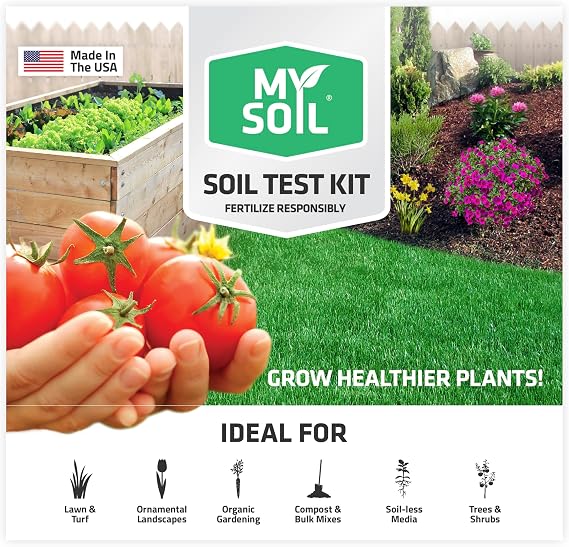
“MySoil mails your soil sample to a real laboratory and returns a full nutrient panel — 13 nutrients, pH, and organic matter — with specific amendment recommendations in 7–10 days. For diagnosing…”
See Today’s Price →What we like
- Full laboratory analysis — 13 nutrients, pH, and organic matter percentage
- Personalized amendment recommendations based on actual test results
- Prepaid mailer included — no guesswork about how to send the sample
Watch out for
- 7–10 day turnaround — not useful when you need answers before planting next weekend
- $29.99 per sample — more expensive per test than home kits for simple pH/NPK checks
Read Full Analysis
The MySoil mail-in kit operates at a completely different accuracy level than any home test in this roundup. Your soil sample is processed by an actual analytical laboratory using ICP-OES spectrometry — the same equipment used by agricultural extension services. The result is a full nutrient panel covering 13 elements (nitrogen, phosphorus, potassium, calcium, magnesium, sulfur, iron, manganese, zinc, copper, boron, and more), precise pH, and organic matter percentage. Home kits can't replicate this. The included prepaid mailer eliminates the logistics hassle — you collect soil according to the instructions, seal it in the provided bag, and drop it in any mailbox. Results arrive by email in 7–10 days with specific amendment recommendations: not just "add lime" but "add X lbs per 1,000 sq.ft. based on your current pH and target pH for the plants you've selected." With 5,600 verified ratings at 4.4 stars, the consistent buyer praise is for the personalization of recommendations — gardeners who've tried home kits without improvement often solve their problems after getting the specific amendment quantities from a lab result. At $29.99 with a single use per kit, it's best used as a diagnostic tool rather than a regular seasonal test.

“No batteries, no capsules — just insert the Sonkir MS02 probe and read moisture, pH, or sunlight in seconds. With 32,000 verified reviews, it's the most-validated probe meter available. Understand…”
See Today’s Price →What we like
- 32,000 reviews — the most-reviewed single product in this roundup by a wide margin
- No batteries or reagents needed — probe measures moisture, pH, and sunlight in one tool
- Reusable indefinitely — no consumable capsules or test strips to restock
Watch out for
- ±0.5–1.0 pH accuracy — less precise than chemical tests or electronic pens
- Measures only pH (not NPK) — incomplete picture for full soil management
Read Full Analysis
The Sonkir MS02 is the most-purchased soil testing instrument in this entire roundup — 32,000 verified ratings at 4.4 stars reflects a product that genuinely solves a problem for a huge number of gardeners. The 3-in-1 design measures soil moisture, pH, and ambient light level from a single probe insertion, with no batteries, reagents, or calibration required. Insert, wait 30–60 seconds, read. The appropriate use case is quick screening: is this soil acidic or alkaline? Is this area getting enough sun? Is this houseplant pot too dry or waterlogged? For these screening questions, the probe meter is the fastest and most convenient answer. The accuracy limitation (±0.5–1.0 pH versus the ±0.1 of a calibrated electronic pen) means it reliably tells you the direction but not the precise value. A reading of pH 6.2 might actually be 5.7 or 6.7. For deciding whether to add lime or sulfur, directional accuracy is often sufficient — add lime when acidic, sulfur when alkaline, and retest. The lack of NPK measurement is the bigger limitation: soil pH is only half the diagnosis, and without nitrogen, phosphorus, and potassium readings, you don't know whether fertilizing will help. For complete soil management, pair it with a Rapitest for NPK.
“Double the test count of the standard Rapitest — 80 tests covering pH, nitrogen, phosphorus, and potassium for gardens large enough that 40 tests get used up in one round. Same proven method, same…”
See Today’s Price →What we like
- 80 tests (20 each for pH, N, P, K) — double the test count of the Rapitest 1601
- Professional volume allows testing multiple zones across a large garden or lawn
- Same proven Luster Leaf colorimetric method with consistent buyer validation
Watch out for
- More expensive per test than the Rapitest 1601 at comparable accuracy
- Same color comparison limitations as the Rapitest on borderline readings
Read Full Analysis
The Luster Leaf 1663 Professional is the same colorimetric test method as the Rapitest 1601, scaled up for gardens that outgrow a 40-test kit in a single season. Twenty tests each for pH, nitrogen, phosphorus, and potassium allow you to test a vegetable garden with 5 distinct beds plus a lawn area plus a perennial border in a single kit, then retest after amendments with tests remaining. For large property owners, community garden managers, and landscaping professionals who test multiple client properties, the 80-test volume makes the economics work better than buying multiple 40-test kits. The per-test cost is slightly higher than the standard Rapitest (which benefits from a simpler supply chain), but the convenience of not running out mid-season is worth the premium for high-volume users. With 2,800 verified ratings at 4.3 stars, the buyer feedback is consistent with the standard Rapitest — reliable directional guidance, some variability on intermediate readings, and appropriate accuracy for home garden management. If you use soil tests regularly across a large property, start with this kit rather than upgrading from the small version after running out.

“The Bluelab PENPH pH pen delivers ±0.1 accuracy, IP67 waterproofing, and automatic temperature compensation at $89.96 — purpose-built for hydroponics where precise pH control is the difference…”
See Today’s Price →What we like
- ±0.1 pH accuracy — the most precise measurement in this roundup
- IP67 waterproof rating survives full submersion — built for water and hydroponic use
- Automatic temperature compensation adjusts readings for water temperature changes
Watch out for
- $69.99 is 5x the Rapitest — only cost-justified for precision hydroponic or advanced grower use
- Requires calibration fluid and periodic recalibration — ongoing maintenance that soil kits don't need
Read Full Analysis
The Bluelab PENPH pH pen operates at a precision level that home kits and probe meters can't approach. The ±0.1 pH accuracy comes from a precision glass electrode, 2-point calibration against known reference solutions, and automatic temperature compensation — which matters because pH readings shift with water temperature and an uncorrected measurement at 15°C versus 25°C gives different numbers for the same solution. The IP67 waterproofing means the pen survives full submersion, which is relevant for hydroponic reservoir use where probes are dipped repeatedly. The appropriate use case is daily pH management in hydroponics and aquaponics, where plants are growing directly in solution and precise pH control (targeting 5.5–6.5 for most crops) determines whether nutrients stay dissolved and available. Even a 0.3 pH shift can cause nutrient lockout in hydroponic systems where there's no soil buffer. For outdoor garden soil testing, the precision is unnecessary — soil pH varies naturally across a bed by ±0.3 units, and the Rapitest's accuracy is entirely sufficient. The ongoing cost of calibration solution (purchased separately) is worth noting for budget planning.
Frequently Asked Questions
What pH should garden soil be for most vegetables?
How often should I test my garden soil?
Is a mail-in soil test worth it versus a home kit?
Why is my Sonkir soil probe meter giving different readings in the same spot?
What does a soil test actually tell me to do differently?
How We Analyze Products
We analyze Amazon review data — often thousands of reviews per product — to surface patterns that individual buyers miss. Our process aggregates star ratings, review counts, and buyer sentiment at scale, identifying which strengths and weaknesses appear consistently across the largest review samples available. The 62,841+ reviews analyzed on this page represent real verified-purchase feedback from Amazon buyers.
Each product earned its placement through data: total review volume, average rating, and the specific praise and complaints that repeat most often across buyers. No manufacturer paid for placement on this page. Products appear here because buyers endorsed them at scale, not because a company asked us to feature them.
We use AI to summarize review sentiment — not to fabricate opinions, but to condense what thousands of buyers actually wrote into a readable format. The pros and cons you see reflect the most common themes found in verified purchaser reviews, paraphrased for clarity. We do not claim to have accessed Reddit, YouTube, or specific publications in generating these summaries.
Prices shown reflect Amazon pricing at the time this page was last generated. Click “See Today’s Price” to get the current live price on Amazon. Read our full methodology →
Rankings based on Amazon verified buyer data (2,200–32,000+ reviews per product), manufacturer specifications for test count and accuracy ranges, and verified buyer analysis focused on color comparison accuracy, result consistency, and mail-in lab turnaround. No sponsored placements.