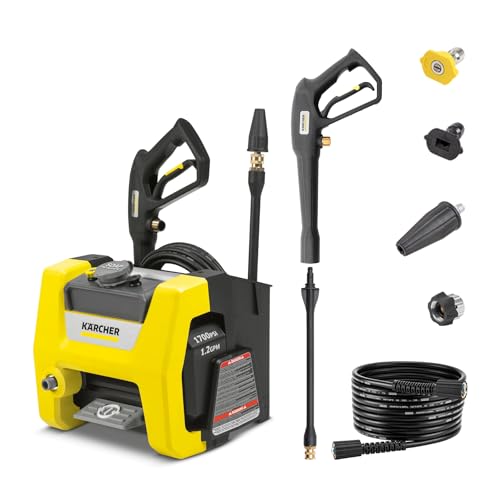
How to Pressure Wash Everything: Surfaces, Safety, and Best Settings
A 1500-2000 PSI electric pressure washer handles the vast majority of home use cases safely -- driveways, decks, siding, vehicles, patio furniture, and outdoor grills. Go above 2500 PSI for stubborn concrete staining or heavy mold removal. The nozzle matters as much as the PSI: the green 25-degree nozzle is your workhorse, the white 40-degree is safe for cars and delicate surfaces, and the red 0-degree is almost never the right choice.
How to Pressure Wash Everything Buying Guide
 Photo by Erik Mclean / Pexels
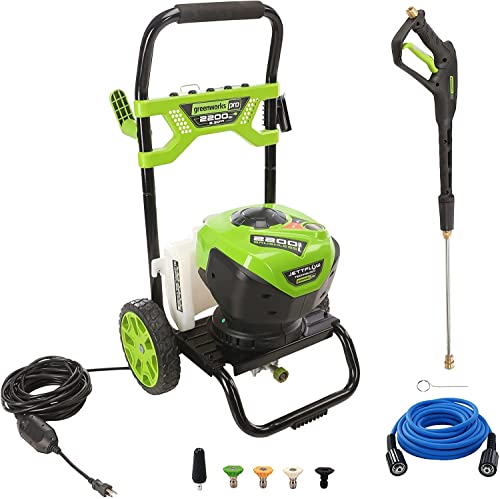
Quick Verdict: Our top pick is the Greenworks GPW2200 2200 PSI 2.3 GPM Electric Pressure Washer (Best Overall) — 2200 PSI tackles every surface from concrete to siding -- the sweet spot of power and safety for home use.. Priced at $399.99.
Budget Pick: The Sun Joe Electric Pressure Washer 1500 PSI 1.1 GPM with Foam Cannon at $79.97 — 1500 PSI at under 14 lbs -- the grab-and-go option for patio furniture, garden tools, and light deck work..
This guide is for you if:

-
You're considering a pressure washer and want to know if it's worth $150-400 for your use case
-
You need to understand PSI and GPM before buying so you get the right power level
-
You want to know what you can (and shouldn't) pressure wash at home

Skip this guide if:
-
You already have a pressure washer and just need technique tips
-
You need commercial-grade cleaning — this covers residential pressure washers only

Quick verdict: A 1500-2000 PSI electric pressure washer handles the vast majority of home use cases safely -- driveways, decks, siding, vehicles, patio furniture, and outdoor grills. Go above 2500 PSI for stubborn concrete staining or heavy mold removal.
You'd be amazed what a pressure washer can do. Most people think: driveway. Maybe a deck. What they discover after actually owning one is that pressure washing is one of the most satisfying home maintenance activities in existence -- and it works on about 30 more things than they expected.
Watch: Project Farm -- "Best Electric Pressure Washer? Ryobi vs Karcher, Sun Joe, WEN, WORX & CAT!" (https://www.youtube.com/watch?v=K5cMJvmlvv4) -- This is the shootout you want to watch before buying. Project Farm runs every machine through identical tests including pressure consistency, flow rate, hose quality, and actual cleaning performance on a standardized test board. The results might surprise you.
THE PSI GUIDE: What Each Power Level Can Do
Before you touch a nozzle, understand what your machine's PSI means for what it can safely clean. Wrong PSI on the wrong surface causes real damage -- etching concrete, stripping deck stain, or destroying car paint.
1000-1500 PSI (Light Duty): Patio furniture, outdoor cushion frames, garden tools, bicycles, motorcycles, boats, cars (with correct nozzle), and second-story vinyl siding. Sun Joe's 1500 PSI machines live here -- lightweight, safe, and genuinely useful for a wide range of tasks.
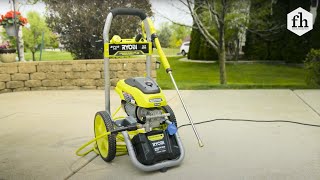
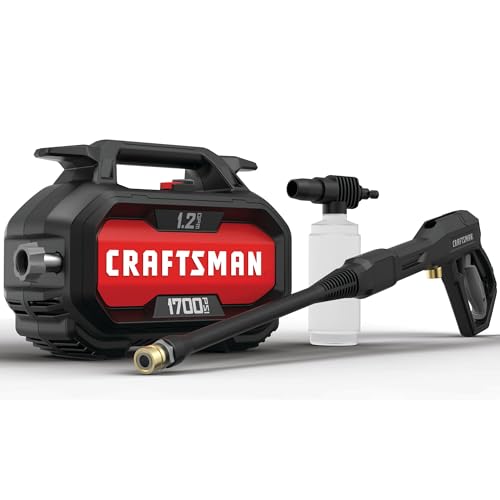
1700-2000 PSI (Medium Duty): The sweet spot for most homeowners. Wooden decks, concrete driveways with light staining, house siding (wood, vinyl, brick), fences, gutters (exterior), outdoor grills, and RVs. CRAFTSMAN and RYOBI machines in this range handle everything the average homeowner will throw at them.
2200-2800 PSI (Heavy Duty): Deep concrete cleaning, removing years of embedded oil stains from garage floors, heavy mildew removal from brick, and stripping old paint. The Greenworks 2200 PSI machine sits at the sensible top of what most homeowners should use.
3000+ PSI (Professional): Stripping paint, industrial cleaning, heavy-duty concrete. Most consumer machines top out below this, and at this PSI level, mistake costs rise dramatically -- a moment of inattention at 3500 PSI strips wood grain from decking.
THE NOZZLE COLOR GUIDE (The Visual That Changes Everything)
The five colored nozzle tips that came with your pressure washer determine the spray angle -- and spray angle controls how concentrated and therefore how aggressive the cleaning action is. Here is what you're actually looking at:
Red (0 degrees): A laser-thin stream with the full PSI concentrated in a pencil width. The most powerful nozzle -- and the one most likely to destroy surfaces. Use ONLY for stripping paint or blast-clearing a clogged pipe. Never point at anything you care about. Most pressure washing instructors say simply: put the red nozzle back in the bag and leave it there.
Yellow (15 degrees): A narrow, high-pressure stream that cuts through caked-on grime, heavy grease, concrete staining, and paint stripping. Good for: oil-stained garage floors, heavy concrete cleaning, preparing surfaces for painting. Dangerous for: wood, any vehicle, plants, windows.
Green (25 degrees): Your workhorse. This is the nozzle that does 80% of the work -- cleaning driveways, decks, siding, fences, and general outdoor surfaces. Powerful enough to remove embedded dirt and algae, angled enough that it won't etch concrete with normal passes. Start here for almost everything.
White (40 degrees): A gentler, wide-spray nozzle. Use this for: cars, delicate wood surfaces, patio cushions, potted plants (to rinse off spray), and anything you're worried about damaging. This nozzle delivers real cleaning power without the aggression.
Black (65 degrees): A soap/detergent application nozzle -- the pressure drops enough that it lets downstream injectors draw cleaning solution. Not for rinsing; for applying soap before switching to the green or white for the rinse pass.
DRIVEWAY & CONCRETE: The Most Dramatic Before/After
Concrete is where you'll see the most satisfying transformation. Years of tire marks, oil drips, algae growth, and general grime have probably made your driveway look decades older than it is. A single afternoon with a green (25-degree) nozzle and a concrete surface cleaner attachment (a spinning head that covers 12-15 inches per pass instead of 1-2 inches) will reveal the original color of the concrete underneath.
What you'll see: Start at one edge and work in overlapping bands. The cleaned strip looks like a different surface -- lighter, more defined texture, like it was just poured. The contrast between the cleaned strip and the uncleaned driveway next to it is genuinely shocking. Move in consistent overlapping passes 6-8 inches apart. Oil stains may need a degreaser applied with the black nozzle first, a 10-minute dwell time, then hot-water pressure washing.
Pro move: Use a rotating turbo nozzle for concrete instead of the standard green tip -- it covers more area per pass and the spinning action breaks up staining more effectively.
DECK RESTORATION: The Project That Pays Off
Pressure washing a weathered deck is the first step in any deck restoration -- and it's also where beginners most often damage their decks by using too much pressure. The rule for wood: 500-600 PSI maximum, held 12-18 inches from the surface. On a 1700 PSI machine, this means your white (40-degree) nozzle and keeping your distance. Never use a 0-degree nozzle on wood.
Watch: This Old House -- search "Ask This Old House power washing a deck" on YouTube for the technique walkthrough. (YouTube: @ThisOldHouse)
What you'll see: Properly done, pressure washing removes the grey oxidized layer from weathered wood, revealing the original warm wood tone underneath. For cedar or redwood decks, the transformation is especially dramatic. After washing, let the deck dry completely (48 hours minimum) before applying stain or sealant -- pressure washing opens the wood grain, which helps stain penetrate but also means the deck is temporarily more vulnerable.