How to Choose the Right Lawn Mower for Your Yard Size (2026)
Under 5,000 sq ft: corded electric or robot mower. 5,000–10,000 sq ft: cordless push or self-propelled electric. 10,000 sq ft–1/2 acre: self-propelled electric (80V battery). Over 1/2 acre: gas self-propelled or riding mower.
How to Choose the Right Lawn Mower for Your Yard Size (2026) Buying Guide
 Photo by Magic K / Pexels
This guide is for you if:
-
You're buying a lawn mower for the first time or replacing one after many years
-
You need to choose between gas, electric, battery, and robotic options for your lawn size
-
You want to know if a robot mower is actually worth the $1,000+ price tag
Skip this guide if:
-
You already know your mower type and just need the best model
-
You have a large acreage or commercial lawn — this covers residential properties up to ~1 acre
Quick verdict: Under 5,000 sq ft: corded electric or robot mower. 5,000–10,000 sq ft: cordless push or self-propelled electric.

| Best For | |||||
| Yard Size | |||||
| Runtime / Session | |||||
| Physical Effort | |||||
| Maintenance | |||||
| Price Range | |||||
| Our Pick |
## Yard Size as the Primary Variable
Most lawn mower regret comes from buying based on brand preference or marketing rather than actual yard requirements. Walk into any big-box store and the sales floor pushes you toward the highest-voltage, widest-deck mower with the most features — because that is what earns margin. The right framework is the opposite: measure your mowing area first, then match the mower to that number.
Before you look at a single product, establish your actual mowing square footage. This is not your lot size. Your lot includes your house footprint, any paved areas, garden beds, patios, and hardscape — none of which you mow. A 10,000-square-foot lot with a 2,000-square-foot house, 1,500-square-foot patio, and 1,000 square feet of garden beds leaves roughly 5,500 square feet of actual lawn. That changes your mower category entirely.
How to get the number: pace your lawn area, use a measuring wheel, or pull up your property on Google Maps satellite view and use the ruler tool. You do not need a precise number — you need to know which tier you are in: under 5,000, 5,000 to 10,000, 10,000 to 1/2 acre, or over 1/2 acre. These tiers map directly to mower type.
Yard shape and obstacles matter almost as much as square footage. A 7,000-square-foot yard that is one open rectangle is a very different mowing job than a 7,000-square-foot yard with three raised beds, a swing set, two ornamental trees, and a 36-inch gate to the backyard. The second yard needs a lighter, more maneuverable mower even though the total area is identical. Count your obstacles and measure your narrowest gate before committing to a deck width.
Slope changes the equation in the other direction. A flat 10,000-square-foot lawn is manageable with a push mower if you are willing to work. A 7,000-square-foot lawn with two steep inclines will exhaust you on a push mower every single time. Self-propelled drive exists specifically for this situation. If your lawn has any grade steeper than a gentle incline — where you feel yourself being pulled downhill — self-propelled is not a luxury, it is the correct tool.
## The Four Mower Types
Push Mowers (Manual or Corded Electric)
Push mowers are the right tool for flat lawns under 5,000 square feet with light use. They are the lightest option (electric push mowers run 40-65 lbs versus 80-100 lbs for self-propelled models), the simplest to maintain, and the least expensive to own. Corded electric push mowers add the complication of extension cord management — a 100-foot cord handles most small yards, but the cord path requires planning on every pass. The benefit is unlimited runtime: plug in and mow until the job is done.
For lawns under 3,000 square feet on flat ground, a corded electric push mower is the most economical, lowest-maintenance option available. There are no batteries to charge or replace, no fuel to manage, and the weight is low enough that most people can lift and maneuver it without effort.
Cordless Push Mowers
The 40V cordless platform covers small-to-medium lawns in one charge without the cord management problem. For 3,000 to 7,000 square feet on flat-to-moderate terrain, a 40V push mower is the clean, quiet, low-maintenance choice. Runtime on a single 40V battery runs roughly 25-40 minutes depending on grass density — enough for most small lawns in a single pass.
The constraint: if your lawn grows quickly or you miss a week, overgrown grass demands more from the motor and reduces runtime. On a well-maintained lawn, runtime is not a problem. On neglected or thick grass, the motor works harder and the battery drains faster.
Self-Propelled Cordless Mowers
Self-propelled mowers use a drive system — typically rear-wheel or front-wheel drive — to propel the mower forward. You control the throttle and direction; the mower does the pushing. This transforms mowing from a physical workout into a walking task, which matters enormously on large lawns and inclines.
The Ryobi 40V HP 20-inch Self-Propelled ($499.95) is the right tool for lawns under one-third of an acre where the 40V battery ecosystem fits. It covers approximately 35-45 minutes of mowing on a full charge, handles average grass density without bogging, and the drive speed is smoothly adjustable. The 40V battery platform is Ryobi's largest — the same batteries power over 100 tools in the lineup, from string trimmers to chainsaws to leaf blowers. If you already own Ryobi 40V tools, the Ryobi mower adds a second battery use case with no platform switching cost.
The Greenworks 80V 21-inch Self-Propelled ($699.99) is the step up for larger lawns and thicker grass. The 80V brushless motor runs at full blade speed through dense bermuda, thick fescue, and late-season growth that slows a 40V motor noticeably. Runtime extends to 45-60 minutes on a full 80V battery — enough to complete most half-acre lawns without stopping for a battery swap. The 21-inch deck covers slightly more ground per pass than the 20-inch Ryobi, reducing total passes on larger lawns. The 80V battery platform includes Greenworks' blower, trimmer, and chainsaw, making it a viable single-ecosystem choice for yard care.
For yards over one-third of an acre with average grass, the Greenworks 80V is the decision. For yards under one-third of an acre with typical conditions, the Ryobi 40V delivers 80% of the performance at 70% of the cost.
Riding Mowers and Zero-Turn Mowers
Riding mowers become the right answer at lawns over one acre, at grades too steep for a walk-behind (over 15 degrees for most riding models), or for anyone with mobility limitations that make push or self-propelled mowing impractical. Zero-turn mowers offer faster mowing speeds and tighter turning radius than traditional riding mowers, at higher cost. This category starts at roughly $1,500 for entry-level riding mowers and $2,500+ for zero-turn models — they are not impulse purchases and represent a different buying decision than walk-behind mowers.
Watch Before You Buy
At a Glance
Showing 3 of 3 products

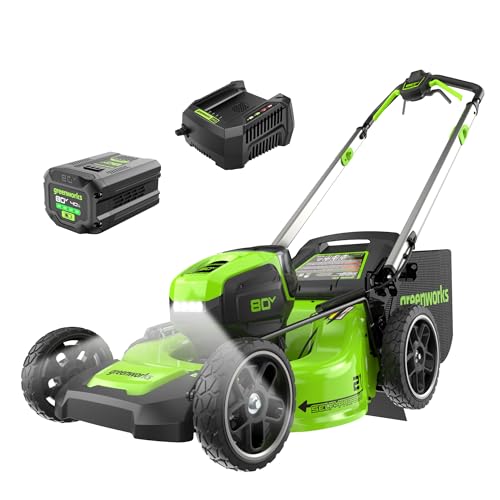
Greenworks 80V 21 in Self-Propelled Cordless Lawn Mower Brushless 4.0Ah
“An excellent value 80V battery mower for flat to moderately hilly yards up to 1/3 acre. Greenworks 80V platform delivers more runtime than 40V alternatives for larger lawns.”
See Today’s Price →What we like
Watch out for
Read Full Analysis
The Greenworks 80V occupies the top of the battery mower performance tier — 80 volts delivers more torque and runtime than the 40V platform most budget cordless mowers use, and the 21-inch brushless motor maintains consistent blade speed through dense grass without bogging down. The self-propelled drive handles the physical effort on hills and longer runs. The included 4.0Ah battery covers approximately a third of an acre per charge, adequate for most suburban lots. The 80V platform is Greenworks' highest-power consumer line; batteries from compatible 80V tools can extend mowing sessions when needed. Service and parts availability is narrower than for EGO or traditional gas brands, which is worth factoring in for a machine you'll run for years. At $699.99, the Greenworks 80V sits $200 above the Ryobi 40V HP on this page. The Ryobi is the better choice for buyers already in the Ryobi 40V ecosystem — battery sharing with existing drills and blowers changes the effective cost calculation considerably. The Greenworks 80V is the better choice for buyers starting fresh who want maximum battery platform performance. For flat to moderate terrain with lots under a third acre, both machines are capable; the Greenworks 80V earns its premium on hills and dense growth conditions where the higher voltage platform's extra torque is actually used.

Ryobi 40V HP Brushless 20-Inch Self-Propelled Lawn Mower
“The Ryobi 40V HP Brushless is the right choice for buyers already invested in the Ryobi 40V ecosystem. Its brushless motor and self-propelled drive deliver genuinely capable cutting performance, and t”
See Today’s Price →What we like
- Brushless motor delivers EGO-competitive cutting performance at a lower platform price
- 40V platform — broad compatibility with Ryobi's extensive cordless tool lineup
- Self-propelled variable speed drive with intuitive thumb paddle control
- 20-inch deck with mulch, bag, and side-discharge options
Watch out for
- Battery not included — add $80–$120 for a 40V battery to the $400 tool price
- 40V platform produces less torque than EGO's 56V in thick, high-growth grass
Read Full Analysis
The Ryobi 40V HP Brushless earns its place on this page through the brushless motor upgrade — brushless motors run cooler, last longer, and extract more runtime from a battery than brushed alternatives at the same voltage. The self-propelled variable speed drive uses a thumb paddle that is more intuitive than typical bar-squeeze controls. All three discharge options — mulch, bag, and side discharge — are included rather than sold separately. The significant qualifier is the battery: it is not included at the $499.95 price. Adding a 40V battery runs $80-$120, pushing the real entry cost to $580-$620 for a buyer starting from scratch. That changes how it competes with the Greenworks 80V at $699.99 on this page, which includes a battery — the gap narrows considerably once battery cost is factored in. The Ryobi's genuine advantage is platform compatibility. If you already own Ryobi 40V string trimmers, blowers, or other tools, batteries you have on hand lower the effective entry cost meaningfully. For buyers without existing Ryobi 40V batteries, the Greenworks 80V bundle offers a cleaner all-in purchase at roughly similar total price and higher voltage. This is a decision that depends as much on your existing tool inventory as the machines themselves.
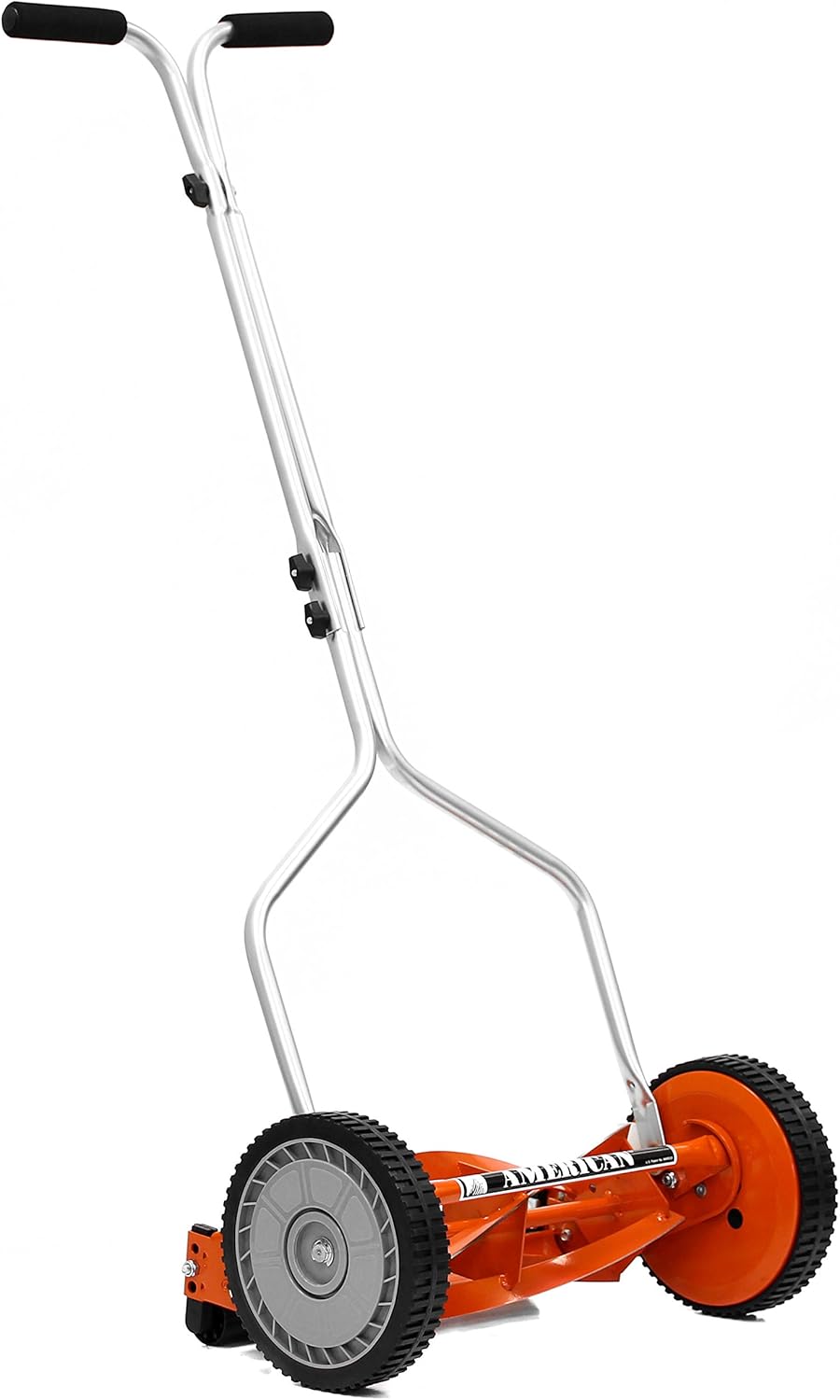
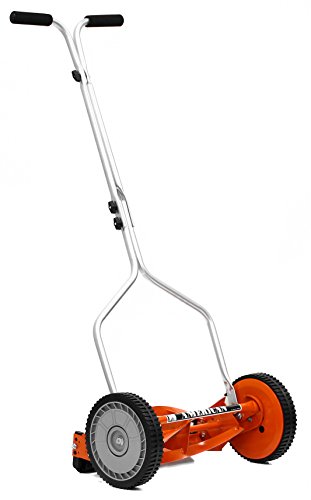
American Lawn Mower Company 1204-14 14-Inch 4-Blade Push Reel Lawn Mower, Red
“A classic red push reel mower for very small flat lawns. The 14-inch cut is only practical for areas under 1,500 square feet — larger properties will find the pass count frustrating.”
See Today’s Price →Frequently Asked Questions
What size lawn do I need a self-propelled mower for?
How long does a battery-powered mower last on a charge?
Is an electric lawn mower as powerful as gas?
Should I mulch, bag, or side discharge my grass?
What is the difference between Greenworks 80V and Ryobi 40V?
How do I know when to sharpen my lawn mower blade?
How We Analyze Products
We analyze Amazon review data — often thousands of reviews per product — to surface patterns that individual buyers miss. Our process aggregates star ratings, review counts, and buyer sentiment at scale, identifying which strengths and weaknesses appear consistently across the largest review samples available. The 17,285+ reviews analyzed on this page represent real verified-purchase feedback from Amazon buyers.
Each product earned its placement through data: total review volume, average rating, and the specific praise and complaints that repeat most often across buyers. No manufacturer paid for placement on this page. Products appear here because buyers endorsed them at scale, not because a company asked us to feature them.
We use AI to summarize review sentiment — not to fabricate opinions, but to condense what thousands of buyers actually wrote into a readable format. The pros and cons you see reflect the most common themes found in verified purchaser reviews, paraphrased for clarity. We do not claim to have accessed Reddit, YouTube, or specific publications in generating these summaries.
Prices shown reflect Amazon pricing at the time this page was last generated. Click “See Today’s Price” to get the current live price on Amazon. Read our full methodology →