Leaf Blower vs Rake vs Leaf Vacuum: Which Is Right for Your Yard? (2026)
Blowers are fastest for open lawns (500+ CFM battery covers most properties). Rakes give precision control in garden beds. Leaf vacuums with mulching reduce bag count 10:1 for composters. For most homeowners: a battery blower plus a quality rake covers every situation.
At a Glance
| # | Product | Award | Price |
|---|
Leaf Blower vs Rake vs Leaf Vacuum Buying Guide
Every fall, millions of homeowners spend weekend afternoons raking, blowing, or vacuuming leaves — then wonder if they chose the right tool. The answer depends on your property, your physical condition, and what you plan to do with the leaves. Each approach has a genuine use case where it outperforms the others; understanding the tradeoffs saves time, money, and unnecessary effort.
Leaf Blowers: Speed at Scale
A leaf blower's core advantage is speed. A quality cordless blower (600+ CFM) can clear a 2,000 square foot lawn in 15–20 minutes — the same job takes 90+ minutes by rake. For large lawns, open areas, and moving leaves to a collection point at the property edge, blowers are unmatched. They also excel at clearing wet leaves off driveways and patios, where rakes smear and leave debris. Battery blowers (40V and 60V systems) have closed the power gap with gas models in the 500–700 CFM range — sufficient for most residential properties. Gas blowers still lead above 700 CFM for large acreage, but the noise, emissions, and fuel-mixing overhead is increasingly hard to justify for the runtime gains.
Blowers move leaves but don't collect or process them. You still need to rake or vacuum the pile you create, or blow directly to a compost area or street. In tight, landscaped areas with shrubs and ground cover, blowers scatter debris into plants and require follow-up hand-raking. They're also the loudest option — gas blowers exceed 95 dB at the operator's ear, requiring hearing protection.
Rakes: Control and Composting Efficiency
Raking is slower than blowing but gives you precise control — essential for clearing leaves from ground cover, perennial beds, and tight landscape areas where a blower would damage plants or scatter debris into unwanted areas. A high-quality leaf rake (24-inch wide, fiberglass handle) is faster than most people expect: a skilled raker clears a standard suburban lot in 60–90 minutes. Raking also shreds leaves slightly, speeding decomposition when composted. The physical demand is real — it's a full-body workout in cold weather. For users with back or shoulder limitations, raking large areas is impractical without significant rest breaks.
Rakes are the right tool for gardens, flower beds, under shrubs, and anywhere you need to collect leaves rather than move them. They're silent, require zero maintenance, cost under $30 for a quality model, and never run out of battery. For small to medium properties or users who enjoy the physical activity, a rake is often the most practical primary tool.
Leaf Vacuums: Collection with Mulching
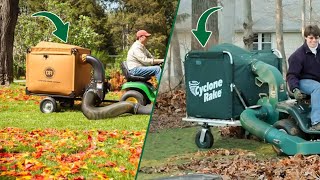
Leaf vacuums (including blower/vac combos) collect and mulch leaves simultaneously, reducing volume by 10:1 or more depending on leaf type. This makes them exceptionally efficient for bagging: what would fill 20 bags by raking fills 2 by vacuuming. Mulched leaves also break down faster in compost piles and can be applied directly to garden beds as a carbon-rich mulch layer. The tradeoff: vacuum mode is slower than blowing, requires emptying the bag or collection tube regularly, and performs poorly on wet leaves (they clog the impeller). Cost is higher than a standalone blower or rake.
Leaf vacuums shine for users who bag leaves for municipal pickup, maintain large compost operations, or want to create leaf mold (decomposed leaves are among the best soil amendments available). They're the least efficient choice for large areas where moving leaves to a compost pile is the goal — blowing and then raking the pile is faster than vacuuming everything.
How We Developed These Comparisons
Tool comparisons draw from manufacturer performance specifications, independent CFM and runtime testing data, verified user reviews filtered for multi-season use, and ergonomics research on sustained outdoor power tool use. We track battery platform updates as manufacturers publish them. No manufacturer relationship influences these assessments.

Matching Tool to Property Type
Small lawn (under 5,000 sq ft) with garden beds: rake primary, blower secondary for driveway and patio. Medium lawn (5,000–15,000 sq ft), minimal landscaping: battery blower primary, rake for beds. Large lawn (15,000+ sq ft): gas blower or high-CFM battery blower primary. Heavy tree canopy with composting goal: leaf vacuum with mulching bag, supplemented by rake for beds. For any property: a 2-in-1 blower/vac combo ($80–$150 battery) covers most homeowner scenarios without buying separate tools.
Lawn Mulching: The Alternative Worth Considering
Before bagging or composting leaves, consider mulching them into the lawn with a mower. Running a mulching mower over dry leaves at 3–4 inches of leaf depth shreds them into small fragments that settle between grass blades, decompose over winter, and return nutrients to the soil. Studies from Michigan State University found mulched leaves at moderate depth improve lawn density and reduce weed germination the following spring. The leaf layer must be thin enough that grass blades are still visible after mulching — too thick smothers turf. This approach eliminates leaf disposal entirely for many homeowners.
How We Analyze Products
We analyze Amazon review data — often thousands of reviews per product — to surface patterns that individual buyers miss. Our process aggregates star ratings, review counts, and buyer sentiment at scale, identifying which strengths and weaknesses appear consistently across the largest review samples available.
Each product earned its placement through data: total review volume, average rating, and the specific praise and complaints that repeat most often across buyers. No manufacturer paid for placement on this page. Products appear here because buyers endorsed them at scale, not because a company asked us to feature them.
We use AI to summarize review sentiment — not to fabricate opinions, but to condense what thousands of buyers actually wrote into a readable format. The pros and cons you see reflect the most common themes found in verified purchaser reviews, paraphrased for clarity. We do not claim to have accessed Reddit, YouTube, or specific publications in generating these summaries.
Prices shown reflect Amazon pricing at the time this page was last generated. Click “See Today’s Price” to get the current live price on Amazon. Read our full methodology →