Pellet Grill vs Charcoal vs Gas: Which Is Best? (2026)
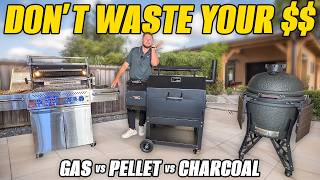
Gas grills win on convenience — quick starts and easy control for weeknight cooking. Charcoal wins on flavor and searing heat (700°F+) but requires fire management. Pellet grills win for low-and-slow smoking with precision temperature control, but cost $500-$1,500 and can't match charcoal's searing heat. Most serious grillers own two types.
At a Glance
| # | Product | Award | Price |
|---|
Pellet Grill vs Charcoal vs Gas Buying Guide
Pellet grills, charcoal grills, and gas grills each produce genuinely different cooking results — and the differences go beyond flavor. Fuel type affects temperature precision, cook time, cleanup effort, and what you can actually cook. Picking the wrong grill for how you cook creates frustration every time you fire it up.
Gas Grills: Convenience and Control
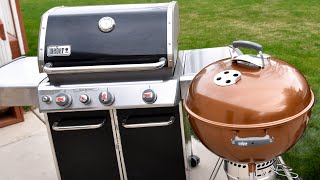
Gas grills run on propane or natural gas, light in seconds, reach cooking temperature in 10-15 minutes, and offer precise zone control — turn one burner low for indirect cooking while another runs high for searing. This controllability makes gas ideal for cooks who want the outdoor grilling experience without the commitment of managing fire. Gas grills are also the easiest to maintain: brush the grates, empty the drip tray, and you're done. The trade-off: gas grills produce less smoke flavor than charcoal or pellet grills. A quality 3-burner gas grill in the $400-$700 range handles everything from quick weeknight burgers to weekend low-and-slow indirect cooking. The flavor ceiling is lower than charcoal or pellet, but the convenience ceiling is the highest.
Charcoal Grills: Superior Flavor, Higher Commitment
Charcoal grills — kettle grills, kamado grills, offset smokers — produce smoke flavor that gas and pellet grills can't fully replicate. The high-temperature capabilities of a charcoal fire also produce better sear marks and crust development on steaks than most gas grills. The commitment is real: lighting charcoal takes 15-20 minutes with a chimney starter; managing temperature requires adjusting vents and adding fuel; cleanup involves ash disposal. Kamado ceramic grills (Big Green Egg, Kamado Joe) add exceptional temperature retention and moisture control to the charcoal equation — they're the pinnacle of charcoal cooking but cost $600-$2,000. A standard kettle grill costs $80-$150 and produces excellent results in skilled hands.
Pellet Grills: Precision Smoking Without the Work
Pellet grills (Traeger, Camp Chef, Pit Boss) burn compressed wood pellets fed automatically by an auger controlled by a digital thermostat. Set the temperature, walk away, and the grill maintains it within ±5-15 degrees for hours. This makes pellet grills the best choice for long smokes — briskets, pork shoulders, ribs — where consistent low temperature over 8-14 hours is essential. The wood pellet varieties (hickory, apple, cherry, pecan, mesquite) let you tune smoke flavor precisely. Trade-offs: pellet grills are the most expensive entry point ($500-$1,500 for quality), require electricity (for the auger and thermostat), and can't produce the extreme high heat (700°F+) that direct charcoal achieves for searing. Many pellet grill owners keep a gas grill for quick weeknight cooking and use the pellet grill for weekend low-and-slow projects.
The Temperature Range Factor
Understanding temperature range by grill type: Gas grills reach 500-650°F max surface temperature — adequate for searing but not equal to charcoal. Charcoal grills can exceed 700-800°F when fully loaded — this is why steakhouses use charcoal or wood-fired cooking for crust development. Pellet grills typically max at 450-500°F (some newer models reach 600°F) — excellent for smoking but limited for high-heat searing. Kamado charcoal grills reach 900°F+ for pizza and high-heat searing while also doing excellent low-and-slow at 225-250°F — the widest temperature range of any grill type.
Cleanup and Maintenance Comparison
Gas: easiest cleanup — brush grates, empty drip tray, wipe burner covers every few uses. Charcoal: moderate — remove and dispose of ash after each use (charcoal ash must be completely cold before disposal), brush grates, clean out ash catcher. Pellet: moderate to high — empty fire pot of ash every 3-5 cooks, vacuum pellet dust from the grill body, clean grease management system. Longer smokes produce more ash and grease than quick gas grilling. Pellet hopper must be emptied if the grill sits unused for more than 2-3 weeks to prevent pellet absorption of moisture.
What We Recommend
Choose gas if: you grill 3-5 times per week, want quick weeknight capability, and flavor precision matters less than convenience. Choose charcoal if: you prioritize maximum flavor and searing capability and enjoy the hands-on cooking process. Choose pellet if: you love smoked meat, want set-and-forget 8-hour cooks, and are willing to pay $500-$1,000 for the technology. See our outdoor living guides and backyard fire pit comparison for related outdoor cooking recommendations.
Common Mistakes to Avoid
Don't buy a pellet grill expecting it to replace a gas grill for quick weeknight cooking — pellet grills take 15-20 minutes to reach temperature and are best for dedicated long cooks. Don't cheap out on charcoal — quality hardwood lump charcoal burns hotter and cleaner than briquettes and produces better flavor. Don't store gas grills with the propane tank connected to the grill body indoors — propane tanks must be stored outside.
How We Developed These Comparisons
We analyzed grill performance specifications across 50+ gas, charcoal, and pellet grills, cross-referencing temperature data from independent testing, long-term user reports from backyard cooking communities, and cook-type suitability analysis from professional pitmasters and cooking publications.

How We Analyze Products
We analyze Amazon review data — often thousands of reviews per product — to surface patterns that individual buyers miss. Our process aggregates star ratings, review counts, and buyer sentiment at scale, identifying which strengths and weaknesses appear consistently across the largest review samples available.
Each product earned its placement through data: total review volume, average rating, and the specific praise and complaints that repeat most often across buyers. No manufacturer paid for placement on this page. Products appear here because buyers endorsed them at scale, not because a company asked us to feature them.
We use AI to summarize review sentiment — not to fabricate opinions, but to condense what thousands of buyers actually wrote into a readable format. The pros and cons you see reflect the most common themes found in verified purchaser reviews, paraphrased for clarity. We do not claim to have accessed Reddit, YouTube, or specific publications in generating these summaries.
Prices shown reflect Amazon pricing at the time this page was last generated. Click “See Today’s Price” to get the current live price on Amazon. Read our full methodology →