How to Choose a Pressure Washer (2026): PSI, GPM, What They
PSI and GPM together decide what a pressure washer can clean - PSI cuts the dirt loose, GPM carries it away. The Westinghouse ePX3500 ($169.00) hits 2500 PSI at a price well under the 2200 PSI machines it outperforms, which is why it leads here. The SIMPSON MegaShot is the gas option for driveways.
At a Glance
| # | Product | Award | Price |
|---|---|---|---|
| 1 |  Westinghouse ePX3500 Electric Pre… Westinghouse ePX3500 Electric Pre…Westinghouse |
Also Excellent | $199 $169 Used — not a new unit -15% Buy → |
| 2 |  Greenworks GPW2200 2200 PSI 2.3 G… Greenworks GPW2200 2200 PSI 2.3 G…Greenworks |
Best Premium | $384.84 Buy → |
| 3 | Budget Pick | $226.11 Buy → |
|
| 4 | Gas Power | $659 Buy → |
How to Choose a Pressure Washer (2026) Buying Guide
 Photo by Erik Mclean / Pexels
Quick Comparison
| Feature | Light Duty (1300–1800 PSI) | Medium Duty (1800–2400 PSI) | Heavy Duty (2400–3200 PSI) |
|---|---|---|---|
| Best For | Cars, patio furniture, fences | Driveways, decks, siding | Concrete, prep for painting, commercial jobs |
| Power Source | Electric | Electric or gas | Gas |
| Price Range | $80–$200 | $150–$400 | $300–$800+ |
| Portability | Lightweight, easy storage | Moderate weight | Heavy, wheeled units |
| Maintenance | Very low | Low–Moderate | Regular (oil, engine) |
| Our Pick For | Homeowners, occasional use | Most homeowners | Large properties, contractors |
Who This Guide Is For
This guide is for you if:
- You're considering a pressure washer and want to know if it's worth $150-400 for your use case
- You need to understand PSI and GPM before buying so you get the right power level
- You want to know what you can (and shouldn't) pressure wash at home
Skip this guide if:
- You already have a pressure washer and just need technique tips
- You need commercial-grade cleaning — this covers residential pressure washers only
Quick verdict: Electric (1600-2200 PSI): cars, patio furniture, decks, siding. Gas (2500-3500 PSI): concrete, brick, heavily stained surfaces.
The PSI x GPM Framework
Most buyers walk into a pressure washer purchase focused on a single number: PSI. The higher the better, right? This is the most common and most damaging misconception in the category. PSI — pounds per square inch — measures how concentrated the water impact force is at the nozzle tip. A higher PSI number means a more focused, harder-hitting stream. But PSI alone tells you nothing about how fast the surface actually gets clean.
The second number — GPM, or gallons per minute — measures how much water volume is moving through the machine. High GPM means more water flushing debris off the surface per second. A pressure washer with moderate PSI but high GPM often outcleans a high-PSI machine with low GPM because it is moving more cleaning volume through the work area.
Cleaning Units (CU) = PSI x GPM. This is the actual productivity metric. Consider two machines: a 2,000 PSI / 1.0 GPM model produces 2,000 Cleaning Units. A 1,600 PSI / 1.5 GPM model produces 2,400 Cleaning Units — and it cleans faster than the first machine despite having 400 less PSI. The lower-PSI machine also carries meaningfully less risk of surface damage on cars and wood because the impact per square inch is lower.
When comparing any two pressure washers, multiply PSI x GPM for both and compare that number. Do not compare PSI alone. A machine rated at 2,500 PSI / 1.1 GPM (2,750 CU) produces less cleaning productivity than a 2,200 PSI / 1.4 GPM machine (3,080 CU) — but most shoppers would pick the higher PSI option without running the math.
One important caveat on ratings: gas pressure washer PSI ratings are frequently listed as peak pressure rather than working pressure. Under actual load, a 3,200 PSI gas washer may operate at 2,700-2,900 PSI. Electric washer ratings tend to be more conservative and more accurate under load. Factor this into gas versus electric comparisons — the real-world gap is smaller than the spec sheet suggests.
Surface-to-PSI Match Chart
The most important thing you can know about pressure washer safety is that the right PSI for any surface is a specific range — not "more is better." Every surface has a damage threshold above which you strip paint, etch soft stone, splinter wood grain, or gouge concrete. Matching PSI to surface protects the surface and gives you better results.
Car paint and automotive surfaces: 1,200-1,400 PSI maximum. Modern automotive clear coat is more durable than older finishes, but 1,600+ PSI at close range risks micro-etching the clear coat and dulling the finish over time. Use the 25-degree green nozzle at minimum, or the 40-degree white nozzle for safety. Keep the wand at least 12-18 inches from the surface. Never direct the 0-degree red nozzle at car paint — it will damage it. Wheel wells and undercarriage can handle 1,600 PSI since those surfaces are unpainted metal and plastic.
Wood decks and fences: 1,500-2,000 PSI with a 40-degree nozzle. Softer woods (cedar, pine, redwood) should be treated at the lower end of this range. Harder woods (ipe, teak, pressure-treated lumber) can handle 2,000 PSI without grain damage. Never use the 0-degree or 15-degree nozzle on wood — the narrow stream is powerful enough to raise the grain, splinter the wood surface, and leave permanent gouged lines along the boards. Hold the wand 8-12 inches from the wood surface and keep it moving. For a full deck washing guide and product recommendations, see Best Pressure Washer for Decks and Fences.
Concrete and brick: 2,500-3,500 PSI handles embedded stains, algae and mold growth, oil spots, and paint overspray. This is the range where gas washers earn their place — 2,000 PSI electric models can clean concrete, but it takes significantly longer and requires multiple passes over stained areas. The 15-degree yellow nozzle is standard for concrete cleaning. Surface cleaner attachments (spinning dual-nozzle heads) make large concrete areas like driveways and patios dramatically faster.
Vinyl and fiber cement siding: 1,500-2,000 PSI with a 25-degree or 40-degree nozzle. Siding cleaning typically requires detergent — pressure alone removes loose dirt but does not kill algae or mold. Use the soap nozzle (black) to apply detergent, let it dwell for 3-5 minutes, then rinse with the 25-degree or 40-degree nozzle at 1,500-2,000 PSI. Never spray directly up under siding laps — you will force water behind the panels.
Patio furniture (metal and plastic): 1,200-1,600 PSI. Most outdoor furniture handles moderate pressure without damage. Wicker and rattan should be treated carefully — the weave can loosen at higher pressure. Painted metal furniture is fine at 1,500 PSI with a 25-degree nozzle.
Windows and glass: 1,200-1,400 PSI with the 40-degree nozzle only. Higher pressure risks cracking older glass, damaging window seals, and forcing water under window frames. An extension wand lets you reach second-story windows from ground level without a ladder.
For car-specific guidance and recommended products, see Best Pressure Washer for Cars.
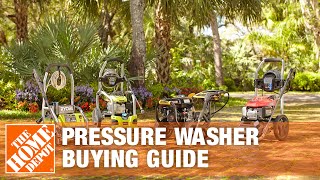
Watch Before You Buy

“2500 PSI for $169 makes the Westinghouse ePX3500 the most power-per-dollar electric washer available. The 5-nozzle set covers every standard cleaning scenario. Build quality is lighter than…”
See Today’s Price →What we like
- 2500 PSI
- 5-nozzle set
- Westinghouse quality
- Budget value
Watch out for
- 2500 PSI is overkill for delicate surfaces like wood decking without a lower pressure nozzle
- 5-nozzle selection requires experimentation to find the right tip
- Can trip GFCI outlets on older properties
Read Full Analysis
The Westinghouse ePX3500 delivers 2500 PSI in an electric unit at $169.00 — comparable PSI to the Simpson gas unit at $659 while costing $130 less and requiring no oil changes or fuel storage. The 5-nozzle set covers 0°, 15°, 25°, 40°, and soap tip applications, handling everything from surface stripping to vehicle rinsing without additional accessory purchases. The 2500 PSI rating requires care on wood decks — use the 40° or soap nozzle on wood to avoid surface damage; reserve 0° and 15° for concrete and pavers. At $169.00 it is the best-value electric unit on this page for homeowners who primarily clean driveways, siding, and patios rather than large wood deck surfaces.
“The Greenworks GPW2200 sits at the top of the residential electric range — enough PSI for concrete maintenance, enough build quality to last multiple seasons. The brushless motor handles extended…”
See Today’s Price →What we like
- 2.3 GPM — highest flow of electric models here
- 2200 PSI for effective wood cleaning
- Pressure-select for surface adjustment
- 35-foot hose — good reach
- Electric — quiet and low-maintenance
Watch out for
- Larger footprint than compact electric models
- Heavier than SPX3001
- Pressure-select adds complexity for beginners
Read Full Analysis
The Greenworks GPW2200 delivers 2.3 GPM — the highest flow rate of any electric pressure washer in this comparison and the metric that most directly determines how quickly large surfaces can be cleaned. PSI determines how hard the water hits; GPM determines how fast it rinses and clears. For large decks and driveways, higher GPM reduces total cleaning time more than higher PSI does. The pressure-select switch allows the operator to dial between low (rinsing, vehicle washing) and high (stripping, concrete cleaning) pressure modes without swapping nozzles — a practical advantage for surfaces requiring different pressures in the same session. The 35-foot hose reaches across most residential deck and driveway configurations without repositioning the machine. At $399.99, it is $231 more than the Westinghouse ePX3500 at $169.00 and $256 more than the Sun Joe SPX3001 at $226.11. The premium buys higher GPM flow and the pressure-select feature. The Simpson gas unit at $659 delivers 2.5 GPM and 3200 PSI for $100 less — the Greenworks costs more than gas while remaining in the electric category. For homeowners who want electric convenience (no gas, no oil maintenance) with the highest possible flow rate, the Greenworks is the right electric choice. For maximum raw performance, the Simpson gas model at $659 outperforms it at lower cost.
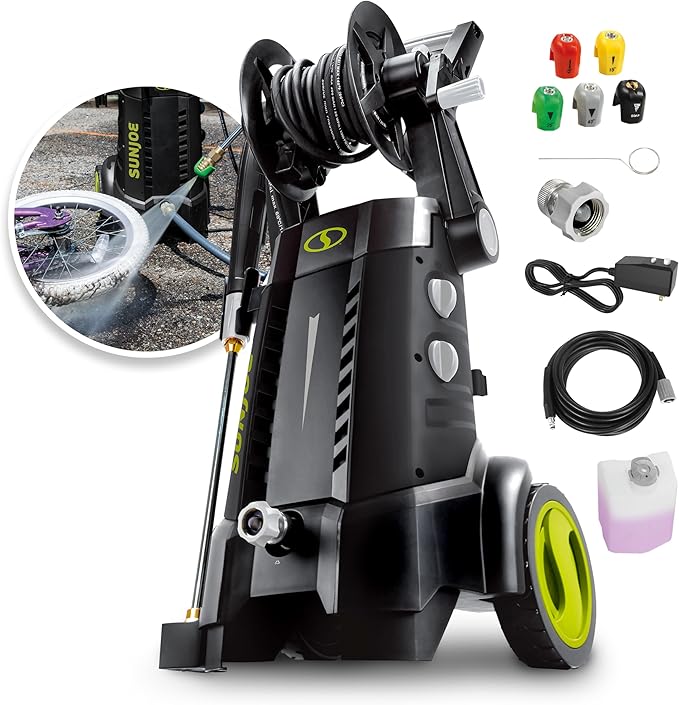
“The integrated 20-foot hose reel is the standout feature — no tangled hose management between jobs. 2030 PSI handles decks, furniture, and siding. The Sun Joe brand is the entry-level reliability…”
See Today’s Price →What we like
- Built-in hose reel for deck/fence work
- PWMA-certified 2030 PSI
- Dual soap tanks
- 5 nozzles included
- Electric — no maintenance
Watch out for
- 1.76 GPM — slower rinse than gas models
- Corded — need extension to reach far fence lines
- Not ideal for 1000+ sq ft decks
Read Full Analysis
The Sun Joe SPX3001 built-in hose reel is a practical differentiator for deck and fence work — the 20-foot hose retracts and stores on the machine rather than tangling across the surface being cleaned. The dual soap tanks allow two different cleaning solutions to be loaded simultaneously, switching between them without draining and refilling. Five nozzles cover the full range from surface stripping to gentle rinsing. PWMA-certified 2030 PSI is the independent verification rating, which is more conservative than manufacturer-claimed PSI on non-certified units. The 1.76 GPM flow rate is lower than the Greenworks, meaning larger surfaces take more time to rinse clear. At $384.84 it is the lowest-priced unit here. Best for deck and fence work in smaller yards where the hose reel convenience and dual soap tanks matter more than maximum flow rate or PSI.

“3200 PSI and 2.5 GPM gives the Simpson 8,000 Cleaning Units — triple the productivity of a budget electric on concrete. The Honda GC190 engine is known for reliability and easy starting. For…”
See Today’s Price →What we like
- Honda GC190 engine — proven reliability
- 3200 PSI / 2.5 GPM real-world performance
- OEM axial pump — serviceable and durable
- 25-foot kink-resistant MorFlex hose
- 5 quick-connect nozzles included
Watch out for
- Gas maintenance required (oil, winterization)
- Louder than electric models
- Heavier and larger than electric alternatives
Read Full Analysis
The Simpson MSH3125 uses a Honda GC190 engine — a commercial-grade powerplant that Honda rates for thousands of hours of service life and backs with Honda-specific warranty and service network access. This is not the case with generic pressure washer engines, where manufacturer support is often unavailable after a few years. The OEM axial pump is serviceable with standard replacement parts, meaning the machine can be rebuilt rather than discarded when pump wear occurs. The 3200 PSI / 2.5 GPM combination delivers meaningfully more power than any electric unit on this page — the Greenworks tops out at 2200 PSI / 2.3 GPM, and the Westinghouse at 2500 PSI with lower GPM. For large driveways with heavy algae staining, long fence runs, and mildew-encrusted wood siding, gas power completes the job faster with less machine movement. At $169 it is $100 less than the Greenworks electric at $384.84 — delivering more PSI and GPM at lower cost. The tradeoff is gas maintenance: seasonal oil changes, fuel stabilizer for storage, and more noise during operation. For homeowners who use a pressure washer regularly on large surfaces, the Simpson's power-per-dollar advantage and Honda engine longevity make it the pragmatic choice over premium electric alternatives.
Frequently Asked Questions
What PSI pressure washer do I need for a driveway?
Can I pressure wash my car with a regular pressure washer?
What is the difference between PSI and Cleaning Units?
Electric or gas pressure washer: which should I buy?
Is 2000 PSI enough for concrete?
How do I avoid damaging surfaces with a pressure washer?
How We Analyze Products
We analyze Amazon review data — often thousands of reviews per product — to surface patterns that individual buyers miss. Our process aggregates star ratings, review counts, and buyer sentiment at scale, identifying which strengths and weaknesses appear consistently across the largest review samples available. The 29,222+ reviews analyzed on this page represent real verified-purchase feedback from Amazon buyers.
Each product earned its placement through data: total review volume, average rating, and the specific praise and complaints that repeat most often across buyers. No manufacturer paid for placement on this page. Products appear here because buyers endorsed them at scale, not because a company asked us to feature them.
We use AI to summarize review sentiment — not to fabricate opinions, but to condense what thousands of buyers actually wrote into a readable format. The pros and cons you see reflect the most common themes found in verified purchaser reviews, paraphrased for clarity. We do not claim to have accessed Reddit, YouTube, or specific publications in generating these summaries.
Prices shown reflect Amazon pricing at the time this page was last generated. Click “See Today’s Price” to get the current live price on Amazon. Read our full methodology →