Best Leather Conditioners for Cars (2026)

The Lexol Leather Conditioner is the best overall — a pH-balanced formula that deeply conditions without leaving any oily residue, developed with input from the leather industry. For a budget option that also cleans, the Meguiar's Gold Class Spray is the fastest and most convenient application under $10.
See Today’s Price →At a Glance
| # | Product | Award | Price | Our Score | |
|---|---|---|---|---|---|
| 1 | 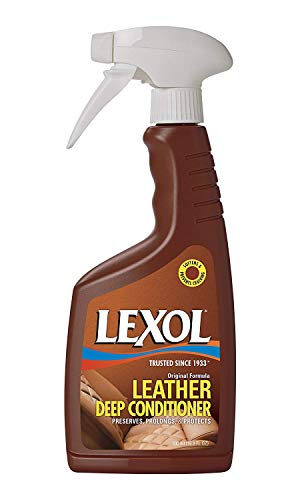 Lexol Leather Conditioner 16.9 oz pH-Ba… Lexol Leather Conditioner 16.9 oz pH-Ba… |
Best Overall | $9 | 9.2 | Buy → |
| 2 | 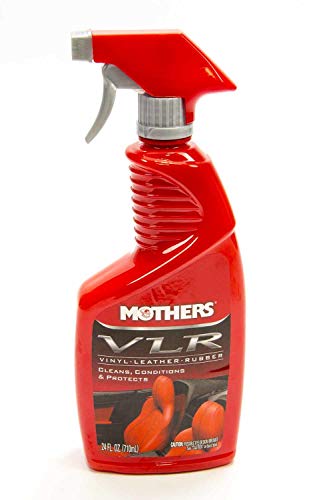 Mothers 06524 VLR Vinyl Leather Rubber … Mothers 06524 VLR Vinyl Leather Rubber … |
Best for Mixed Interiors | $8 | 8.9 | Buy → |
| 3 | 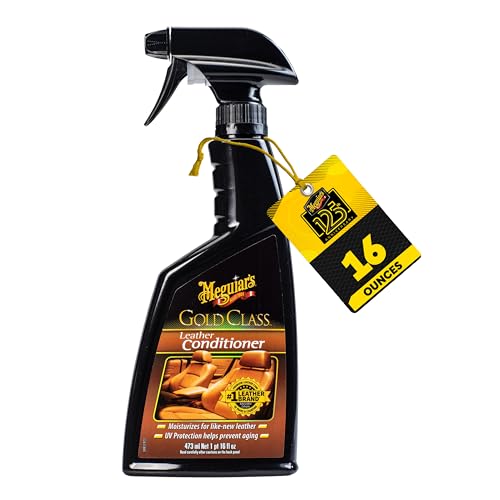 Meguiar's Gold Class Leather Conditione… Meguiar's Gold Class Leather Conditione… |
Best Quick Apply | $7 | 8.5 | Buy → |
| 4 | 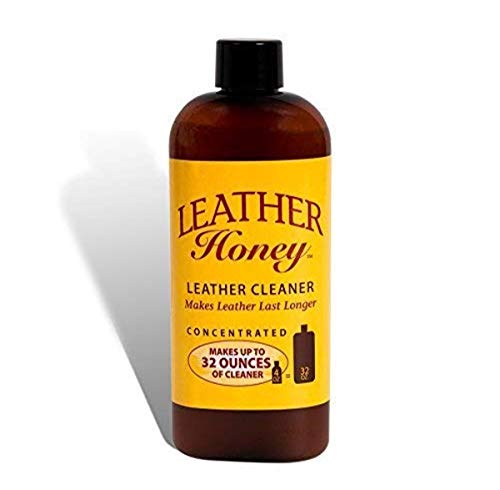 Leather Honey Leather Cleaner Concentra… Leather Honey Leather Cleaner Concentra… |
Best for Cleaning | $17 | 8.2 | Buy → |
Showing 4 of 4 products
Lexol Leather Conditioner 16.9 oz pH-Balanced Formula
“The most trusted pH-balanced leather conditioner — restores suppleness to dried leather and prevents cracking without leaving a greasy surface. Regular use extends leather seat life significantly in h”
See Today’s Price →
Mothers 06524 VLR Vinyl Leather Rubber Care 24 oz
“A ready-to-use interior protectant for vinyl dashboards, door panels, leather, and rubber trim. UV protection formula slows the fading and cracking that destroys unprotected interior surfaces in sunny”
See Today’s Price →
Meguiar's Gold Class Leather Conditioner Spray 16 oz
“Meguiar's Gold Class Leather Conditioner Spray is the easiest leather maintenance product — spray on clean leather seats, wipe in, and you're done. The UV protection is a unique bonus that prevents th”
See Today’s Price →
Leather Honey Leather Cleaner Concentrated Formula 8 oz
“Leather Honey Leather Cleaner is the best dedicated cleaner for heavily soiled car seats. Diluted for regular cleaning or used full-strength on stains, it lifts grime without drying out the leather.”
See Today’s Price →Leather Conditioners for Cars (2026) Buying Guide
 Photo by Александр Лич / Pexels
Conditioner vs. Cleaner: Two Different Products for Two Different Problems
Leather conditioner and leather cleaner serve distinct functions. Conditioner (Lexol $9.46, Mothers VLR $8.82, Meguiar's $7.17) moisturizes leather to prevent cracking and restore flexibility — it is a maintenance product for leather that is clean but dry. Leather cleaner like the Leather Honey Cleaner ($17.99) removes embedded grime, oils, and stains from leather before conditioning. For neglected or visibly soiled seats, clean first with the Leather Honey, then follow with a conditioner. For regularly maintained seats that just need moisture replenishment, skip straight to a conditioner. Using conditioner on dirty leather seals the contaminants in.
pH Balance: Why It Matters for Car Leather
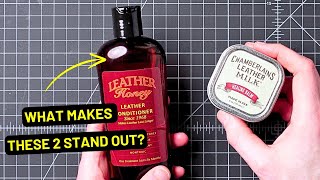
Car leather is typically chrome-tanned and has a slightly acidic pH (4–5). Alkaline cleaners and conditioners gradually break down the leather's protective top coat over repeated use. The Lexol ($9.46) is explicitly pH-balanced for leather, which is why it has a strong following among detailers and leather goods professionals. The Meguiar's Gold Class spray ($7.17) is also formulated for automotive leather and includes UV inhibitors that slow fading and drying from sun exposure. The Mothers VLR ($8.82) is unique in covering vinyl, leather, and rubber surfaces simultaneously — useful for modern car interiors with mixed material dashboards and door panels.
What to Expect at Each Price Point
- Under $10 (Meguiar's $7.17, Mothers VLR $8.82, Lexol $9.46): Spray or pump-bottle conditioners for routine maintenance. Apply every 1–3 months depending on climate and sun exposure. Lexol is the most established name for pure leather conditioning; Mothers VLR handles mixed-material interiors; Meguiar's adds UV protection in a quick spray.
- $17–$18 (Leather Honey $17.99): Concentrated cleaner for stained or neglected leather. More expensive per ounce but dilutes for light-duty use. Best used before conditioning rather than as a standalone product.
How Often to Condition
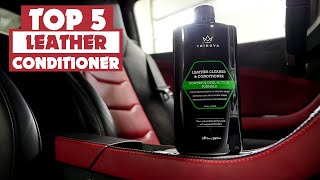
In dry, sunny climates (Southwest US, high altitude), condition every 4–6 weeks. In mild, humid climates, every 2–3 months is sufficient. The tell: if your fingertip drags slightly on the leather surface rather than gliding, the leather is dehydrated and needs conditioning. Do not wait for visible cracking — surface cracking means the leather has already begun breaking down at the fiber level, and conditioning at that point slows deterioration but cannot reverse it.
Common Mistakes to Avoid
- Conditioning without cleaning: Applying conditioner over seat grime locks contaminants into the leather pores. Always clean the seat first, even if it looks clean — a damp microfiber cloth reveals more than it appears.
- Over-applying conditioner: More conditioner does not mean better results. A thin even coat absorbed fully is better than a heavy application that sits on the surface and attracts more dust.
- Using products labeled for shoes or furniture: Shoe polish and furniture conditioners use different chemical formulations that can stain automotive leather or leave oily residue that transfers to clothing.
Related Guides
Frequently Asked Questions
What is the best leather conditioner for cars?
How often should I condition car leather?
Do leather conditioners work on faux leather and vinyl?
Can conditioning fix cracked leather seats?
Do I need to clean leather before conditioning?
How We Analyze Products
We analyze Amazon review data — often thousands of reviews per product — to surface patterns that individual buyers miss. Our process aggregates star ratings, review counts, and buyer sentiment at scale, identifying which strengths and weaknesses appear consistently across the largest review samples available. The 6,782+ reviews analyzed on this page represent real verified-purchase feedback from Amazon buyers.
Each product earned its placement through data: total review volume, average rating, and the specific praise and complaints that repeat most often across buyers. No manufacturer paid for placement on this page. Products appear here because buyers endorsed them at scale, not because a company asked us to feature them.
We use AI to summarize review sentiment — not to fabricate opinions, but to condense what thousands of buyers actually wrote into a readable format. The pros and cons you see reflect the most common themes found in verified purchaser reviews, paraphrased for clarity. We do not claim to have accessed Reddit, YouTube, or specific publications in generating these summaries.
Prices shown reflect Amazon pricing at the time this page was last generated. Click “See Today’s Price” to get the current live price on Amazon. Read our full methodology →