How to Choose Tires in 2026: The Practical Driver Guide
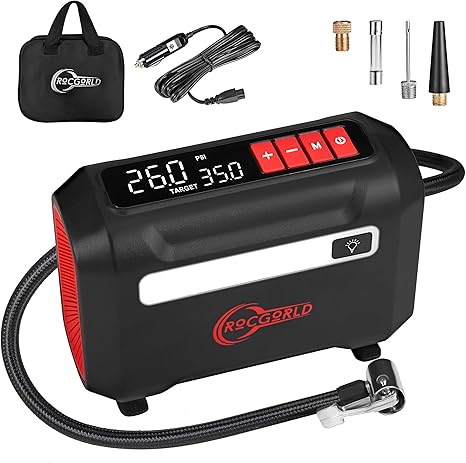
The ROCGORLD R8 Tire Inflator at $29.99 is the top-ranked tire maintenance tool on this page — the digital pressure gauge auto-shuts at your target PSI so you never over-inflate, and the LED light lets you work in a dark garage or roadside emergency.
At a Glance
| # | Product | Award | Price |
|---|---|---|---|
| 1 | Our Top Pick | $29.99 Buy → |
|
| 2 | Also Excellent | $280.21 Buy → |
|
| 3 | Worth Considering | $215.99 Buy → |
|
| 4 | 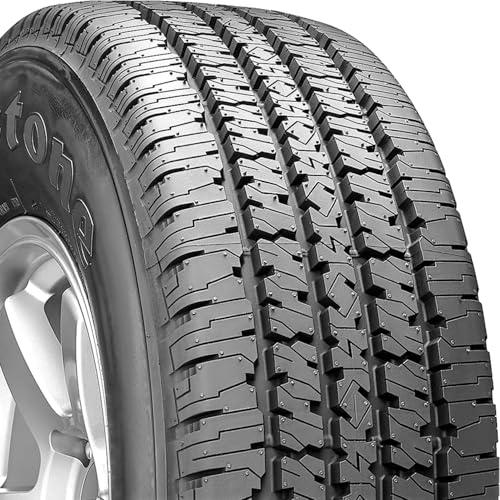 Firestone Transforce HT Highway T… Firestone Transforce HT Highway T…Firestone |
Best All-Season Highway | Check current price on Amazon Buy → |
How to Choose Tires Buying Guide
 Photo by Sergei Starostin / Pexels
How we picked these. We evaluated tire selection criteria across size designation, speed rating, load index, tread pattern (all-season vs. winter vs. performance), treadwear warranty, and OEM specification compliance, cross-referencing Consumer Reports tire testing and Tire Rack satisfaction data.
Buying tires is one of the highest-stakes vehicle purchases most drivers make. The wrong set affects handling, fuel economy, noise, and safety in wet and winter conditions. Getting it right starts with understanding your vehicle's requirements and matching them to the conditions where you actually drive.
Reading Your Tire Size and Speed Rating
The correct tire size for your vehicle is printed on the driver-side doorjamb sticker and in the owner's manual. It appears in a format like 225/55R17 — the first number is tread width in millimeters, the second is aspect ratio (sidewall height as a percentage of width), and the number after R is rim diameter in inches. Never install tires with a different rim diameter than specified. Load index and speed rating appear after the size (for example, 94V) — the speed rating must meet or exceed the original specification; the load index must also meet or match OEM. Changing tire size is possible for aesthetic reasons but requires verification that no rubbing occurs under full compression and steering lock.
All-Season vs. All-Weather vs. Winter Tires
All-season tires handle dry and wet roads well but lose significant grip below 45 degrees F as the rubber compound hardens. All-weather tires carry the Three-Peak Mountain Snowflake (3PMSF) symbol, meaning they meet minimum snow traction standards — they are a meaningful upgrade over standard all-seasons for drivers in regions with occasional snow. Dedicated winter tires use softer compounds and aggressive siping that maintain flexibility and traction below 45 degrees F, providing substantially shorter stopping distances on ice and packed snow. If you live somewhere with at least two months of below-freezing temperatures, dedicated winter tires on a separate set of steel wheels are the single most effective safety investment available. Our car battery guide pairs well with winter prep since cold weather stresses batteries and tires simultaneously.
Performance vs. Touring vs. Truck Tire Categories
Passenger car tires fall into several categories. Touring tires prioritize ride comfort, low noise, and long tread life — the right choice for most sedans, crossovers, and family vehicles. Performance tires use softer compounds for better dry grip and handling response but wear faster and are louder. Ultra-high performance (UHP) tires maximize grip for sporty driving but sacrifice tread life and wet-weather performance in cold temperatures. Truck and SUV tires come in highway terrain (H/T), all-terrain (A/T), and mud-terrain (M/T) varieties — A/T tires provide the best balance of pavement manners and off-road capability for most drivers who occasionally venture off-road. For vehicles that stay on pavement, H/T tires provide superior ride quality and fuel economy versus A/T.
UTQG Ratings: Treadwear, Traction, and Temperature
The Uniform Tire Quality Grading (UTQG) system assigns three ratings to every passenger tire. Treadwear is a comparative index where higher numbers indicate longer expected tread life — a tire rated 600 should last roughly twice as long as one rated 300 under the same conditions. Traction grades (AA, A, B, C) measure wet stopping distance; AA is the best. Temperature grades (A, B, C) measure heat resistance at sustained speeds; A is the best. These ratings are manufacturer-reported, not independently certified, but they provide a useful relative comparison between tires. A touring tire rated 700AA will outlast a performance tire rated 280A significantly, reflecting the soft-compound tradeoff.
Installation and Rotation
New tires should always be installed in pairs at minimum — mixing tire ages and wear levels on the same axle unbalances handling. For optimum safety, replace all four simultaneously when budget allows. Rotate tires every 5,000 to 7,500 miles or at every other oil change to equalize wear across all four positions. Directional tires (marked with an arrow indicating rotation direction on the sidewall) can only be rotated front to rear on the same side of the car. Keep your vehicle's electrical and battery systems in good condition to maintain consistent TPMS readings — see our guides on automotive battery testers and dash cams for other essential vehicle maintenance tools. Proper inflation is the single most important factor in tire life: check pressure monthly and before long trips with a quality gauge, not just when the TPMS light appears.
For a detailed head-to-head, see our Michelin Vs Continental Tires comparison.
For a detailed head-to-head, see our Michelin Vs Goodyear Tires comparison.
Watch Before You Buy
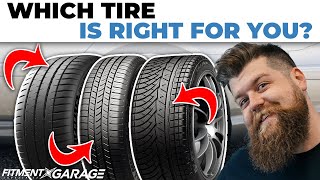
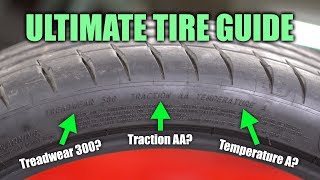
“”
See Today’s Price →Watch out for
- Vehicle-specific fitment requires verifying compatibility with your exact year make and model
- Professional installation recommended for safety-critical components to ensure proper torque specifications
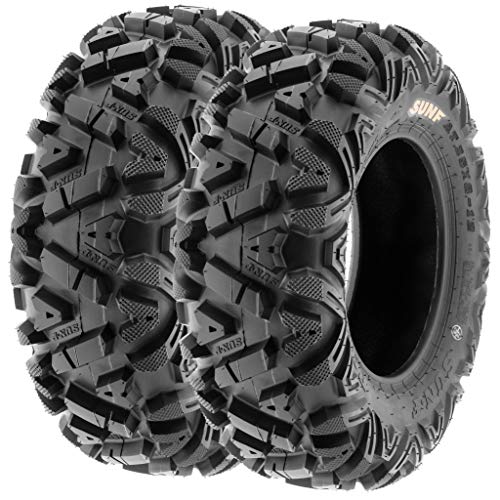
“SUNF's set of four ATV/UTV all-terrain tires provides aggressive tread and durable 6-ply construction for off-road grip in mud, gravel, and loose terrain. Sold as a full set for convenient…”
See Today’s Price →Watch out for
- Vehicle-specific fitment requires verifying compatibility with your exact year make and model
- Professional installation recommended for safety-critical components to ensure proper torque specifications
![Maxxis BigHorn 2.0 Radial (6ply) ATV Tire [27x11-14]](https://m.media-amazon.com/images/I/41uyTs0MLsL._SL500_.jpg)
“The Maxxis BigHorn 2.0 is a well-regarded radial ATV tire with deep knobs and a 6-ply rating for traction and durability across varied terrain. Its radial construction delivers a smoother ride than…”
See Today’s Price →What we like
- Radial construction improves ride quality and cornering stability over bias-ply ATV tires
- Deep V-lug tread bites through mud, loose rock, and trail debris for all-terrain traction
- 6-ply rating handles the sidewall abuse of rocky terrain and loaded racks without pinch flats
- Proven Maxxis compound resists cuts and abrasion better than budget ATV tire alternatives
Watch out for
- Radial construction is pricier than bias-ply alternatives for budget ATV builds
- Aggressive tread pattern increases road noise on hardpack roads compared to trail-specific tires
- Heavy carcass weight reduces acceleration response for sport ATVs prioritizing agility
Read Full Analysis
Radial construction improves ride quality and cornering stability over bias-ply ATV tires Deep V-lug tread bites through mud, loose rock, and trail debris for all-terrain traction Radial construction is pricier than bias-ply alternatives for budget ATV builds Aggressive tread pattern increases road noise on hardpack roads compared to trail-specific tires
“Firestone Transforce HT is the OEM tire on many F-150s and full-size trucks. Designed for highway and light off-road use, it balances tread life with smooth on-road handling.”
See Today’s Price →What we like
- OEM fitment on multiple Ford F-150 and Chevrolet Silverado configurations
- H/T pattern provides 50,000+ mile tread life on highway-primarily driven trucks
- All-season compound handles wet roads, light snow, and dry pavement
- Less road noise than aggressive all-terrain tires for daily commuting
Watch out for
- Not suitable for serious off-road use or deep snow conditions
- Stiff sidewall reduces ride comfort vs. passenger car tires
Frequently Asked Questions
How do I find the right tire size for my car?
How often should I replace my tires?
Are all-season tires good enough for winter driving?
Should I replace two tires or all four?
What does the speed rating on a tire mean?
What is the difference between all-terrain and highway-terrain tires?
What causes uneven tire wear?
How We Analyze Products
We analyze Amazon review data — often thousands of reviews per product — to surface patterns that individual buyers miss. Our process aggregates star ratings, review counts, and buyer sentiment at scale, identifying which strengths and weaknesses appear consistently across the largest review samples available. The 10,874+ reviews analyzed on this page represent real verified-purchase feedback from Amazon buyers.
Each product earned its placement through data: total review volume, average rating, and the specific praise and complaints that repeat most often across buyers. No manufacturer paid for placement on this page. Products appear here because buyers endorsed them at scale, not because a company asked us to feature them.
We use AI to summarize review sentiment — not to fabricate opinions, but to condense what thousands of buyers actually wrote into a readable format. The pros and cons you see reflect the most common themes found in verified purchaser reviews, paraphrased for clarity. We do not claim to have accessed Reddit, YouTube, or specific publications in generating these summaries.
Prices shown reflect Amazon pricing at the time this page was last generated. Click “See Today’s Price” to get the current live price on Amazon. Read our full methodology →