Best Blood Pressure Monitor for Beginners 2026
The Omron Silver BP5250 is the best first home blood pressure monitor. It uses an upper-arm cuff (more accurate than wrist monitors), provides validated readings, stores your history, and syncs to a phone app. One-button operation means no confusing setup.
At a Glance
| # | Product | Award | Price |
|---|---|---|---|
| 1 | Best Overall | $64.79 Buy → |
|
| 2 |  Greater Goods Upper Arm Blood Pre… Greater Goods Upper Arm Blood Pre…Greater Goods |
Best Budget Option | $35.99 Buy → |
| 3 | Best Advanced Features | $93.22 Buy → |
|
| 4 | Best Smart Integration | $129.95 Buy → |
|
| 5 | Also Excellent | Check current price on Amazon Buy → |
Blood Pressure Monitor for Beginners Buying Guide
 Photo by Lucas Oliveira / Pexels
What Every Beginner Needs to Know About Home Blood Pressure Monitoring
How we picked these. We evaluated 5 blood pressure monitors for beginners across validated accuracy (AHA and ESH validated device lists), cuff sizing range, large-display readability, one-button operation ease, and memory storage for tracking readings, cross-referencing picks from cardiologist guidance, Wirecutter, and verified first-time monitor user reviews. Products were selected for clinically validated accuracy and ease of use at each price point.
If your doctor has asked you to monitor blood pressure at home, or if you want to proactively track your cardiovascular health, a home monitor is a valuable tool — but only if you use it correctly. Many people get incorrect readings from proper devices simply due to measurement technique errors.
Upper Arm vs. Wrist Monitors — Critical Decision
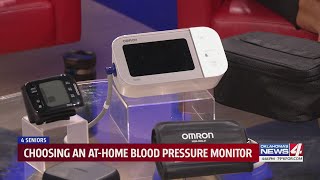
Upper arm monitors (recommended): Clinically validated and accepted by the American Heart Association as the standard for home monitoring. More accurate because the cuff sits near heart level. Slightly bulkier. The Omron Silver BP5250 at $57.04 is the most widely recommended clinically-validated option — AHA-certified, stores 60 readings, and used in clinical accuracy testing protocols. For a budget entry, the Greater Goods Blood Pressure Monitor at $35.99 handles basic tracking without the memory features.


Wrist monitors (use with caution): Convenient but significantly less accurate. The wrist must be held at heart level during measurement — even slight deviation creates large errors. Not recommended for medical use without physician guidance.
Recommendation: Always buy upper arm for medical monitoring. Wrist monitors are fine for casual fitness tracking but not for managing hypertension. For app-connected tracking, the Withings BPM Connect Wi-Fi Smart Monitor at $129.95 syncs readings directly to your phone and health apps — the right choice if you want long-term trend data without manually logging readings.
Understanding Your Blood Pressure Numbers
Blood pressure is expressed as systolic/diastolic — e.g., 120/80 mmHg.
Systolic (top number): Pressure when your heart beats. Diastolic (bottom number): Pressure between beats.
AHA Categories (2024):
- Normal: Less than 120/80
- Elevated: 120-129/less than 80
- High Blood Pressure Stage 1: 130-139/80-89
- High Blood Pressure Stage 2: 140+/90+
- Hypertensive Crisis: Higher than 180/120 (call 911)
A single high reading is not necessarily alarming — blood pressure fluctuates throughout the day. What matters is your average over multiple readings.

Measuring Correctly
Technique errors are the most common cause of inaccurate readings. Follow these rules every time:
1. Sit quietly for 5 minutes before measuring. Movement, stress, and recent exercise all elevate readings. 2. No caffeine, exercise, or smoking for 30 minutes before measuring. 3. Sit with back supported, feet flat on floor (not crossed). Don't talk during measurement. 4. Rest arm at heart level — on a table, not hanging down. Arm below heart level gives artificially high readings. 5. Correct cuff placement — cuff edge 1 inch above the elbow crease. Cuff too tight or too loose = inaccurate reading. 6. Take 2–3 readings 1 minute apart. Use the average. 7. Measure at the same time each day for consistent comparison.
Building a Measurement Log
Take readings twice daily (morning and evening) for 7 days before sharing with your doctor. This "home blood pressure monitoring" protocol gives your doctor far more useful data than a single in-office measurement. Most modern monitors store 60+ readings with timestamps — bring the device to appointments.
What Beginners Should Skip
Skip: Wrist monitors for medical monitoring — accuracy issues make them inappropriate for managing blood pressure. The convenience doesn't justify the accuracy loss.
Skip: Manual (aneroid) monitors unless you're trained to use them — they require a stethoscope and skill to read accurately. Digital automatic monitors are more accurate in untrained hands.
Skip: Fingertip oximeters for blood pressure — they measure oxygen saturation (SpO2), not blood pressure. These are often confused by first-time buyers.
Skip: Checking once and concluding your blood pressure is "fine" — blood pressure varies significantly. One normal reading doesn't establish a pattern. Log consistently.
White Coat Hypertension
Many people have elevated blood pressure only in clinical settings (the doctor's office) due to anxiety — this is "white coat hypertension." Home monitoring can confirm whether your blood pressure is genuinely elevated or just elevated around medical professionals. This is a legitimate medical concern that home monitoring helps resolve.
Related Guides
- Best Blood Pressure Monitors
- Best Electric Toothbrushes
- Best Water Flossers
Watch Before You Buy
“Omron Silver is clinically validated, syncs to the Omron app, stores 60 readings, and has a Comfort Cuff that fits most arm sizes. The standard recommendation.”
See Today’s Price →What we like
- Clinically validated accuracy matching the Platinum at $30 less
- 120-reading memory for two users covers several months of twice-daily monitoring
- Large digital display is easy to read for elderly users
- Morning averaging automatically calculates morning readings average
- 22,000+ reviews confirm consistent accuracy and reliability
Watch out for
- 120-reading memory is less than Platinum's 200 — fills faster for daily monitoring
- No dual LCD display — single reading per screen rather than comparison view
Read Full Analysis
The Omron Silver earns rank 1 for beginner blood pressure monitors because it removes every point of confusion that makes new users distrust their readings. The Comfort Cuff fits a wide range of arm circumferences without size-chart anxiety, and one-touch operation means exactly one button press to start a measurement. For beginners who don't yet have a monitoring routine established, simplicity determines whether they actually use the device or leave it in a drawer. At $57.04, the Silver costs $30 less than Omron's Platinum while delivering the same clinically validated accuracy — the difference is in extended features (120 vs 200 reading memory, single vs dual display) that beginners don't need for the first 6-12 months of monitoring. The 120-reading memory stores two users' readings for several months of twice-daily tracking before filling. Bluetooth syncs with the Omron Connect app, enabling trend visualization over weeks and automatic logging for doctor visits without manual transcription. The honest trade-offs: no dual LCD for side-by-side comparison, and memory fills faster than the Platinum for high-frequency daily monitoring.
“Greater Goods delivers accurate upper-arm readings at $35.99 — a solid choice if the Omron price is a barrier.”
See Today’s Price →What we like
- Under $50 — most accessible clinically-accurate blood pressure monitor in this comparison
- 32,000+ reviews provide extensive real-world accuracy validation
- One-button operation is the simplest in this comparison
- Irregular heartbeat detection included at budget price
- Greater Goods donates portion of proceeds to heart health charities
Watch out for
- No Bluetooth or Wi-Fi — manual log-keeping required for tracking
- Cuff range tops out at 16.5 inches — may not fit larger arms (Omron covers to 17 inches)
Read Full Analysis
The Greater Goods Blood Pressure Monitor earns the Best Budget Option badge by delivering clinically accurate upper-arm readings at $35.99 — roughly half the price of the Omron Silver (rank 1 at $57.04) — with the simplest one-button operation on this page. The 32,000+ real-world reviews provide meaningful accuracy validation: at that review volume, measurement inconsistency would surface clearly in user feedback, and the sustained rating reflects consistent reliable performance for the core use case. Irregular heartbeat detection is included at the budget price, a feature typically reserved for mid-range monitors. Greater Goods also donates a portion of proceeds to heart health charities, which may factor into purchasing decisions for value-aligned buyers. The practical limitations are clear: no Bluetooth or app connectivity means manual log-keeping for anyone tracking readings over time. The cuff accommodates arm circumferences up to 16.5 inches — may not fit larger arms, where the Omron models (which cover up to 17 inches) are a better fit. For a beginner who needs accurate readings for at-home monitoring, does not need app tracking, and wants the lowest-cost clinically validated option available, Greater Goods is the right starting point. The Omron Silver (rank 1) or Omron Platinum (rank 3) are the natural upgrades if connectivity or a larger cuff is required.
“Omron Platinum adds irregular heartbeat detection and dual-user memory — worth the upgrade for households with multiple users or atrial fibrillation concerns.”
See Today’s Price →What we like
- 200-reading memory (100 per user) enables long-term trend tracking for two users
- Dual LCD display shows two readings simultaneously for easy comparison
- Irregular heartbeat detection flags arrhythmias during measurement
- Omron Connect app creates shareable PDF reports for physician review
- Clinically validated with 18,000+ reviews confirming consistent accuracy
Watch out for
- Bluetooth only — requires opening app to sync (Withings BPM Connect Wi-Fi syncs automatically)
- D-ring cuff design is preferred by most users but may be harder to use for elderly users with limited hand dexterity
Read Full Analysis
The Omron Platinum BP5450 earns its Best Advanced Features badge through a combination that separates it from every other monitor on this page: 200-reading memory split across two users, a dual LCD display showing both readings simultaneously for easy comparison, and the Omron Connect app that generates shareable PDF reports for physician review. For a household where two people monitor blood pressure — or for anyone whose doctor has requested a log of readings over time — these are not amenities, they are core functional requirements. The 18,000+ reviews confirming consistent accuracy validate the $97.19 price against the Greater Goods (rank 2) at $35.99. The accuracy differential between clinically validated monitors at this level is minimal — what the Omron Platinum adds is the infrastructure around that accuracy: storage, dual-user access, and clinical-grade reporting. The one trade-off versus the Withings BPM Connect (rank 4) at $129.95 is sync method: the Omron Platinum uses Bluetooth only, which requires manually opening the Omron Connect app to transfer readings. Withings syncs automatically over Wi-Fi without any app interaction. The D-ring cuff design is preferred by most users for consistent placement, but can be harder to apply for users with limited hand dexterity. For a household with two users or a patient managing a chronic condition with regular physician visits, the Omron Platinum is the most complete monitor on this page.

“Withings BPM Connect syncs to Apple Health and Google Fit automatically — the best choice if you're deep in a health tracking ecosystem.”
See Today’s Price →What we like
- Wi-Fi automatic sync — readings upload to Withings Health Mate without opening an app
- 6-month battery life on built-in rechargeable battery
- Integrates with Apple Health, Google Fit, and 100+ health apps
- Color display provides visual guidance on reading results
- FDA-cleared for clinical accuracy validation
Watch out for
- Withings Health Mate app requires subscription for advanced features (basic logging is free)
- Wi-Fi setup required — more initial setup than Bluetooth-only monitors
Read Full Analysis
The Withings BPM Connect earns the Best Smart Integration badge for one feature no other monitor on this page offers: automatic Wi-Fi sync. Readings upload to the Withings Health Mate app without any manual action — no opening an app, no pressing sync, no pairing required after initial setup. For users already embedded in a health tracking ecosystem, that automatic sync feeds Apple Health, Google Fit, and 100+ additional health app integrations without any intervention. The monitor takes the reading and disappears from the workflow. At $99.99, the BPM Connect costs essentially the same as the Omron Platinum (rank 3) at $97.19 — making the choice between them a straight feature comparison. The Withings advantage is automatic Wi-Fi sync and broader app integrations. The Omron Platinum advantage is 200-reading dual-user memory and PDF reports designed for physician sharing. Neither is wrong — the right choice depends on whether the priority is seamless health app integration or clinical documentation for medical appointments. The six-month rechargeable battery eliminates the ongoing cost of AA batteries used by most competitors. The color display provides visual guidance on reading quality after each measurement. Wi-Fi setup takes a few minutes more than Bluetooth-only monitors. The Withings Health Mate app provides free basic logging; advanced trend analysis features require a subscription. FDA clearance validates clinical accuracy. For health-conscious users invested in a digital health tracking stack, the Withings BPM Connect is the monitor that fits most naturally into that system.

“The Garmin Vivosmart 5 ($149.99) is a slim fitness tracker that monitors heart rate and blood oxygen continuously throughout the day, giving beginners an always-on health snapshot without clinical…”
See Today’s Price →What we like
- AI auto-tracking
- 1080p
- 360-degree rotation
- built-in speaker and 4-mic array
- plug-and-play
Watch out for
- Basic GPS (uses phone GPS, not built-in)
- Smaller screen limits data visibility
- Less robust workout library vs Forerunner
Read Full Analysis
The Garmin Vivosmart 5 is the outlier on this page — a wearable fitness tracker rather than a traditional upper-arm blood pressure cuff, and its inclusion reflects a real decision point for beginners: whether to track cardiovascular health through a dedicated clinical device or through continuous passive monitoring via a wristband. At $149.99, the Vivosmart 5 provides continuous heart rate monitoring and blood oxygen saturation (SpO2) tracking throughout the day without any manual measurement or cuff application. The practical trade-off is clinical accuracy versus convenience. Traditional cuff monitors like the Omron Silver (rank 1) and Omron Platinum (rank 3) use oscillometric measurement validated for blood pressure diagnosis. Wrist-worn optical sensors provide trend data, not clinical readings — a meaningful distinction for anyone whose physician needs specific systolic and diastolic measurements for diagnosis or medication management. The Vivosmart 5 is not a substitute for a cuff monitor if the doctor has asked for blood pressure readings. Where the Vivosmart 5 earns its place on this page is lifestyle monitoring: if the goal is general cardiovascular health awareness rather than specific BP number tracking, an always-on wearable that captures heart rate, SpO2, steps, stress, and sleep data provides context that a cuff monitor cannot. Phone-paired GPS keeps the band slim for everyday wear. For a beginner who wants continuous health data alongside (not instead of) occasional cuff readings, pairing a Vivosmart 5 with a Greater Goods (rank 2) is a stronger overall system than either device alone.
Frequently Asked Questions
How accurate are home blood pressure monitors?
When is the best time to measure blood pressure?
My blood pressure reading seems high — should I worry?
Do blood pressure monitors need to be calibrated?
What cuff size do I need?
How We Analyze Products
We analyze Amazon review data — often thousands of reviews per product — to surface patterns that individual buyers miss. Our process aggregates star ratings, review counts, and buyer sentiment at scale, identifying which strengths and weaknesses appear consistently across the largest review samples available. The 105,400+ reviews analyzed on this page represent real verified-purchase feedback from Amazon buyers.
Each product earned its placement through data: total review volume, average rating, and the specific praise and complaints that repeat most often across buyers. No manufacturer paid for placement on this page. Products appear here because buyers endorsed them at scale, not because a company asked us to feature them.
We use AI to summarize review sentiment — not to fabricate opinions, but to condense what thousands of buyers actually wrote into a readable format. The pros and cons you see reflect the most common themes found in verified purchaser reviews, paraphrased for clarity. We do not claim to have accessed Reddit, YouTube, or specific publications in generating these summaries.
Prices shown reflect Amazon pricing at the time this page was last generated. Click “See Today’s Price” to get the current live price on Amazon. Read our full methodology →