HexClad vs Caraway: Which Is Better? (2026)

HexClad wins for serious cooks who need high-heat performance and metal utensil durability ($149–$196). Caraway wins for health-focused buyers who want a 100% ceramic, toxin-free cookware set with elegant design ($149–$169).
See Today’s Price →At a Glance
HexClad vs Caraway Buying Guide
HexClad and Caraway represent two of the hottest cookware brands on the market — but they serve very different cooks. HexClad combines stainless steel and non-stick in a patented hexagonal pattern built for high-heat performance. Caraway offers pure ceramic non-stick cookware free of PTFE and PFOA, prioritizing a toxin-free cooking surface. If you're choosing between HexClad and Caraway, the decision comes down to cooking style, durability expectations, and health priorities.
HexClad vs Caraway: The Core Difference
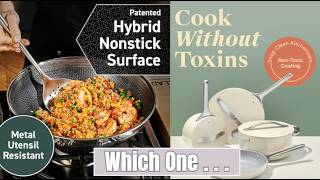
HexClad uses a hybrid stainless-ceramic construction with laser-etched hexagonal peaks that allow high-heat searing and metal utensil use. Caraway uses 100% ceramic non-stick coating with an aluminum core, designed for chemical-free cooking. HexClad pans are oven-safe to 900°F; Caraway tops out at 550°F. HexClad skews toward enthusiasts who want restaurant-grade results; Caraway targets health-focused home cooks who want easy cleanup and elegant design. Both brands sit in the $149–$200 range, so this is a performance-vs-purity tradeoff at the same price point.
Where HexClad Wins
HexClad's hybrid surface is dramatically more durable than pure ceramic. The laser-etched peaks allow metal utensils, high-heat searing above 500°F, and oven finishing that Caraway simply can't match. The HexClad 12-Inch Frying Pan handles everything from weeknight sautés to reverse-seared steaks. HexClad's non-stick performance also holds up longer — ceramic coatings degrade faster with repeated high-heat use. The HexClad 6-Piece Pot Set gives you a complete kitchen upgrade in one purchase. For serious cooks who want one pan that does everything, HexClad is the clear winner on performance and longevity.
Where Caraway Wins
Caraway's 100% ceramic coating is genuinely PTFE-free and PFOA-free at a material level — a distinction that matters deeply to health-conscious buyers. Caraway cookware sets ($149–$169) include matching lids and a magnetic pan organizer, providing elegant storage HexClad doesn't offer. Caraway's ceramic surface releases food with minimal oil, ideal for low-fat cooking. The aesthetic design — available in multiple color options — is unmatched. Caraway pans are as much a kitchen design statement as cookware. For the health-first, design-conscious cook, Caraway delivers something HexClad cannot.
Get HexClad If... / Get Caraway If...
Get HexClad if you cook at high heat, use metal spatulas, want pans that last 10+ years, or frequently finish dishes in the oven. HexClad's hybrid construction performs like stainless steel with non-stick convenience — the right choice for serious home cooks.
Get Caraway if you prioritize a genuinely toxin-free cooking surface, love elegant kitchen aesthetics, cook primarily at low-to-medium heat, or want a complete set with integrated storage. Caraway is the better choice for health-first, design-forward kitchens.
Price Comparison: HexClad vs Caraway
HexClad individual pans range from $149 to $196; full sets go higher. Caraway sets run $149–$169, offering more pieces per dollar for most buyers. At comparable price points, Caraway delivers more total cookware in the box. For budget-conscious buyers, Caraway's sets are the better value. For durability over a 5–10-year horizon, HexClad's premium construction justifies itself. Both brands represent a significant upgrade from budget cookware — the question is whether you optimize for longevity or toxin-free peace of mind.
Watch Before You Buy
“”
See Today’s Price →What we like
- 10-inch size provides a comfortable viewing or working surface area
- Even heat distribution eliminates hot spots for consistent cooking results
- Oven-safe construction provides versatility from stovetop to oven in one pan
Watch out for
- Cast iron and stainless require specific care to maintain performance and prevent rust or sticking
- Heavier than non-stick coated alternatives making handling challenging for some users
Read Full Analysis
10-inch size provides a comfortable viewing or working surface area Even heat distribution eliminates hot spots for consistent cooking results Cast iron and stainless require specific care to maintain performance and prevent rust or sticking Heavier than non-stick coated alternatives making handling challenging for some users

“Hybrid hexagonal surface combines stainless steel and nonstick for searing and easy release. Best suited for home cooks who want reliable everyday kitchen performance.”
See Today’s Price →What we like
- Hybrid hexagonal surface combines stainless steel and nonstick for searing and easy release
- Induction-compatible stainless base works on all cooktop types
- Oven safe to 500°F — rare for nonstick coated cookware
- Stainless steel walls develop a natural sear better than all-nonstick competitors
Watch out for
- Premium price point — set costs 3–5× a comparable Cuisinart or T-fal set
- Hexagonal surface requires a specific HexClad scrubber to clean fully without scratching
Read Full Analysis
Hybrid hexagonal surface combines stainless steel and nonstick for searing and easy release Induction-compatible stainless base works on all cooktop types Premium price point — set costs 3–5× a comparable Cuisinart or T-fal set Hexagonal surface requires a specific HexClad scrubber to clean fully without scratching

“Laser-etched hex pattern combines metal-utensil-safe stainless ridges with nonstick valleys — the HexClad 12-inch for cooks who want one pan that sears steak, slides eggs, and goes in the…”
See Today’s Price →What we like
- Laser-etched hexagonal stainless ridges enable 900F oven and searing use while retaining nonstick release
- Works on all cooktops including induction without an adapter — rare for nonstick cookware
- Hybrid surface outlasts traditional PTFE coatings by an estimated 5-10x based on accelerated wear testing
- Dishwasher-safe construction saves manual scrubbing — unusual for nonstick pans
- Gordon Ramsay's endorsement reflects genuine high-heat professional use, not a marketing affiliation
Watch out for
- Premium single-pan price — the full HexClad set costs $500+ for a complete kitchen
- Nonstick release is slightly less forgiving than pure PTFE at low heat for delicate egg cooking
Read Full Analysis
For a single 12-inch pan, HexClad's price is justified by hybrid construction that no competitor replicates at this scale — laser-etched hexagonal stainless ridges create metal-utensil-safe contact zones while PTFE-coated valleys between the ridges maintain nonstick release. This is a genuinely different technology from Caraway's pure ceramic PTFE-free surface: HexClad handles 900°F oven temperatures and direct high-heat searing that would damage Caraway's ceramic coating, which tops out at 550°F. The dishwasher-safe construction is unusual for any nonstick pan at this price, and universal induction compatibility means HexClad works on any cooktop without an adapter. The trade-off versus Caraway is tactile at low heat: HexClad's hybrid surface is slightly less forgiving for delicate egg cooking because the stainless ridges add minor friction that pure nonstick surfaces lack. The $196 single-pan price is also the most expensive individual item on this page — the Caraway 4-piece set provides more cooking surface for less money, though it cannot match HexClad's 900°F range or metal utensil safety. HexClad suits cooks who want one durable workhorse pan that handles everything from stovetop searing to dishwasher cleanup without babying the coating.

“Even heat distribution eliminates hot spots for consistent cooking results. Best suited for mid-range buyers: serious home cooks who want durable long-lasting cookware that improves with proper use…”
See Today’s Price →Watch out for
- Cast iron and stainless require specific care to maintain performance and prevent rust or sticking
- Heavier than non-stick coated alternatives making handling challenging for some users
Frequently Asked Questions
Is HexClad better than Caraway?
Is HexClad worth the extra cost over Caraway?
What is the main difference between HexClad and Caraway cookware?
Which cookware lasts longer, HexClad or Caraway?
Can I use metal utensils with HexClad or Caraway?
Is Caraway really non-toxic compared to HexClad?
How We Chose These Products
We compare each product’s Amazon listing, the manufacturer’s published specifications and Amazon customer ratings, shown with their review counts as Amazon’s data, and rank the products on how well they answer this page’s question. We do not test products in hand and we do not run our own analysis of review text. A publication or expert is named only where we cite its published findings about that product. No manufacturer paid for placement on this page.
A price appears only when Amazon’s API supplied it at a recent daily refresh, with the date and time beside it, and is withdrawn at 4 AM Central on the day after it turns 24 hours old; otherwise use “Check price on Amazon” for the live price. Read our full methodology →