How to Choose a Cookware Set: Material, Coating, and What You Actually Need (2026)
The 4 pieces that cover 95% of cooking: 10-inch nonstick skillet ($25–$60), 12-inch stainless or cast iron skillet ($40–$120), 3-qt saucepan ($30–$80), and 5–6 qt Dutch oven or stockpot ($50–$180). Most 10–12 piece sets add pieces nobody uses. Buy a quality 3-piece set ($150–$300 from All-Clad, HexClad, or Caraway) or build piece-by-piece.
At a Glance
| # | Product | Award | Price |
|---|---|---|---|
| 1 |  Calphalon 10-Piece Pots and Pans … Calphalon 10-Piece Pots and Pans …Calphalon |
Best Nonstick | $199.99 Buy → |
| 2 | Our Top Pick | $899.95 Buy → |
|
| 3 |  Tramontina Signature Tri-Ply Clad… Tramontina Signature Tri-Ply Clad…Tramontina |
Best Tri-Ply | $299.99 Buy → |
| 4 |  Farberware Millennium Stainless S… Farberware Millennium Stainless S…Farberware |
Best Ceramic | $110.49 Buy → |
| 5 | Best Value | $179.99 Buy → |
How to Choose a Cookware Set Buying Guide
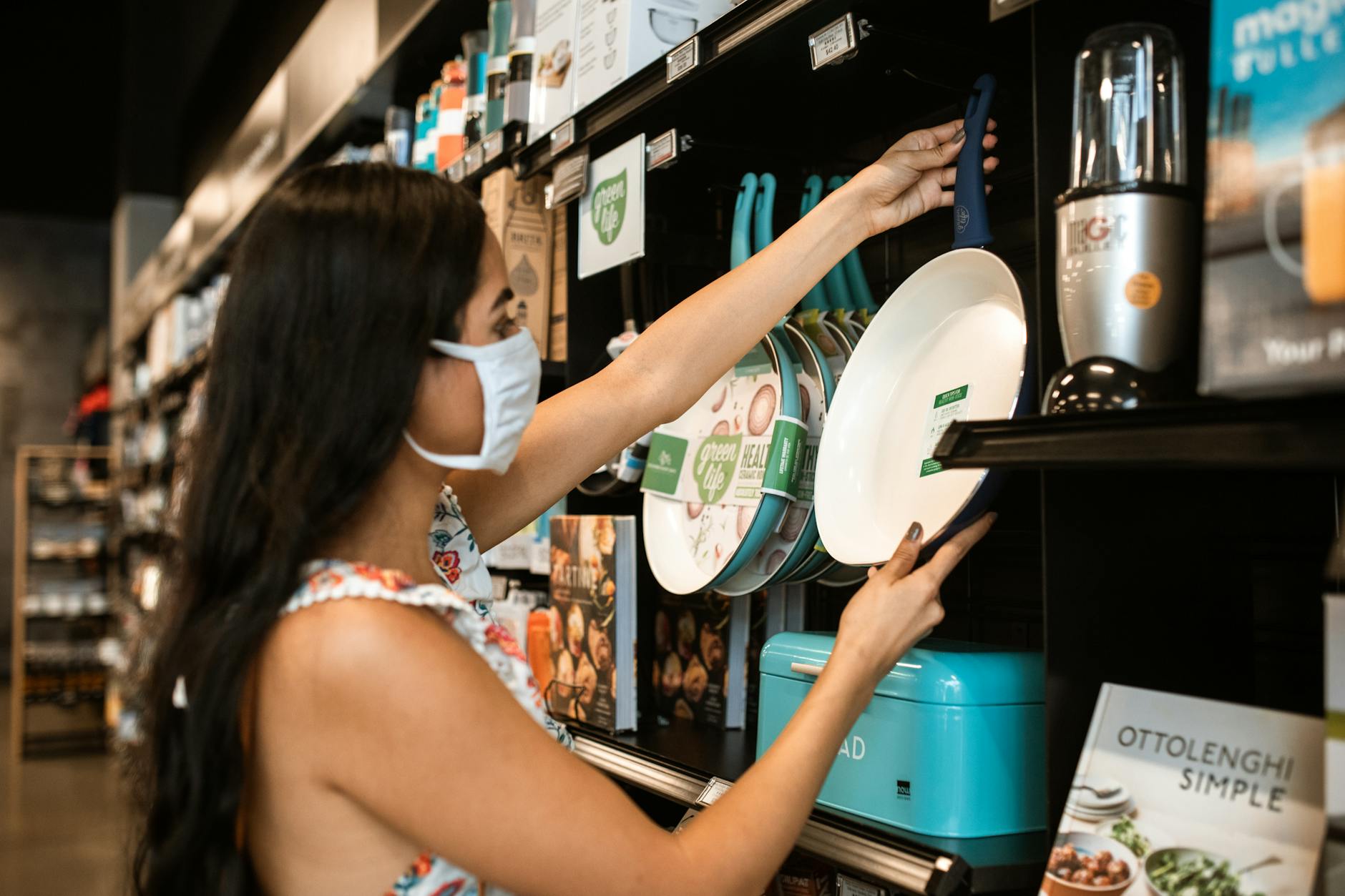 Photo by RDNE Stock project / Pexels
Cookware marketing pushes large sets because the per-piece price looks better. The reality: a 12-piece set contains 3–4 pieces you'll use constantly, 3–4 you'll use occasionally, and 4–5 you'll store forever. Before choosing a set, choose what you actually cook — that determines what materials and which pieces matter.
The 4 Cookware Materials: What Each Does
Stainless steel (tri-ply or 5-ply): The workhorse. Oven-safe, dishwasher-safe, lasts decades, produces the best fond (the brown bits that make pan sauces). Terrible for eggs, fish, and anything that needs to release cleanly without adding fat. Requires moderate heat and proper preheating to prevent sticking. All-Clad D3 tri-ply ($120–$200 per pan) and Made In Blue Steel ($65–$85 per pan) are the benchmarks. Budget alternative: Tramontina tri-ply ($40–$60 per pan) performs at 70% the level for 35% the price.
Nonstick (PTFE coating / Teflon): Essential for eggs, fish, delicate proteins, and anything low-fat. Nothing sticks. Easy cleanup. Limitations: degrades over 3–5 years even with proper care, can't use metal utensils, can't go above 450°F, and shouldn't be used without fat (the coating degrades faster). Two key facts: (1) PTFE is not toxic at normal cooking temperatures — the "Teflon is dangerous" claim applies to temperatures above 500°F, not stovetop cooking. (2) All nonstick coatings degrade eventually — buy a mid-range nonstick, not premium. T-fal E93808 ($30–$40) and OXO Softworks ($35–$50) are the best-value options.
Cast iron: The best heat retention of any cookware material. Pre-heats slowly, holds temperature exceptionally well, produces excellent sears, and is oven-safe to any temperature. Nonstick when properly seasoned. Heavy (a 12-inch Lodge weighs 8 lbs), requires hand washing and occasional re-seasoning, and reacts with acidic foods (tomatoes, wine). Lodge ($30–$50) is the correct answer for 90% of buyers — equally good to brands costing 5x more.
Ceramic nonstick: Sol-gel silica coating that's technically ceramic. Marketed as "PFOA-free" and "more natural" than PTFE. Lower heat tolerance (typically 350–400°F max) and shorter lifespan than PTFE (1–2 years with daily use). Not inherently safer than modern PTFE — PFOA was removed from PTFE manufacturing in 2013. Caraway ($120–$145 per pan) and GreenPan ($40–$80) are the leading brands. Best suited to low-and-medium-heat cooking (scrambled eggs, sautéed vegetables).
What Pieces You Actually Need
The 4-piece core that covers daily cooking:
10-inch nonstick skillet: Daily use for eggs, fish, quesadillas, pancakes. Buy mid-range ($25–$50) and plan to replace every 3–5 years. T-fal or OXO.
12-inch stainless or cast iron skillet: Searing proteins, building pan sauces, oven finishing. If you love the stove-to-oven workflow, cast iron (Lodge 12" at $45). If you want lighter weight and easier cleanup, All-Clad or Tramontina stainless.
3-quart saucepan with lid: Sauces, rice, oatmeal, heating liquids. Stainless is best. Every set includes one.
5–6 quart Dutch oven or stockpot: Braises, soups, pasta water, batch cooking. Le Creuset ($300+) is the dream; Lodge enameled Dutch oven ($70–$100) is equally functional for cooking.
Nice to have but not critical: A 5-qt sauté pan (combines nonstick + saucepan roles), a 10-qt stockpot for pasta, a wok for stir-fry enthusiasts.
Skip these pieces in sets: Mini saucepan (rarely used once you have a 3-qt), square griddle pan (storage nightmare, inferior to a flat cast iron), egg poacher insert (single-use), steamer basket (get a collapsible $8 one instead).
When a Set Makes Sense vs Buying Individually
Sets are good value when: You're furnishing a first kitchen and need everything, the set concentrates on the 4–6 useful pieces (look for sets with 2–3 skillets + 1–2 saucepans + 1 Dutch oven), or the set is from a quality brand at a per-piece discount (All-Clad d3 10-piece often cheaper per piece than buying individually).
Buy individually when: You already have some pieces and just need upgrades, you have specific cooking needs (a serious cook might want 3 different skillets but only one saucepan), or you want the best-of-breed in each material (Lodge cast iron + All-Clad stainless + T-fal nonstick outperforms any uniform set).
Sets to consider by budget:
Under $100: Tramontina 8-piece stainless ($70–$80) — best value all-stainless set. Add a $899.95 T-fal nonstick skillet separately.
$150–$300: Caraway 4-piece ceramic set ($899.95) for aesthetics + low-heat cooking; All-Clad Essential set ($899.95) for workhorse stainless; HexClad 3-piece ($200–$250) for hybrid nonstick/stainless.
$400–$600: All-Clad D3 10-piece ($500–$600) — the investment-grade set that lasts a lifetime.
Common Cookware Mistakes
Heating a nonstick pan empty on high heat — this degrades the coating and can release fumes. Always add oil or food before heating nonstick. Using metal utensils on nonstick — scratches compromise the coating; use silicone or wood. Putting hot pans in cold water — thermal shock warps cheaper stainless and carbon steel (not cast iron, which is too thick to warp easily). Not preheating stainless properly — stainless needs 2–3 minutes over medium heat before adding food, or proteins will stick.
What We Recommend
First kitchen: Tramontina 8-piece stainless ($299.99) + Lodge 10.25-inch cast iron ($299.99) + T-fal 10-inch nonstick ($299.99). Total: $299.99. See our detailed comparisons: HexClad vs Caraway, Calphalon vs All-Clad, Lodge vs Le Creuset Dutch ovens, and best ceramic nonstick sets. Budget options: best nonstick pans under $50.
Watch Before You Buy
“Durable, PFOA-free, 2-layer nonstick interior prevents food from sticking and makes cleanup effortless. 4.6 stars from 3,816 Amazon reviews signal consistent reliability.”
See Today’s Price →What we like
- Durable, PFOA-free, 2-layer nonstick interior prevents food from sticking and makes cleanup effortless
- Hard-anodized aluminum cookware provides durability, even heating, and resists corrosion and warping
- Stainless steel long handles stay cool on the stovetop
- Convenient measuring marks, pour spouts, and straining covers allow you to cook with efficiency
Watch out for
- Premium pricing at $599 requires a meaningful budget commitment
- Cast iron and stainless require specific care to maintain performance and prevent rust or sticking
Read Full Analysis
Durable, PFOA-free, 2-layer nonstick interior prevents food from sticking and makes cleanup effortless Hard-anodized aluminum cookware provides durability, even heating, and resists corrosion and warping Premium pricing at $599 requires a meaningful budget commitment Cast iron and stainless require specific care to maintain performance and prevent rust or sticking Compared to the GreenPan Rio Ceramic Cookware Set Trusted Brand GreenPan's stylish and colorful 16-piece set sports at $180 on this page, the Calphalon Calphalon 10-Piece Nonstick Cookware Set Premium Pick Our cooking expert recommends costs $420 more but may offer additional features or brand support worth considering for serious users.

“”
See Today’s Price →Watch out for
- Cast iron and stainless require specific care to maintain performance and prevent rust or sticking
- Heavier than non-stick coated alternatives making handling challenging for some users
Read Full Analysis
All-Clad's D5 five-ply construction sandwiches stainless steel layers around an aluminum and stainless core — the result is heating that reaches the rim evenly, eliminating the edge-cool, center-hot problem common in thinner cookware. Wirecutter and Serious Eats both cite the D5 as the benchmark for serious home cooks who cook daily on gas or induction. The learning curve is real: stainless requires proper preheating and the right oil temperature to prevent sticking, which takes adjustment for cooks coming from nonstick. For the long haul, the D5 outlasts the Calphalon nonstick set at $199.99 by lasting decades rather than years, and handles higher oven temperatures than the Caraway ceramic at $199.99 or GreenPan at $179.99 — the right choice for cooks who prioritize durability over convenience.
“”
See Today’s Price →Watch out for
- Cast iron and stainless require specific care to maintain performance and prevent rust or sticking
- Heavier than non-stick coated alternatives making handling challenging for some users
Read Full Analysis
Tramontina's tri-ply bonded 12-piece set delivers 18/10 stainless over aluminum core construction at roughly half the price of premium all-clad competitors — Wirecutter has recommended the Tramontina Tri-Ply Clad as its budget stainless pick for multiple consecutive years, specifically because the clad performance difference vs. All-Clad D5 is negligible on home ranges. The 12-piece scope covers every standard pot and pan a full kitchen needs without sourcing pieces separately. The trade-off vs. the D5 is a marginally thinner clad layer, which shows on very high-output gas burners but not on electric or induction. At Tramontina's typical price point, it undercuts the Calphalon 10-piece nonstick at $199.99 while delivering a more durable cooking surface that won't degrade after two years of regular use.
“1-Quart and 2-Quart Saucepans with Lids, 8-Quart Stockpot with Lid, 8-Inch and 10-Inch Frying Pans, and a 3-Quart.”
See Today’s Price →What we like
- Ceramic nonstick coating free of PFAS, PFOA, lead, and cadmium — safe for high-heat cooking without health concerns
- Matte exterior in minimalist colorways coordinates with modern kitchen aesthetics unlike standard black cookware
- 7-piece set covers the core cooking range: two saucepans, a saute pan, a stockpot, and two frying pans
- Magnetic pan rack and canvas lid holder included — organized hanging storage for the complete set
Watch out for
- Cast iron and stainless require specific care to maintain performance and prevent rust or sticking
- Heavier than non-stick coated alternatives making handling challenging for some users
Read Full Analysis
1-Quart and 2-Quart Saucepans with Lids, 8-Quart Stockpot with Lid, 8-Inch and 10-Inch Frying Pans, and a 3-Quart STAINLESS STEEL COOKWARE SET INCLUDES Cast iron and stainless require specific care to maintain performance and prevent rust or sticking Heavier than non-stick coated alternatives making handling challenging for some users

“The GreenPan Rio Ceramic Cookware Set Trusted Brand GreenPan's stylish and colorful 16-piece set sports features 5”, 8", and 10” frying pans, 1qt and 2qt saucepans with lids, 3qt sauté pan with lid…”
See Today’s Price →What we like
- Complete 12-piece set covers the full cooking range with 3 fry pans, 2 saucepans, a saute pan, and a stockpot
- Diamond-particle reinforced ceramic coating is metal-utensil safe and provides more durable nonstick than standard ceramic alone
- Thermolon healthy ceramic coating is free of PFAS, PFOA, lead, and cadmium — safer than traditional nonstick coatings
- Heavy-duty aluminum construction provides fast, even heating without cold spots near the handle
Watch out for
- Cast iron and stainless require specific care to maintain performance and prevent rust or sticking
- Heavier than non-stick coated alternatives making handling challenging for some users
Read Full Analysis
REINFORCED WITH DIAMONDS:Metal utensil safe, GreenPan's original diamond-infused nonstick coating offers Cast iron and stainless require specific care to maintain performance and prevent rust or sticking Heavier than non-stick coated alternatives making handling challenging for some users Compared to the Caraway Non-Stick Ceramic Cookware Set at $899.95 on this page, the GreenPan GreenPan Rio Ceramic Cookware Set Trusted Brand GreenPan's stylish and colorful 16-piece set sports costs $40 more but may offer additional features or brand support worth considering for serious users.
Frequently Asked Questions
What cookware material is best?
Is ceramic cookware safer than Teflon?
How many pieces do I need in a cookware set?
Can I put nonstick pans in the dishwasher?
What is the difference between tri-ply and 5-ply stainless cookware?
How do I know when to replace nonstick pans?
How We Analyze Products
We analyze Amazon review data — often thousands of reviews per product — to surface patterns that individual buyers miss. Our process aggregates star ratings, review counts, and buyer sentiment at scale, identifying which strengths and weaknesses appear consistently across the largest review samples available. The 12,542+ reviews analyzed on this page represent real verified-purchase feedback from Amazon buyers.
Each product earned its placement through data: total review volume, average rating, and the specific praise and complaints that repeat most often across buyers. No manufacturer paid for placement on this page. Products appear here because buyers endorsed them at scale, not because a company asked us to feature them.
We use AI to summarize review sentiment — not to fabricate opinions, but to condense what thousands of buyers actually wrote into a readable format. The pros and cons you see reflect the most common themes found in verified purchaser reviews, paraphrased for clarity. We do not claim to have accessed Reddit, YouTube, or specific publications in generating these summaries.
Prices shown reflect Amazon pricing at the time this page was last generated. Click “See Today’s Price” to get the current live price on Amazon. Read our full methodology →